4/16 – 4/30/2026
The main purpose of this Japan trip is to walk Kumano Kodo (熊野古道) and to visit the Japan Alps. We have been to Japan a few times and have visited Tokyo, Kyoto and Osaka, but we have never been to Nagoya. Therefore, we will also spend extra time sightseeing in Nagoya.
For the Kumano Kodo walk, we booked a self-guided tour with luggage transfer with Walk Japan. This is a very popular walk, and we are going with 6 friends, so we booked the trip a year ago.
Kumano Kodo is one of the only two UNESCO pilgrimage routes — the other one is El Camino de Santiago. Several of us have walked El Camino, and we would be able to get a dual pilgrim certificate after completing this walk.
Day 1: Arrived in Nagoya (名古屋)
Our flight from San Francisco to Nagoya had a 2+ hours layover in Taipei, where Rei had some beef noodles. We arrived in Chubu Centrair International Airport shortly after 11am. The line at the airport customs was long. We also needed to fill out a simple form and had fingerprints. It took a long time, so when we finally arrived at the luggage claim, our bags were already out.
The airport had very convenient public transportation. There were frequent trains going to Nagoya city center. We bought the tickets with reserved seats, which cost close to 3,000 yens for two. We were given two tickets each, which was confusing. It took us a while to figure out that one ticket was for entering and exiting the station gates, and the other was for seat assignment.
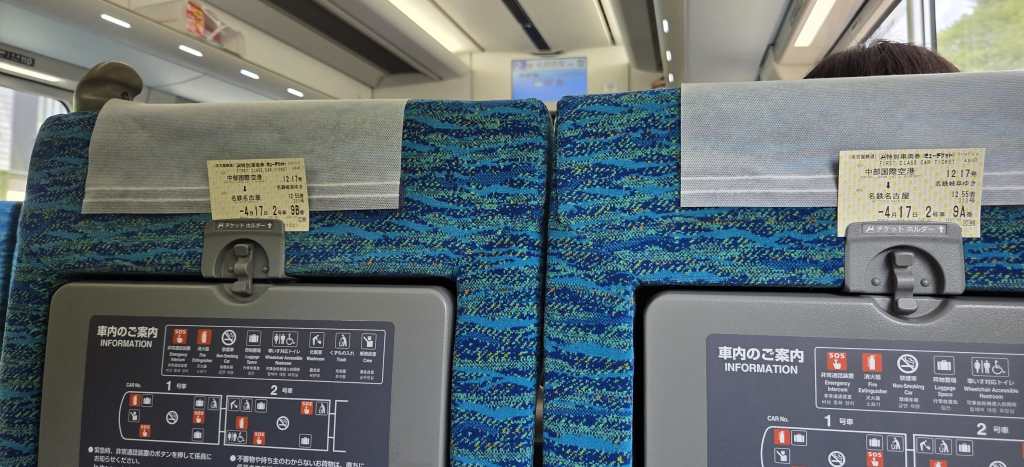
The train ride was about 40 minutes. We looked around and found out that fellow passengers all placed their seat assignment tickets in front of them, and we quickly followed suit.
Our hotel was only a short walk from the train station. The hotel room was tiny — it’s the smallest hotel room we had ever stayed. There wasn’t even enough room to lay out our luggage!
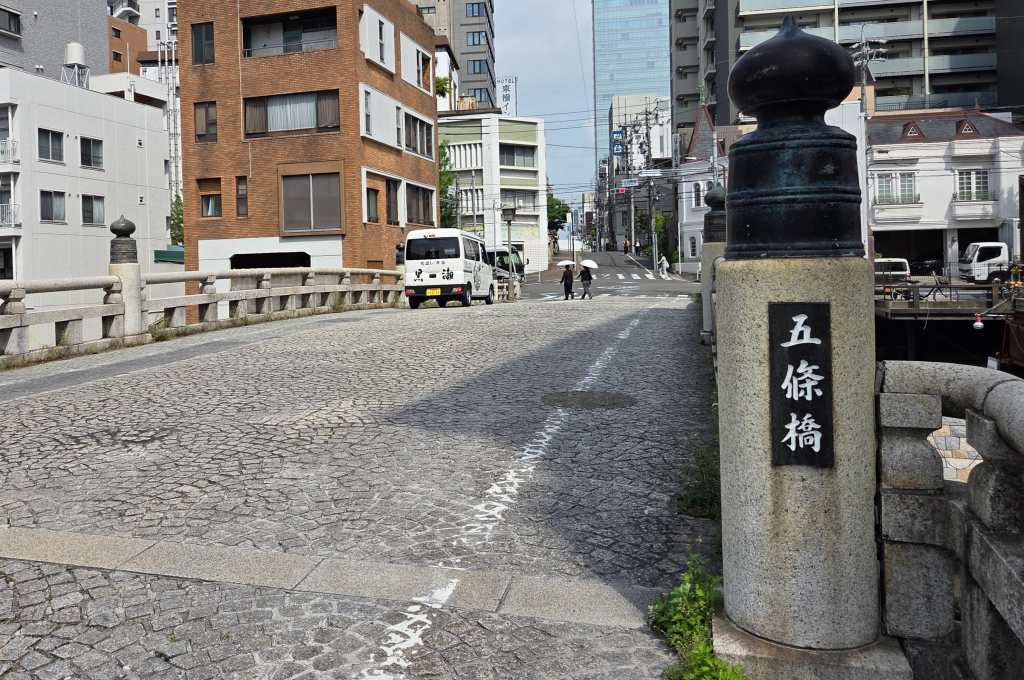
It was only about 1:30pm after we checked into the hotel, so Rei and I decided to visit Nagoya Castle. The castle was about 30 minutes walk from the hotel. On the way, we saw the reconstruction of an old bridge and a boat dock.
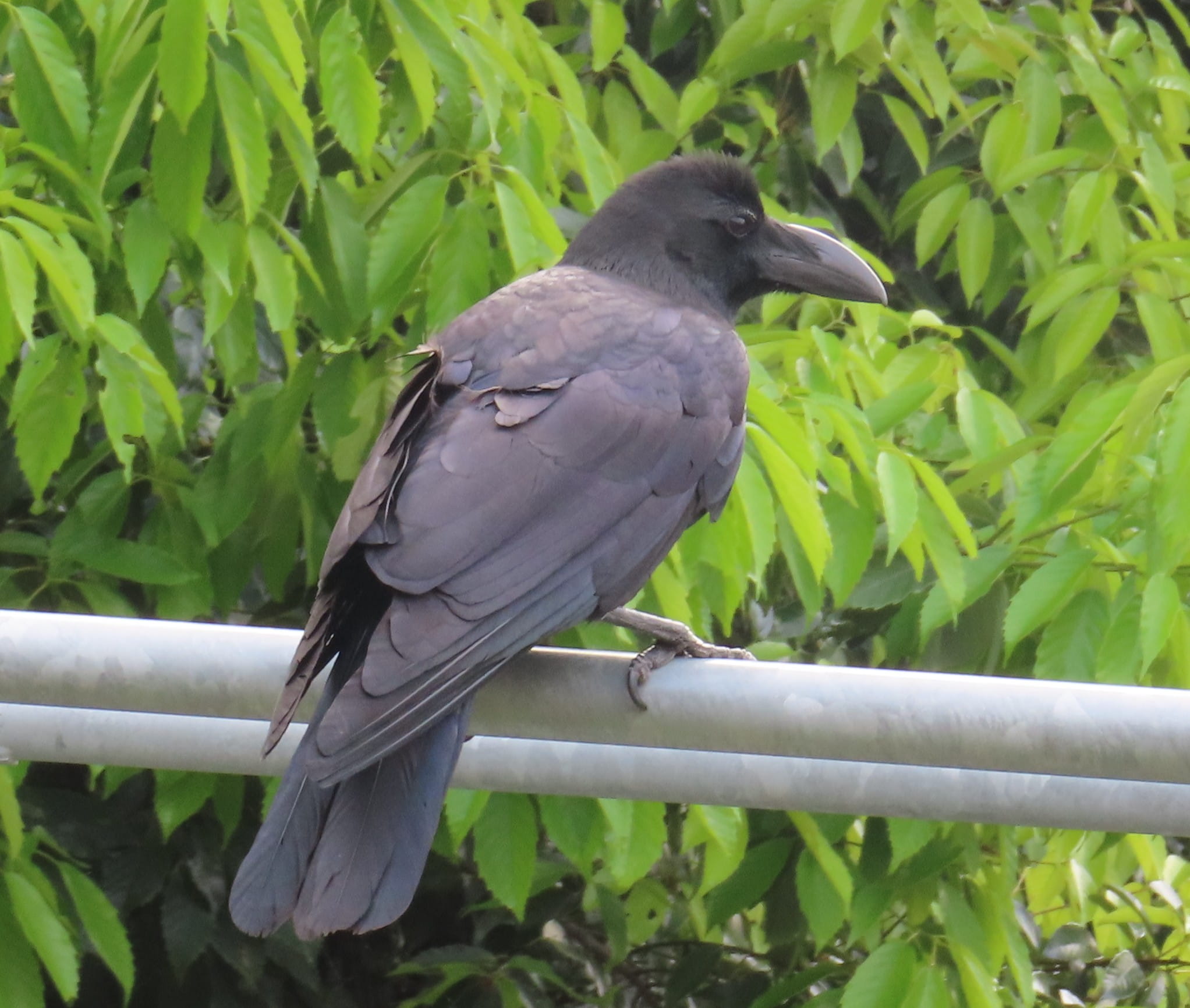
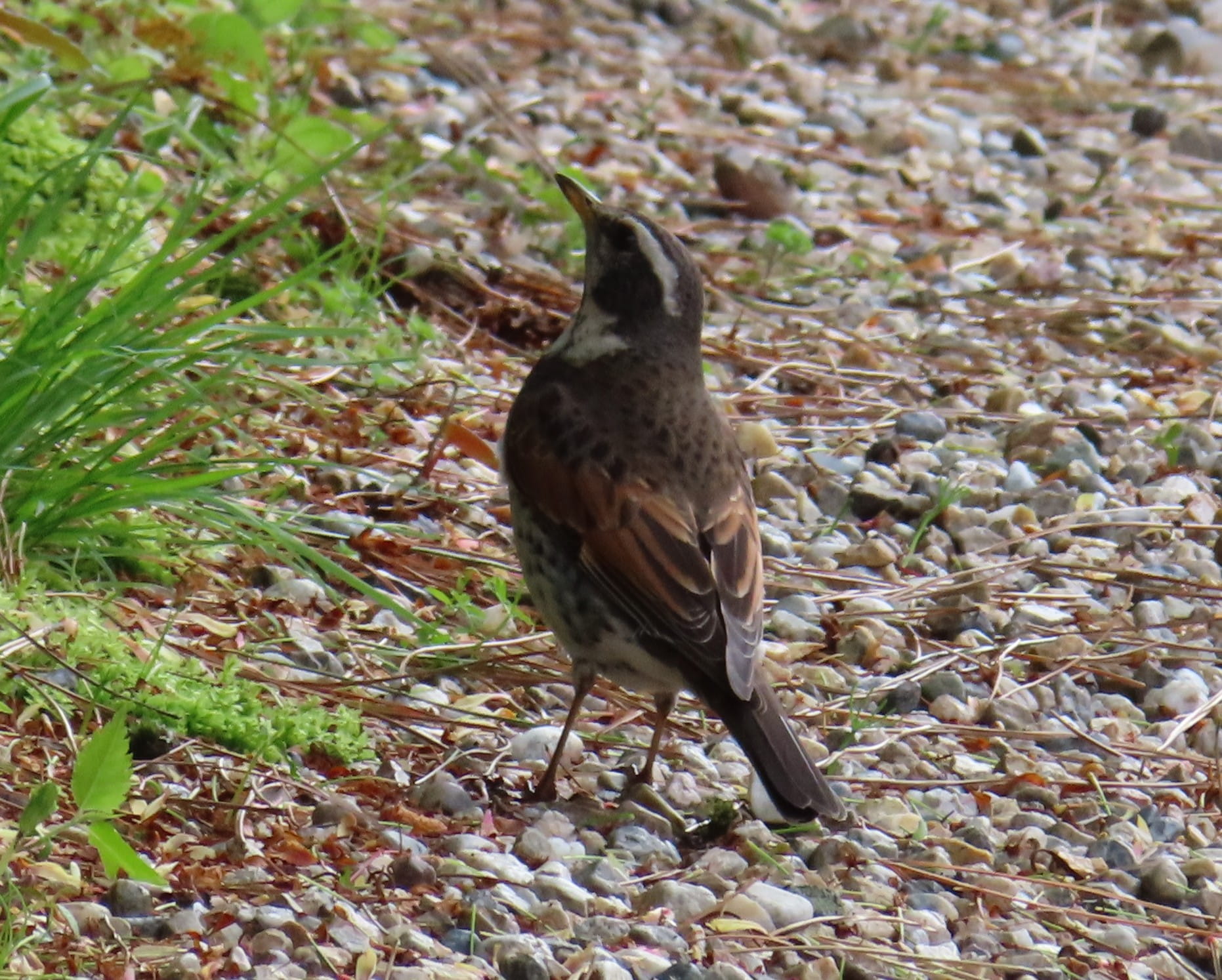
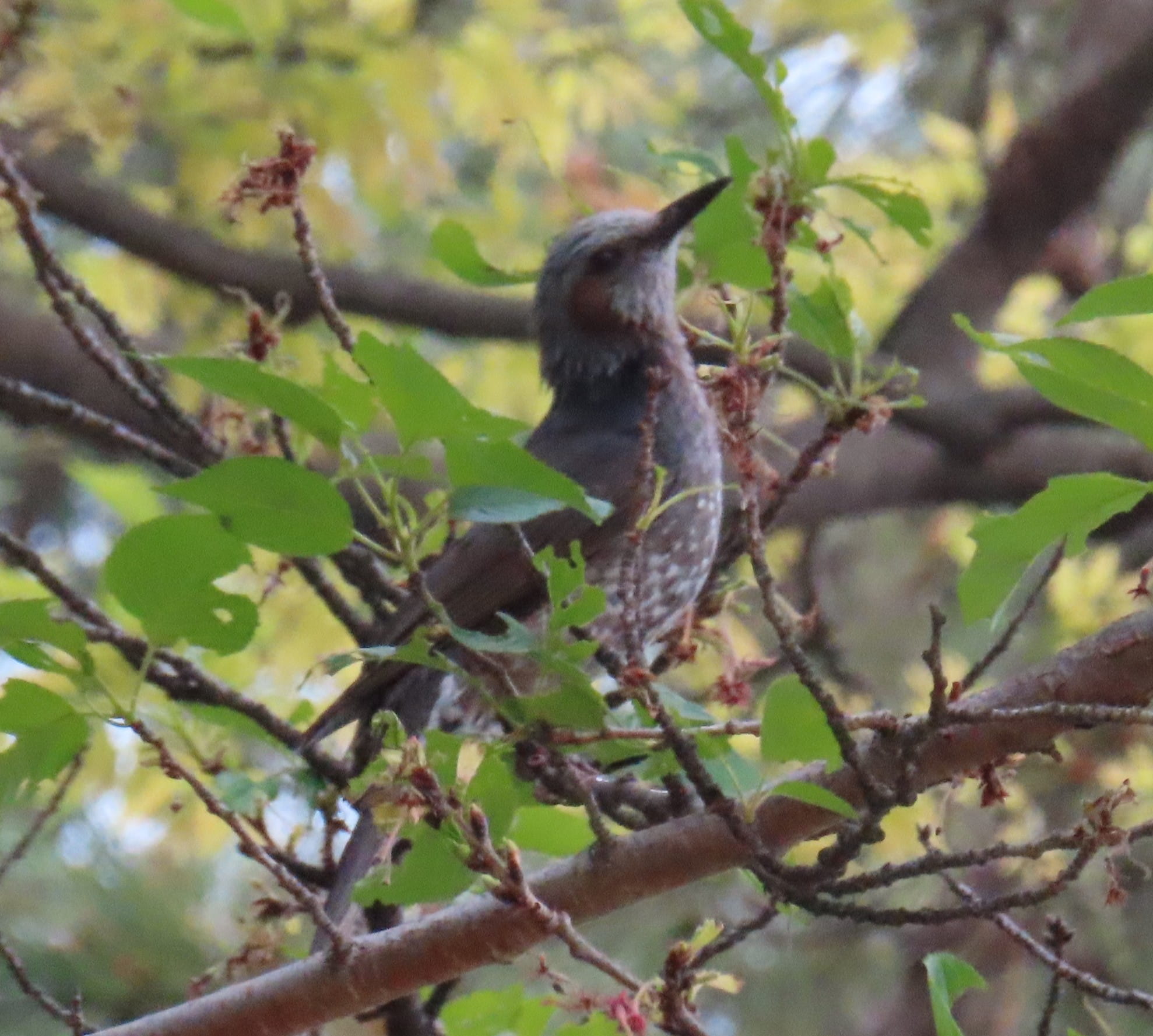
The entrance fee for Nagoya Castle was 500 yen per adult. Today was Friday, but we still saw a lot of tourists there. The castle ground was huge and verdant. There were many Large-billed Crows flying around and cawing. I also saw other kinds of birds such as a Dusky Thrush and a Brown-eared Bulbul. (Check my impressive Bird List.)
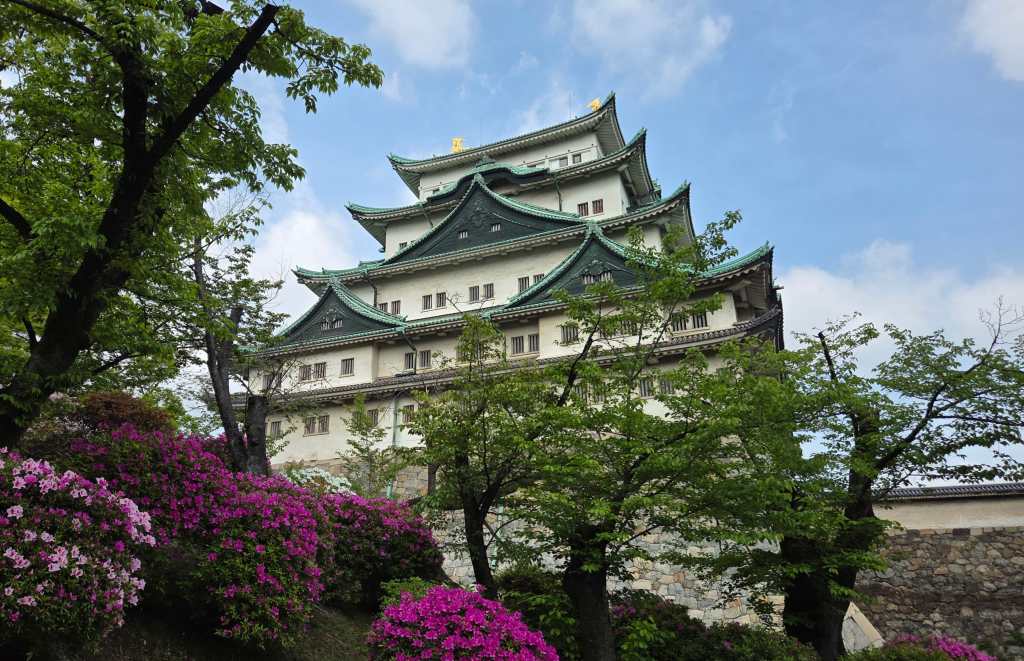
The main castle and small corner towers were all closed for inside visit. A sign outside the main castle informed us that the castle was closed for safety issue.
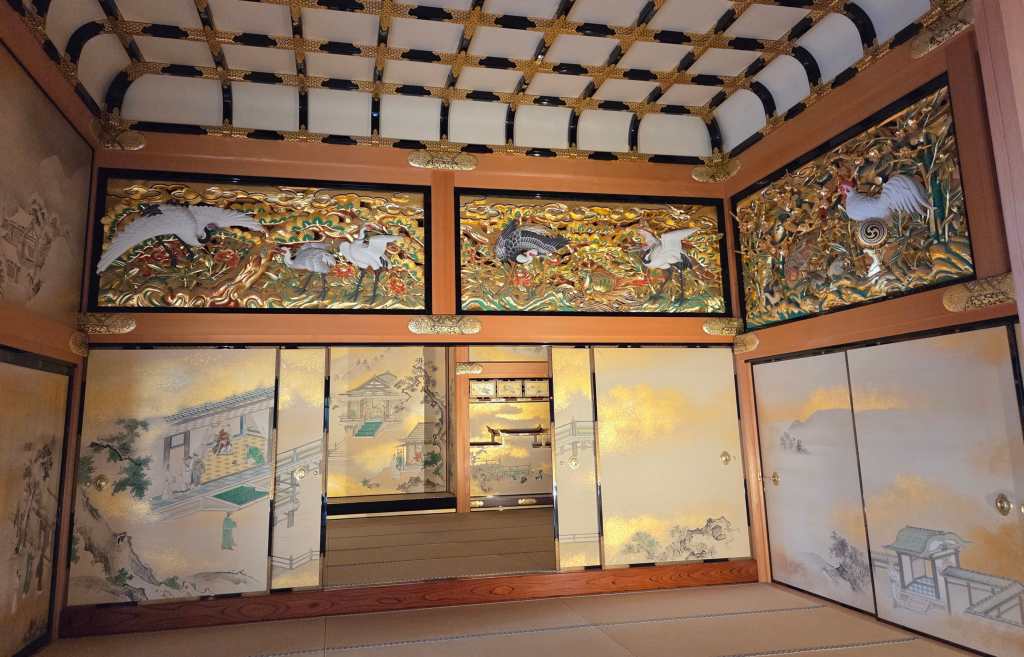
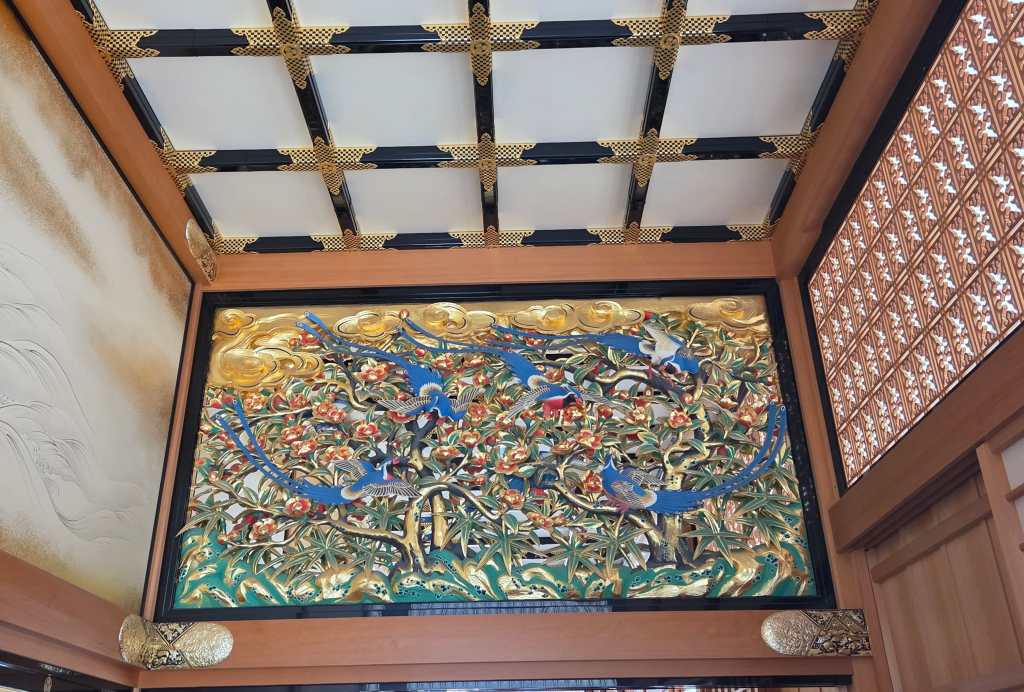
Fortunately, Hommaru Palace (本丸御殿), the shogun’s residence, was open for inside visit. Nagoya Castle was completely destroyed during World War II. The site we saw now was a reconstruction. Nevertheless, the palace was still magnificent. Visitors were required to take off shoes before entering. The palace floors were either wooden planks or tatami. There were many elegant rooms — each with exquisitely painted golden walls of flora and fauna. We all took many photos.
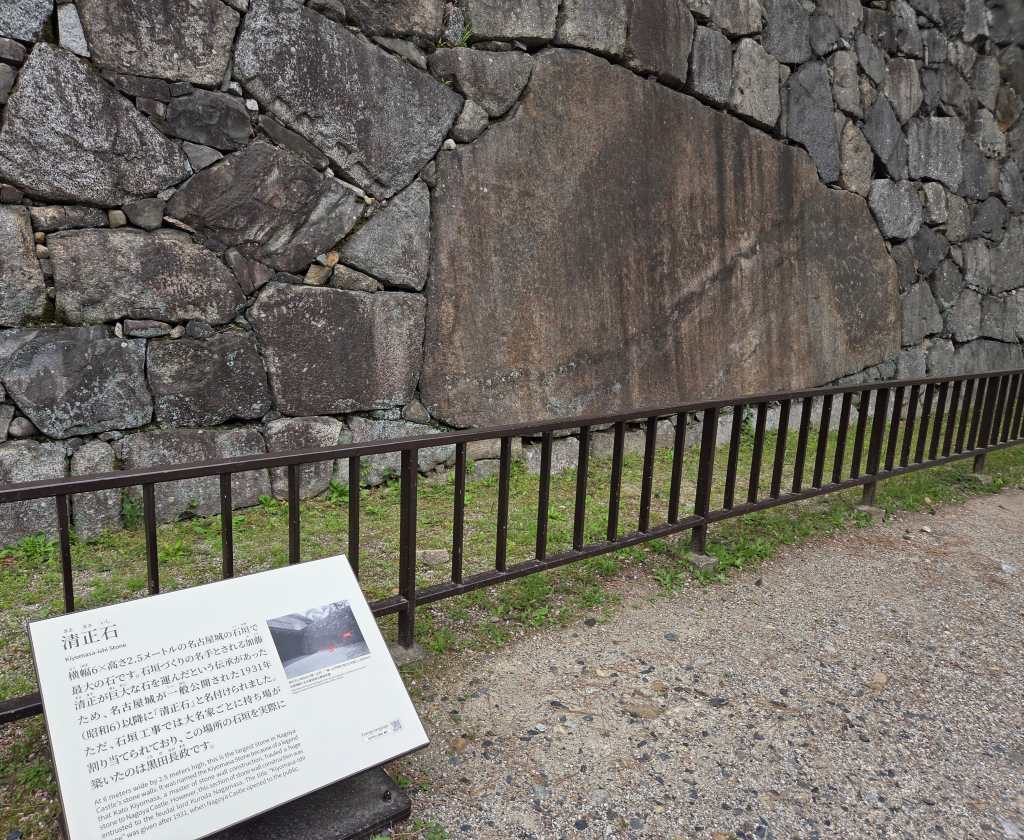
The castle was protected with strong stone walls that reminded me of Inca stonework. There were some especially huge and impressive stones.
There were also gift shops (of course!) with a plethora of souvenirs and snacks. We were not interested in trinkets, but the snacks were too tempting, so we ended up buying a few.
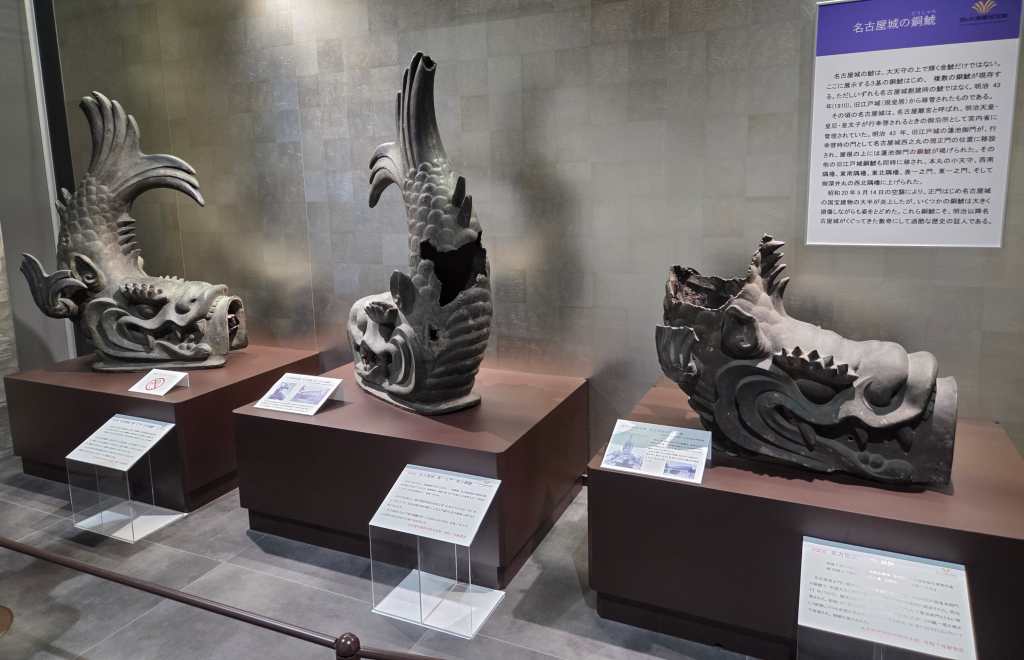
There was also a small museum onsite displaying some original paintings and artifact. The description was mainly in Japanese, so we didn’t get enough information about the display.
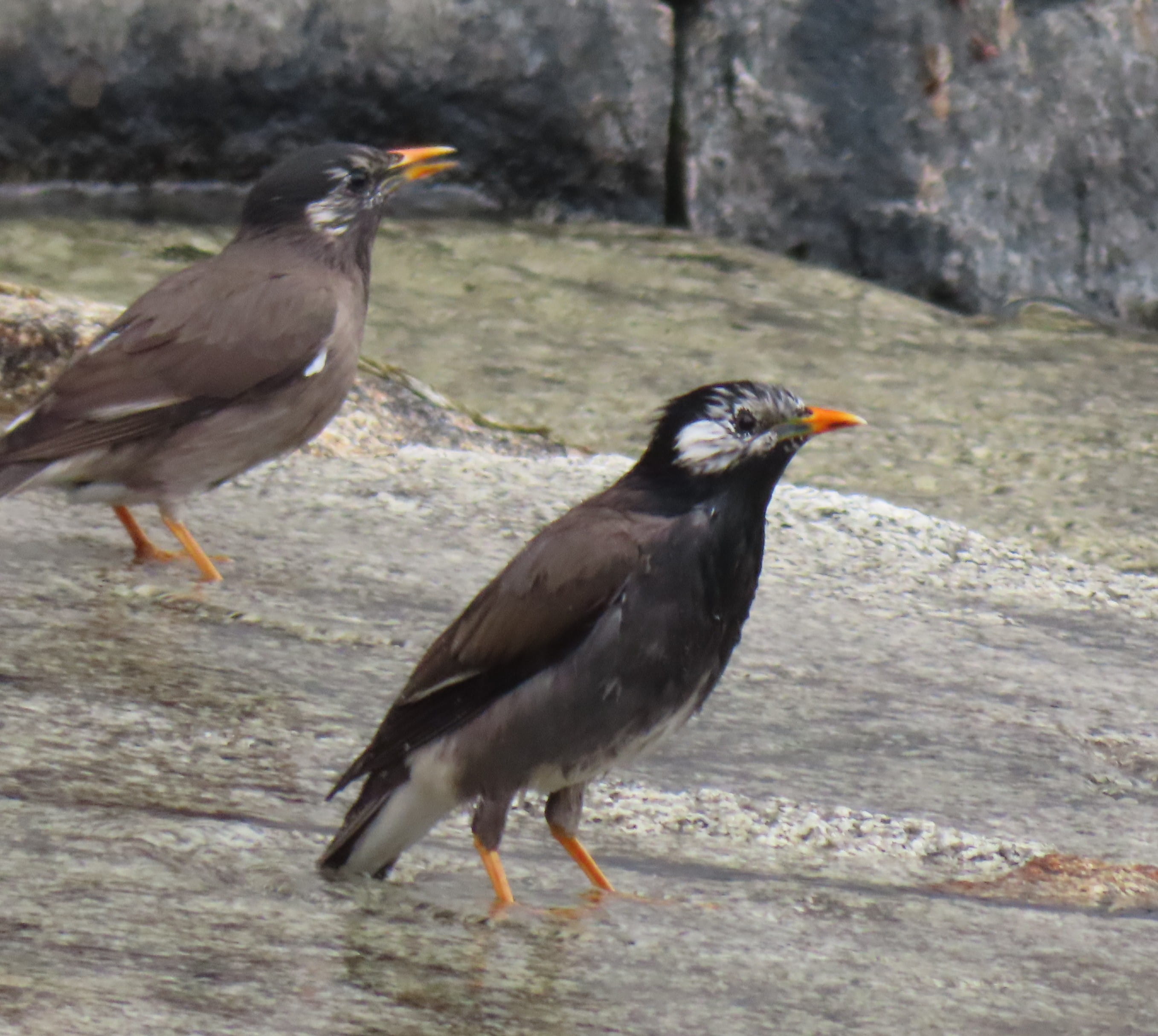
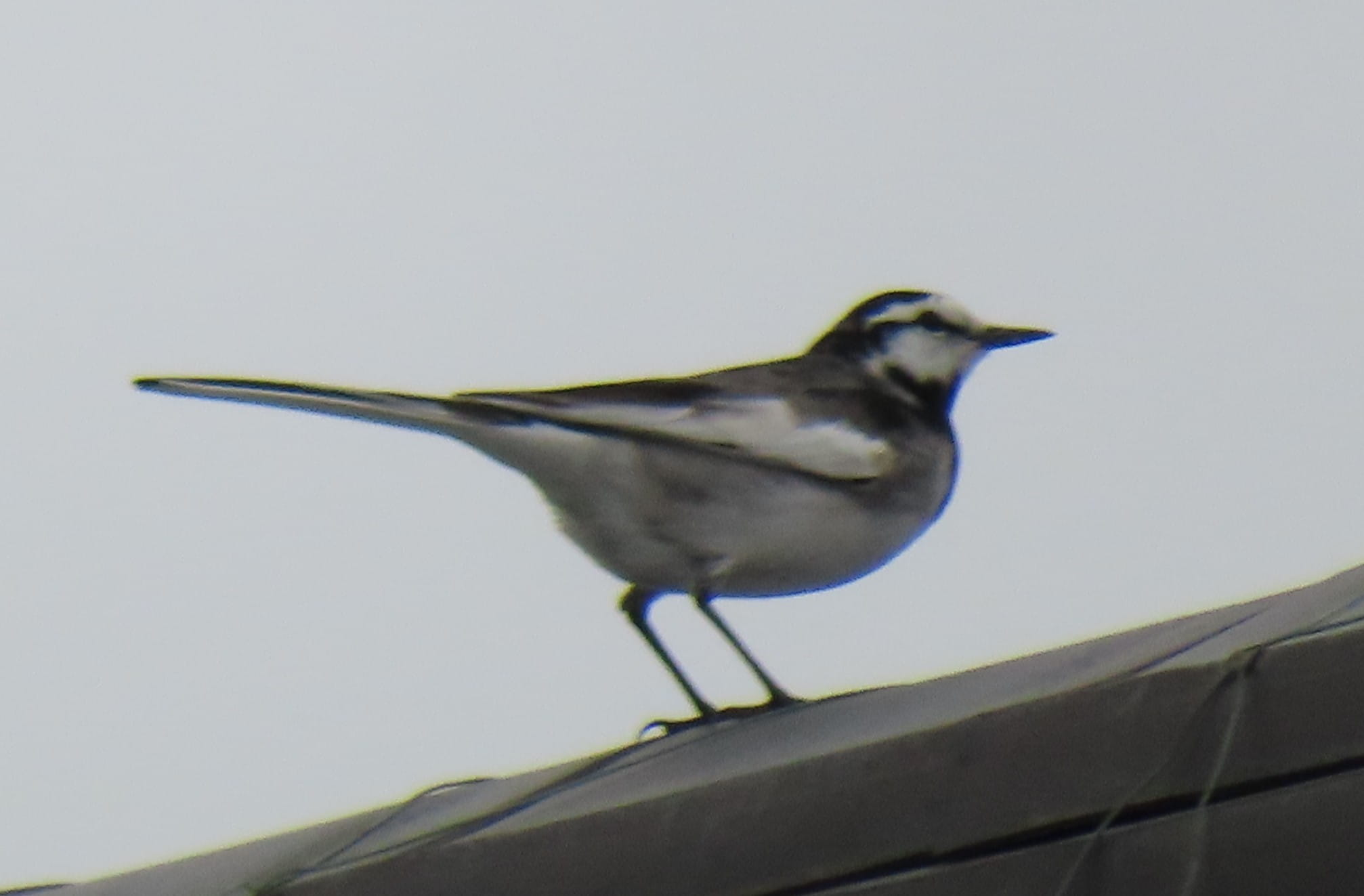
Afterwards, we stopped by the Noh Theater next to the castle. There were stone walls with flowing water outside the theater. Several White-cheeked Starlings were frolicking near the water. I also saw a Japanese Wagtail.
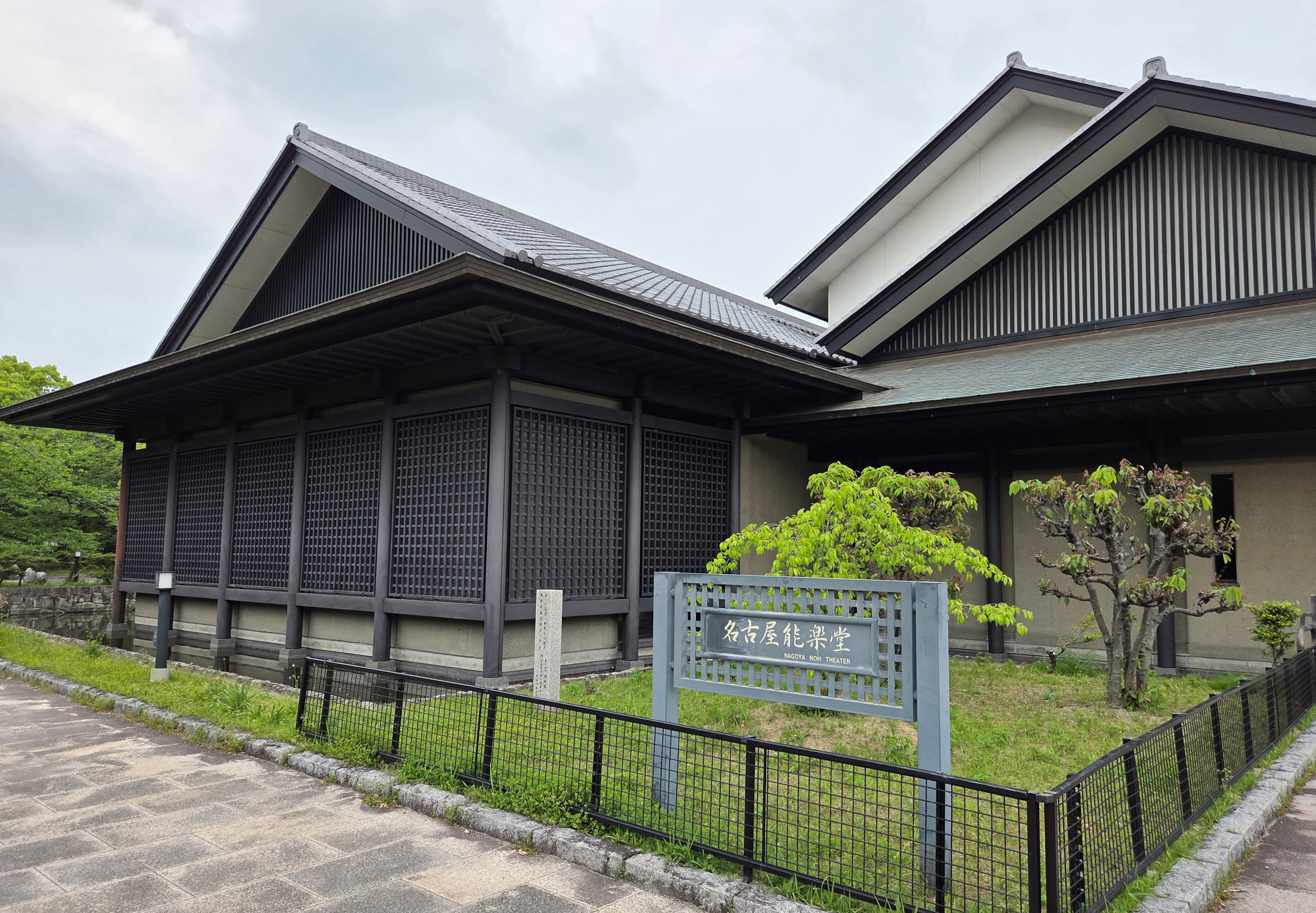
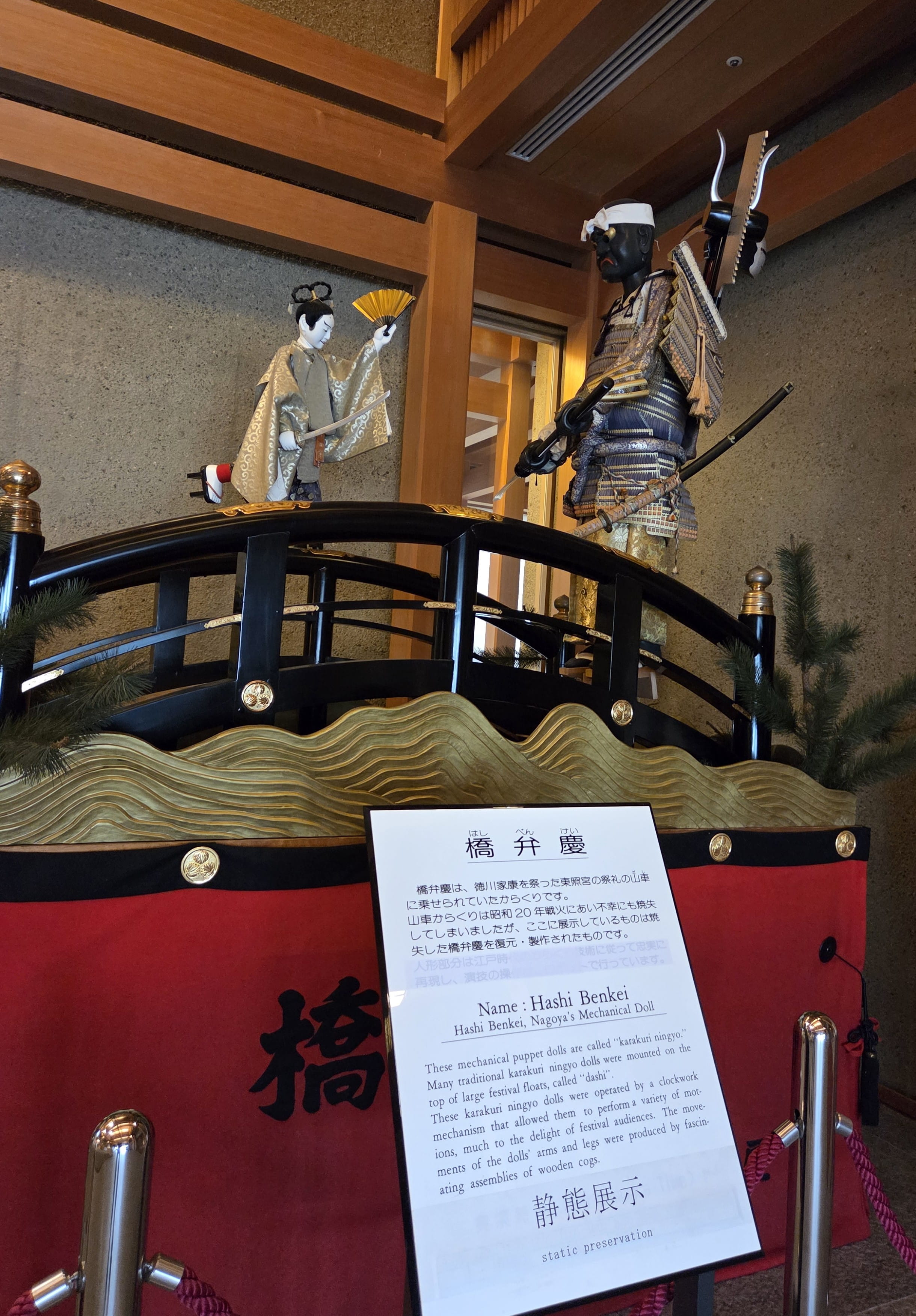
The theater had a good collection of Noh masks and costumes. We were not familiar with Noh, but the masks looked scary. Photographs were not allowed inside the exhibition (but it’s okay at the entrance hall).
On our way back to the hotel, we stopped by a ramen shop to have dinner. In addition to order the food items, we were also asked to specify how we liked our ramen cooked and how salty or spicy the soup should be — it’s kind of complicated!
Then, we returned to the hotel to take a shower and to rest.
Day 2: Nagoya (名古屋)
We got up very early this morning due to jet lag. Our hotel didn’t serve breakfast, but there’s a shop across the street serving breakfast with reasonable price and it opened early, so we went there to have breakfast. Rei ordered a Japanese styled breakfast, and I ordered a breakfast with egg, toast and salad. The food and coffee tasted good.
We would spend the entire day in Nagoya, but I had to go to JR train station to retrieve the train tickets I bought online. It took us a while to find out that we needed to retrieve tickets from a “blue machine” at the train station. After that, I received the tickets without issues. If you purchased the tickets online using a credit card, remember to bring the card with you because you would need to insert the same card. You also needed to enter the 4-digit code you selected previously while purchasing the tickets.
Today was Saturday, and we were able to purchase all-day subway tickets with a discount (620 yen per adult). Nagoya had a famous Toyota Museum, but Rei said he’s not interested. So, we decided to go to Atsuta Jingo (熱田神宮), a famous shrine, first. There was no direct subway train to the shrine, and we would have to transfer. I already figured out what trains we needed to take, but we ended up following Rei’s creative suggestion that took longer to get there!
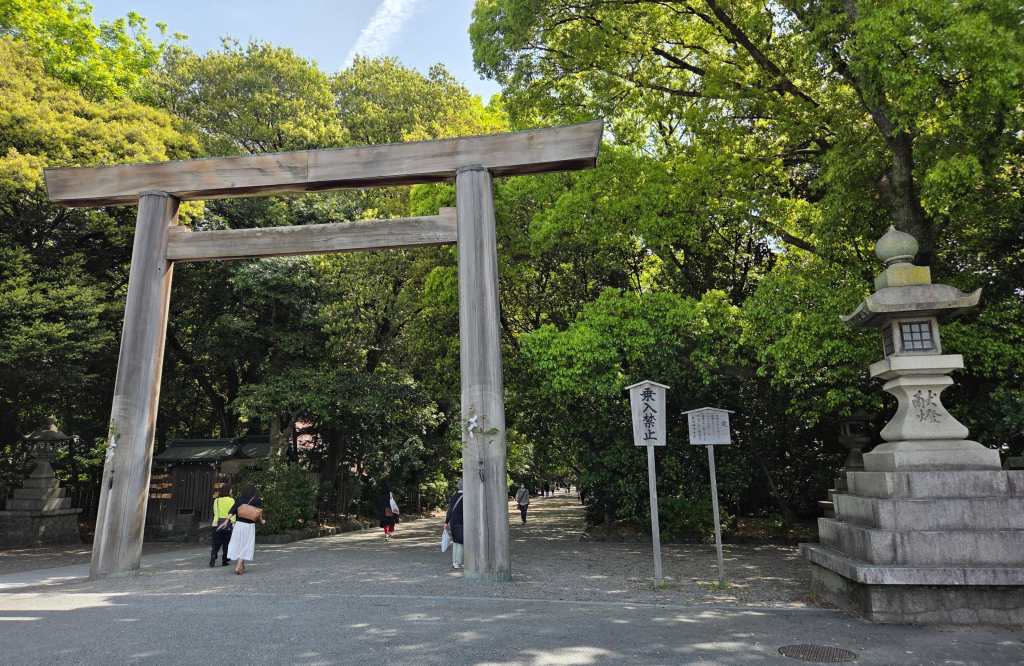
From the subway station, it was a short walk to Atsuta Jingo. Many people were walking toward the place, so we simply followed the crowd. The entrance to the shrine was a plain but majestic torii gate.
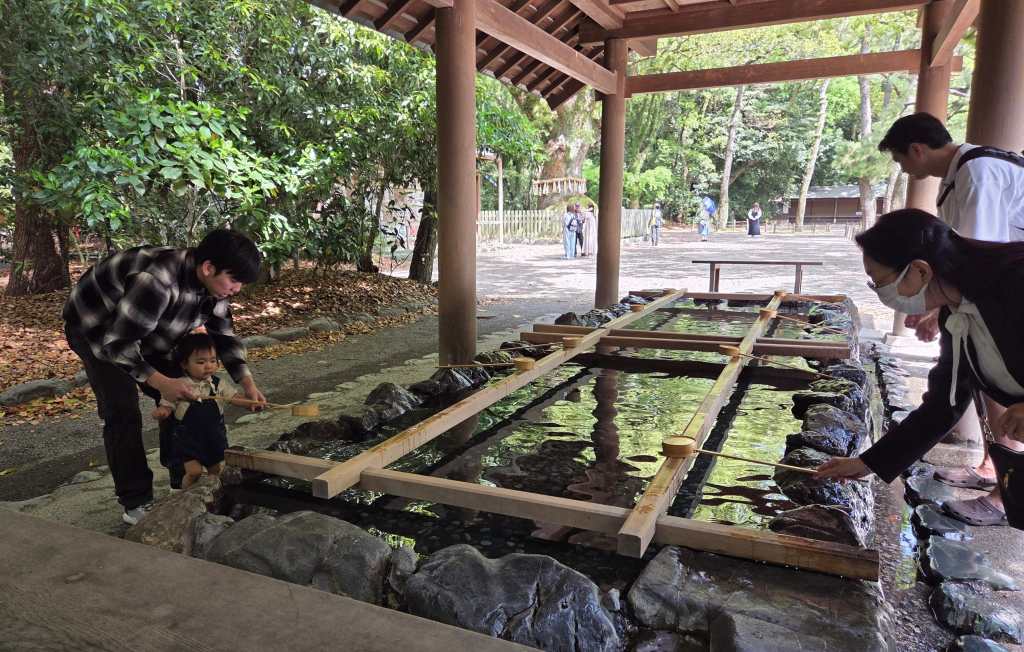
Just like many holy places, visitors to Atsuta Jingo needed to wash their hands at an ablution fountain first.
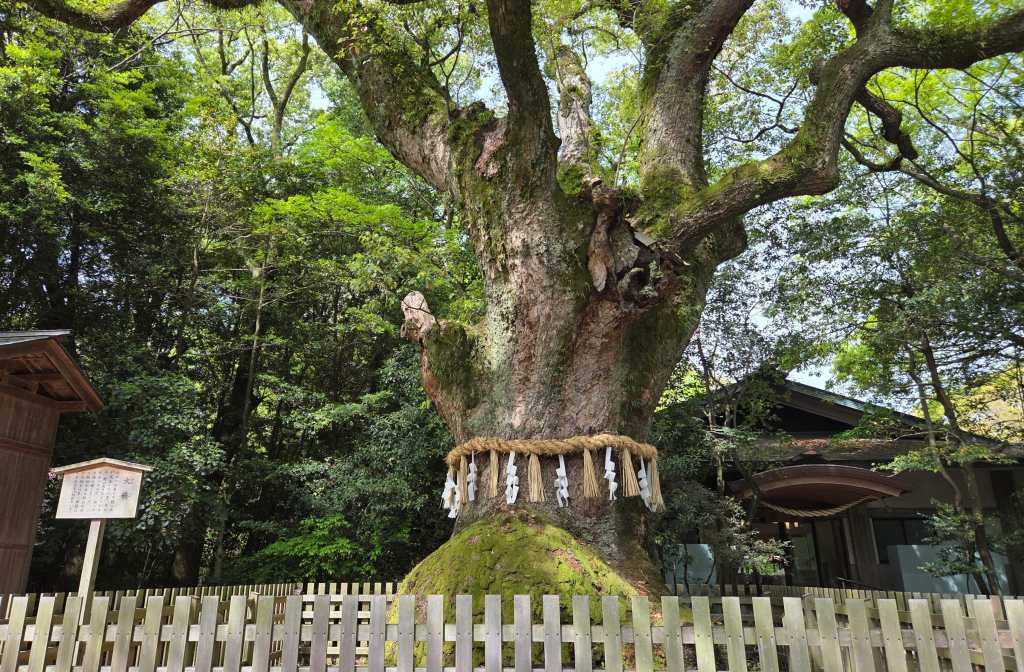
Near the ablution fountain, there was a wall of Japanese wine containers and an ancient sacred tree.
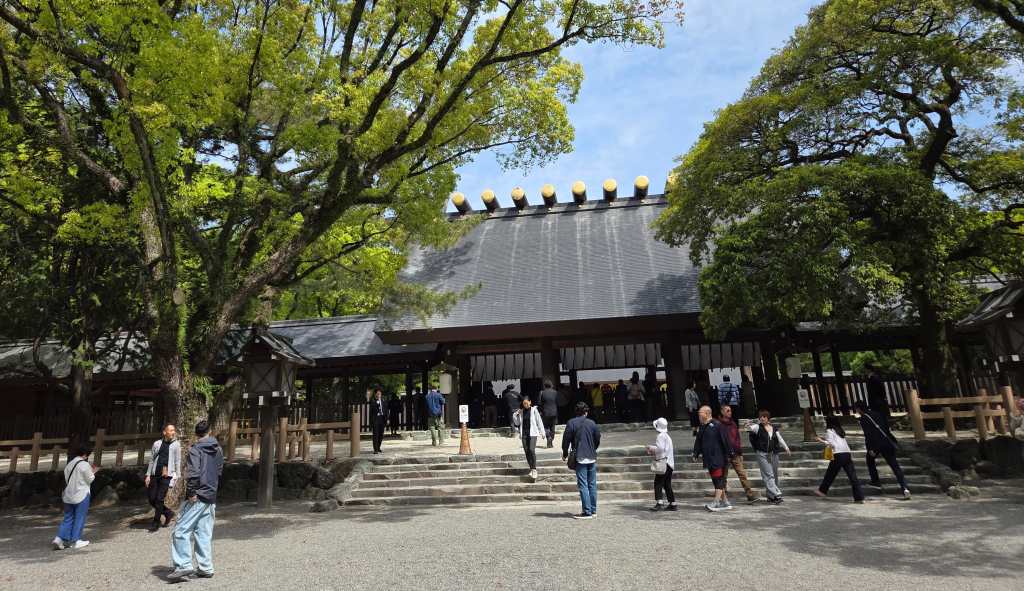
Then we went to pray at the Main Sanctuary. We saw that visitors all clapped their hands twice after praying. We didn’t know why, but we followed suit. (More on the proper way of praying later…)
There was a long line at a water fountain. We didn’t want to wait in line, but we joined the line after we found out that it was for people having eye problems (Rei had an eye issue.) One needed to first make a coin donation, wash the hands, and then splash the water 3 times at a stone situated at the middle of the fountain. Rei splashed the water multiple times all over the walls of the fountain and made quite a scene! Haha! (Sorry, no photos allowed there.)
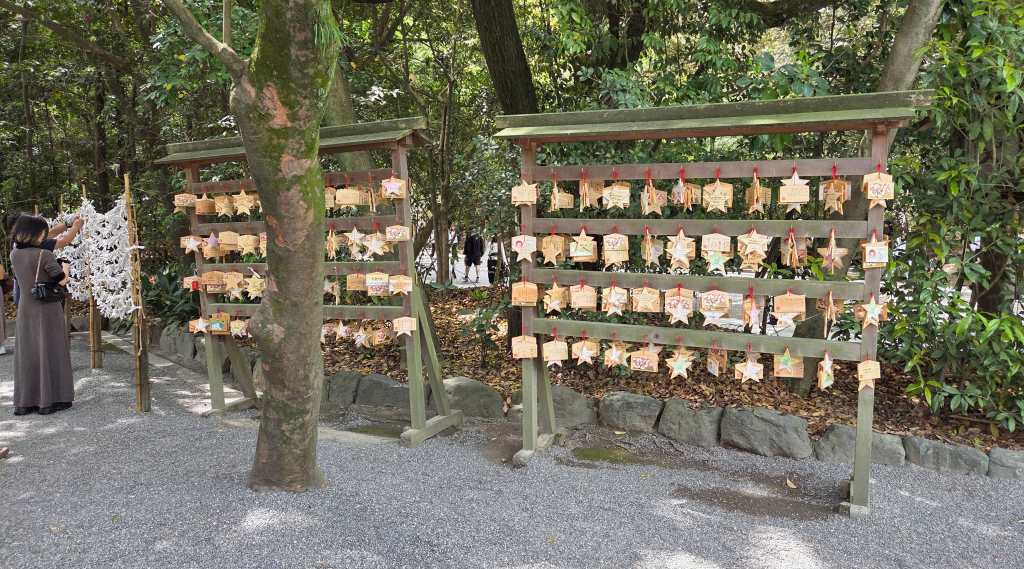
We were clueless regarding the purpose of this shrine. Rei googled to find out that it’s a “multi-purpose” shrine for health, safety, academic achievement, good luck, etc. Visitors could write down a wish on a piece of paper, make a donation, and then tie the paper on a “wishing wall.” We didn’t do that though.
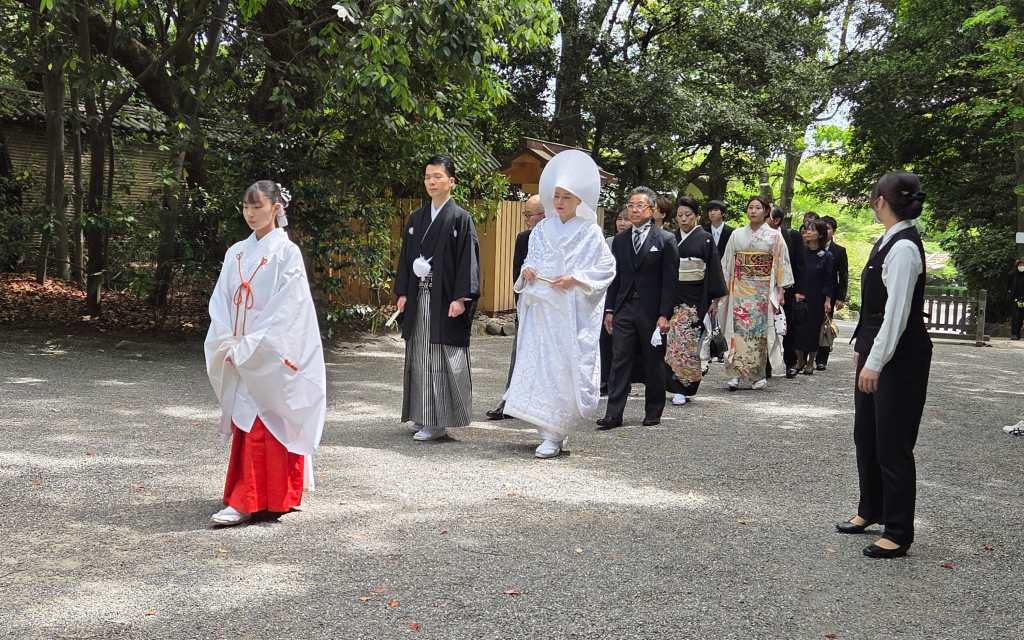
People could also get married at the shrine, and there was indeed a wedding procession going on with a priestess leading the groom, the bride and their relatives. We all took photos of the procession. It’s quite interesting.
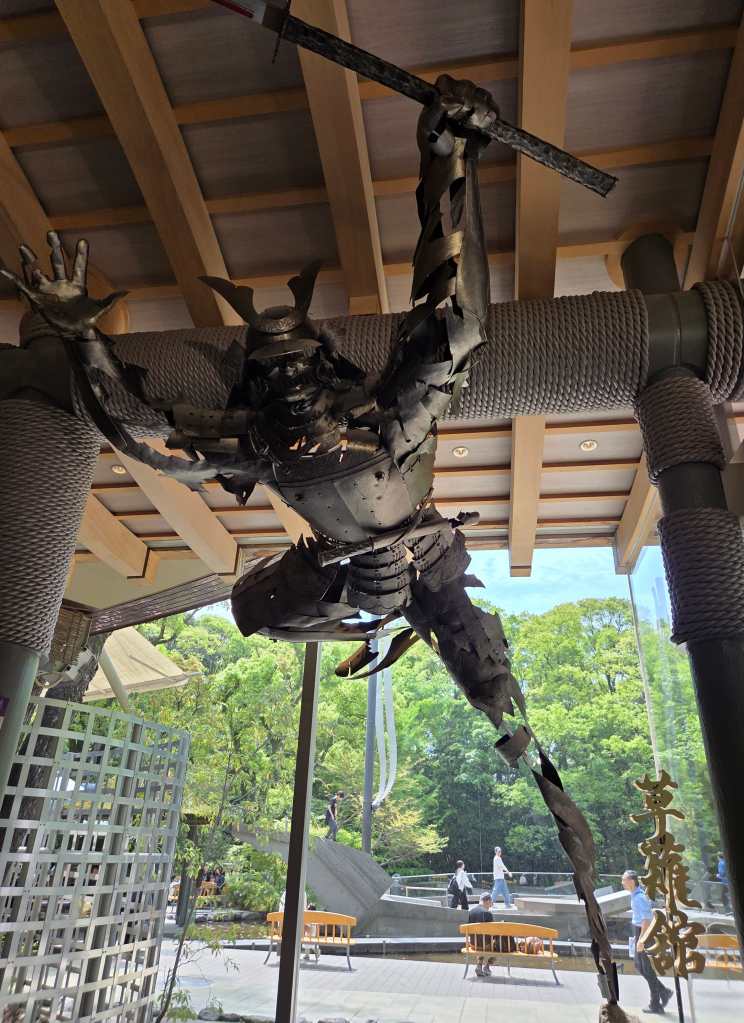
Atsuta Jingo also had a treasure hall and a sword museum (500 yen each, or a combined ticket for 800 yen). Rei wanted to visit both places, so we purchased the combined tickets. It turned out that both places only had information in Japanese and no photos were allowed inside! However, at the end of the sword museum visit, there’s a room for us to try to lift swords, and photos were allowed there. Rei managed to lift both long swords, and I took photos. Yours truly couldn’t lift either of the long swords!
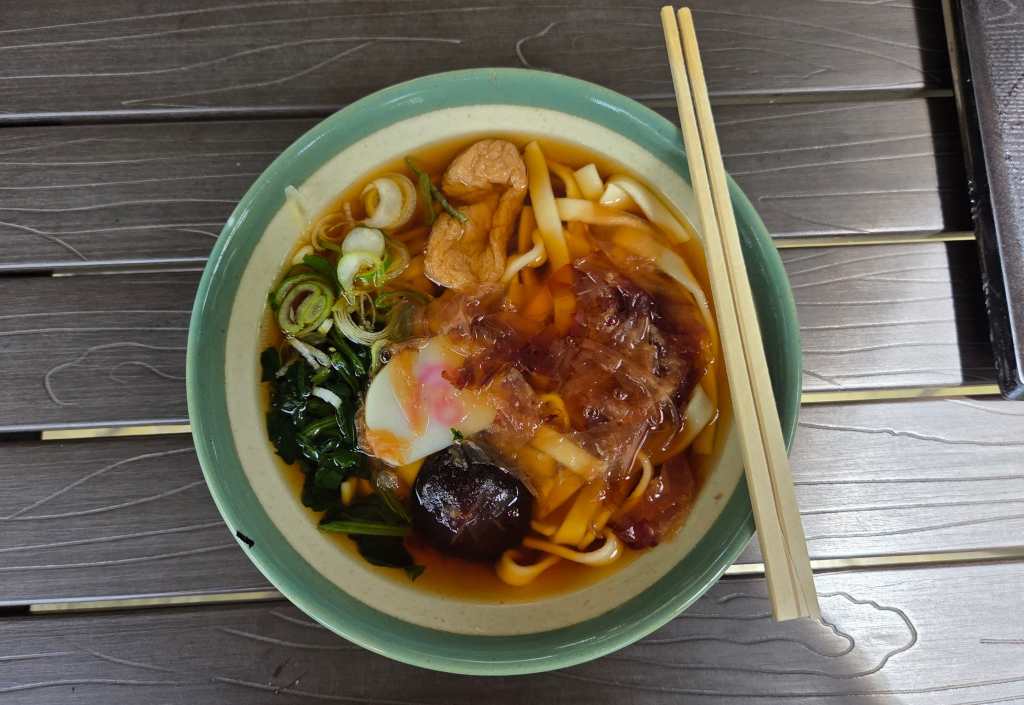
Rei never researched “must sees” beforehand for the places we were visiting, but he would research “must eats,” and he found out that the noodle restaurant at the shrine was among the “must eats,” so we had our lunch there. The noodle soup was indeed very delicious!
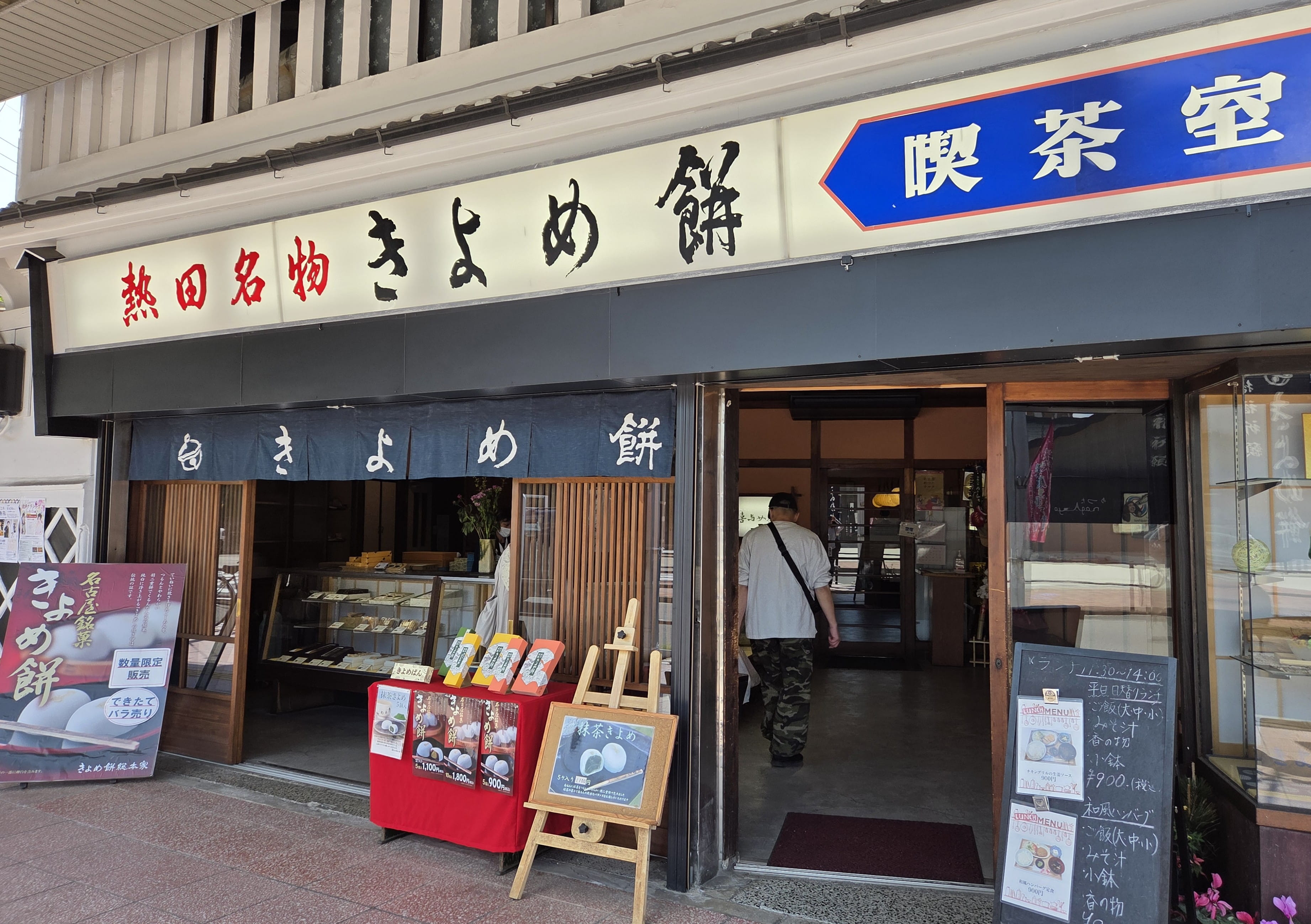
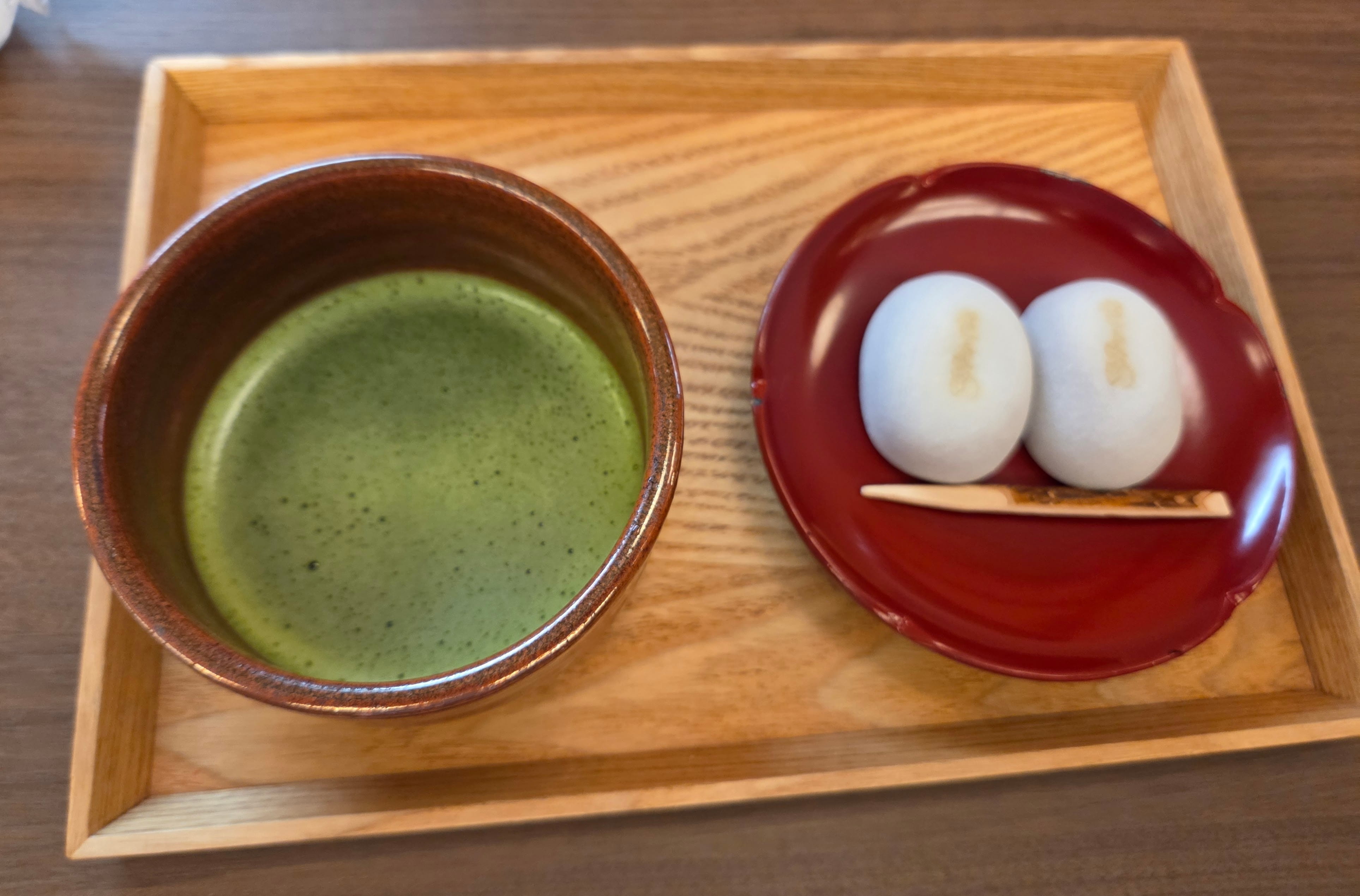
A dessert shop near the shrine was another “must eat,” so we walked there after the shrine visit. We had matcha and mochi desserts with red beans and chestnuts inside. We enjoyed the dessert and the tea very much too. There were a lot of very tempting sweet desserts and ice cream every place we went in Japan. Blood sugar be damned!
The second destination of the day was the Tokugawa Garden and Art Museum. The place belonged to the Tokugawa family. Generations of Tokugawa shoguns controlled Japan for about 250 years, and the family owned a plethora of treasures. Visitors would be able to view the treasures in their art museum. After we found out that the entrance ticket cost 2,000 yen per person, we decided to forgo the art museum and only go to the garden (240 yen after showing our 1-day subway ticket).
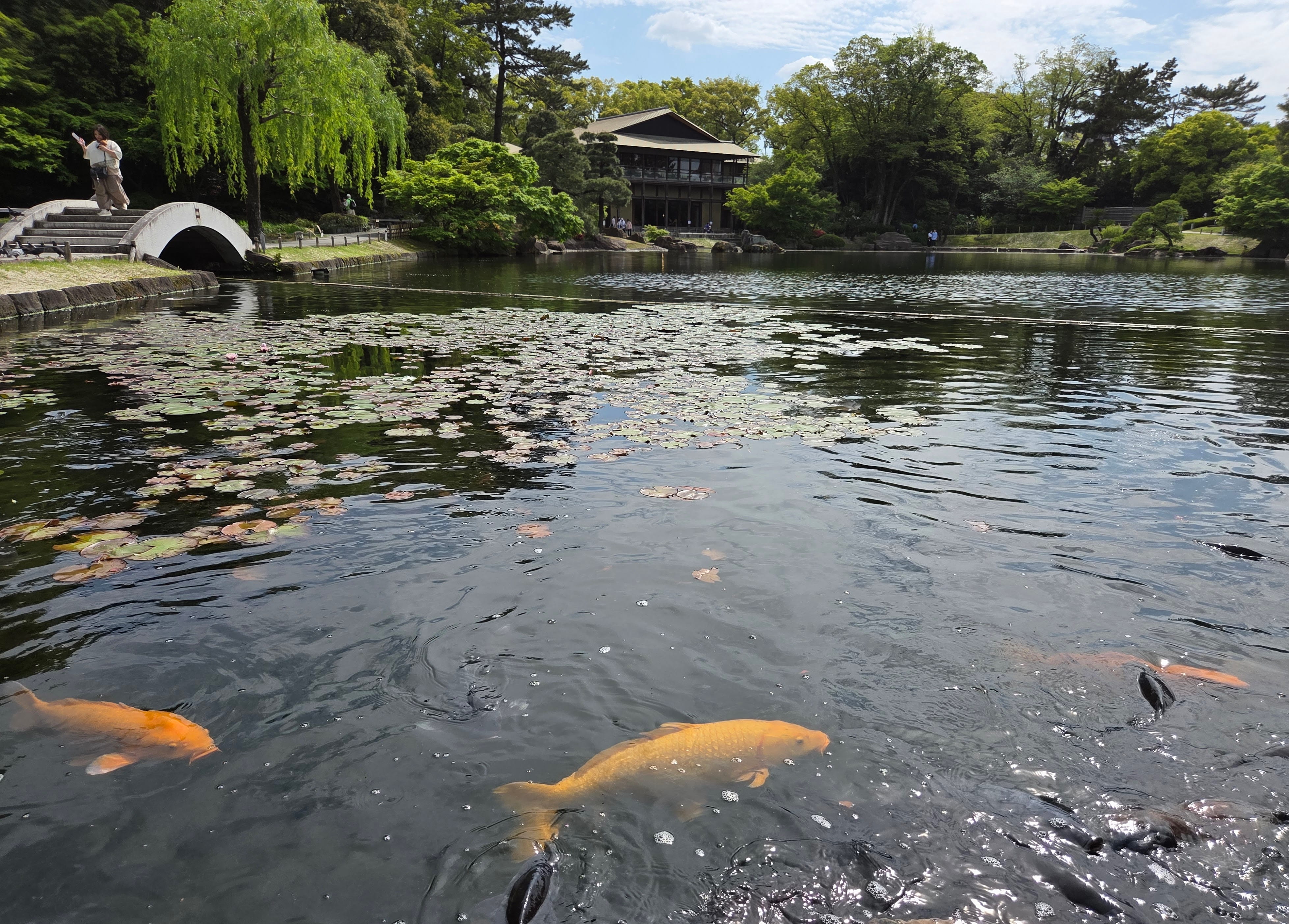
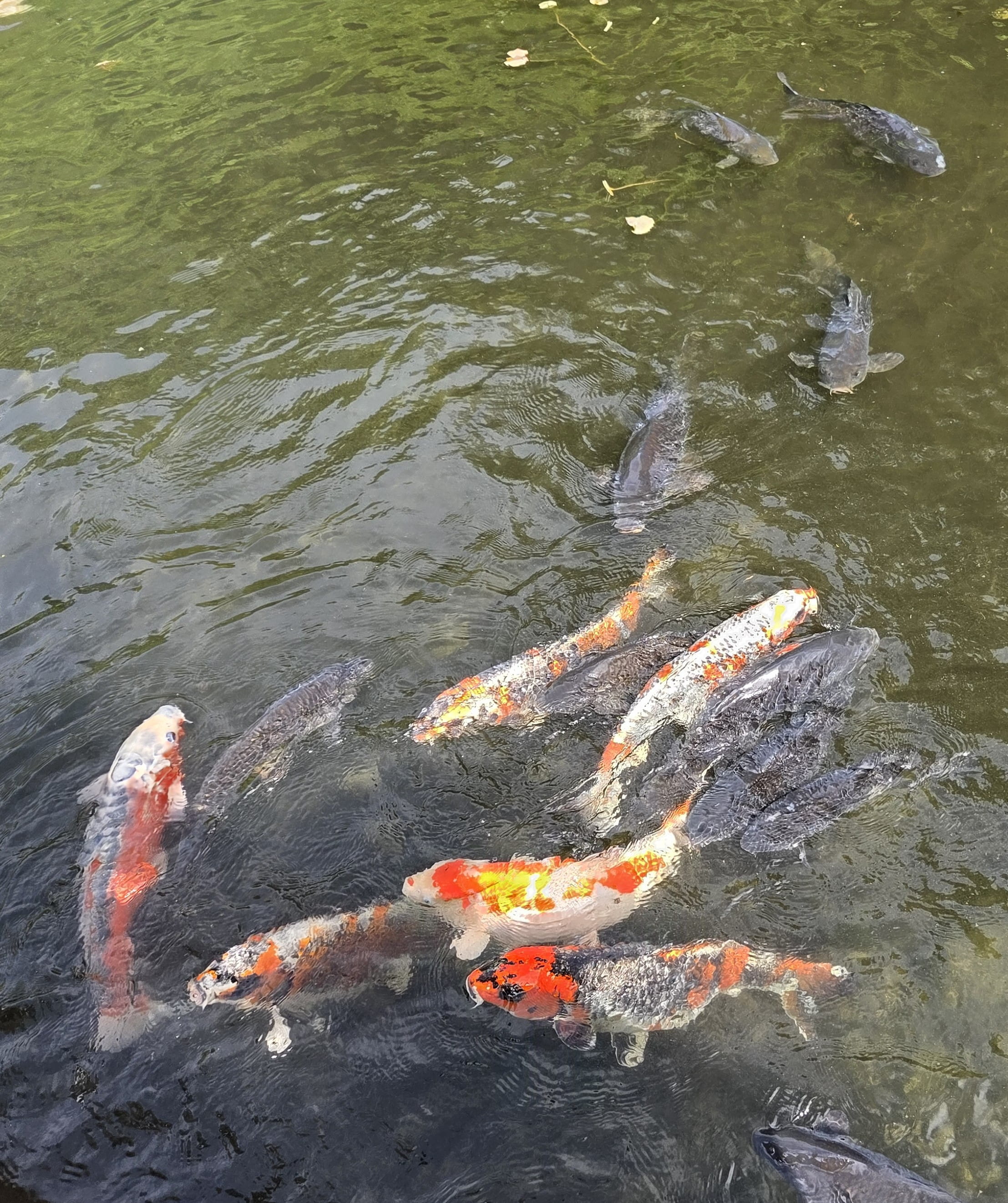
The garden had a large lake/pond with many very fat Koi carps. They were the biggest I had ever seen! There were also some waterfowls in the lake.
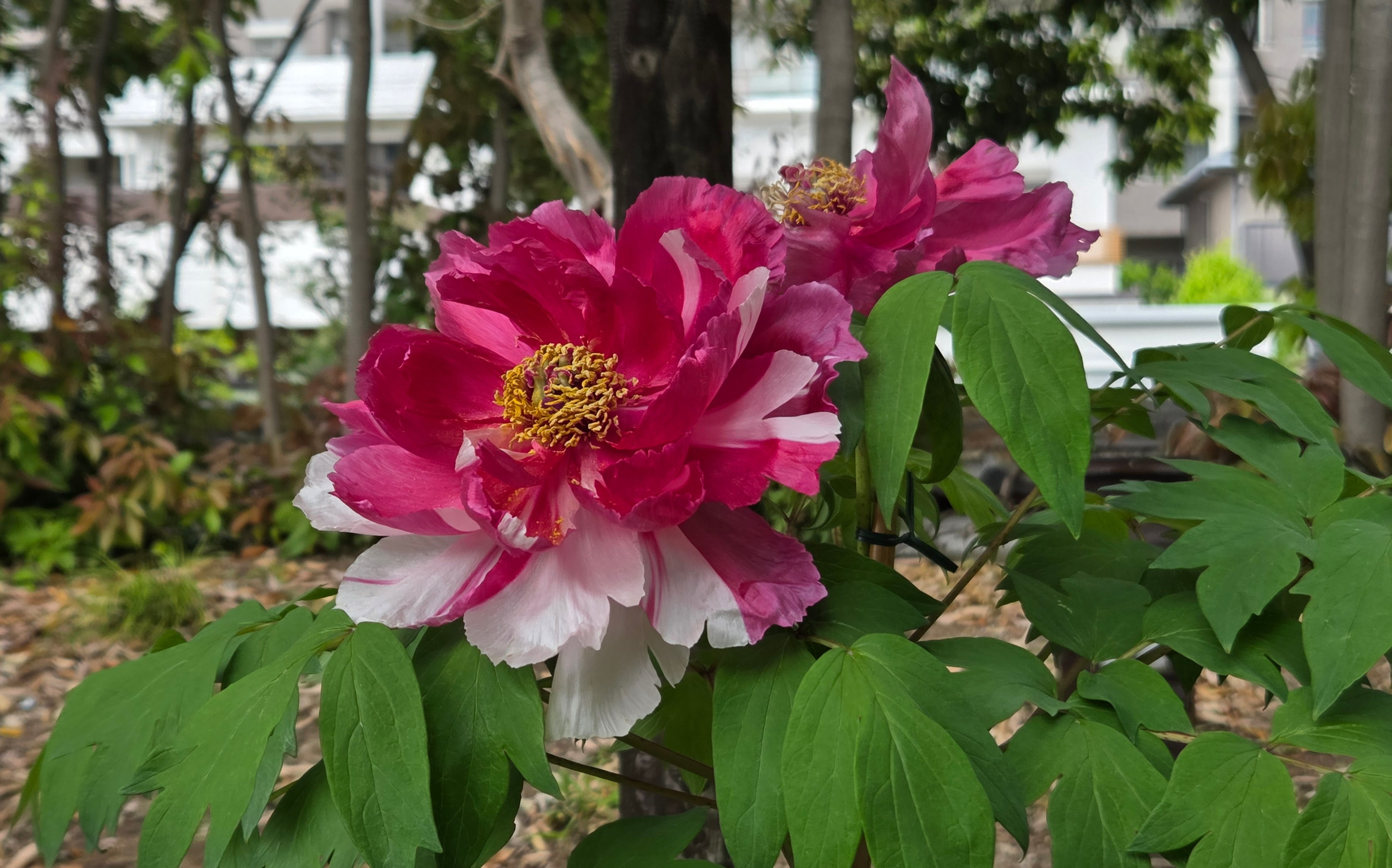
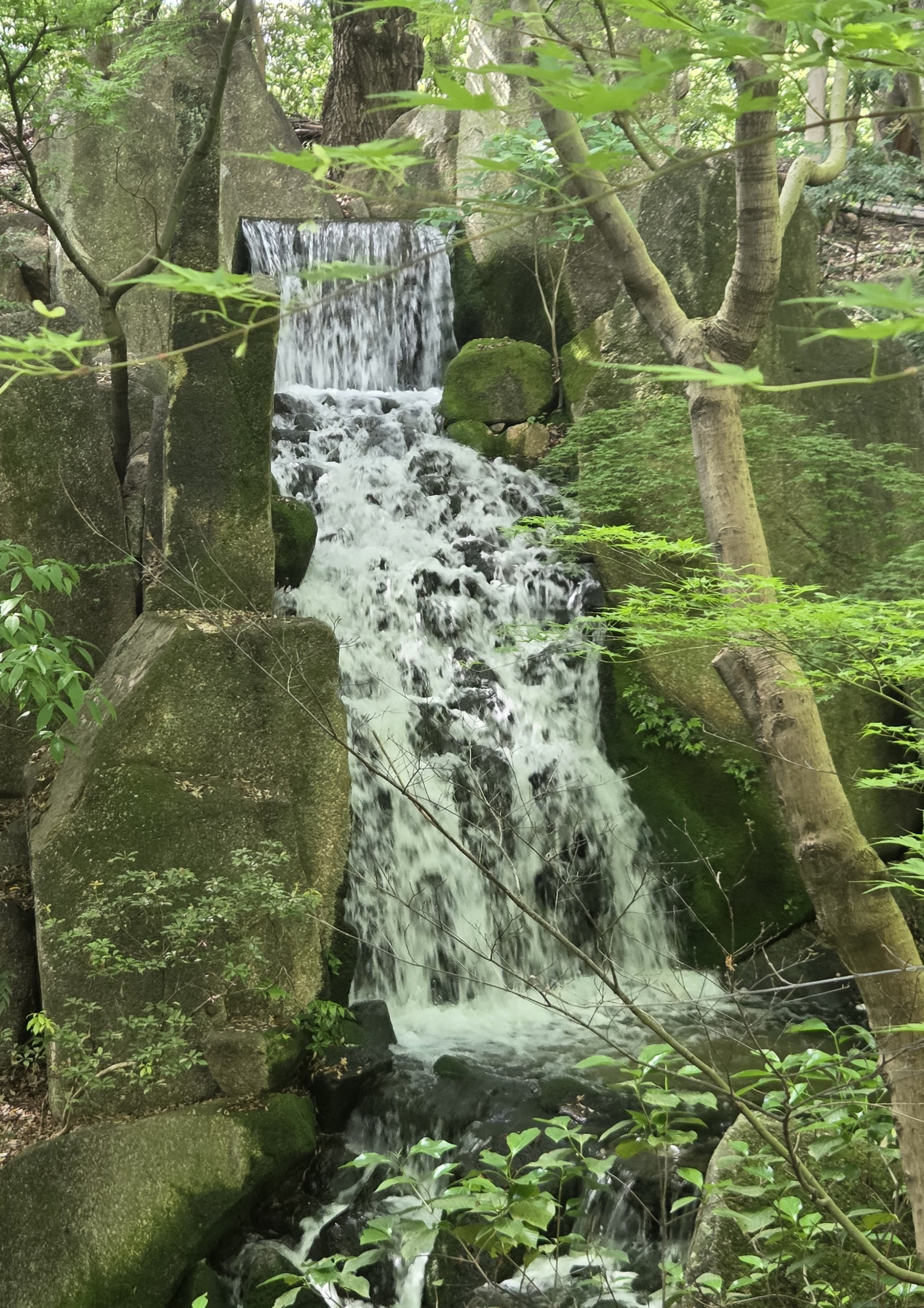
The garden was verdant with a variety of colorful flowers. The peony garden was especially impressive. There was also a waterfall, Ozone no Taki, in the garden.
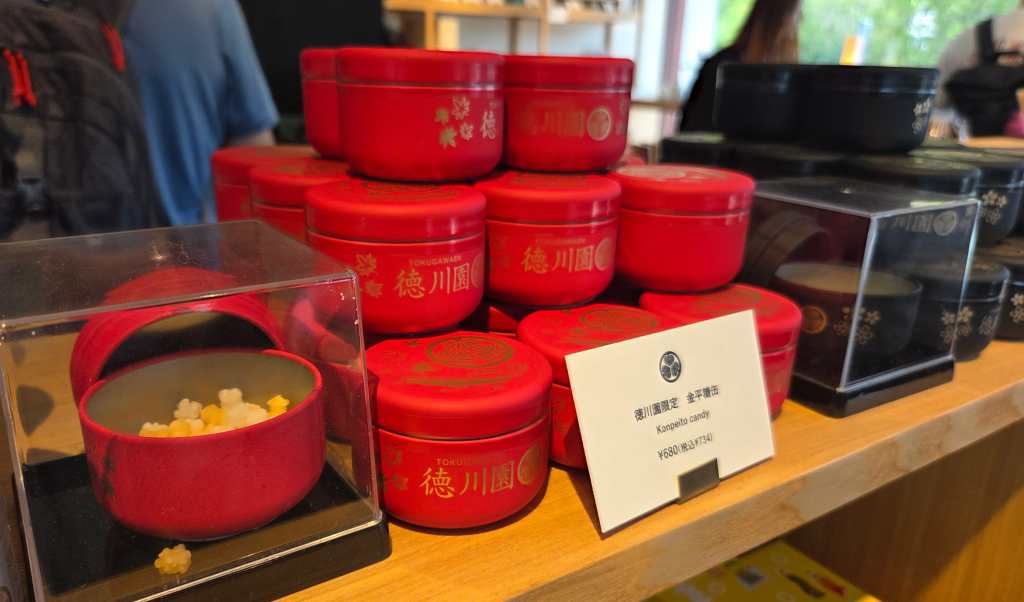
As usual, there’s a gift shop at the exit. We didn’t plan to buy anything. However, upon entering the shop, we found out that they had Konpeito candies in fancy Tokugawa Garden cans. Sister (our daughter) asked us to bring back some Konpeito candies for her, so we bought all 3 varieties they had in the store.
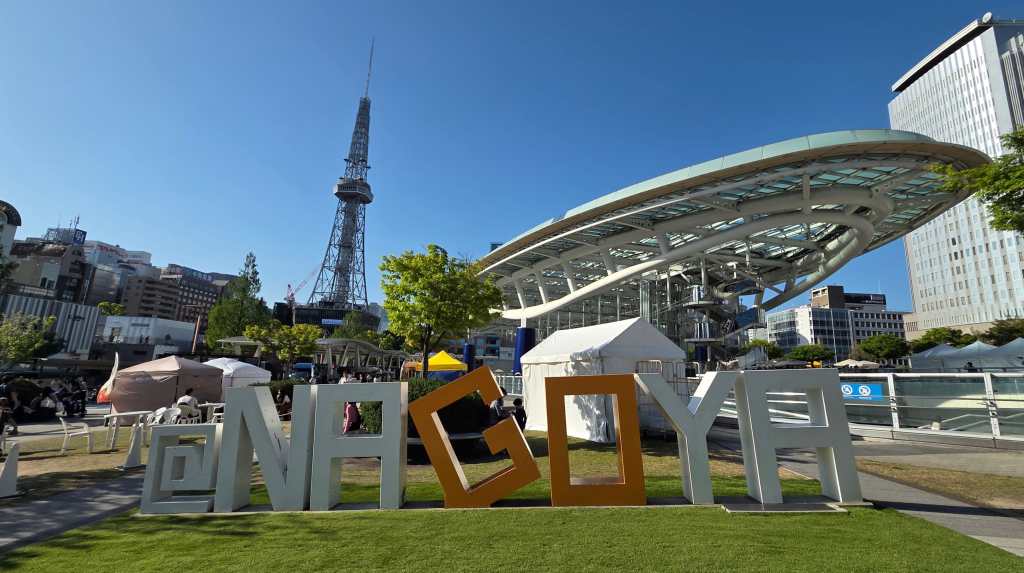
After the garden visit, only Mirai Tower and Oasis 21 remained on the list. We climbed up the Spaceship-Aqua to walk around the walkway. From the walkway, we were able to take amazing photos of the Mirai Tower and the dancing water fountains.
Since it’s weekend, there was a big crowd patronizing the cafes, restaurants and stores in the area. Because we were going on a hiking trip, we couldn’t do any shopping here now.
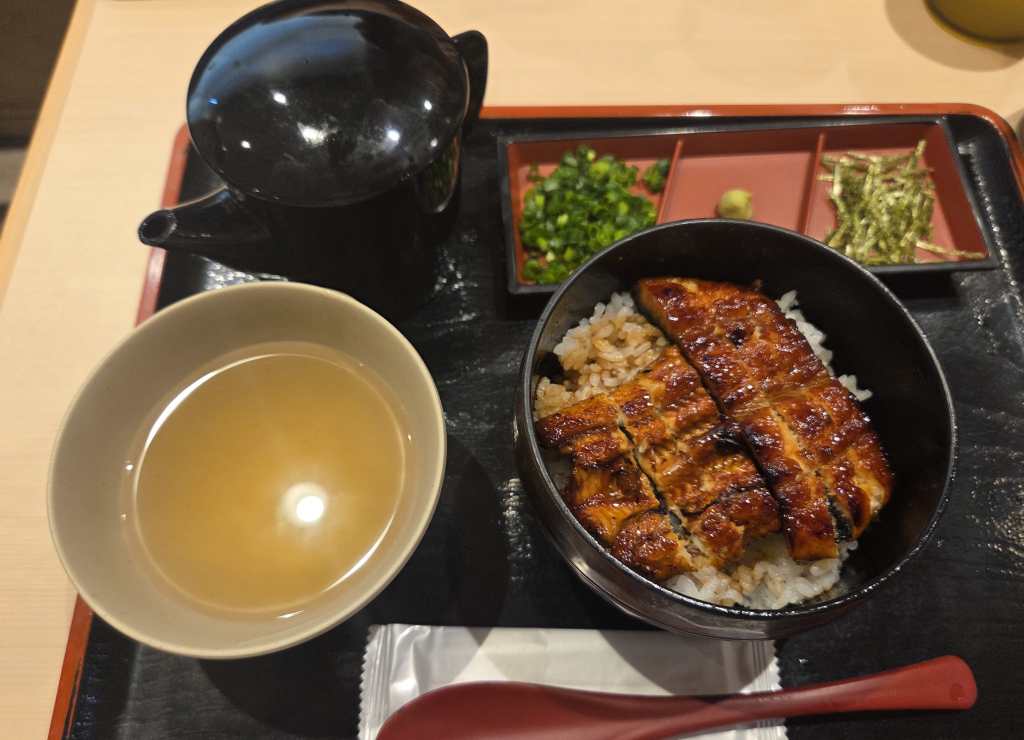
Rei wanted to have eel rice for dinner. It was only shortly past 4pm. Most restaurants wouldn’t open until after 5pm. Then, Rei was able to find a place that’s open and their price was very reasonable. We went there to have dinner before returning to the hotel to take a shower and to pack.
Day 3: To Yuasa (湯浅)
Today we’re taking train rides to Yuasa to start the Kumano Kodo hiking. Due to jet lag, we still got up very early in the morning. We checked out to walk to the Nagoya JR train station shortly after 7am. On the way we saw a group of tourists walking to the station with luggage, so we simply followed them. It turned out that they knew a short route walking on the ground level, unlike the Google instruction Rei followed previously that required going down underground and back again. Even though Rei still thought that Google is always right, I found out that Google isn’t as reliable when travelling outside of the US.
Our first train to Shin-Osaka was at 8:49am, so we still had time for a sit-down breakfast at the train station. For the train rides to Yuasa, we each got 3 tickets: a station ticket, a Shinkansen bullet train ticket from Nagoya to Shin-Osaka, and a limited express train ticket from Shin-Osaka to Yuasa. It was very confusing. We didn’t realize that we needed to insert both the station ticket and the Shinkansen ticket together at the gate in order to enter. We found out only after asking the staff at the station.
The train ride to Shin-Osaka was very comfortable. After we got off the train, we had to walk to a different entrance for the limited express train ride. There were 2 trains leaving at 10:13am. We almost went to the wrong platform, but fortunately I found out the mistake quickly.
There were a lot less passengers on the limited express train. Our friends were on an earlier train and had already arrived at tonight’s lodge in Yuasa. They texted me to let me know that we should pick up Kumano Kodo Kii-ji Route stamp books at the train station visitor information office and asked us to pick up extra copies for them too. Just like El Camino, Kumano Kodo also had several routes. The one around Yuasa was the Kii-ji Route.
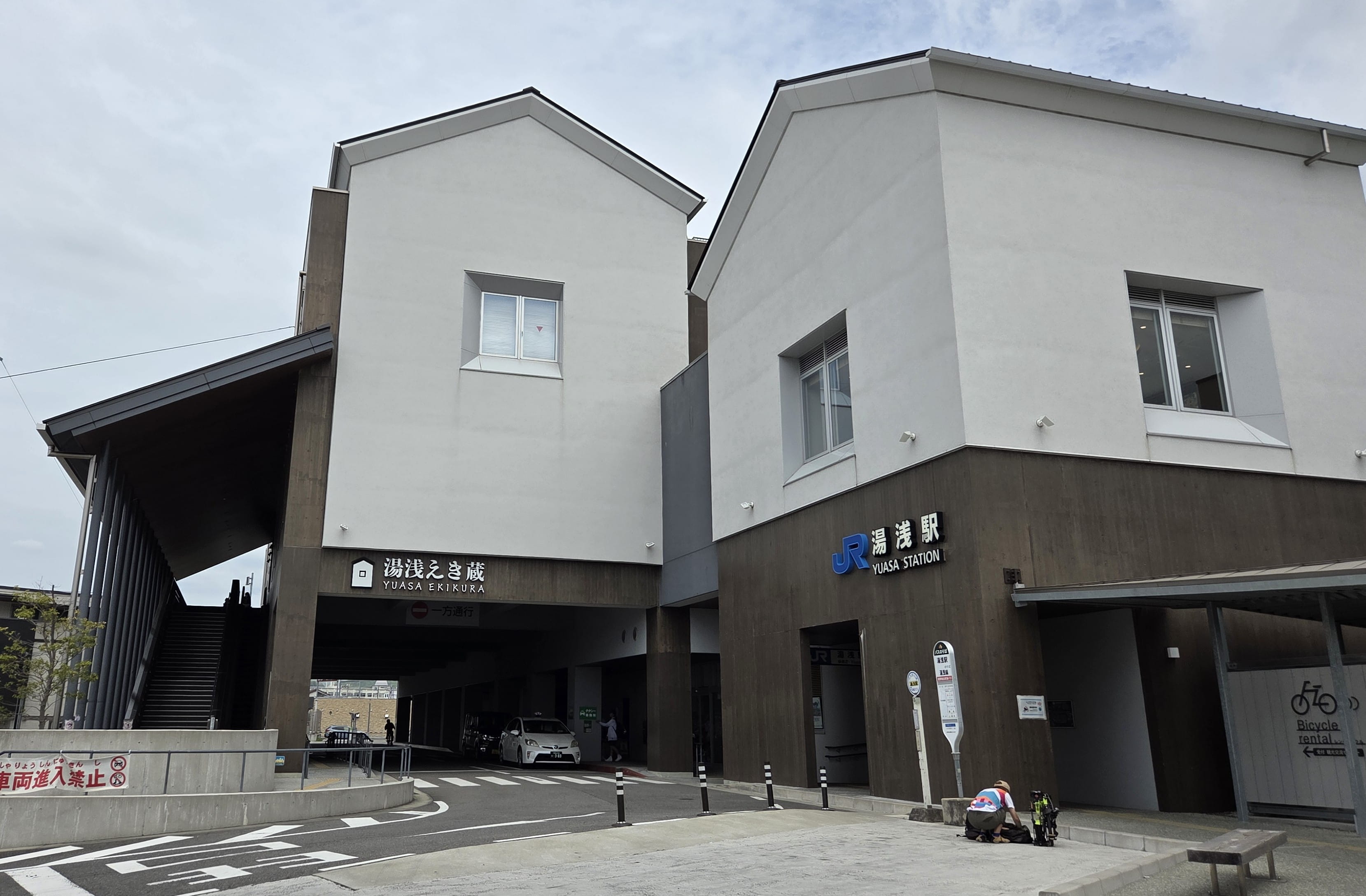
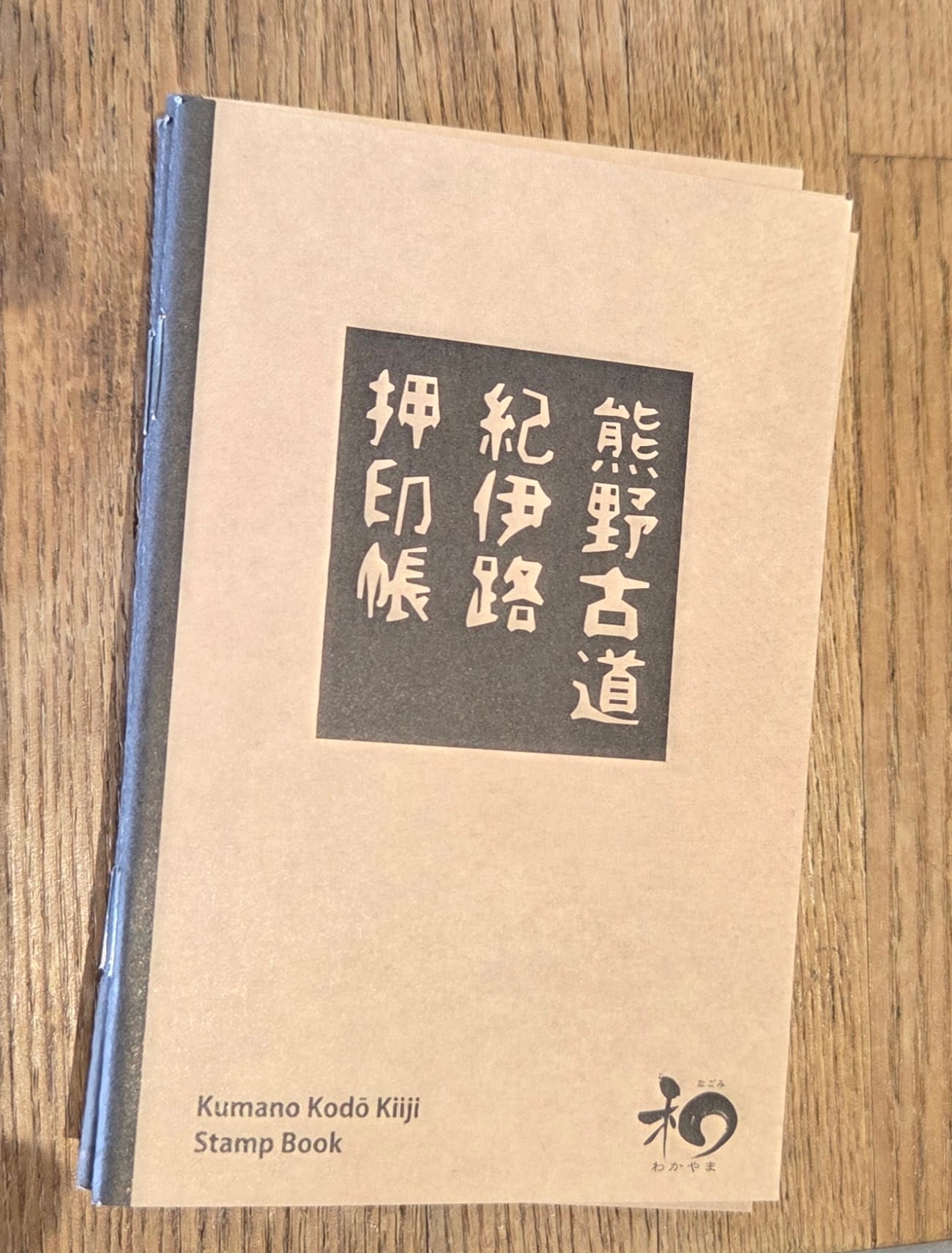
Soon after we left the Yuasa train station with 8 Kumano Kodo Kii-ji Route stamp books, we saw friends walking towards us! After greeting and hugging, I gave them the stamp books so that they could start the hike. Rei and I had to walk to tonight’s lodge to leave our suitcases there first.
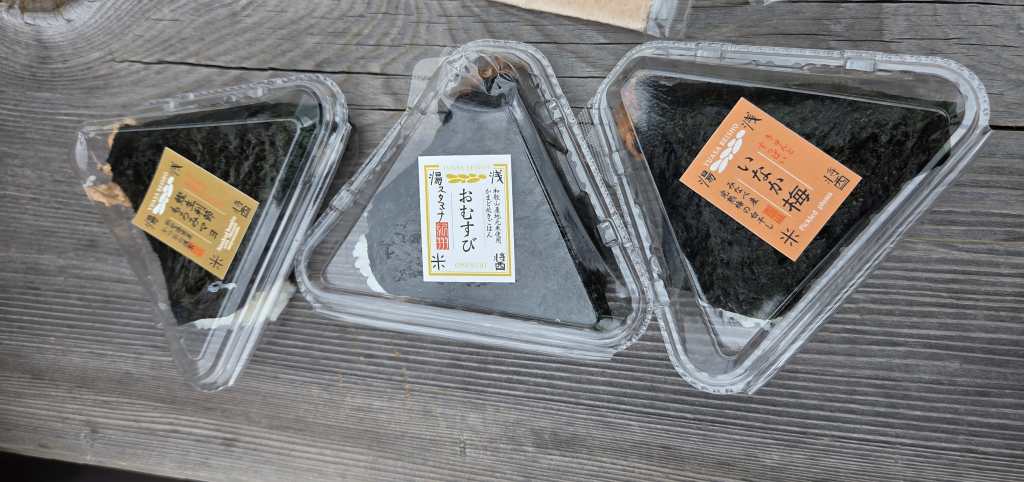
After checking into the hotel and leaving the suitcases, we returned to the train station. It was already past noon and Rei was hungry. There was a cafe by the station selling delicious looking rice triangles, but there was only description in Japanese. We bought 3 rice triangles by random selection. I had a salty prune one, and Rei had a meat one and a fish one. The rice was warm and fresh, so it tasted delicious.
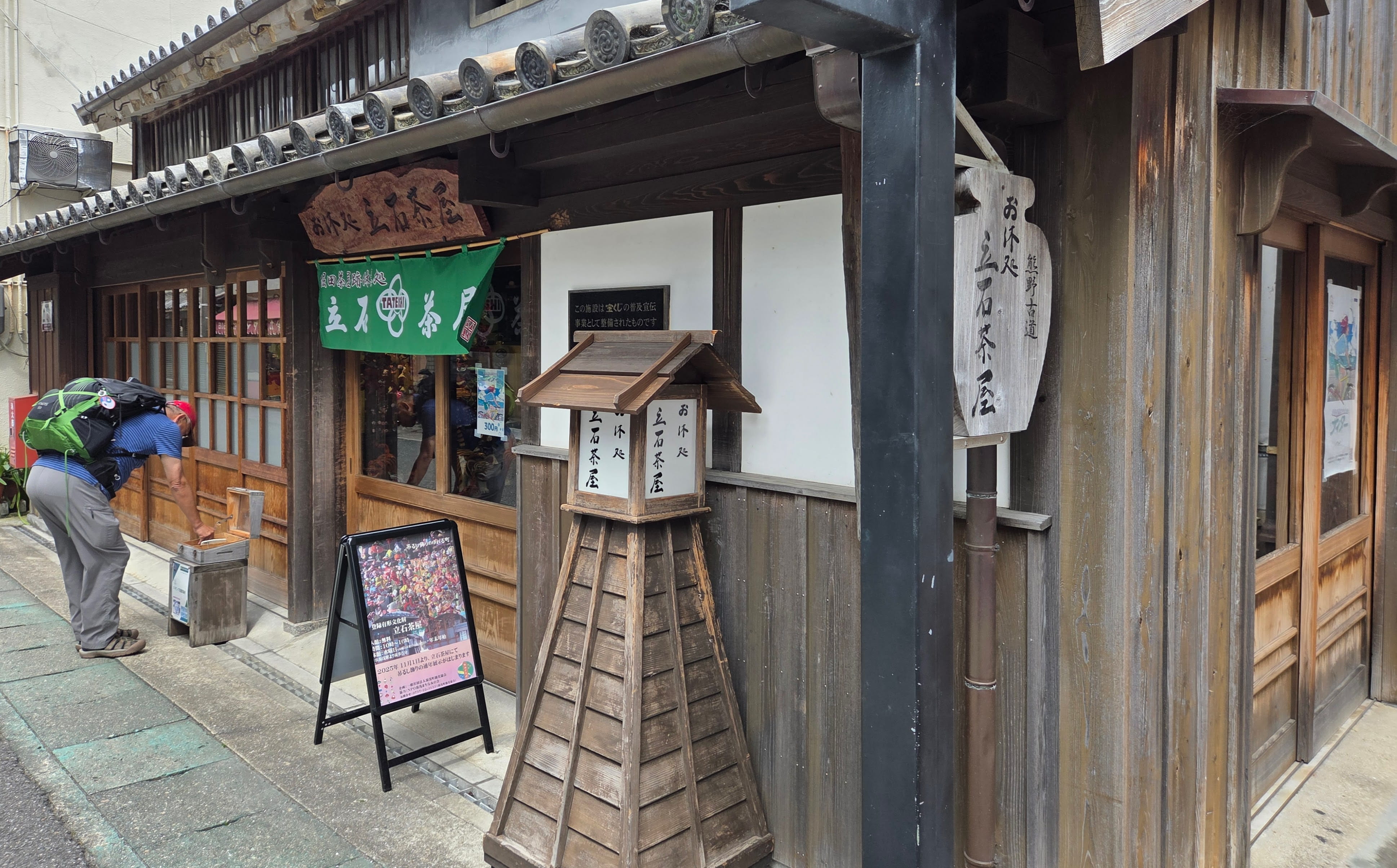
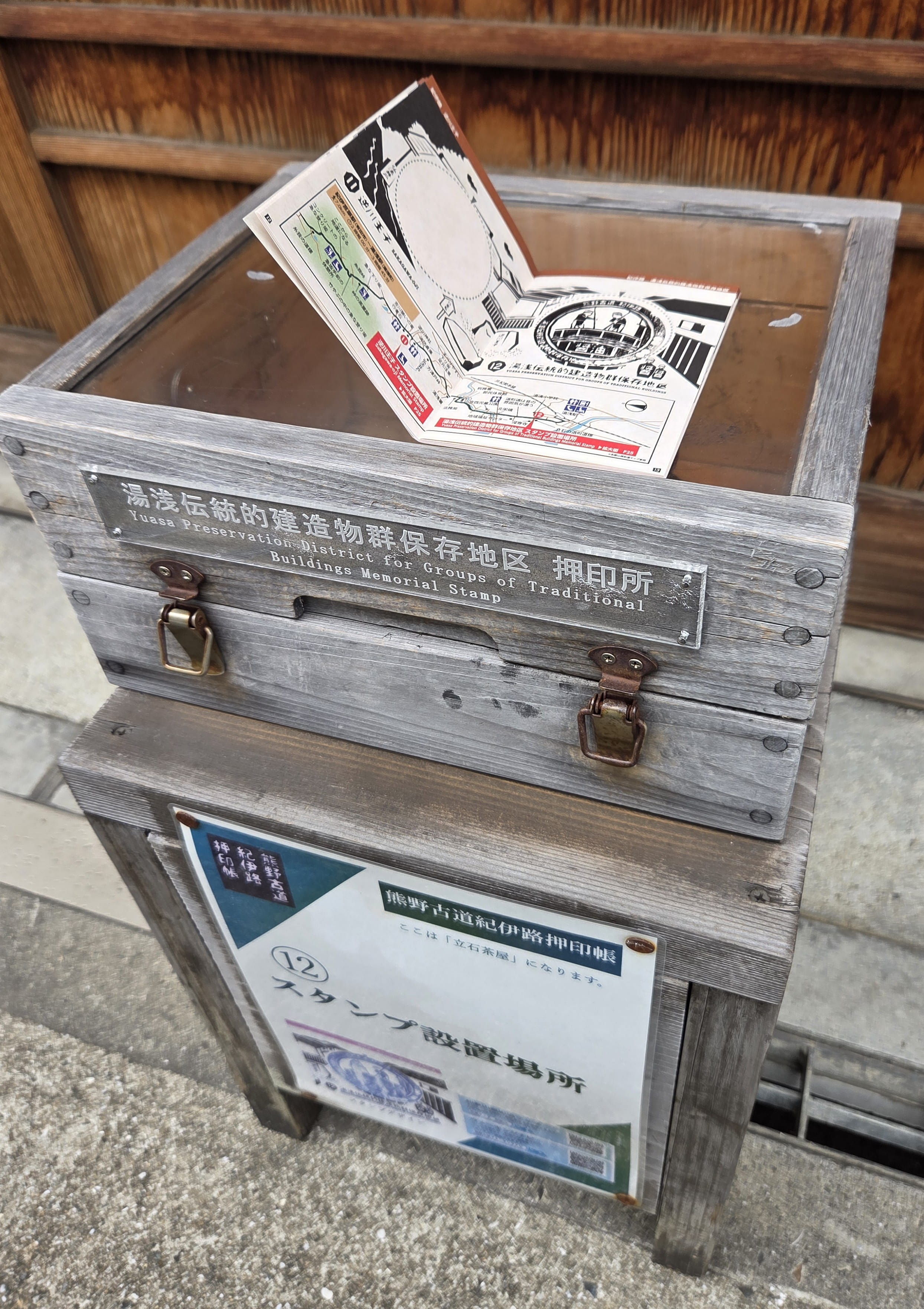
We first walked on a narrow road with traditional buildings. Rei spotted a stamping station (#12), and we had our first stamp.
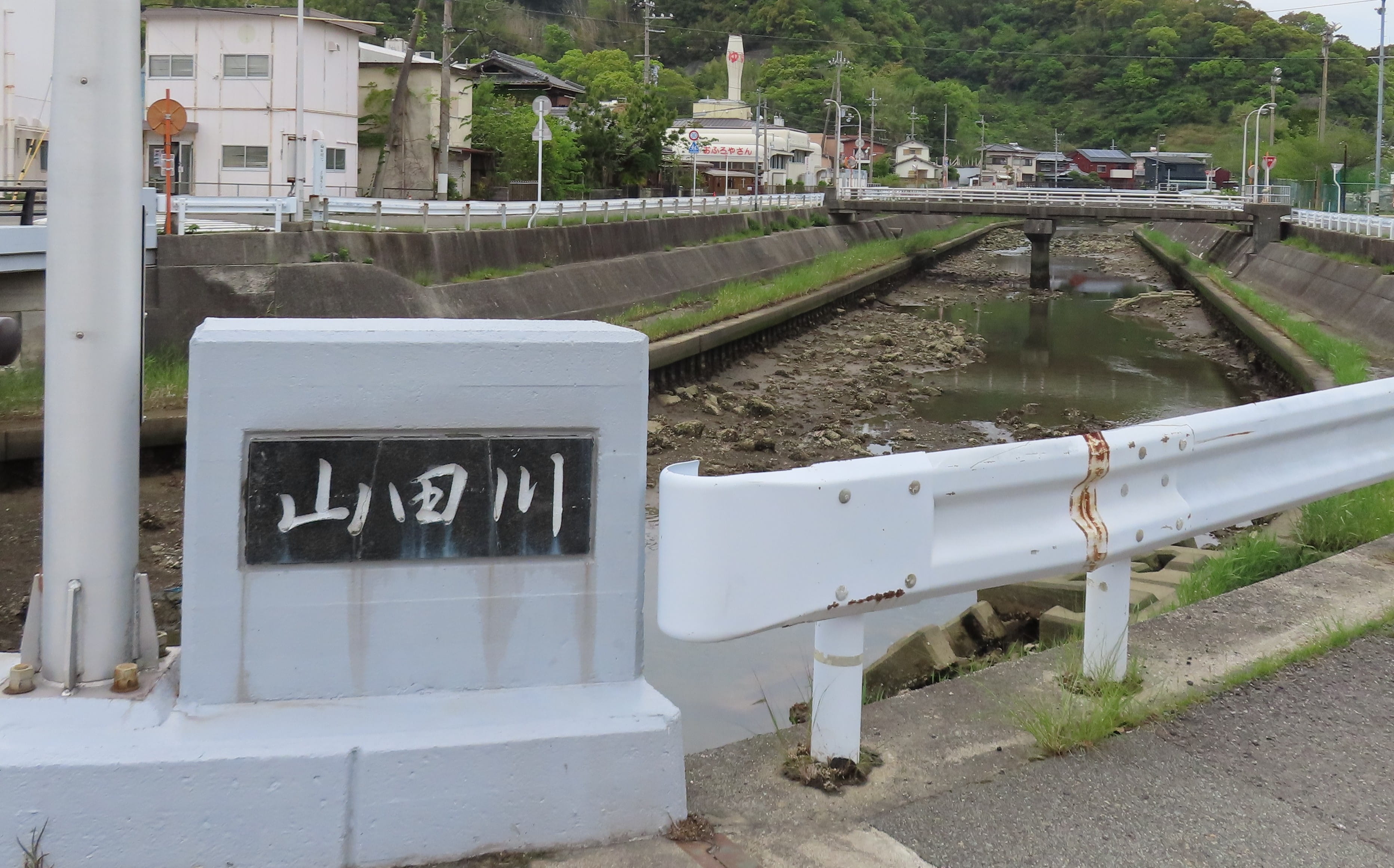
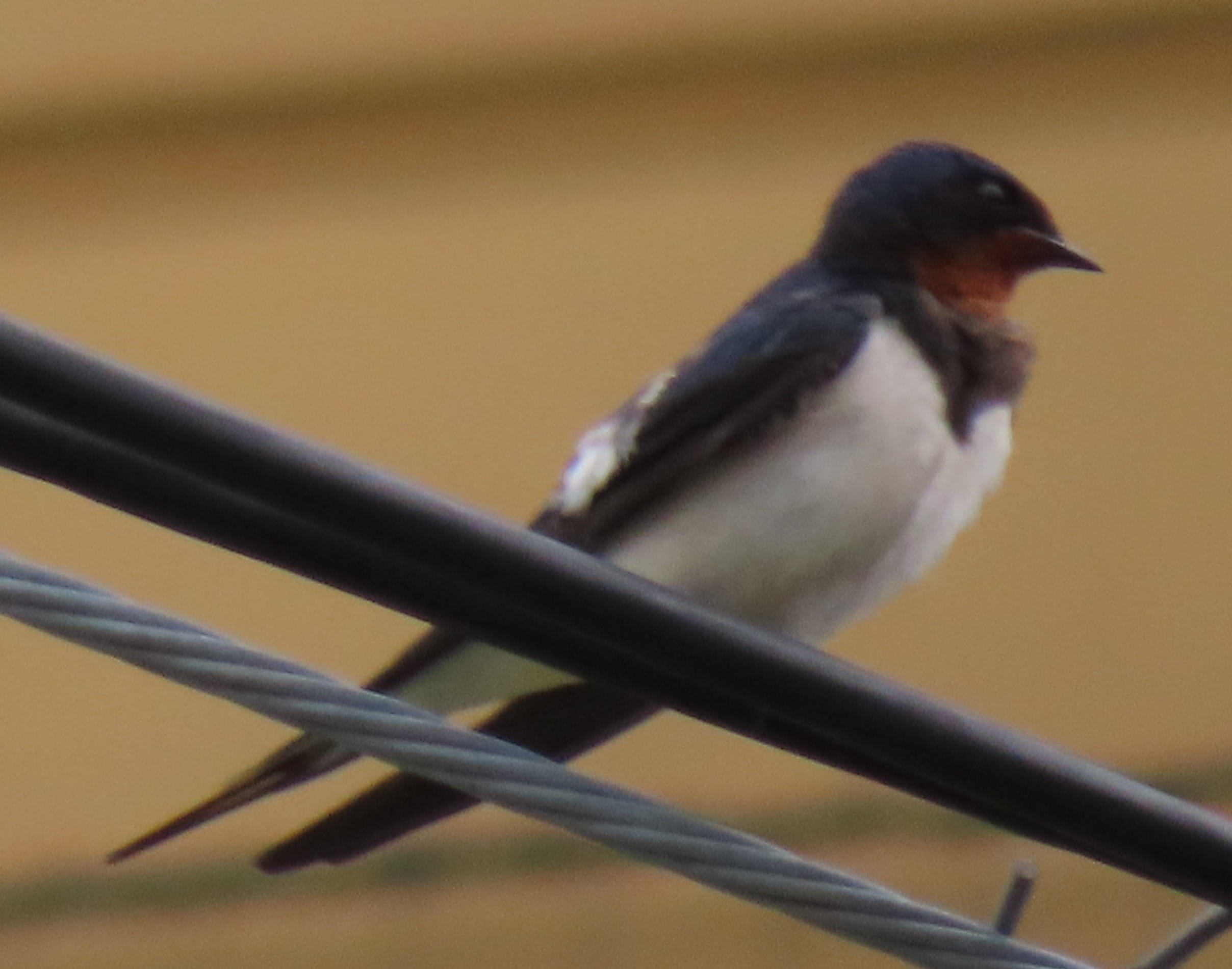
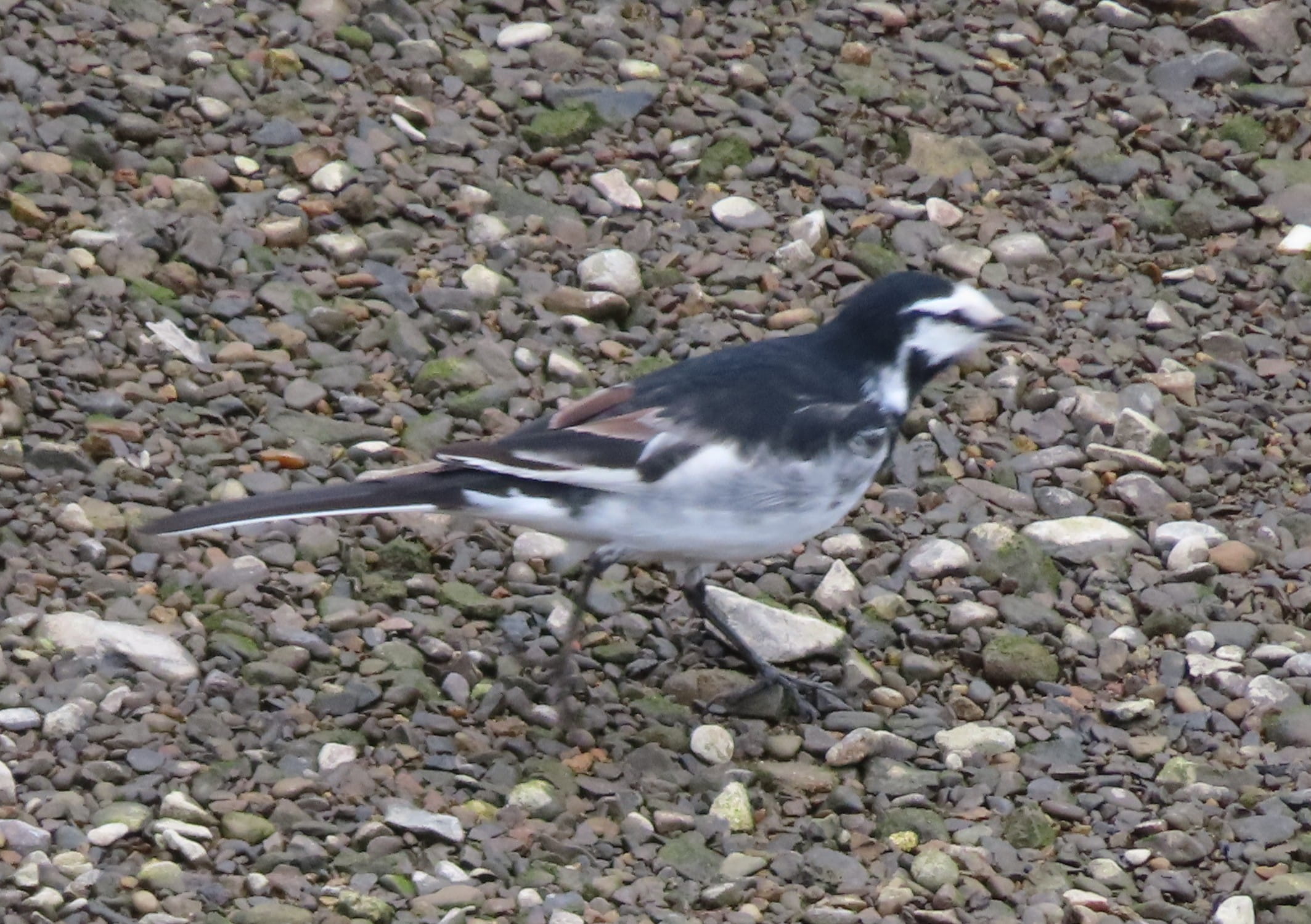
This was a pretty easy walk, and we didn’t even need our hiking poles. We walked along a shallow river, and I saw a few Barn Swallows flying around and a Japanese Wagtail stopped at the river bank.
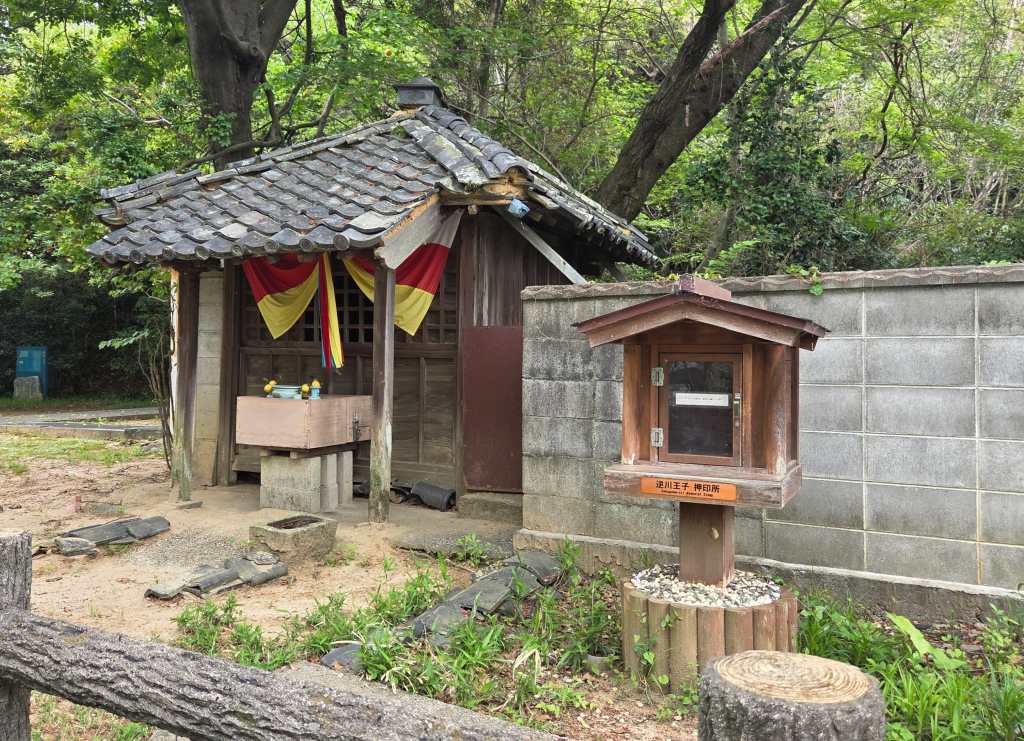
After about another 30 minutes of walk, we found the #11 stamping station. I texted friends. It turned out that they walked fast and completely missed the 2 stamping stations!
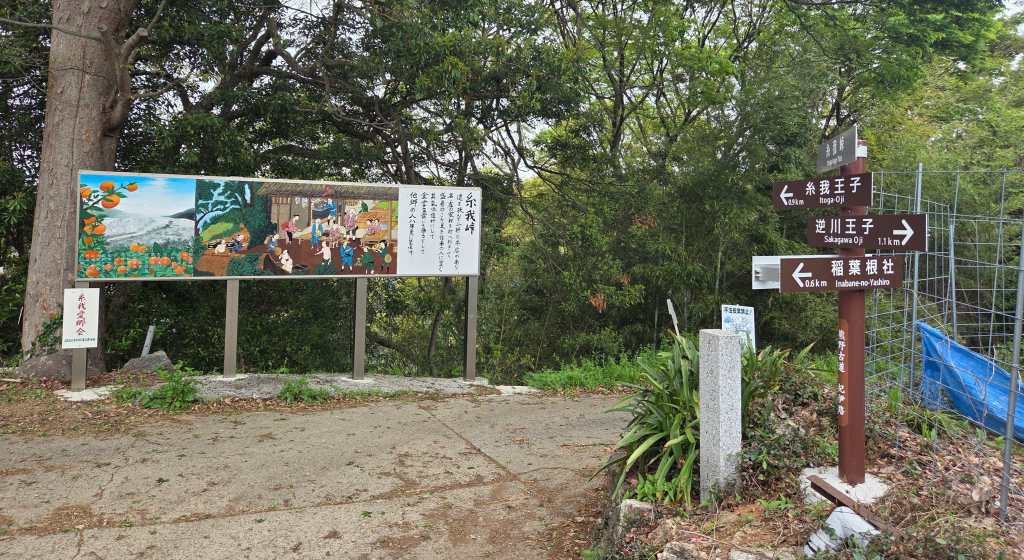
Then we had a steep climb to reach Itoga Pass. There was a sign pointing to an off-trail shrine. Rei is always very curious about this kind of “unknown” signs.
“Let’s go check out that shrine!“
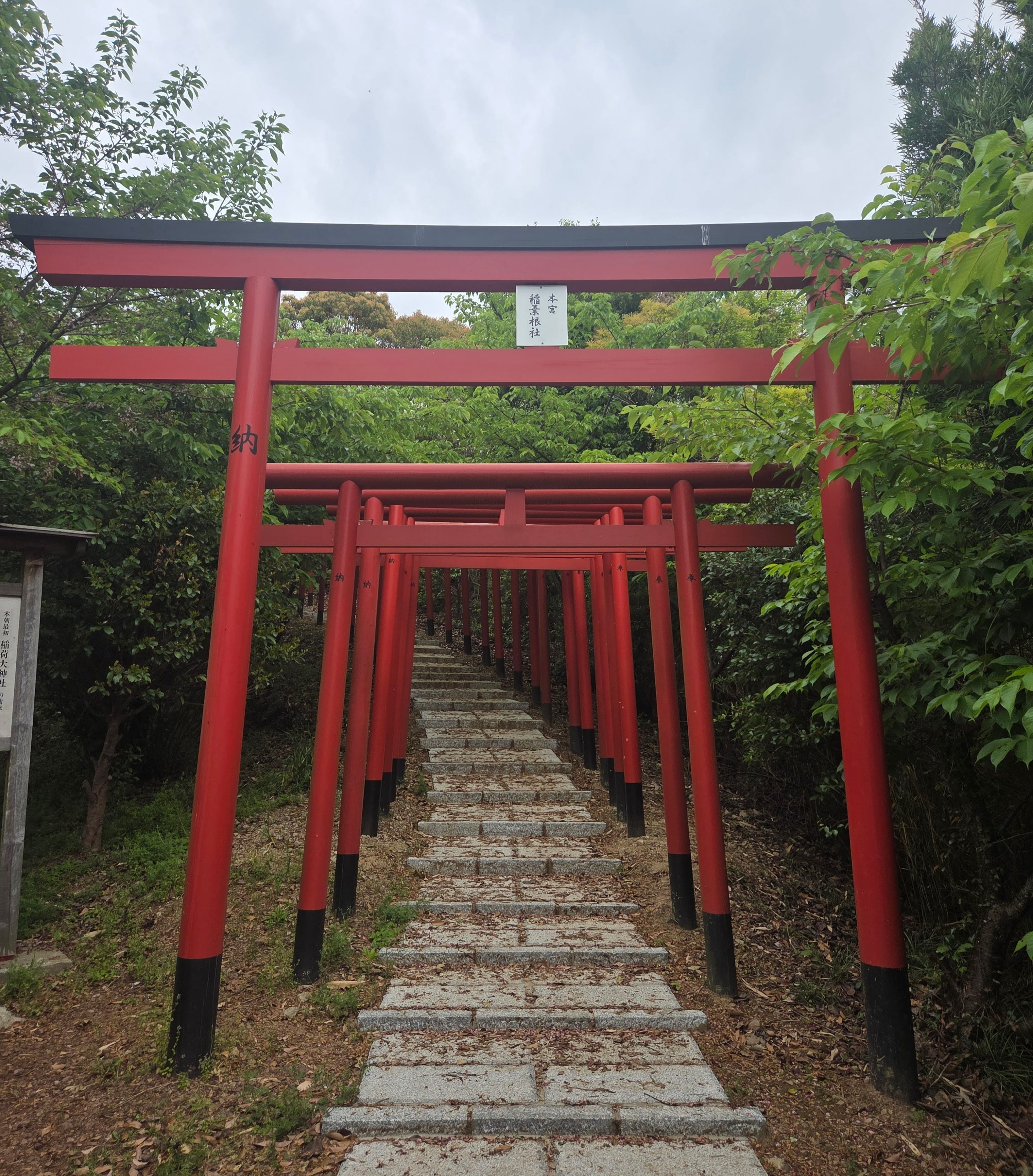
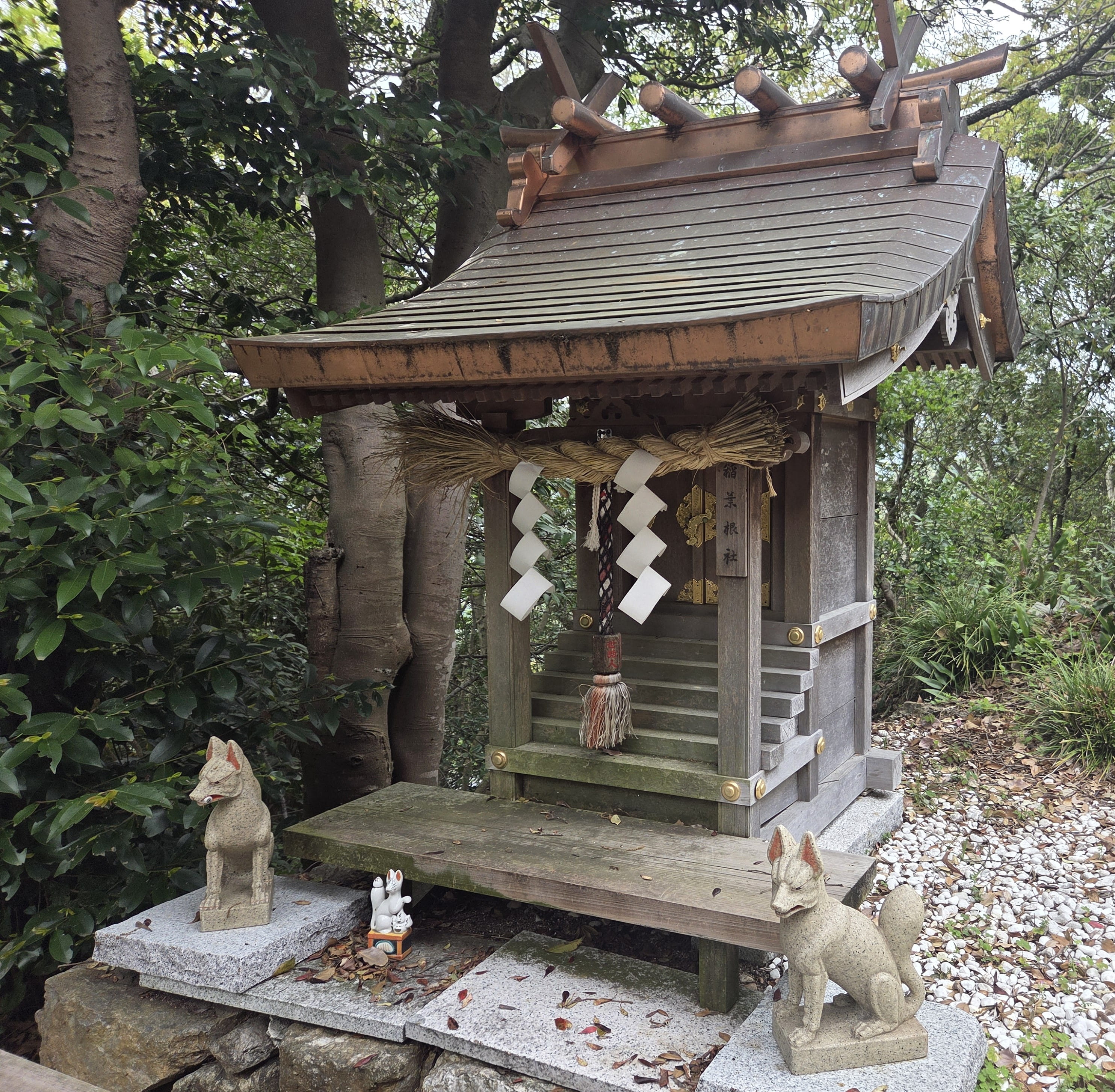
The shrine was 0.6km away off Kumano Kodo and involved steep up and down climb. Fortunately, it was a pretty site with many torii gates. The description was in Japanese only, so we had no idea what it was.
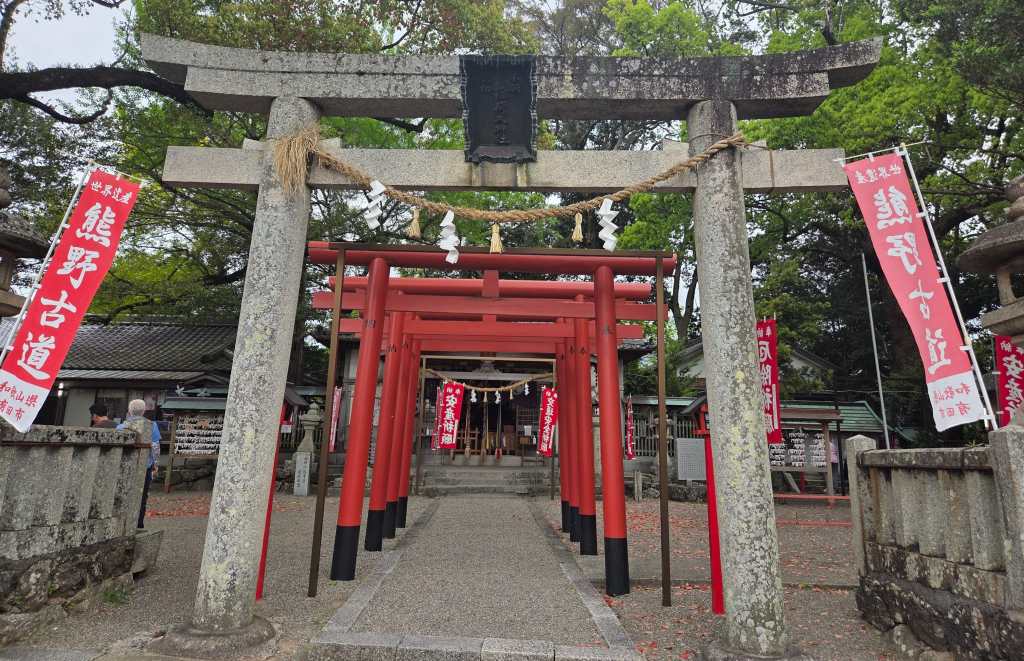
Friends texted me to say that they “finally” found a stamping station (#10). We still had a couple kms to go. After a short stop at Itoga Oji shrine, we finally reached stamping station #10 at Itoga-Inari Shrine and visited an interesting museum next to it.
Friends already reached Kiii-Miyahara train station, the end of today’s hike. Instead of taking a train ride back to Yuasa, they planned to walk back to collect the 2 stamps they missed. We met them on their returning trek, and Rei gave them detailed information regarding where to find the stamping stations. Afterwards, Rei and I walked to the Kiii-Miyahara station to take the train back (200 yen per ticket).
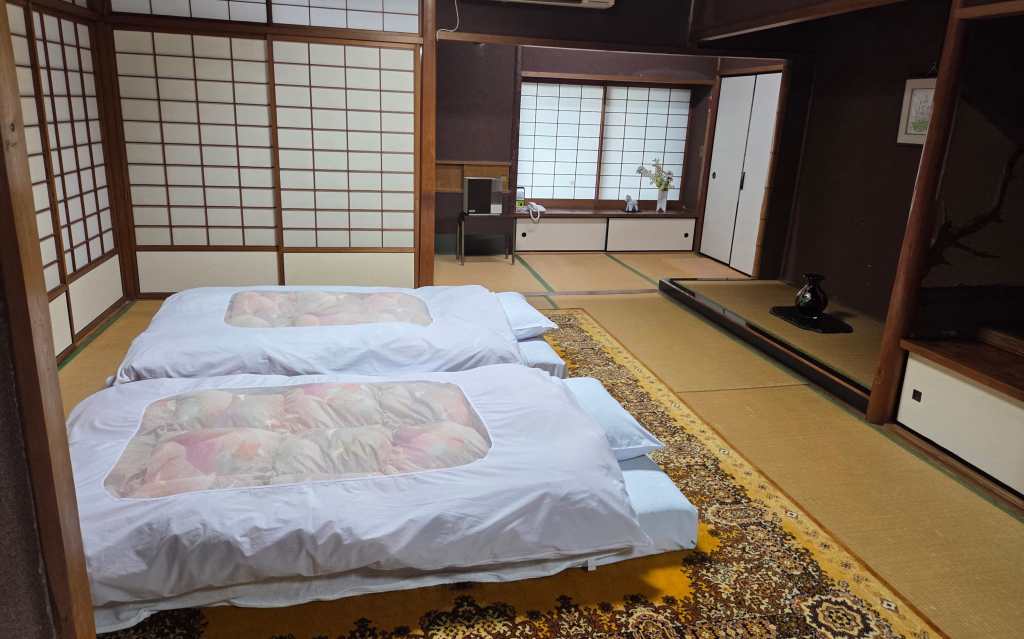
After we walked back to the lodging, we were able to finally check into our room. The hostess showed us an amazing Japanese bedroom that looked extremely comfortable! We were both very impressed.
Tonight’s lodge only had Japanese style public bath providing absolutely no privacy, so it was a new experience for all of us. There was only one other guy besides Rei. They bathed at different time, and there were no issues. We six females had quite an interesting experience 🙂
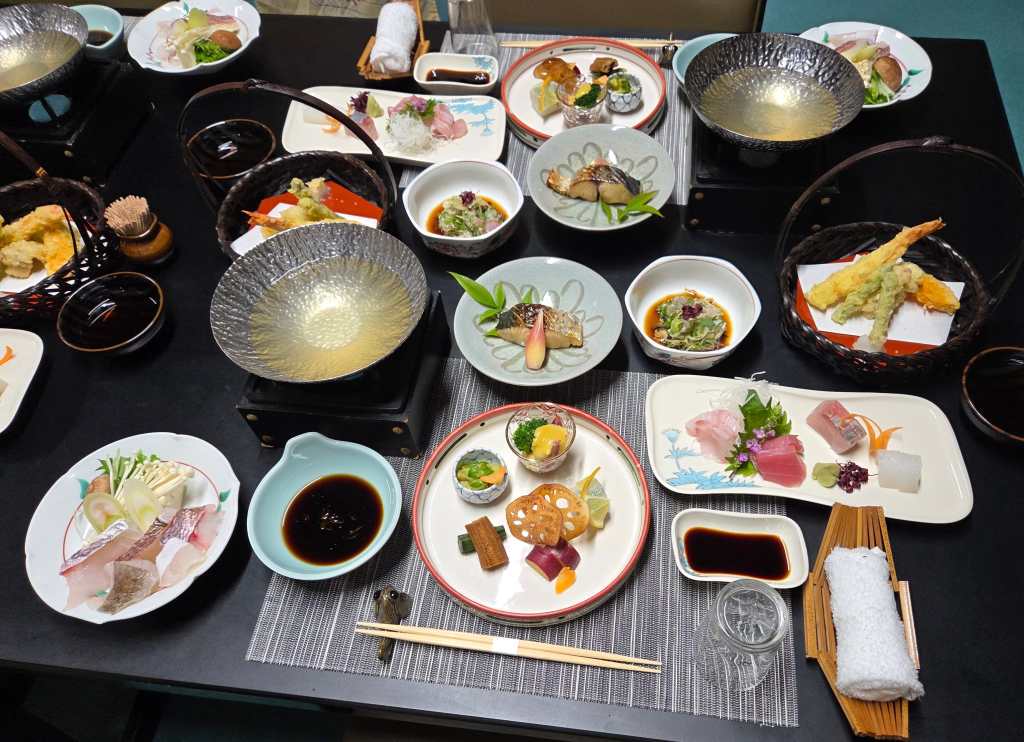
We had an elaborate Japan dinner tonight. The food was splendidly presented that we all took many photos. There were appetizers, tempura, sashimi, grilled fish and hot pot! Every dish tasted very delicious. This was the best meal we had on this trip so far!
Day 4: To Takahara (高原) (4.5km)
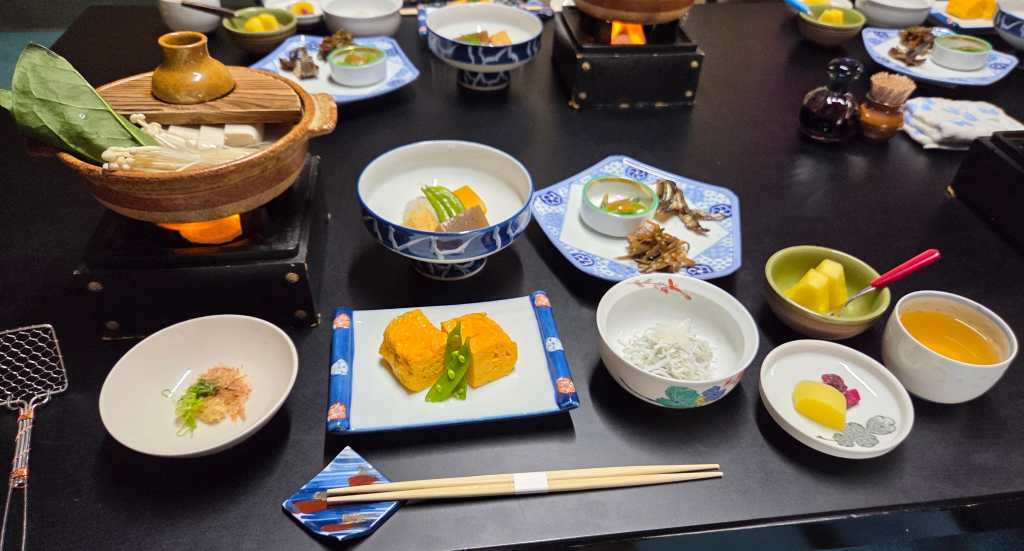
This morning’s breakfast was as impressive as last night’s dinner. It’s a Japanese style breakfast with many variety of items. The hostess described each item to us and explained the proper way to eat them. Everything was so delicious! We never gained weight on our hiking trips, but we wondered whether this trip would be an exception!
Kumano Kodo has several different routes just like El Camino. We walked part of the Kii-ji section yesterday, and today we’re going to start the major Nakahechi route (中辺路) starting from Takijiri-oji. We would first take a limited express train ride to Kii-Tanabe station (紀伊田辺駅).
The train ride was at 10:38am, so Rei and I decided to do a bit of sightseeing before the train ride. Yuasa was famed to be the birth place of Japanese Soy Sauce (called “the first drop”). The Soy Sauce Museum was only about 20 minutes walk away. The surrounding area also had many restored traditional Japanese houses.
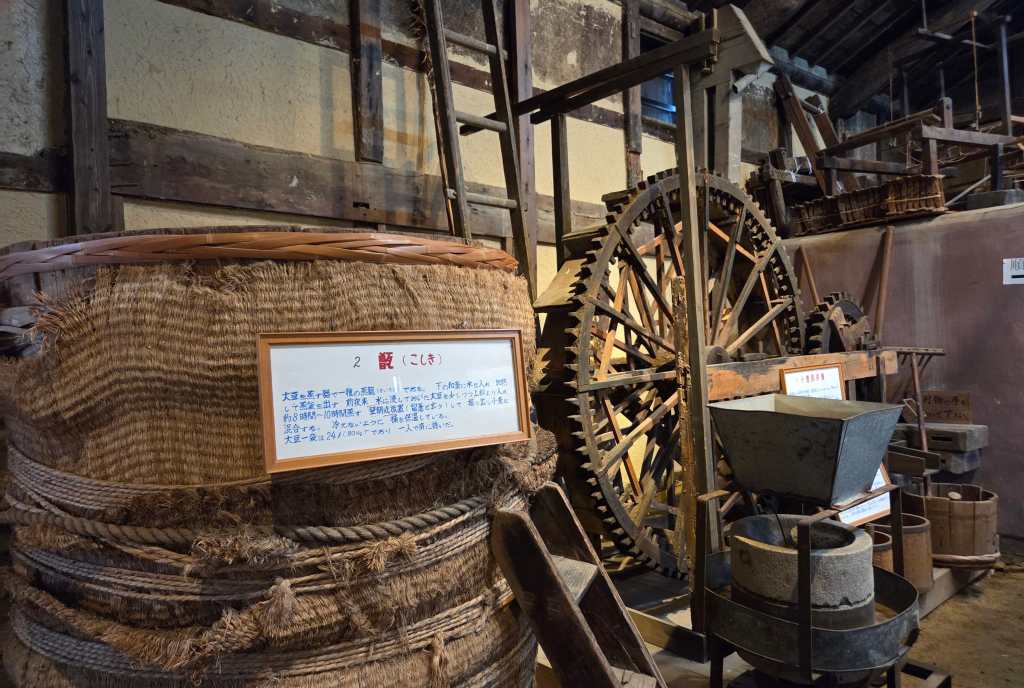
The museum was free and unmanned. However, the information was in Japanese only, and we had to use our imagination to guess the soy sauce manufacturing process.
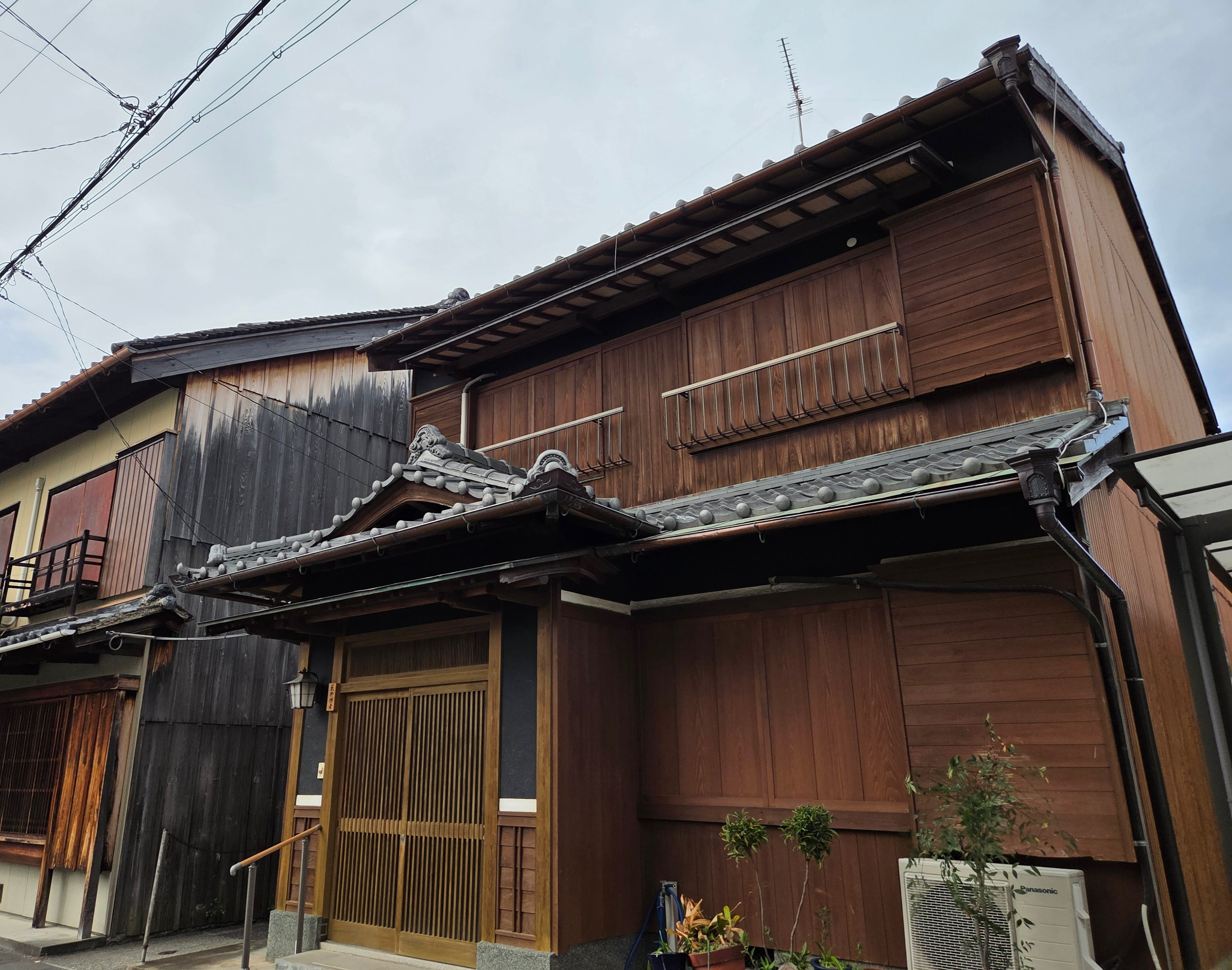
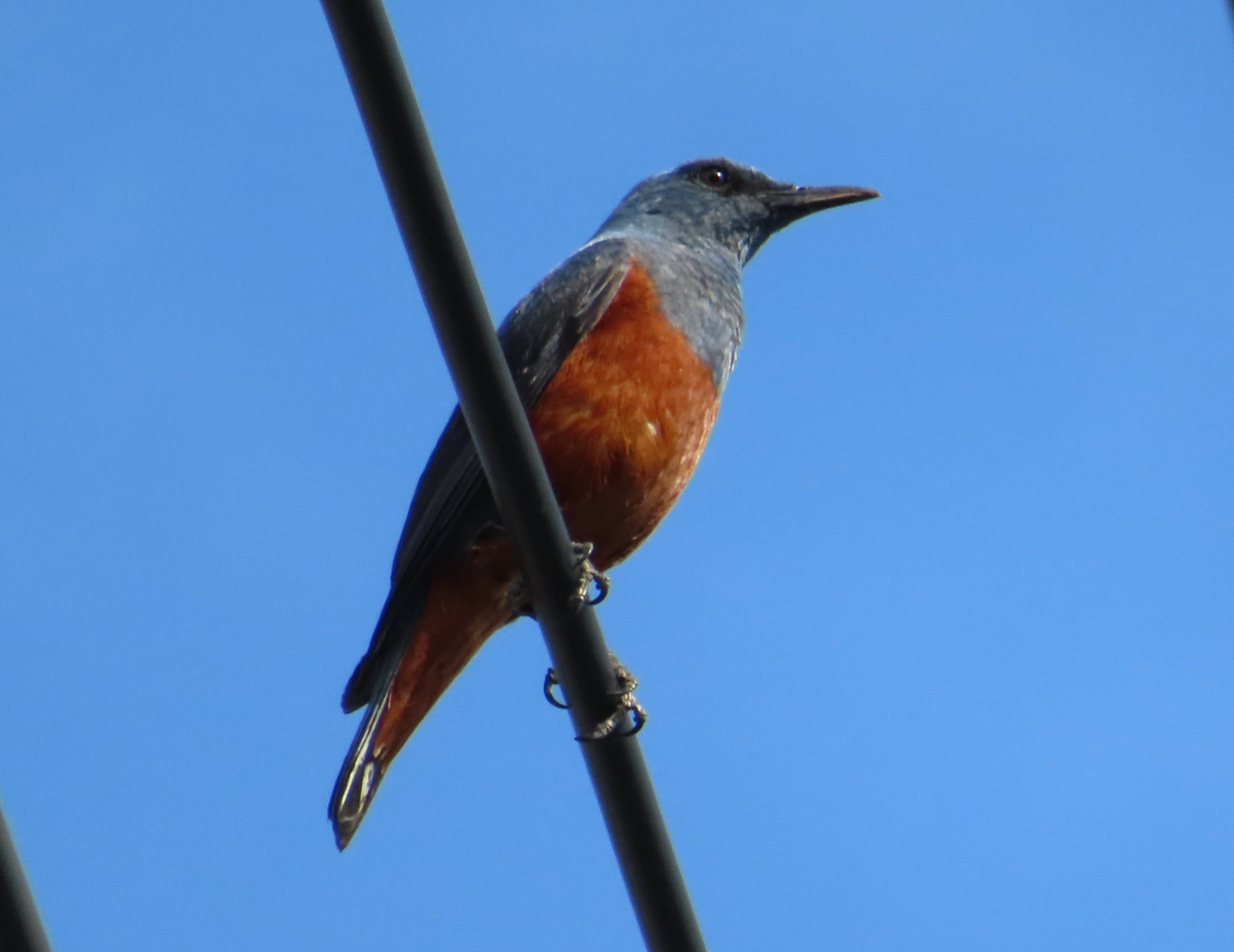
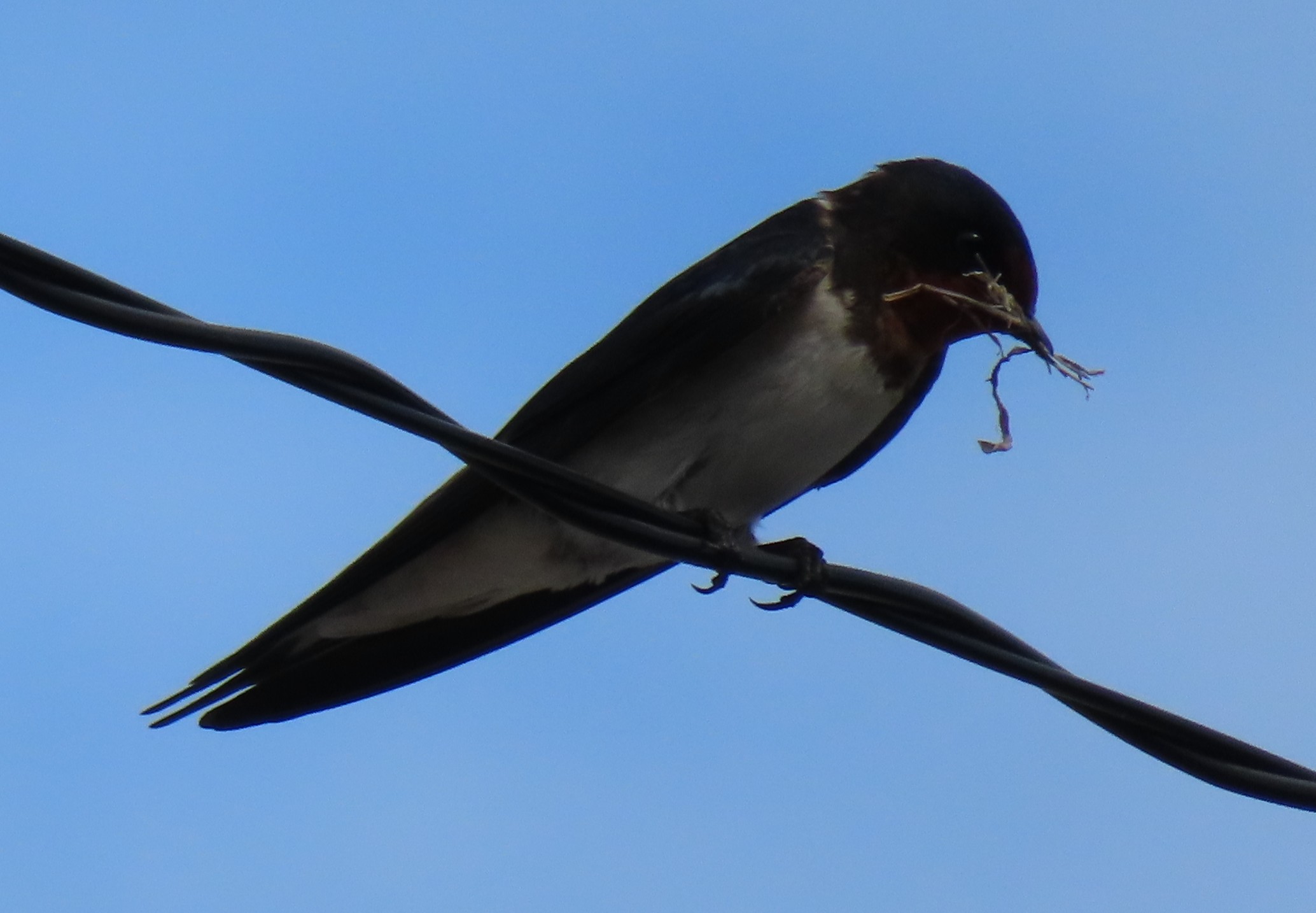
Traditional Japanese houses were wooden houses with beautiful roofing tiles. They looked serene and elegant. We took many photos.
Afterwards, we returned to the lodging to meet with friends, who went on their own explorations. We were told that they tried “soy sauce coffee” and found it delicious!
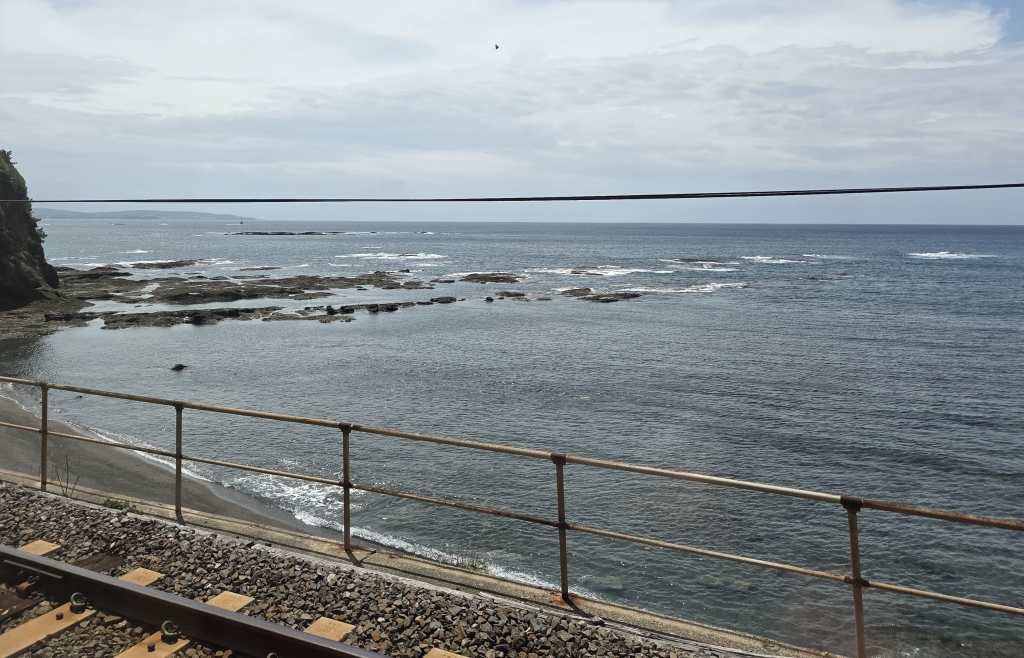
Train ride to Kii-Tanabe was first on an inland route with many verdant hills. After a while, we were reaching the coast with spectacular ocean views. We reached Kii-Tanabe before 11:30am and immediately went to the information center to get free Kumano Kodo Nakahechi stamp books. The information center was full of hikers walking Kumano Kodo!
Walk Japan arranged taxis to take us to the Takijiri trailhead at 1pm. We had enough time for a sit-down lunch before the 40 minutes taxi ride. The taxi dropped us off at the trailhead and continued transporting our luggage to today’s lodging.
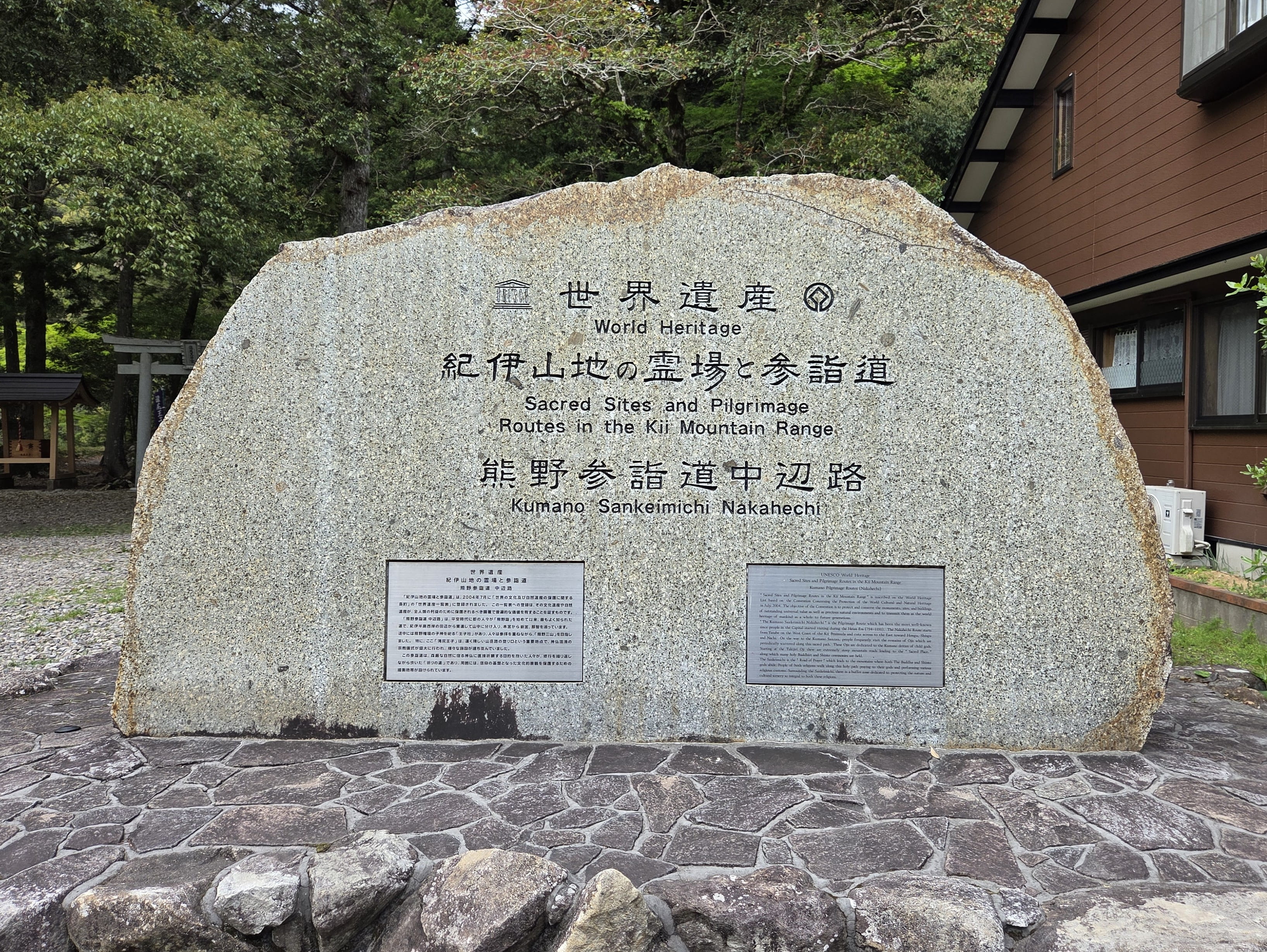
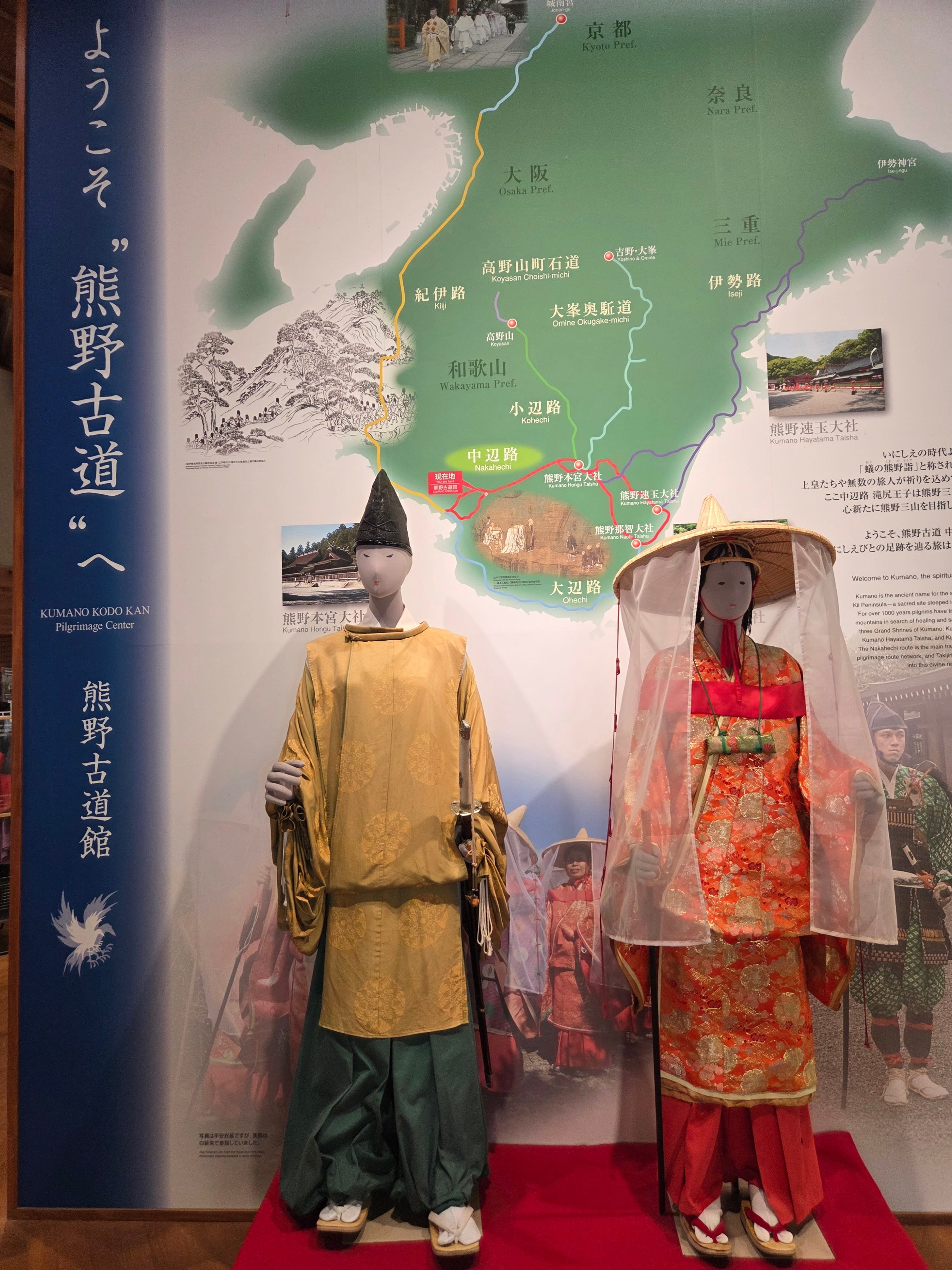
There was a small museum with a gift shop across the road from the trailhead. I already knew that some hikers doing Kumano Kodo in “cosplay” style. The museum had models showing pilgrims in traditional clothing.
The gift shop had a fancier version of Nakahechi stamp books that cost 100 yen each.
“Let’s get those stamp books, and we can stamp both,” decided Rei.
Friends also purchased expensive Kumano Kodo “shells” to hang on their backpacks in addition to the fancy stamp books.
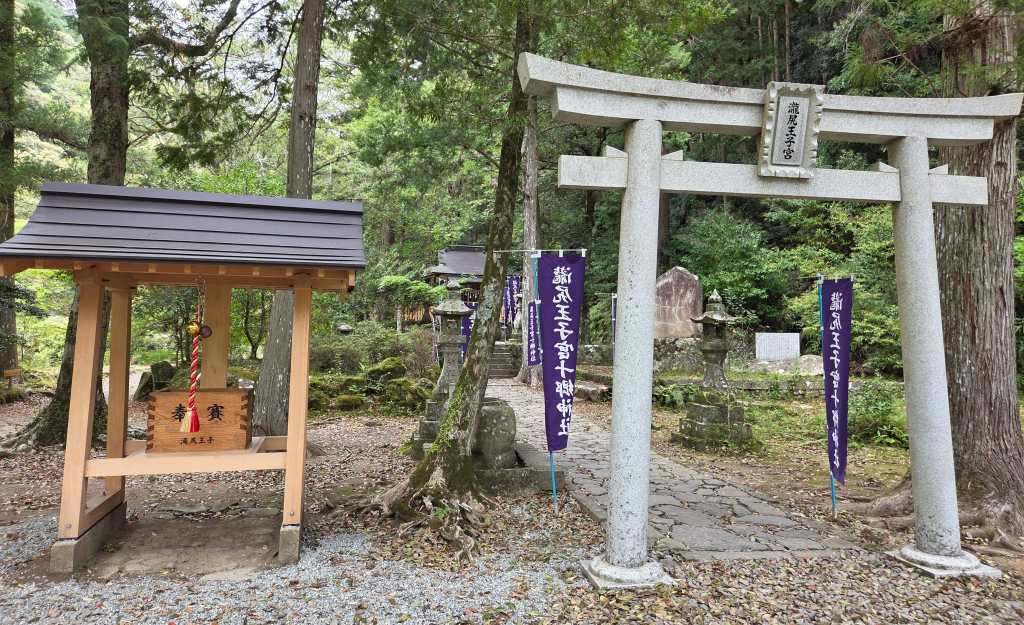
The trailhead had a Takijiri-oji stamping station (stamp #4). We all stamped both books! Then, we also spent a lot of time taking photos. When we started walking, it was already past 2pm.
This section of Kumano Kodo had steep climbs on stairs, big stones and tree roots, so we progressed slowly. Shortly we reached a narrow and dark cave. It was said that ladies braved through the cave will be blessed with smooth delivery of babies.
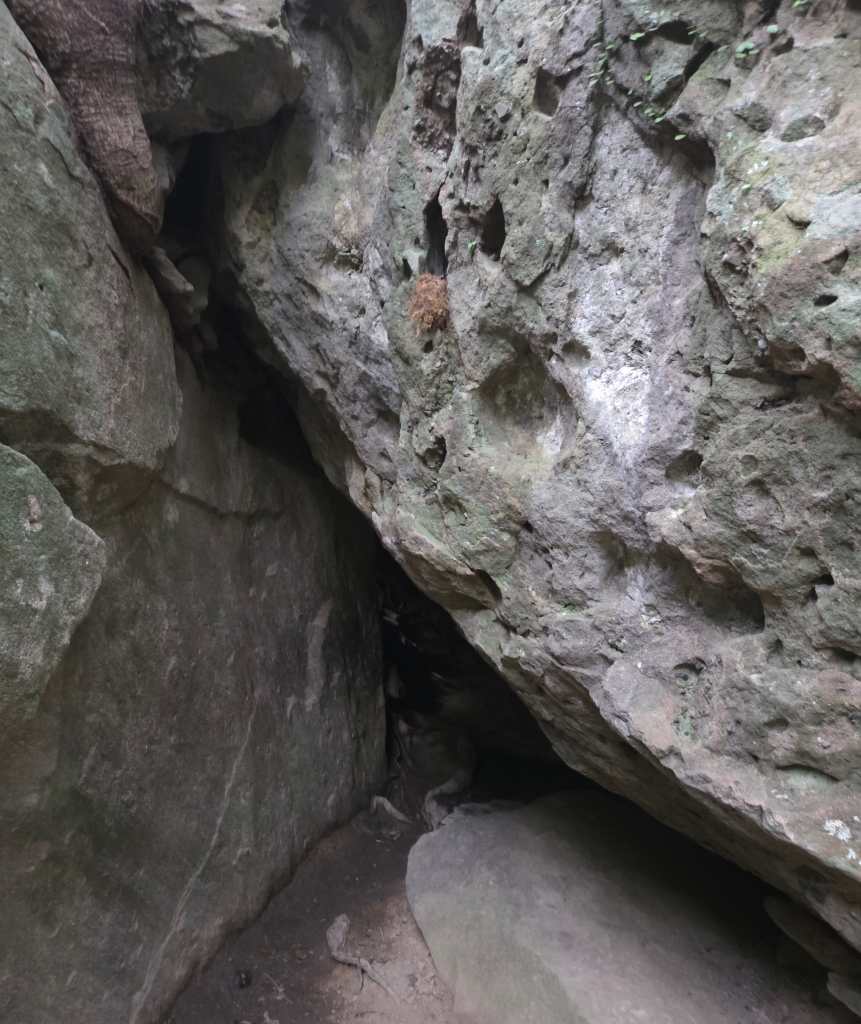
Three young ladies in our group decided to do it to be on the safe side. The rest of us were supposed to meet them at the other end of the cave. However, no one knew where the other end of the cave was located! We finally found them after hearing the noises. The three of them all found the experience thrilling.
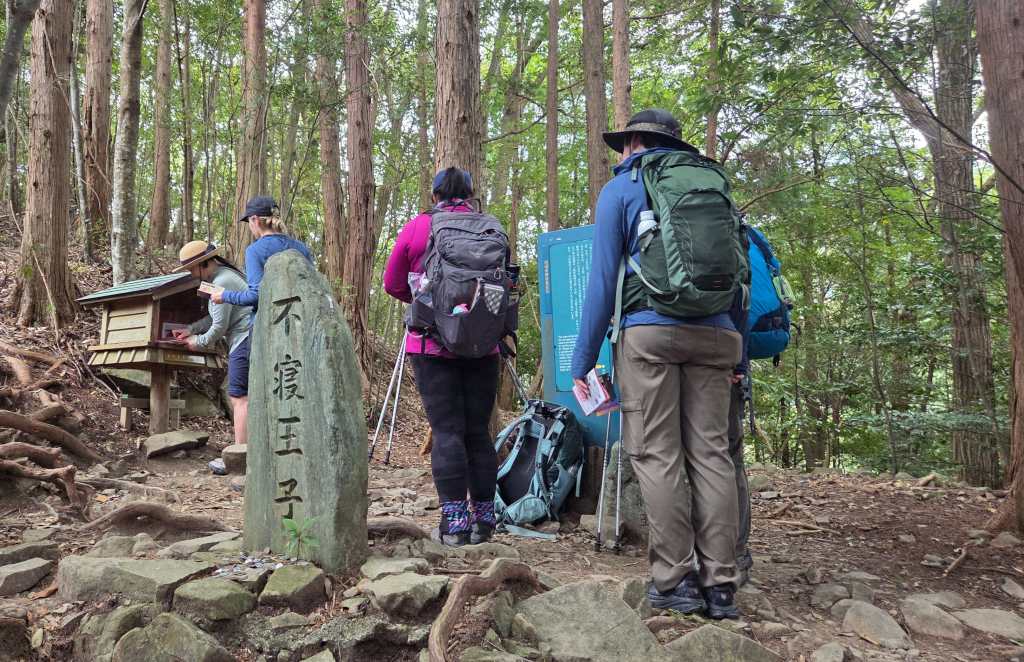
The next stamping station Nezu-oji (stamp #5) was only a short distance away. Other hikers almost missed the stamping station until they saw us.
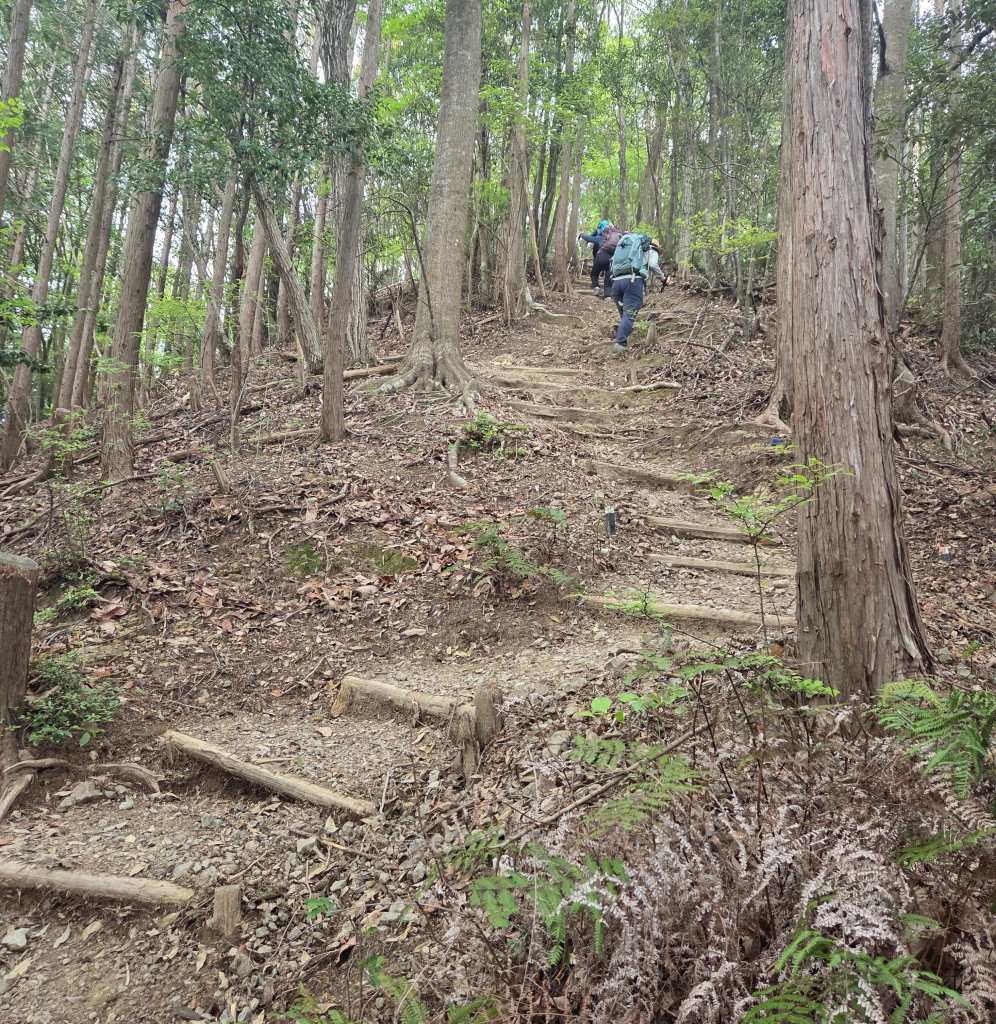
There was more steep climbing, so it took us more than an hour to walk the first one mile! Rei commented that it was possible to continue the taxi ride with luggage to completely skip today’s walk.
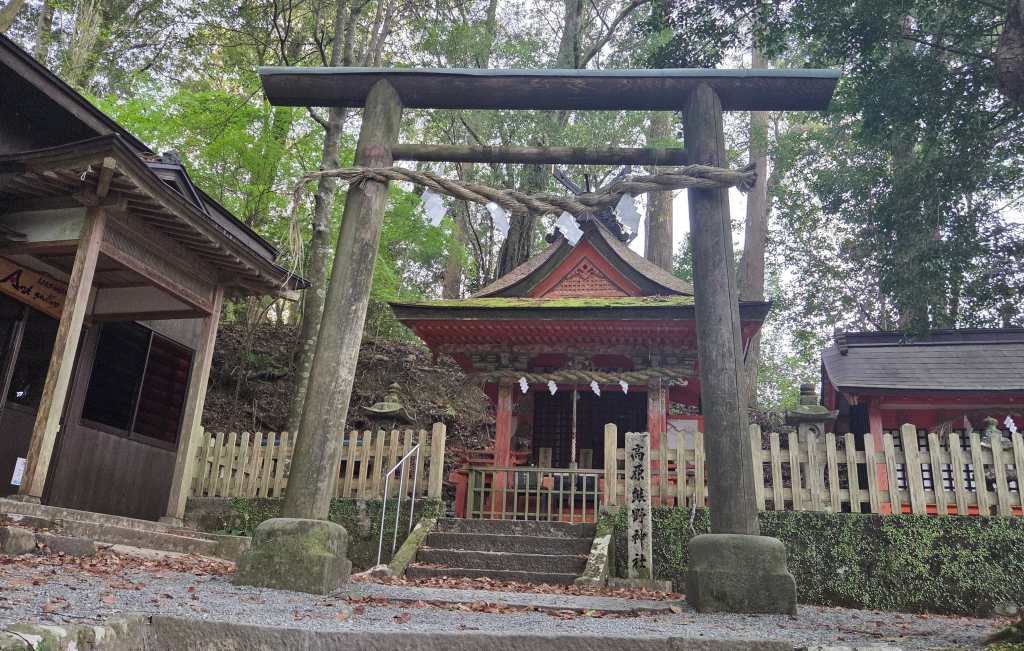
We thought we were done with climbing, but there were more uphill sections. Fortunately, it was getting easier. We reached Takahara Kumano-jinja (高原熊野神社) (stamp #6) after one more hour of hiking.
There was a detailed description of the shrine. However, it was too dark for us to see the inside. Rei wondered whether it would be a blasphemy to shine the inside with his headlight. I assured him that it would be, so he had to give up his crazy idea.
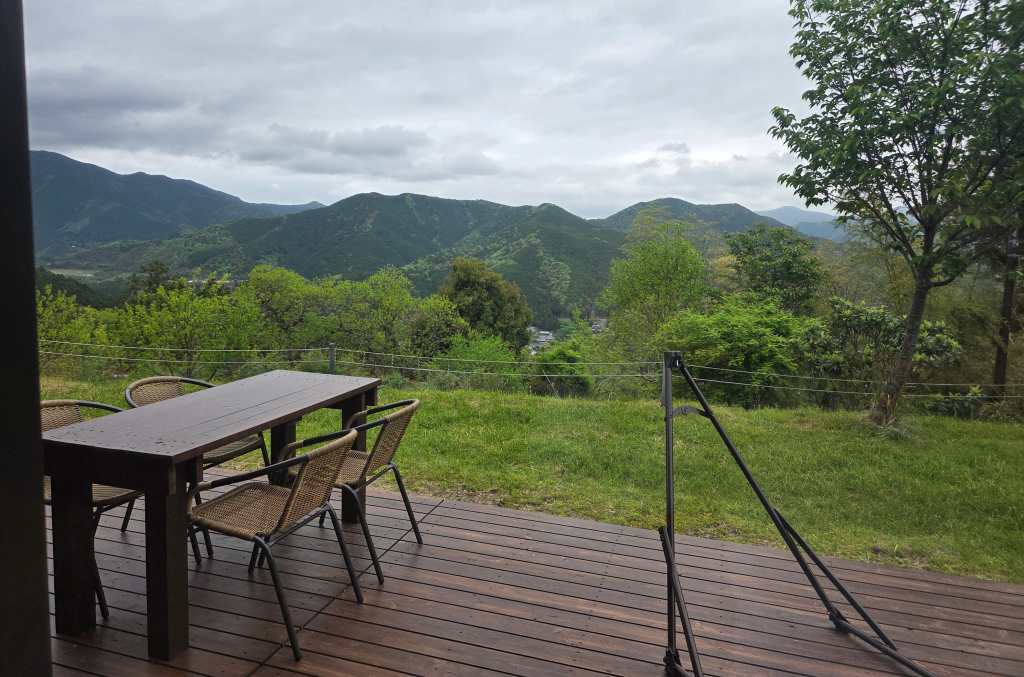
Takahara was a very small town. Walk Japan couldn’t find a place that can accommodate our entire group. So, friends stayed in a hotel near Takahara Kumano-jinja. Rei and I stayed in a rustic cabin further down the road all by ourselves.
We both enjoyed the quiet cabin with private bathroom and a small kitchen. There was a washing machine too, but no dryer though.
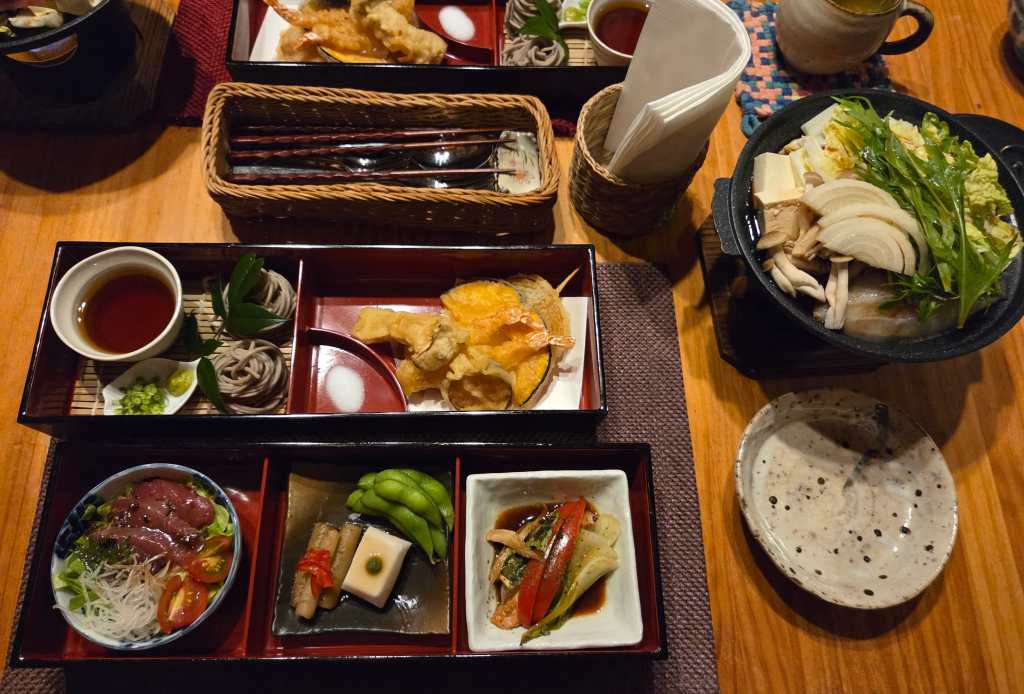
Dinner was delivered to us at 7pm. It’s another lavish Japanese dinner that we could enjoy leisurely in the cabin.
Friends had a French dinner at their lodging. They sent us many photos of their food and dessert.
Day 5: To Yunomine (湯の峰温泉) (13km)
It was foggy in the early morning. The outside patio floor was wet, but it was no longer raining. Our patio French door offered us a splendid mountain view! I later learned that Takahara was known as “Village in the Mist,” which was a very proper name.
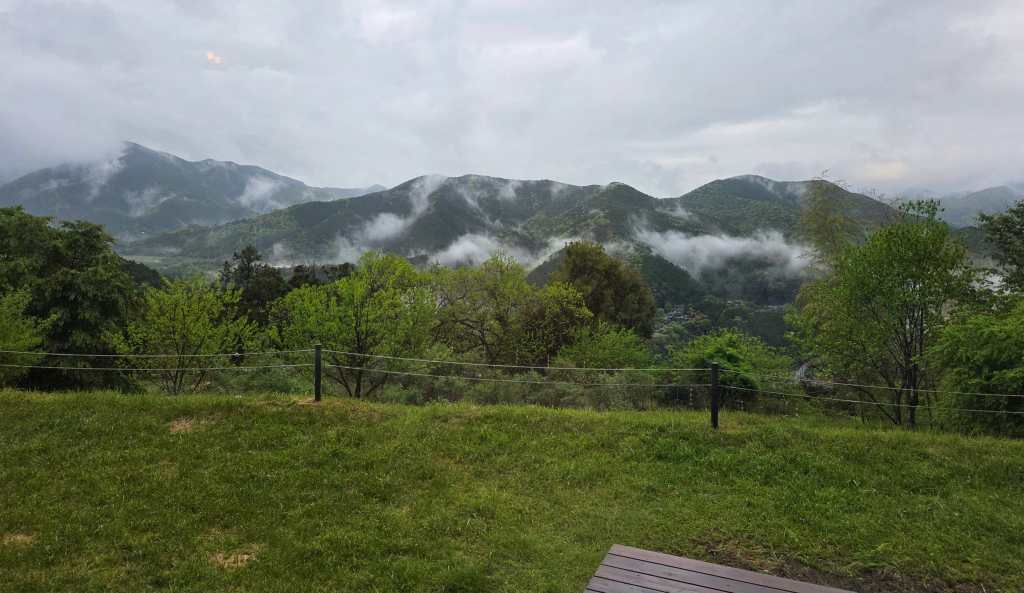
The cabin owner brought our breakfast to us around 7:40am. We had sandwiches, scrambled eggs, nuts and soup. After breakfast, we walked to the hotel friends stayed to meet with them.
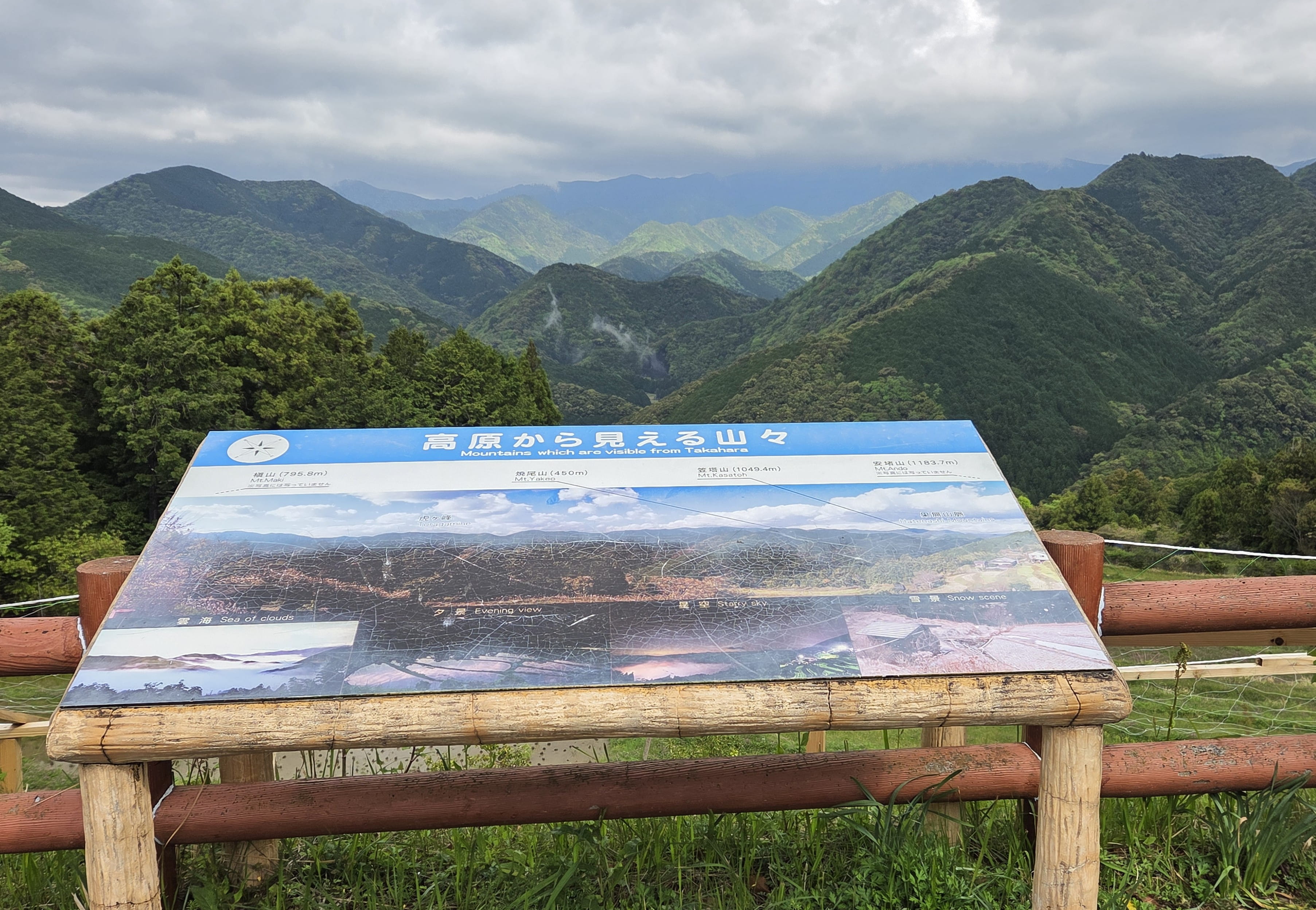
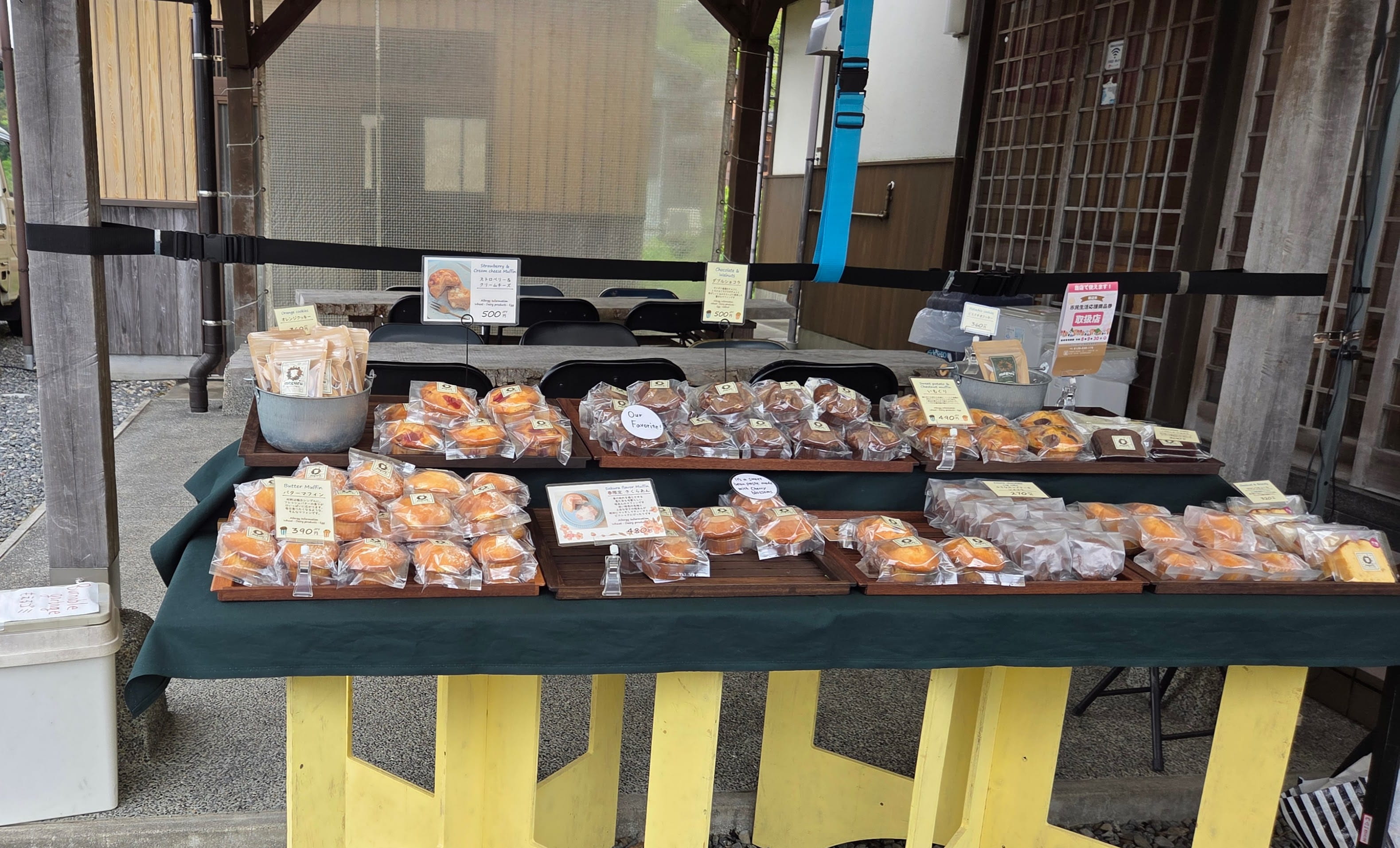
We started today’s hike around 9am. There was a broad viewing area around a Kumano Kodo rest area in Takahara. Some vendors set up a booth selling coffee and bakery. We all purchased some bakery items. I bought a chestnut muffin.
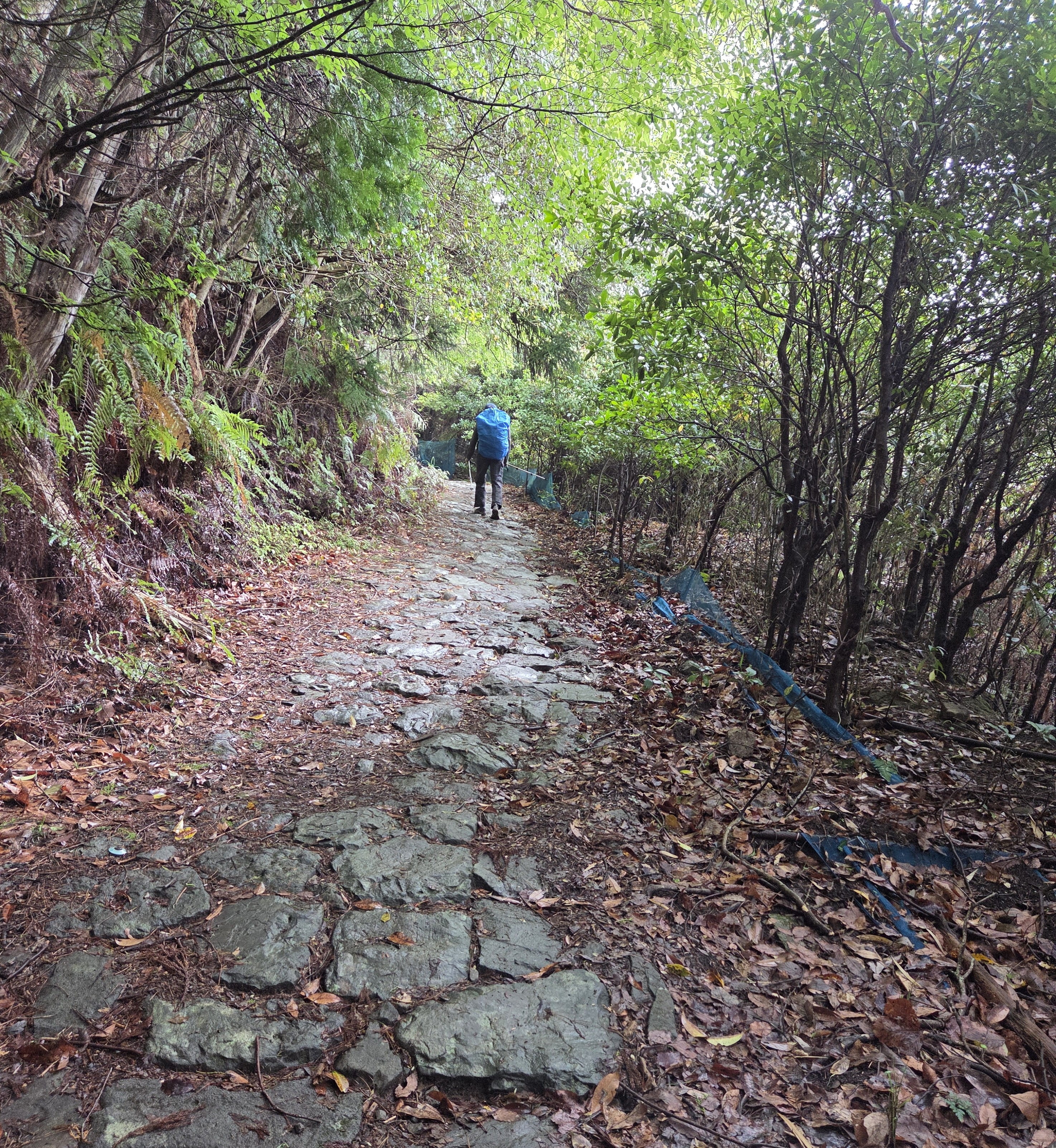
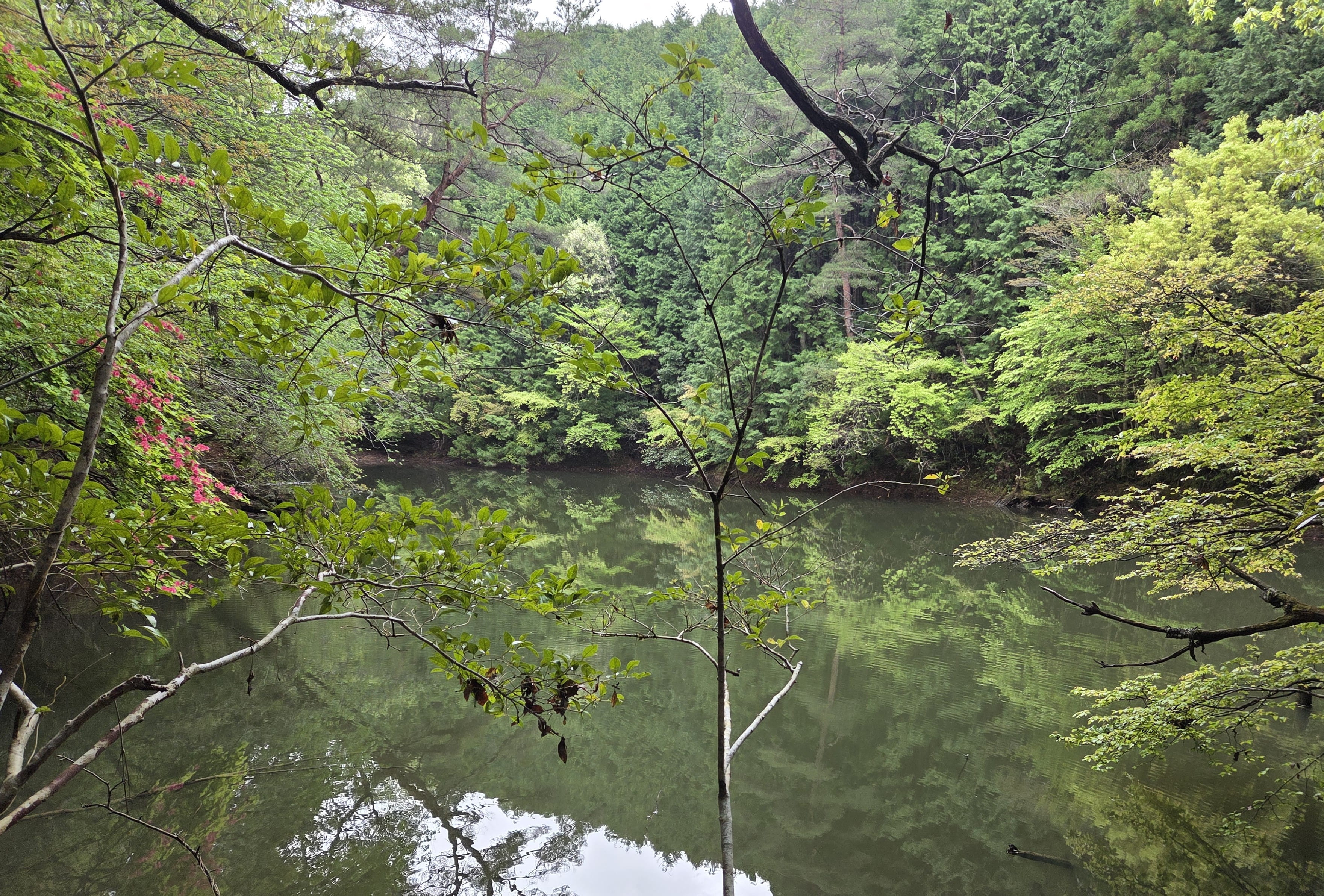
This morning’s hike started with very steep uphill climbing. We reached beautiful Takahara-ike Pond after more than 1km. The pond water reflected the surrounding trees and brushes amazingly. We all took many photos.
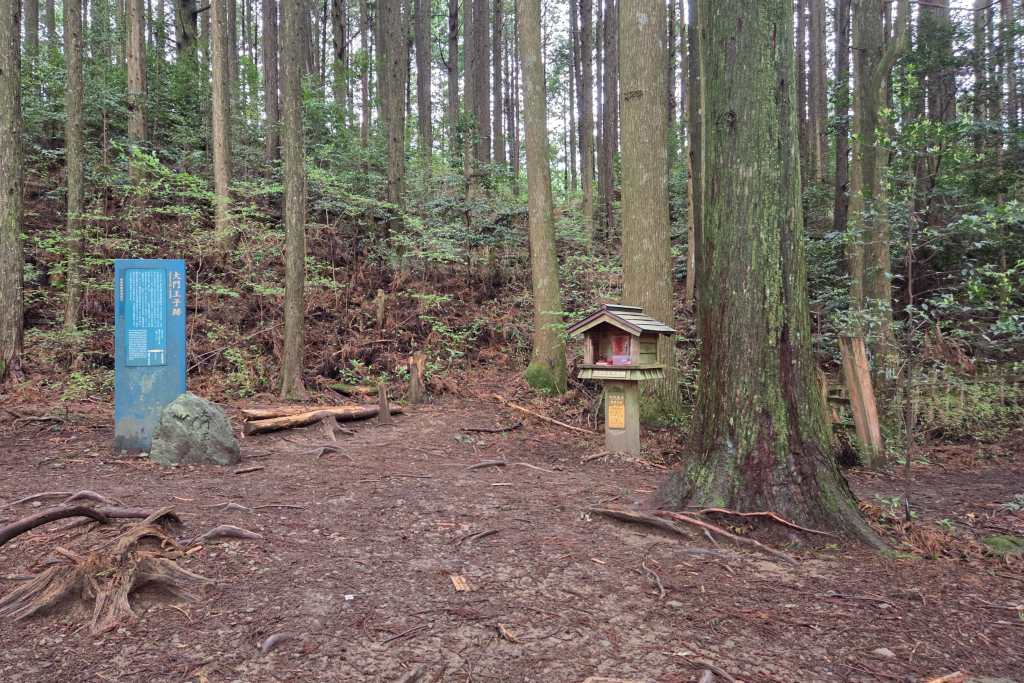
Shortly after the pond we reached today’s first stamping station Daimon-oji (stamp #7). Daimon meant “big door” — there used to be 6 tall torii gates there, but they no longer existed. We arrived there first; soon there’s a line for pilgrims waiting to stamp their pilgrim passport following us. There were more hikers today.
Kumano Kodo is a world heritage pilgrim route. It’s full of history. There were many signs indicating historical points along the route. Fortunately for us, there was information in English! For example, a sign showed where a traveller perished; the person was responsible and didn’t want others to be burdened, so he placed a gold piece in his mouth to cover the expense! Another sign indicated the location of a teahouse ruin.
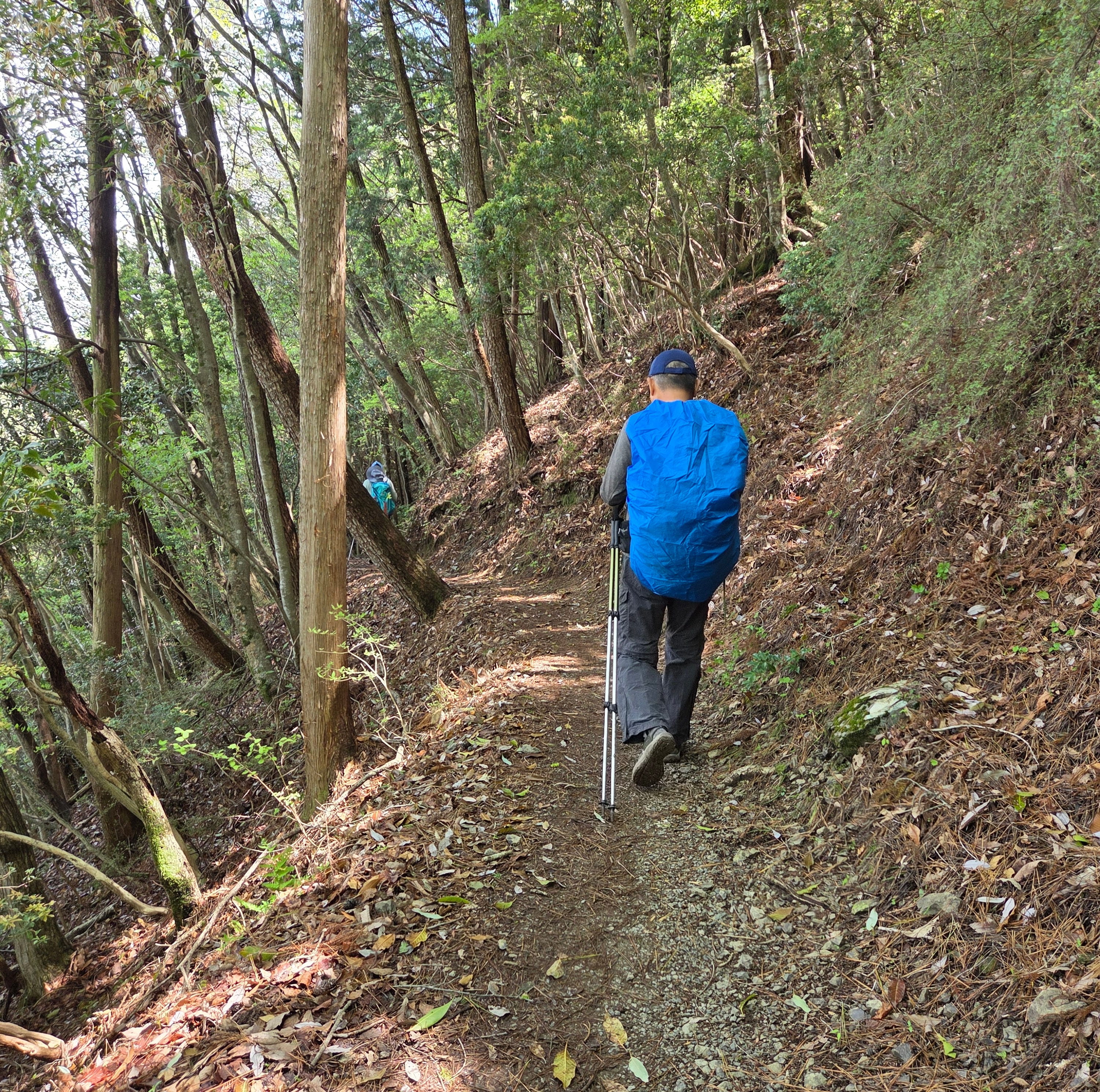
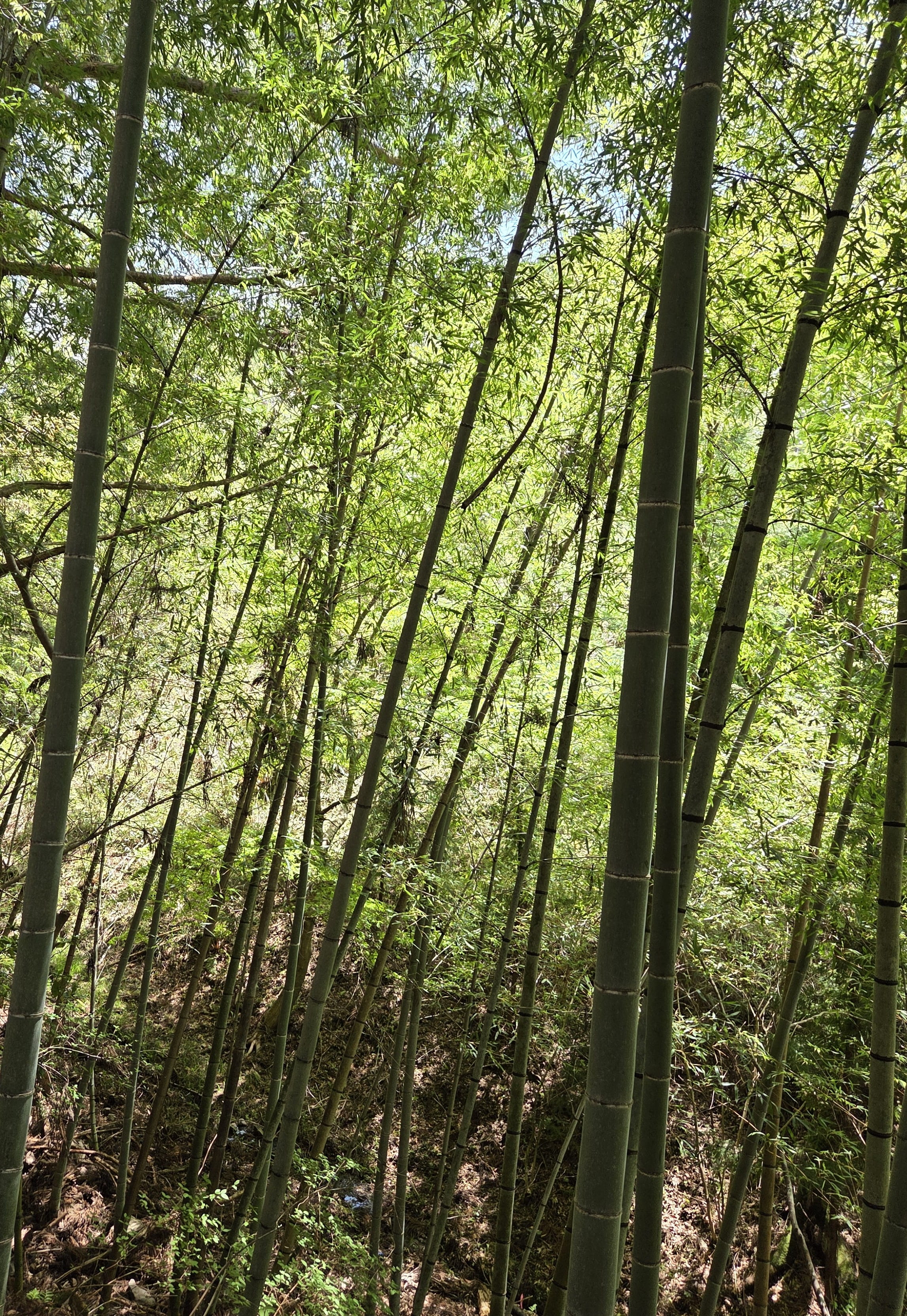
The trail finally leveled off. The next section was a gentle downhill walk. We were now walking on a dirt and gravel forest trail that reminded many of us of Mount Tam. There was even a small creek and some ferns along the trail. The only major difference was that we walked through a bamboo forest that was distinctly oriental.
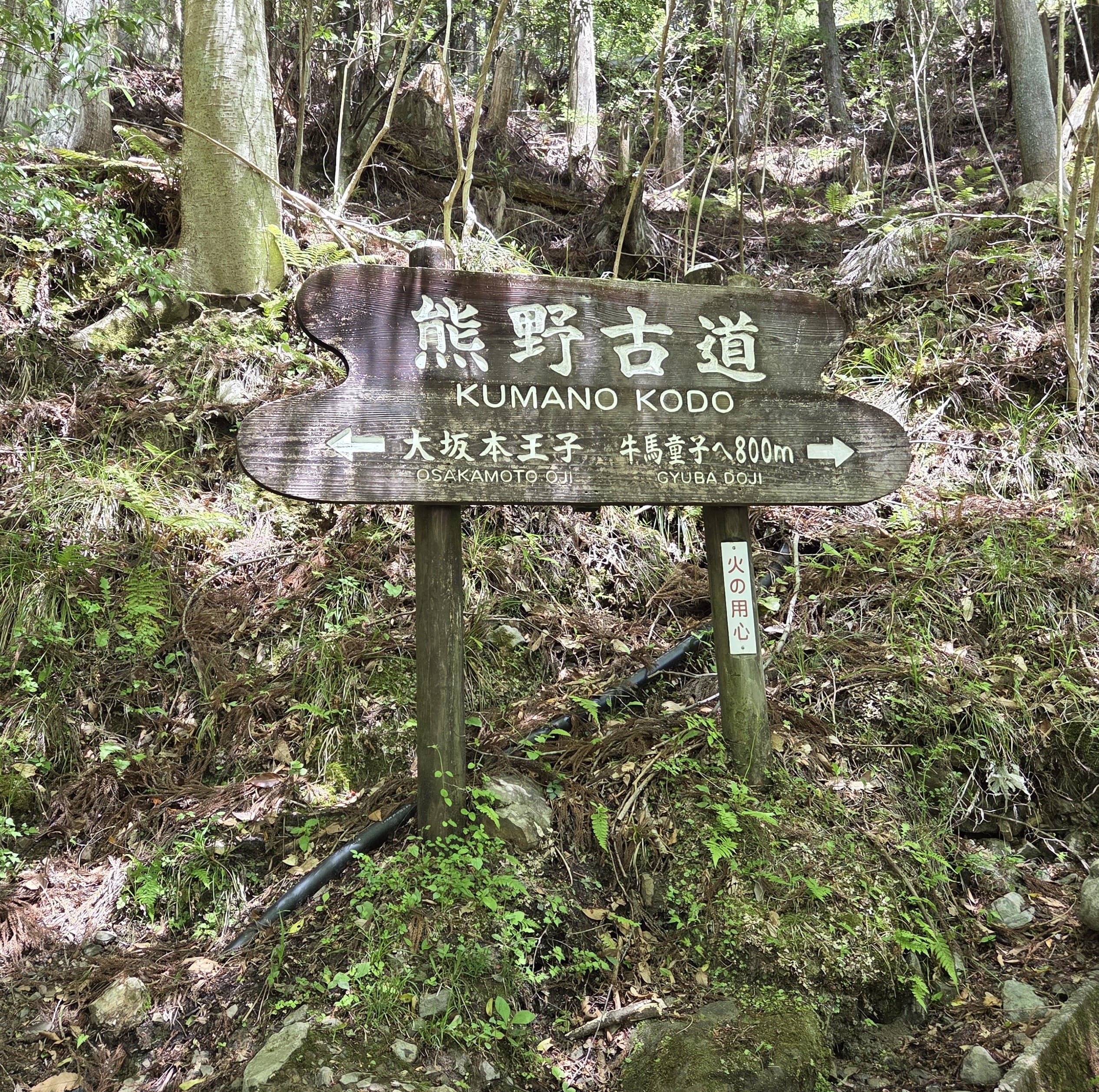
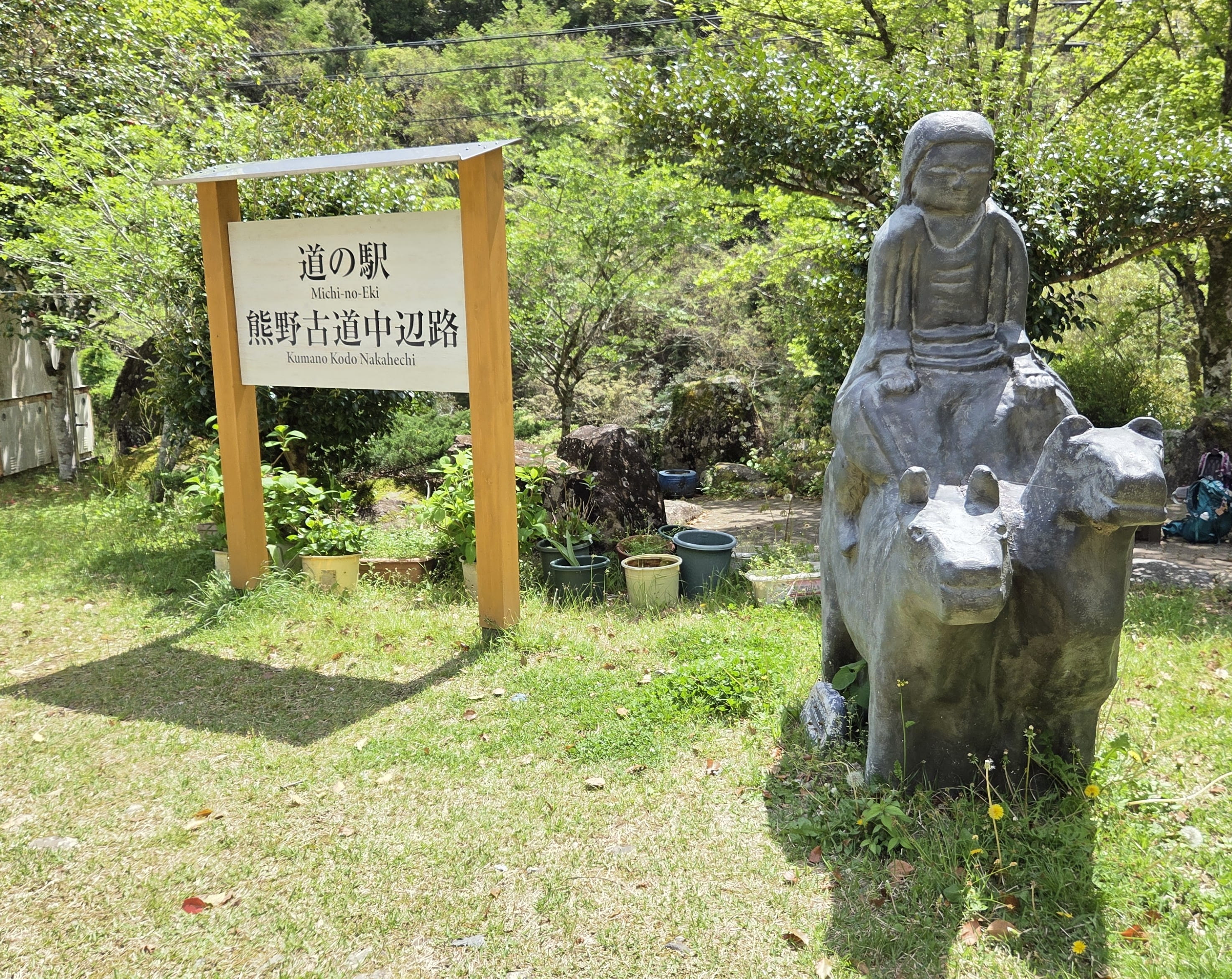
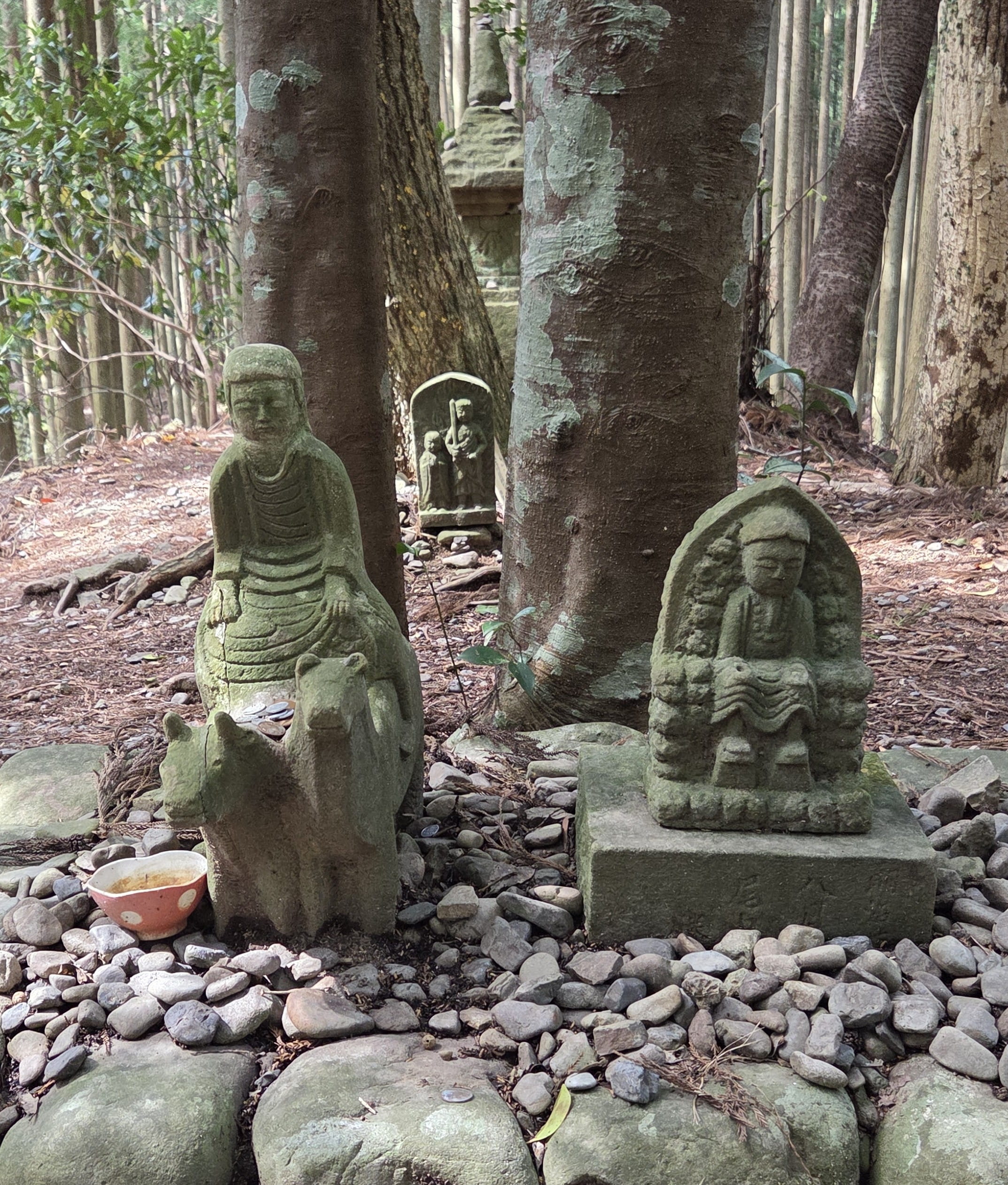
Past noon, we reached today’s lunch spot, Michi-no-Eki rest area, where there was a Gyuba-doji Statue of Emperor Kazan riding both a horse and a cow. In addition to restrooms, there’s a cafe and gift shop where we could purchase food for lunch. Friends also did some souvenir shopping. They claimed that they were supporting local economy.
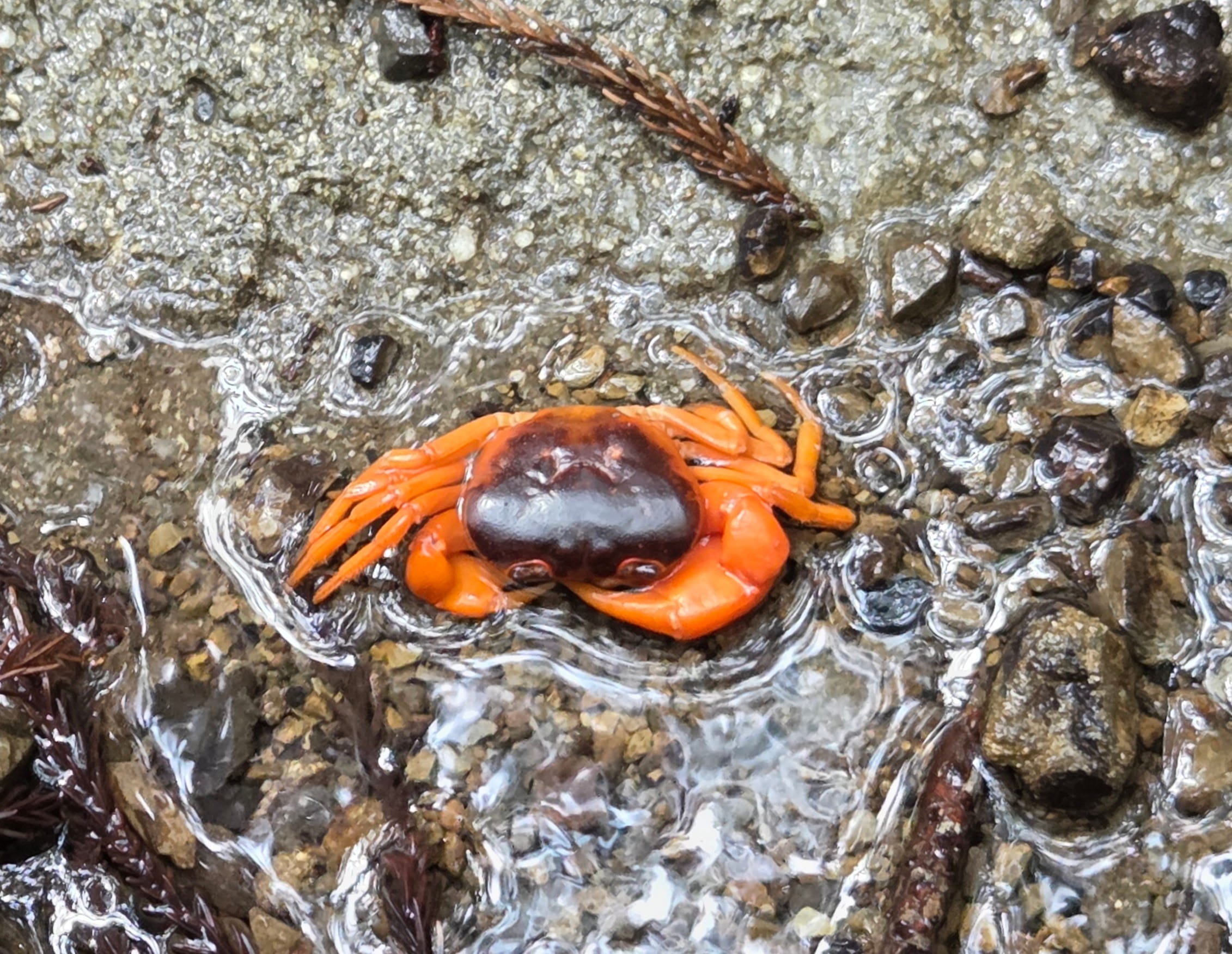
We continued walking to Gyuba-doji Stamping Station (#10). There was a Japanese group walking in front of us. We saw them crouching down to take photos — there was an orange-colored small crab! It looked similar to the crab we saw previously during a rain forest hike, though the color of this crab was different.
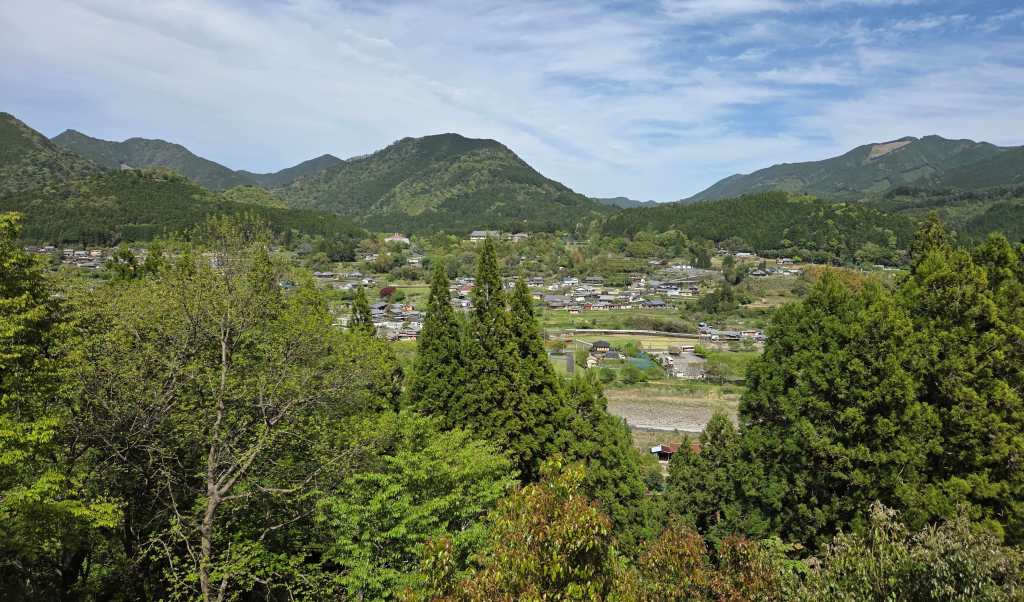
There was also an overlooking point with superb view of verdant mountains and small villages below, not unlike the views we saw while hiking in Switzerland and Italy.
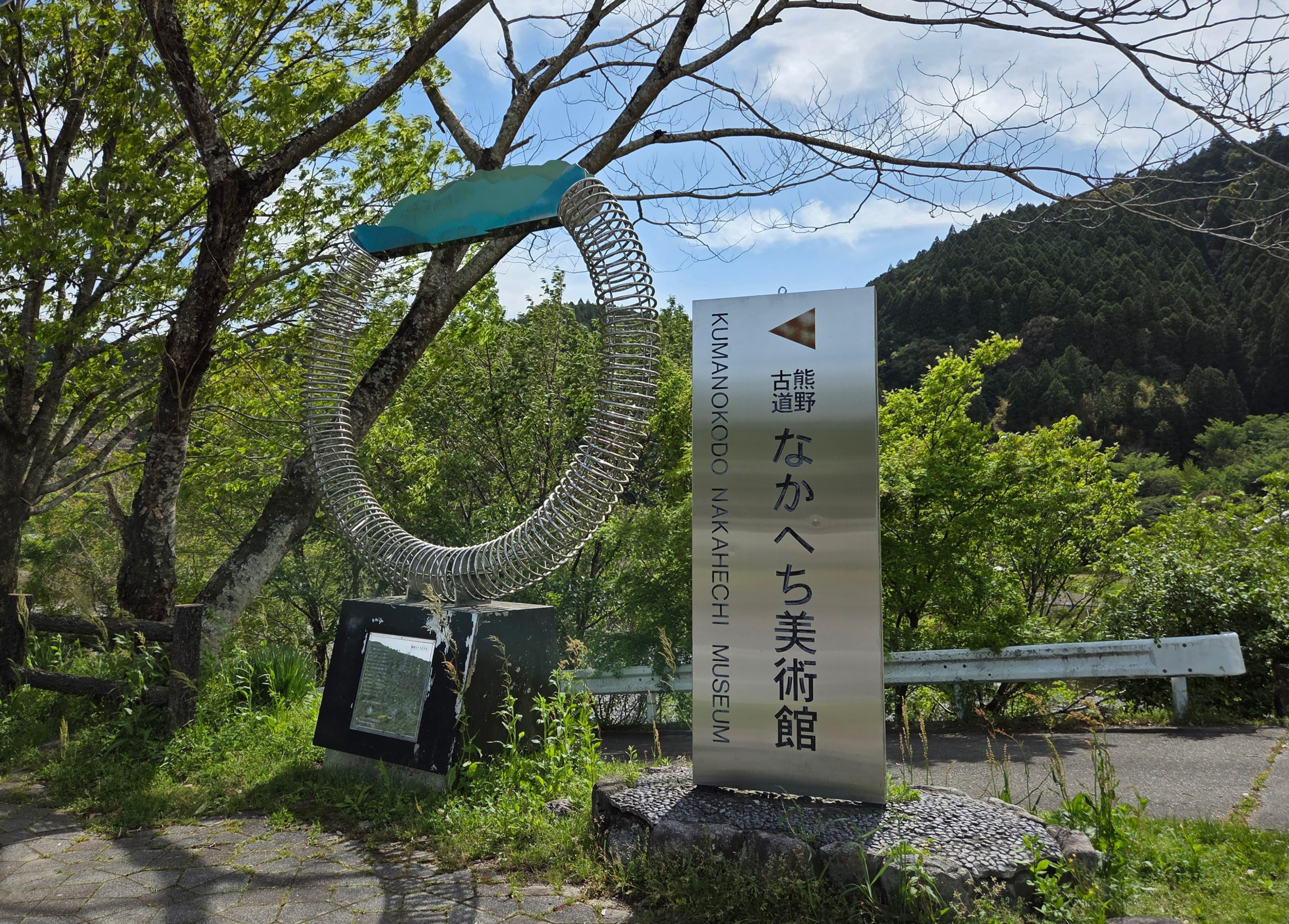
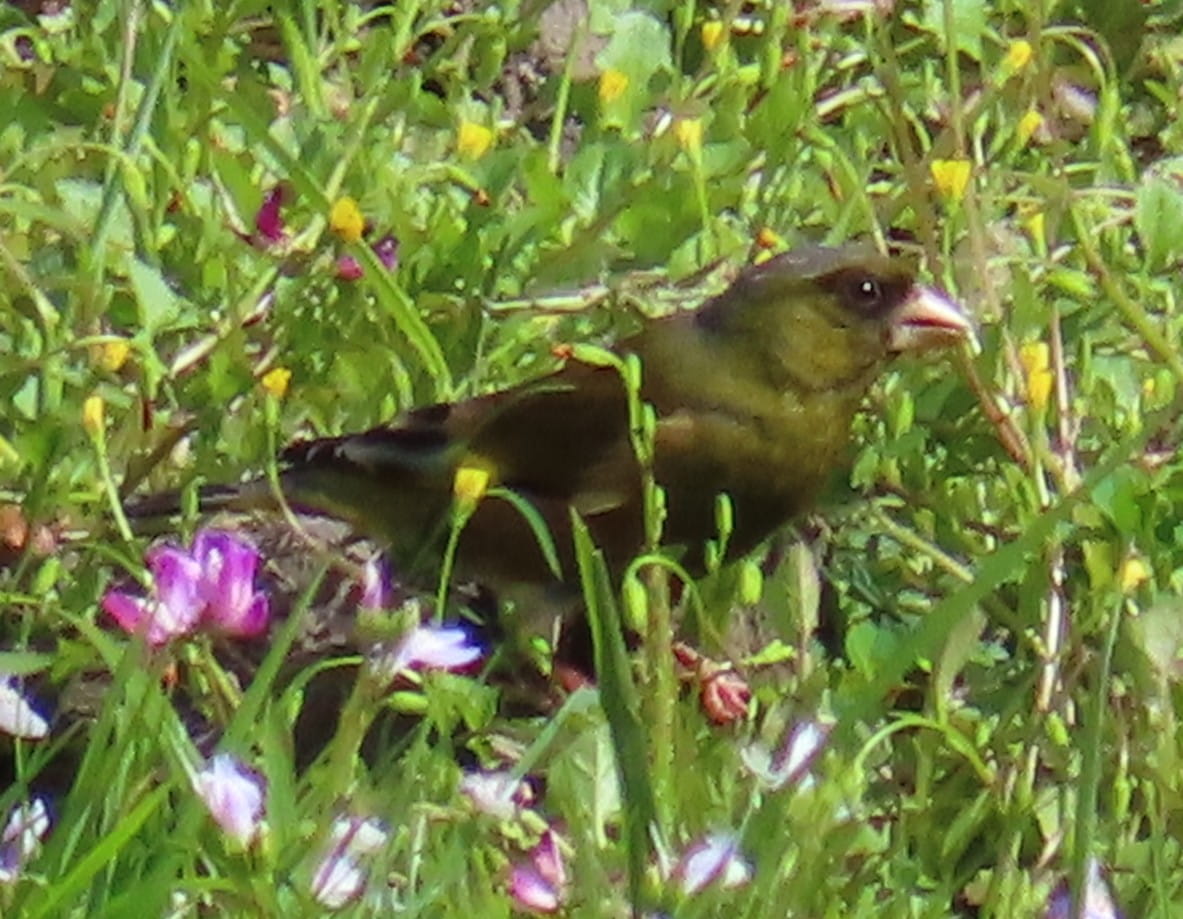
From there, it was a steep downhill hike to reach the valley floor where Kumano Kodo Nakahechi Art Museum was located, though we didn’t have time for an inside visit. I saw a flock of Oriental Greenfinches on a field not too far from the museum.
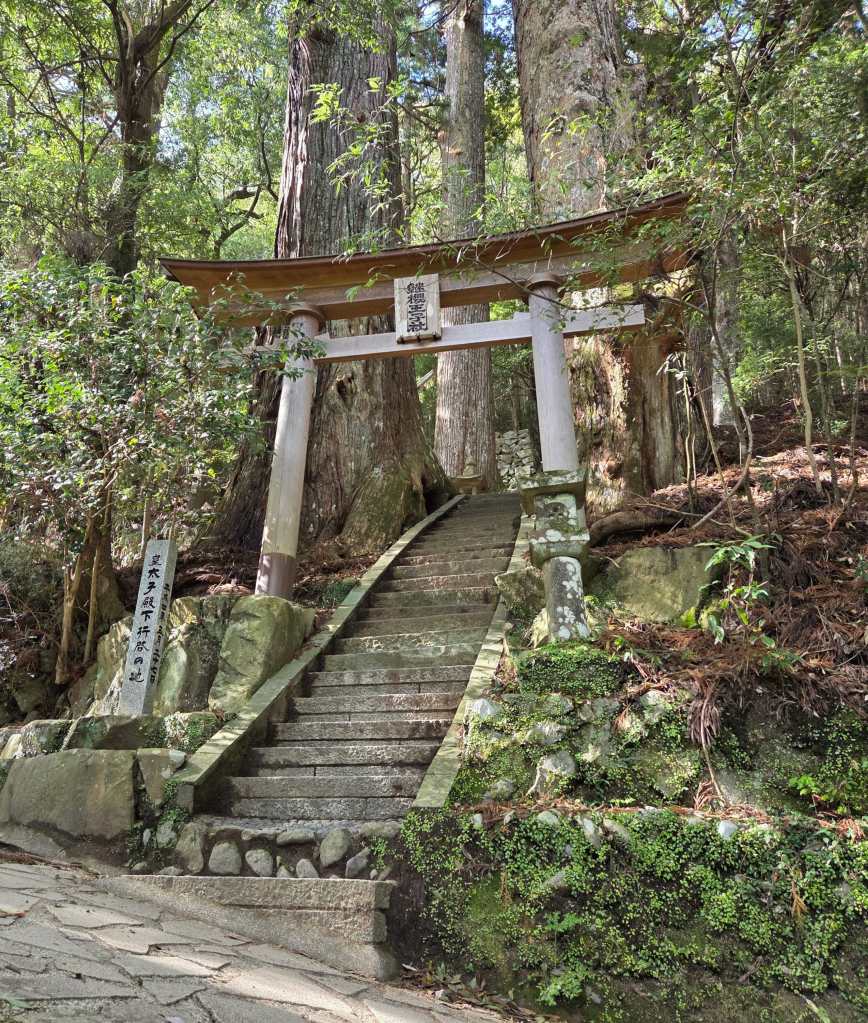
Tsugizakura-oji (stamp point #12) looked impressively, so we spent extra time to look around and to pray. The next stamping station #13 was close by, but the sign wasn’t obvious. We got lost a bit until Rei finally located it.
It was already 3:45pm, and we still needed to walk 1.5km to catch the 4:10pm bus to reach tonight’s hotel. We all power walked and ran to the bus station. Fortunately, this was a downhill section. We all made it to the bus station with a few minutes to spare.
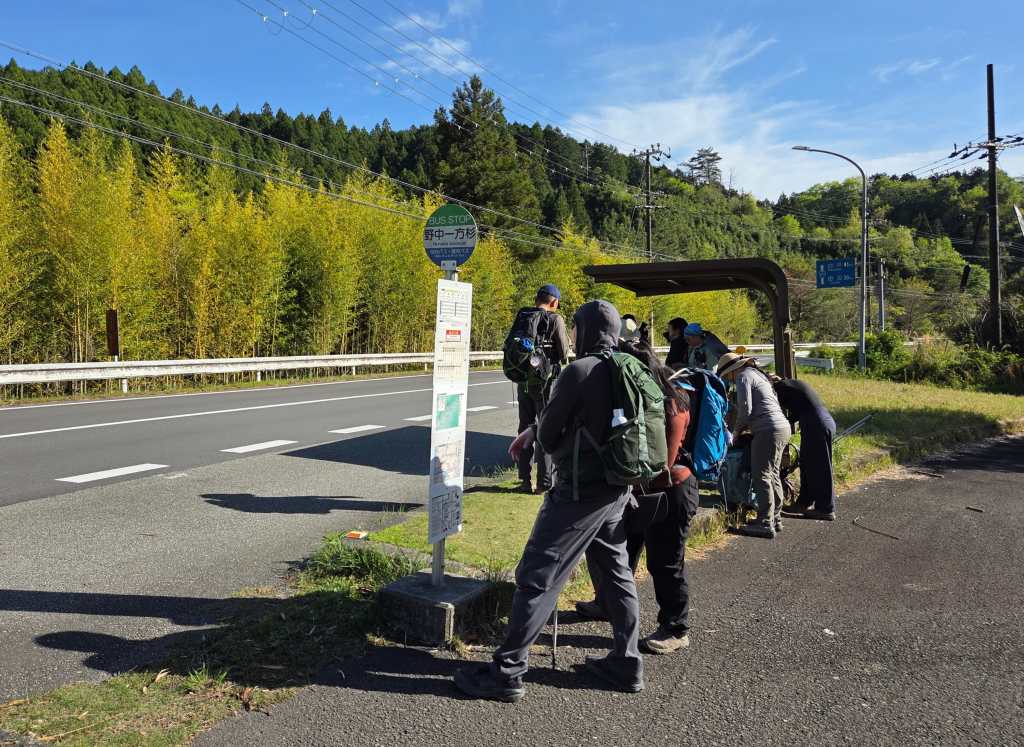
This was our first bus ride, and we didn’t know the correct procedure. We didn’t realize that we needed to get a ticket when on board the bus, so that the bus driver could calculate the fare when we got off. We ended up showing pictures of the bus stop to the driver in order to pay and get off the bus.
Tonight’s hotel, Yunomine-so, was a fancy hot spring hotel. At check-in, we needed to attend an “orientation” to learn how to use the hotel facilities.
In addition to the public baths, thd hotel also had 2 private family baths. Rei and I were able to secure one after only 5 minutes of waiting. Our friends also preferred the private baths. We’re really not used to a “textile free” bath with a bunch of other people!
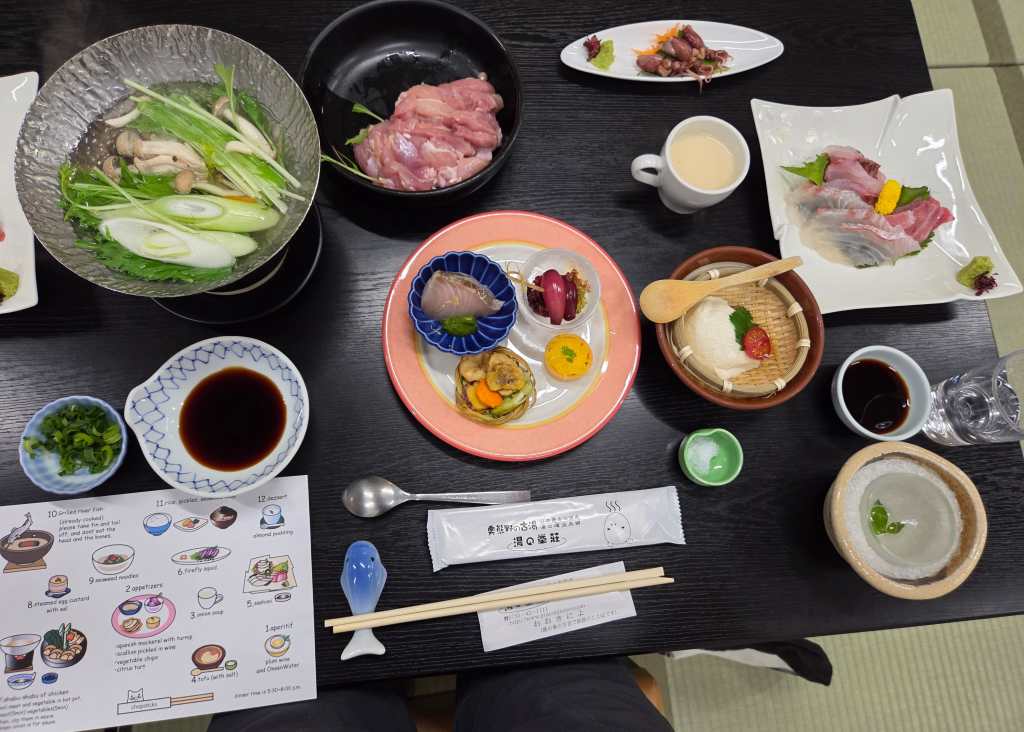
Dinner was at the large dining hall. We had an elaborate 12-course Japanese dinner that came with an instruction sheet labeling the order of the courses from aperitif to dessert! The aperitif was chilled plum wine and onsen water. Even though I rarely drink, I enjoyed the plum wine very much. Everyone in the group loved the wine and the food. The dinner was considered the best meal of the trip. We would spend 2 nights in this hotel and were all very looking forward to additional meals here.
Day 6: To Hongu (本宮) (24km)
In order to get our certificates, we need stamps #14 to #21, so we had to take the 8:29am bus to the stop Doyukawa-bashi to reach the trailhead.
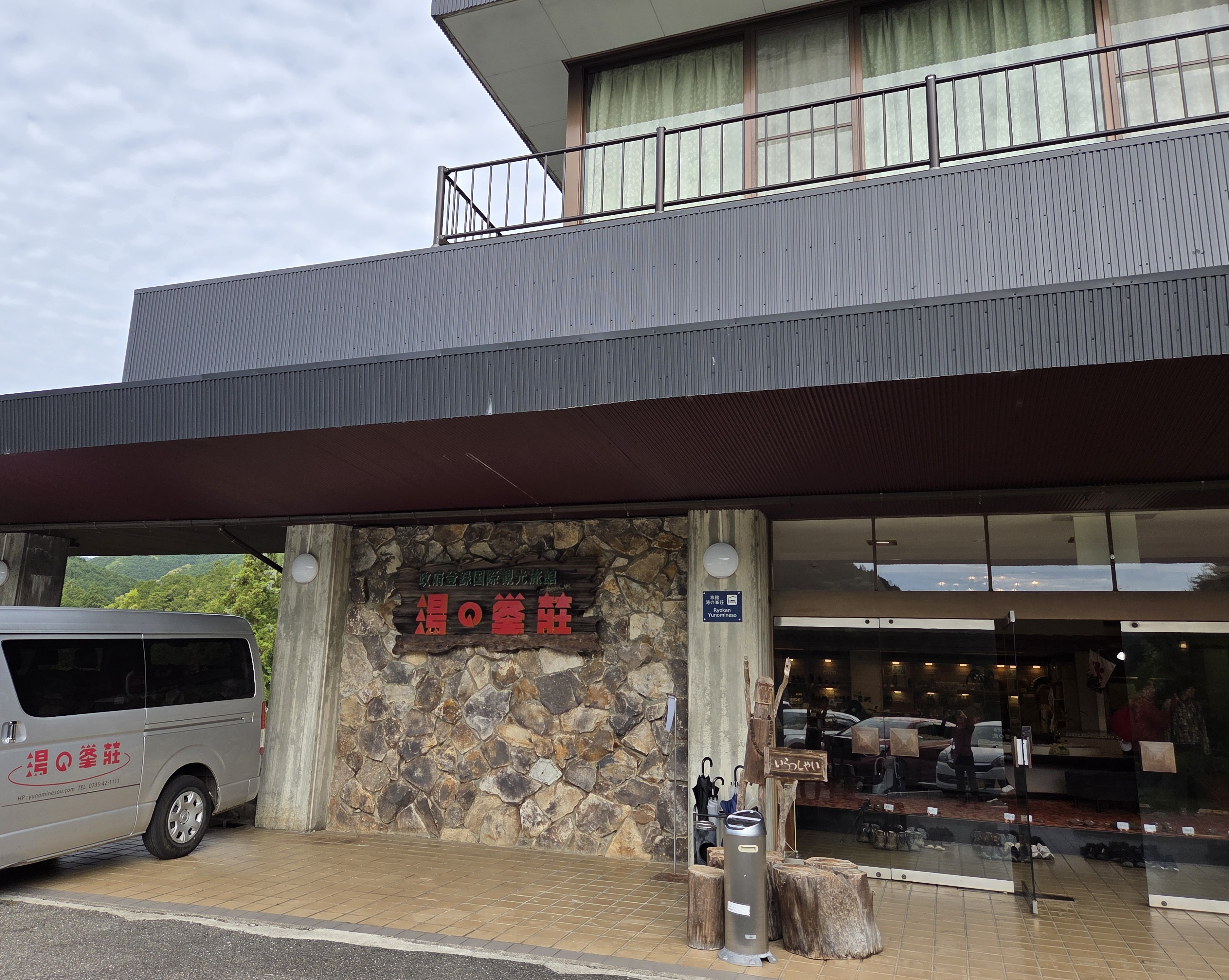
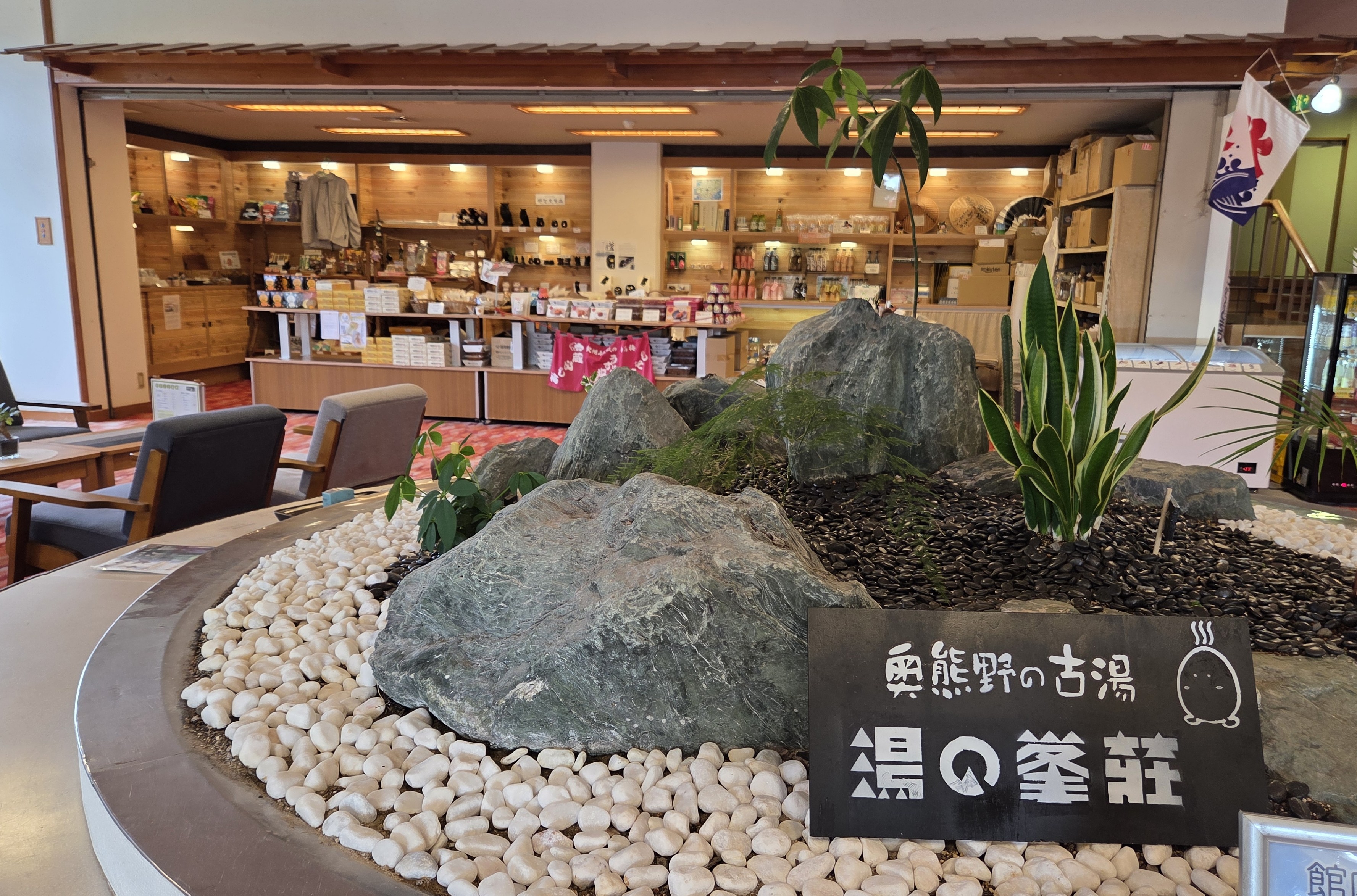
Breakfast was at 7am. It’s a delicious Japanese style breakfast that we all enjoyed. The hotel would arrange a ride to take us to the Yunomine Onsen bus stop at 8:15am. Because Rei rushed me to our hotel room after checking in yesterday evening, I went down to the hotel lobby to take some photos before leaving.
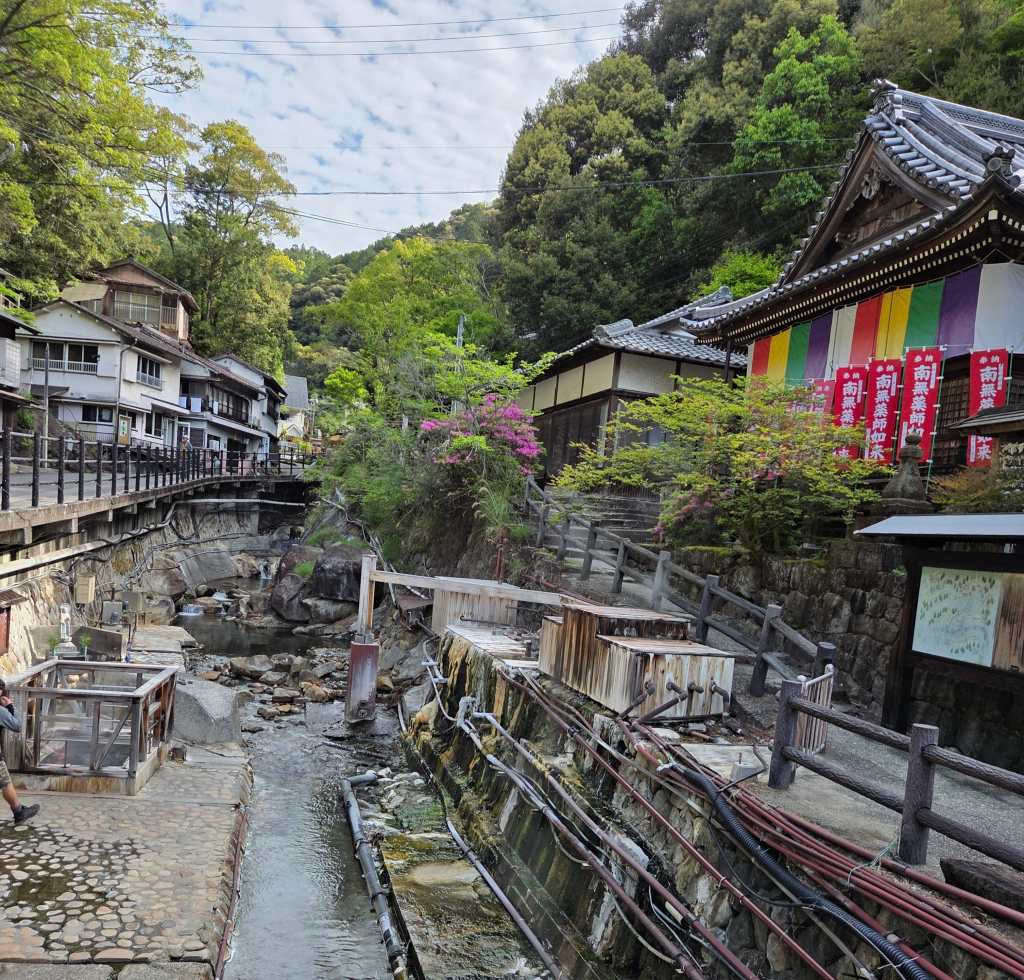
Yunomine Onsen was a quaint little town with traditional Japanese buildings. There’s a hot spring creek flew through the town with a small open-aired hot spring tub right by the creek. The town also had a public bath that people could pay to enter. Since our bus would arrive shortly, we didn’t have time to linger.
This time we knew the proper procedure for a bus ride: when we boarded the bus from the back door, we had to get a small paper ticket to indicate our starting point. We got off from the front door, handed the paper for the driver to calculate the fare, and then paid to get off the bus.
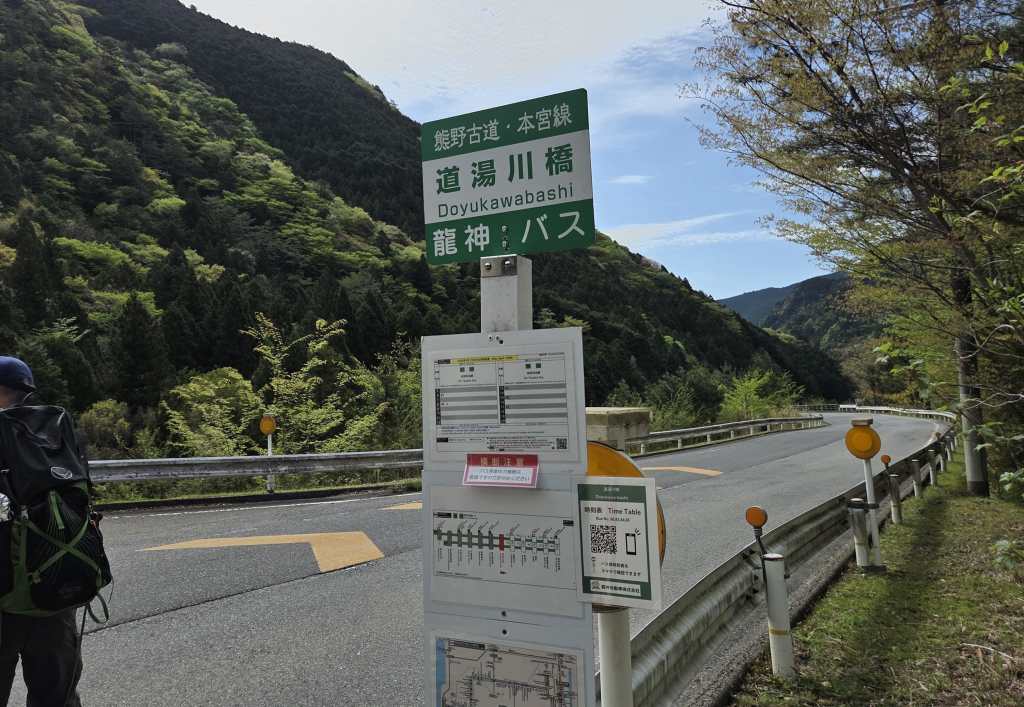
Most passengers on the bus were hikers with a backpack and hiking poles. When the bus arrived at Doyukawa-bashi stop, many people got off with us. The trailhead was just across the road.
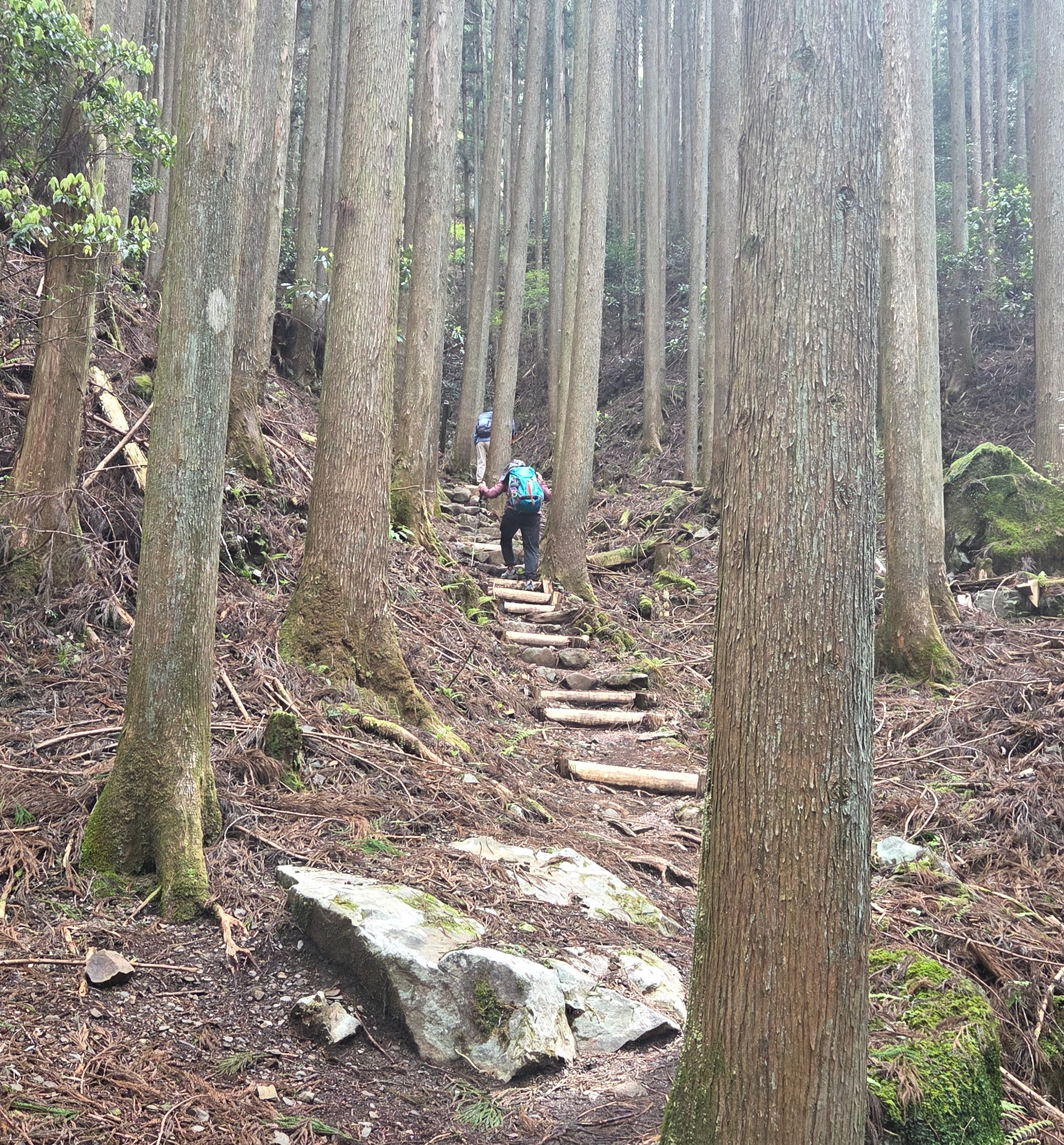
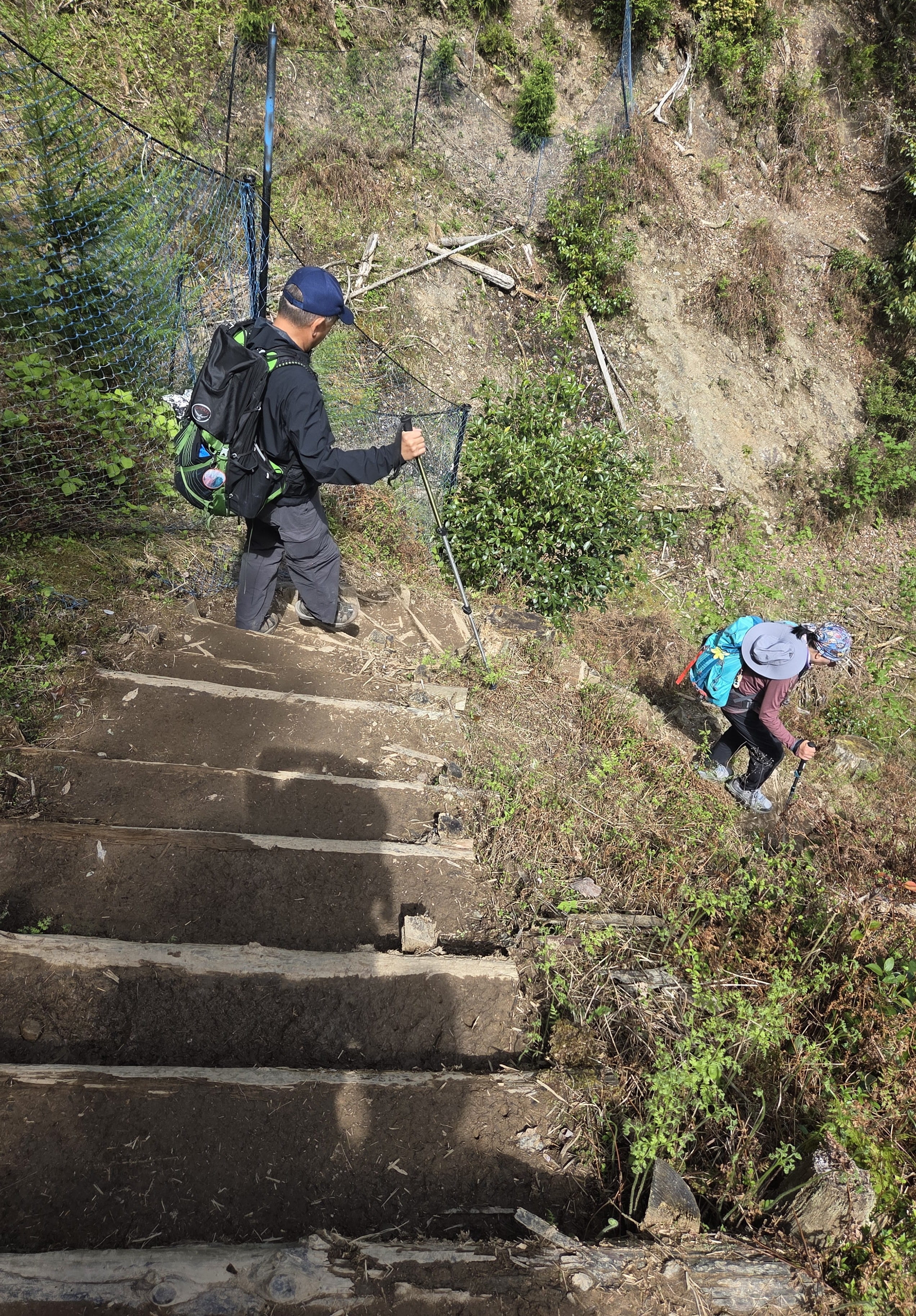
The trail started with a section on the paved road. Soon we turned right to walk on a narrow steep trail leading unrentlessly uphill. After much climbing, we finally reached today’s first pass. Then it was a steep downhill hike until we arrived at a section of dirt road with gentle slope. The hike was more enjoyable afterwards.
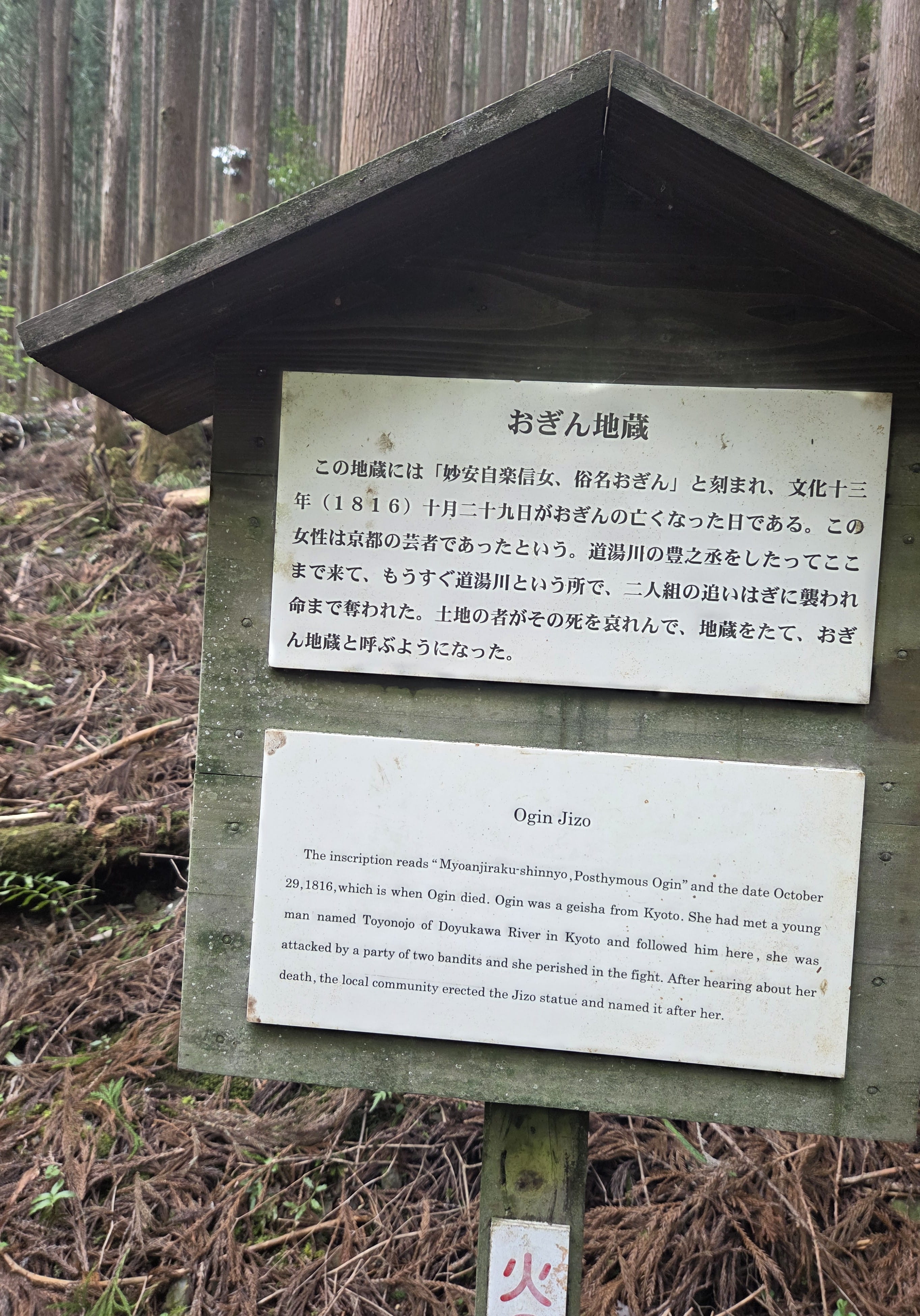
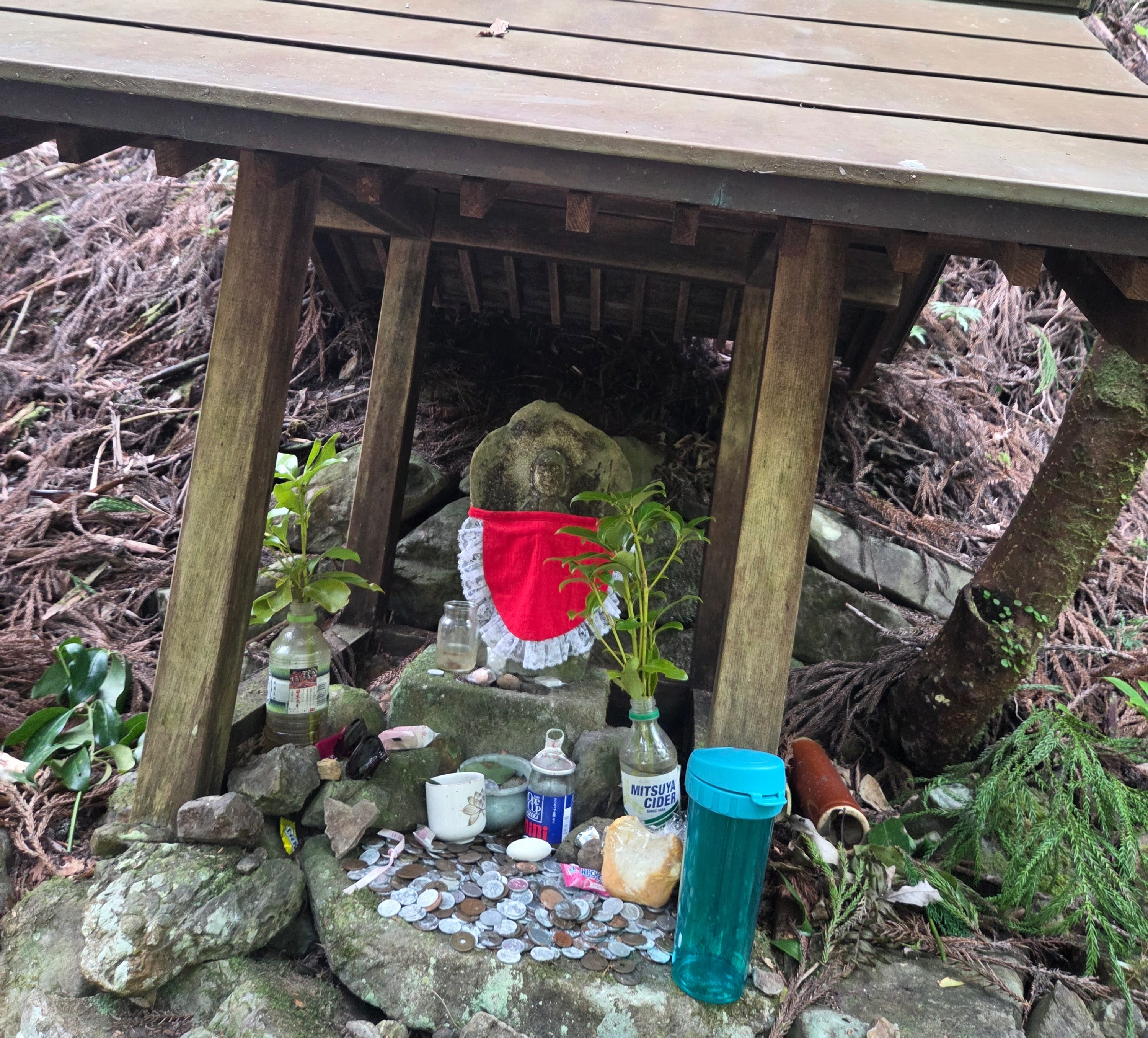
As I’ve mentioned previously, Kumano Kodo was full of history. Hikers should take time to read the roadside descriptions (many had English information) rather than just blasting through. There was a sign Ogin Jizo telling the story of Ogin, a geisha from Kyoto. Ogin met a young man in Kyoto and followed him on the road. She was attacked and killed by two bandits. After hearing about the tragedy, local community set up a memorial for her along Kumano Kodo.
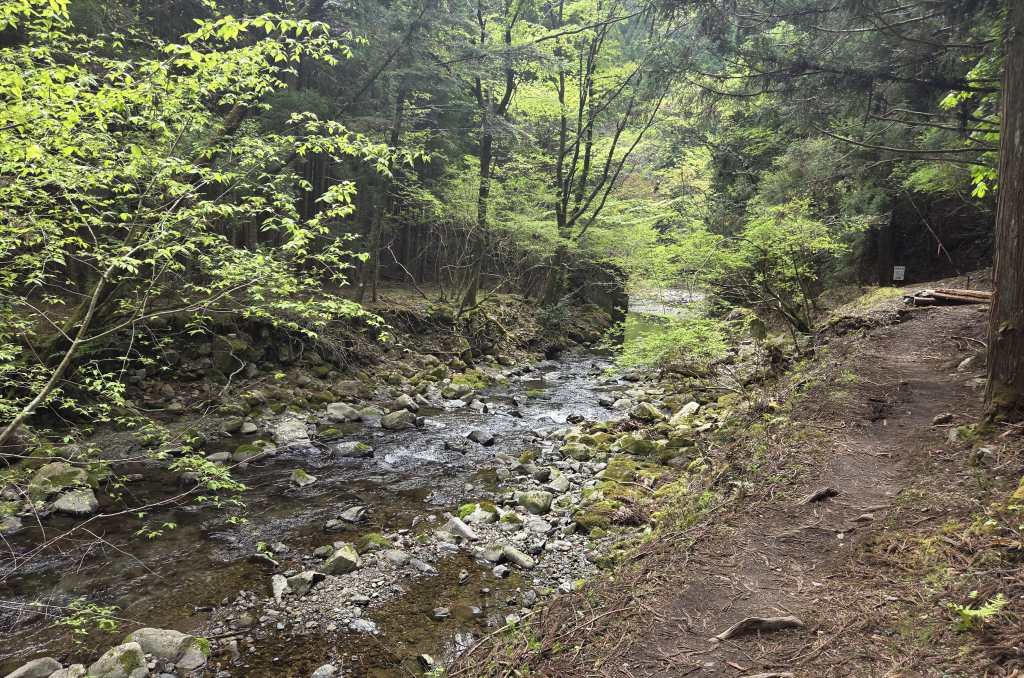
The next section of the hike was on a gentle dirt forest trail along a small creek. It was a very pleasant hike that reminded me of hiking in Marin county.
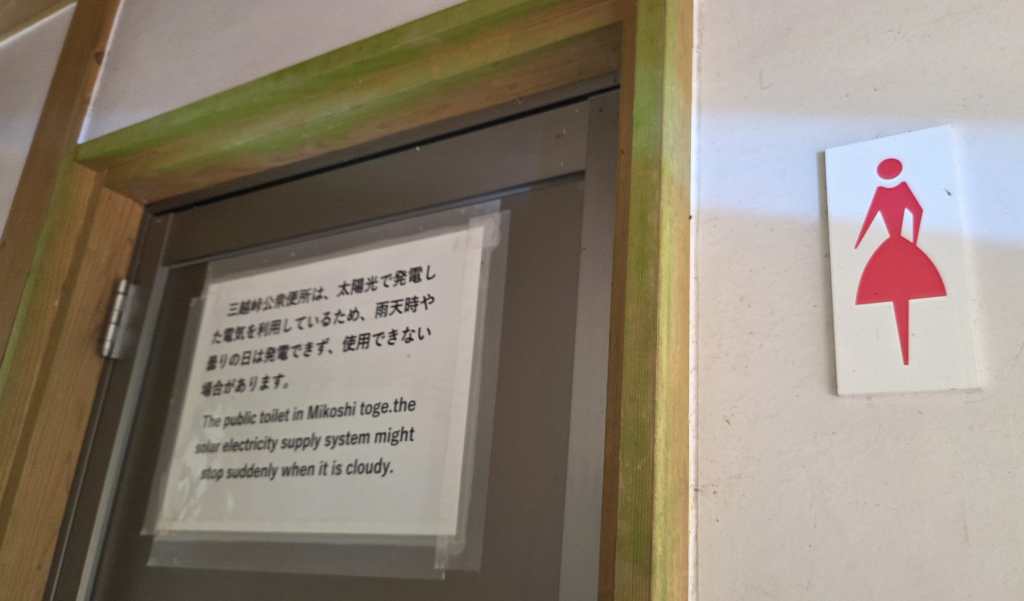
It was another very steep climb until we reached the second pass. There was a rest area with restrooms. Though it was only 11:15am, we decided to take our lunch break here. There was a sign outside of the restroom saying that the toilet was powered by solar energy, and it might not flush on cloudy days! (A major issue with renewable energy.) Fortunately, it was sunny today.
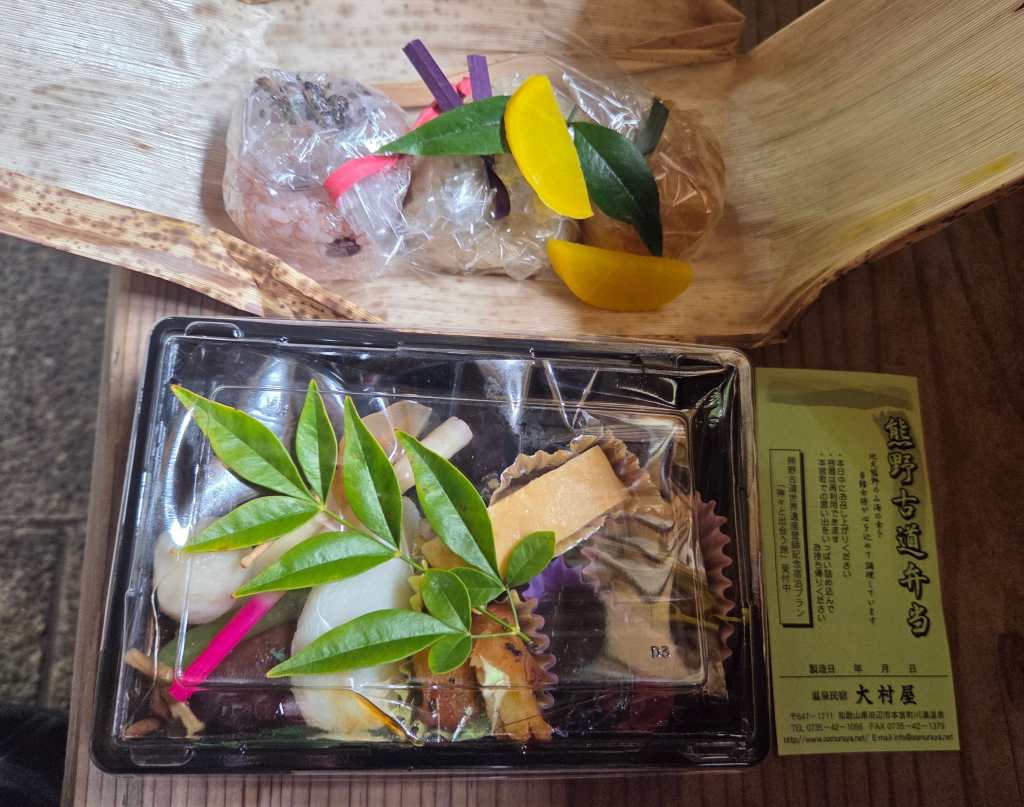
We all had a beautiful Japanese bento and rice balls from the hotel. Though it looked like an artwork, the portion was small, so we supplemented with our own chocolate and nut bars.
Since the rest area was at a pass, the next section was another steep downhill walk. Then we reached Michinogawa Settlement ruins and saw other hikers having their lunch on a grassland.
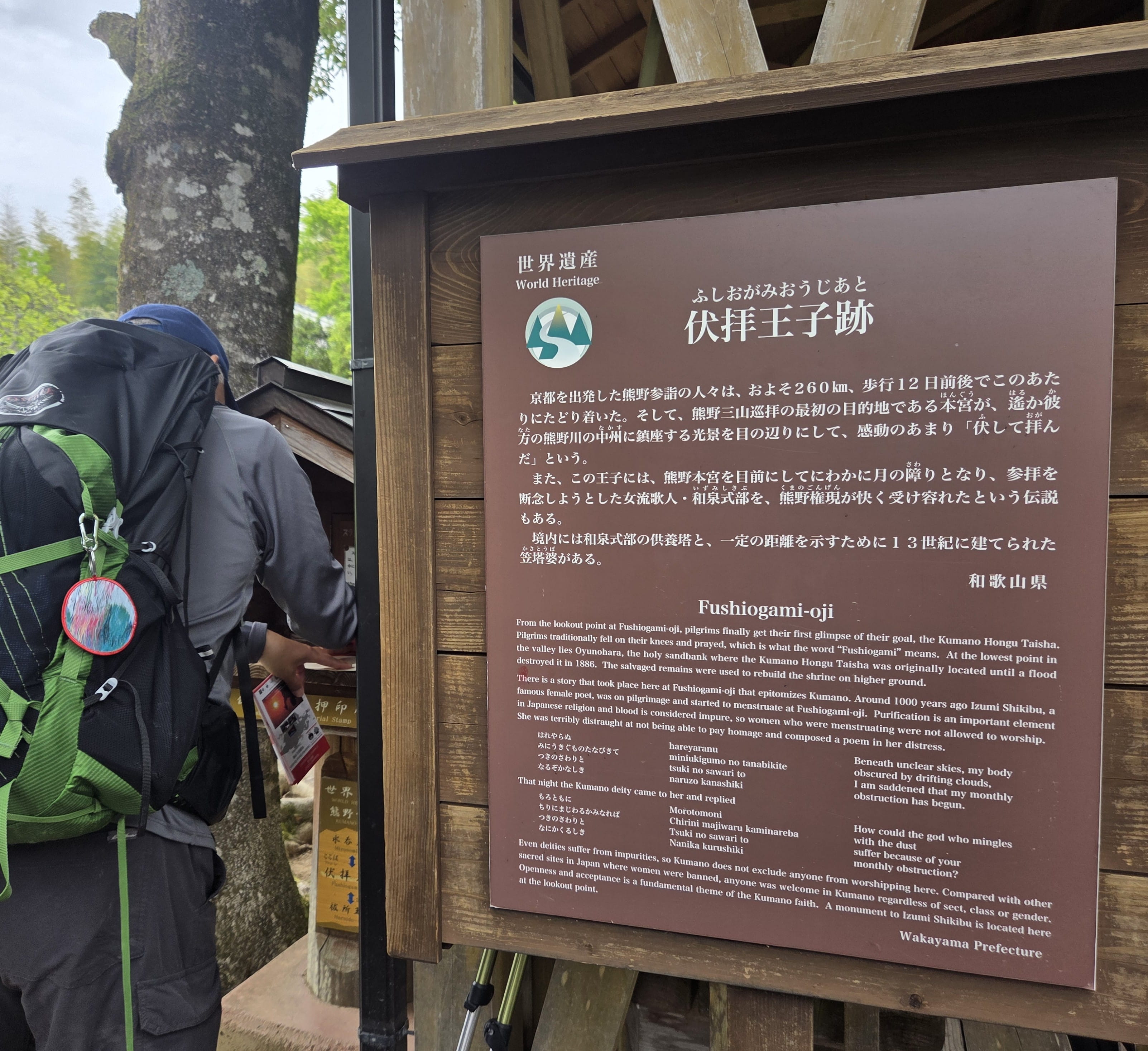
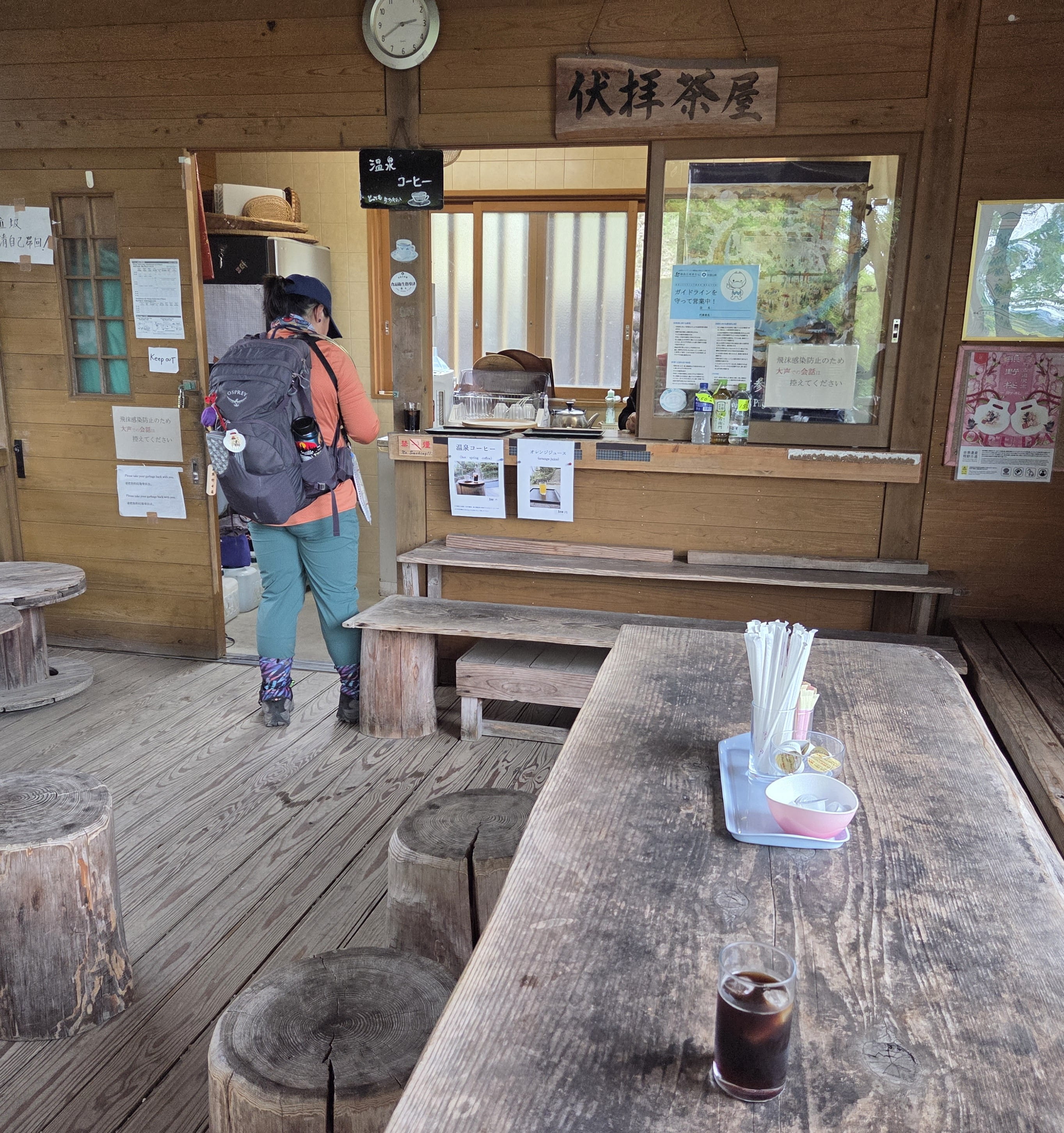
There were several stamping stations on the way. We reached Fushiogami-oji (Stamp point #19) around 3pm. There was a small cafe selling Onsen Coffee. Everyone in the group wanted to try. Rei ordered an iced coffee (310 yen) to share with me. We both liked it.
A friend changed into her new Dual Pilgrim T-shirt she purchased yesterday.
“Where did you get that T-shirt?“
“In a store at yesterday’s lunch break place. I asked whether we should buy one too and you said no firmly,” I retorted.
“I didn’t realize that it’s a Dual Pilgrim T-shirt!“
We resumed walking after the coffee break. It was about 2 more miles to reach today’s destination Kumano Hongu Taisha (熊野本宮大社). There was a detour to a high up viewpoint. I wanted to skip it, but Rei said the place offered an excellent view of the great torii gate near Kumano Hongu Taisha and friends were all very excited!
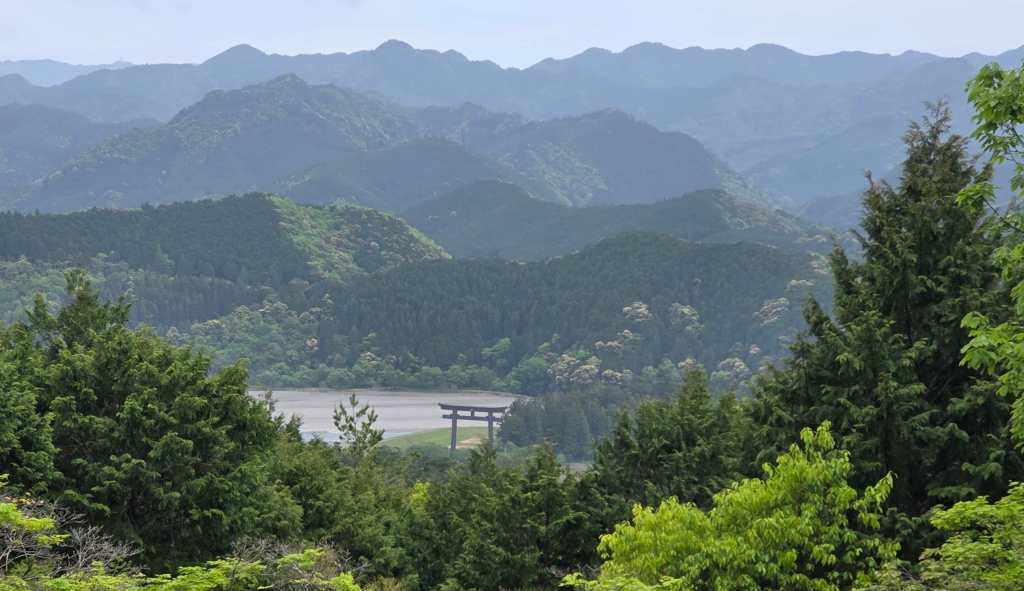
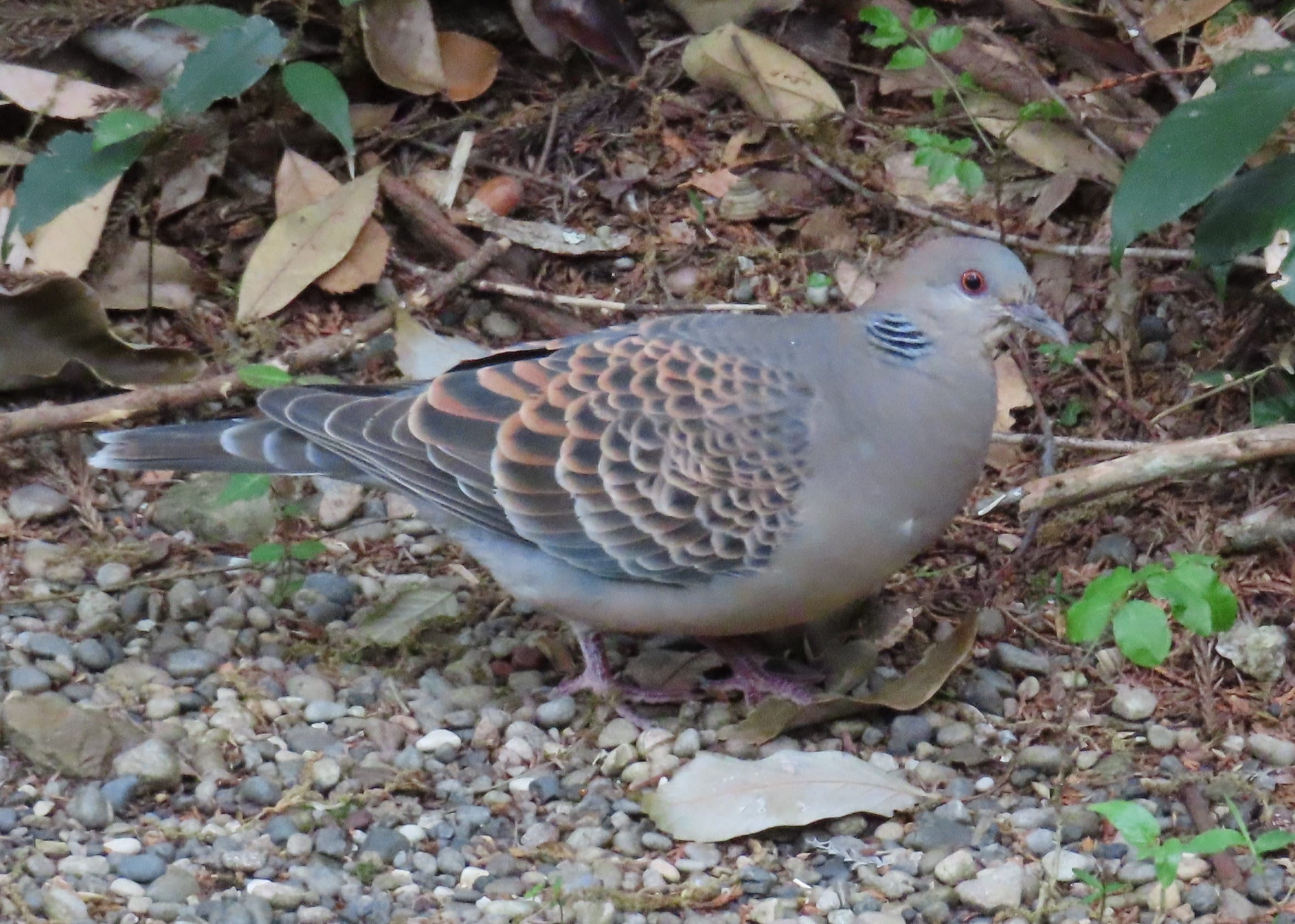
The view of the great torii was indeed magnificent. We spent a long time taking many photos there, so when we arrived in Kumano Hongu Taisha, it was already past 4pm. We saw an Oriental Turtle-Dove before reaching the temple complex. This was the only Oriental Turtle-Dove we saw on this trip.
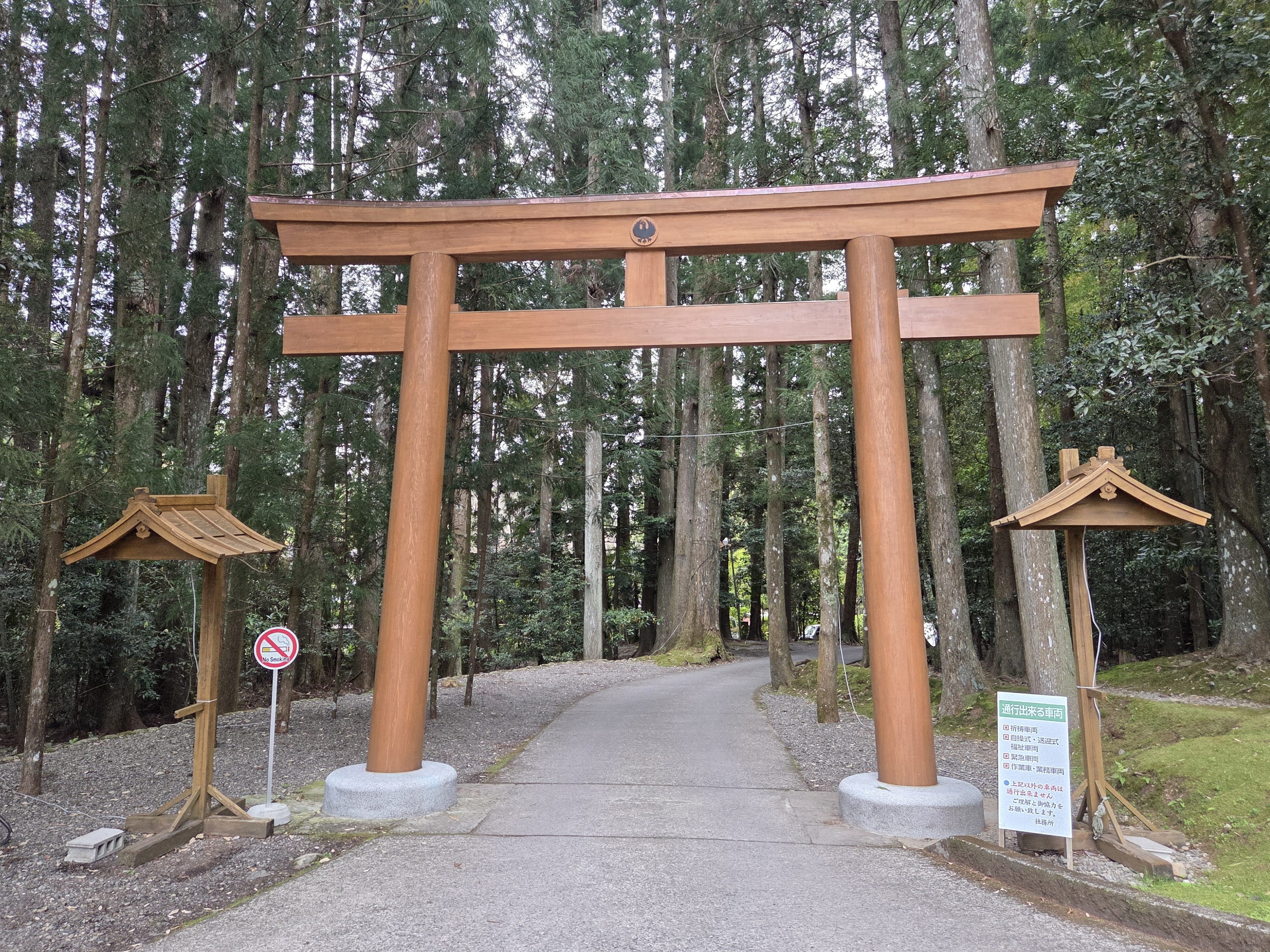
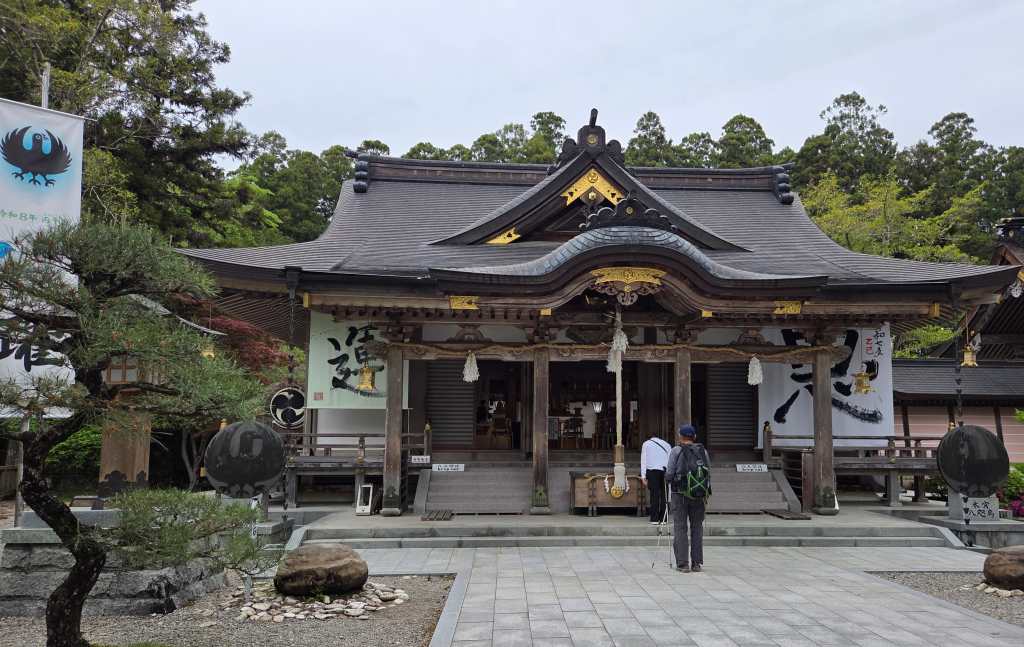
Two friends also completed a camino walk, so we were qualified for a Dual Pilgrim certificate (El Camino + Kumano Kodo). To get the certificates, we had to go to the information center, which would close at 5pm, so we rushed there.
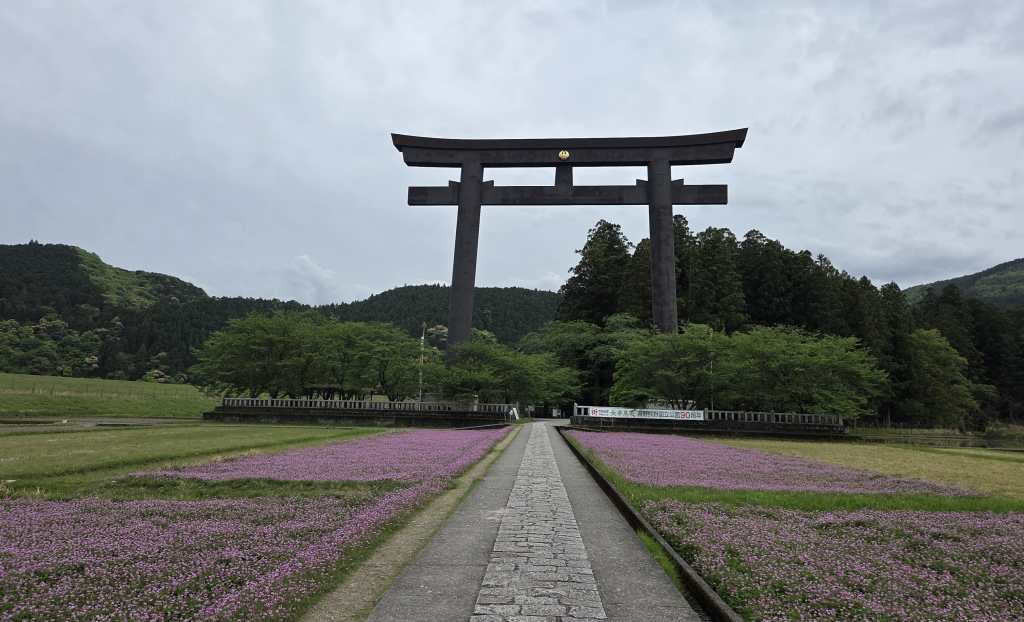
Afterwards, we walked to the great torii gate to get another stamp (Stamp point #22). We already missed the last returning bus at 4:40pm. A friend contacted the hotel, and they sent out a shuttle to pick us up.
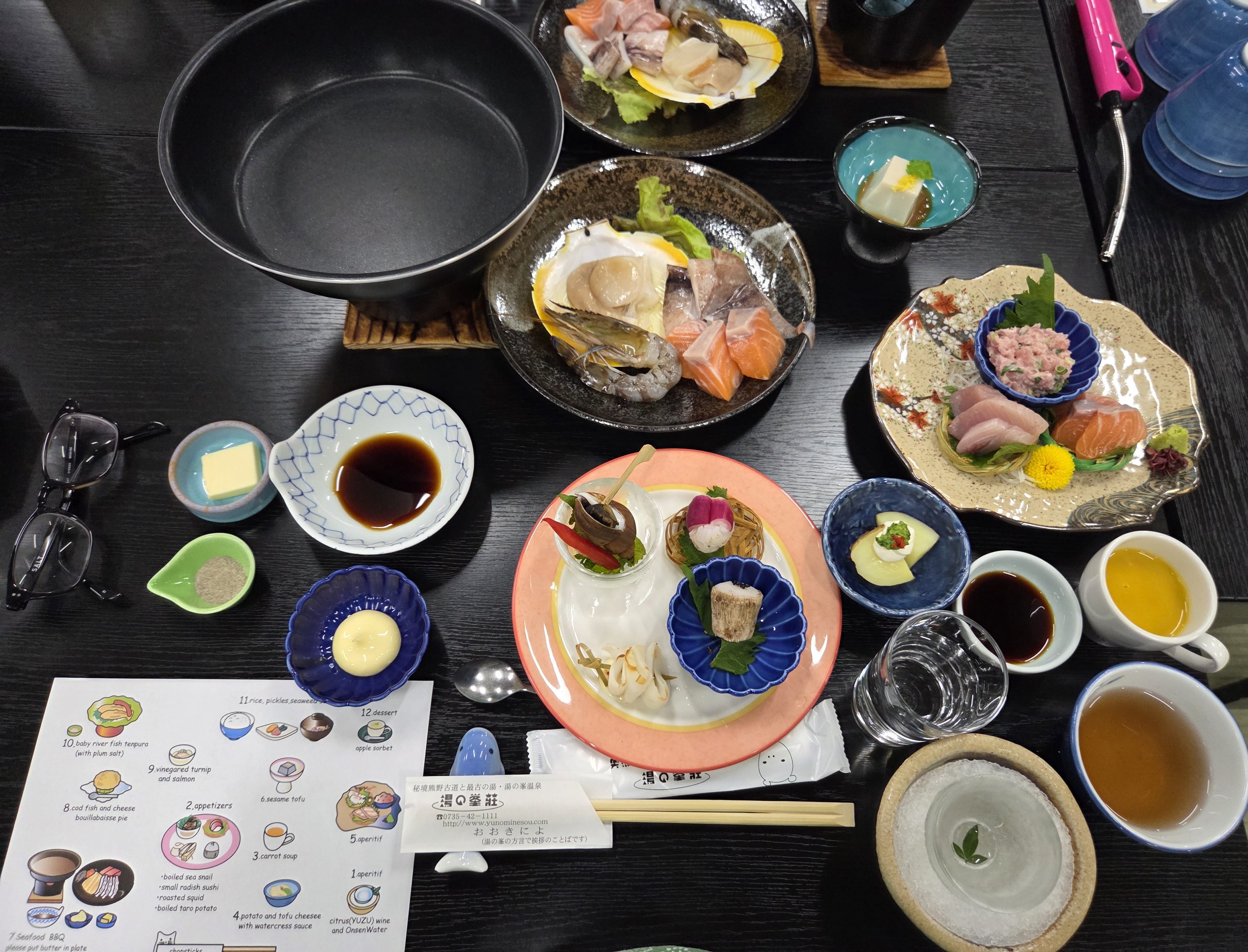
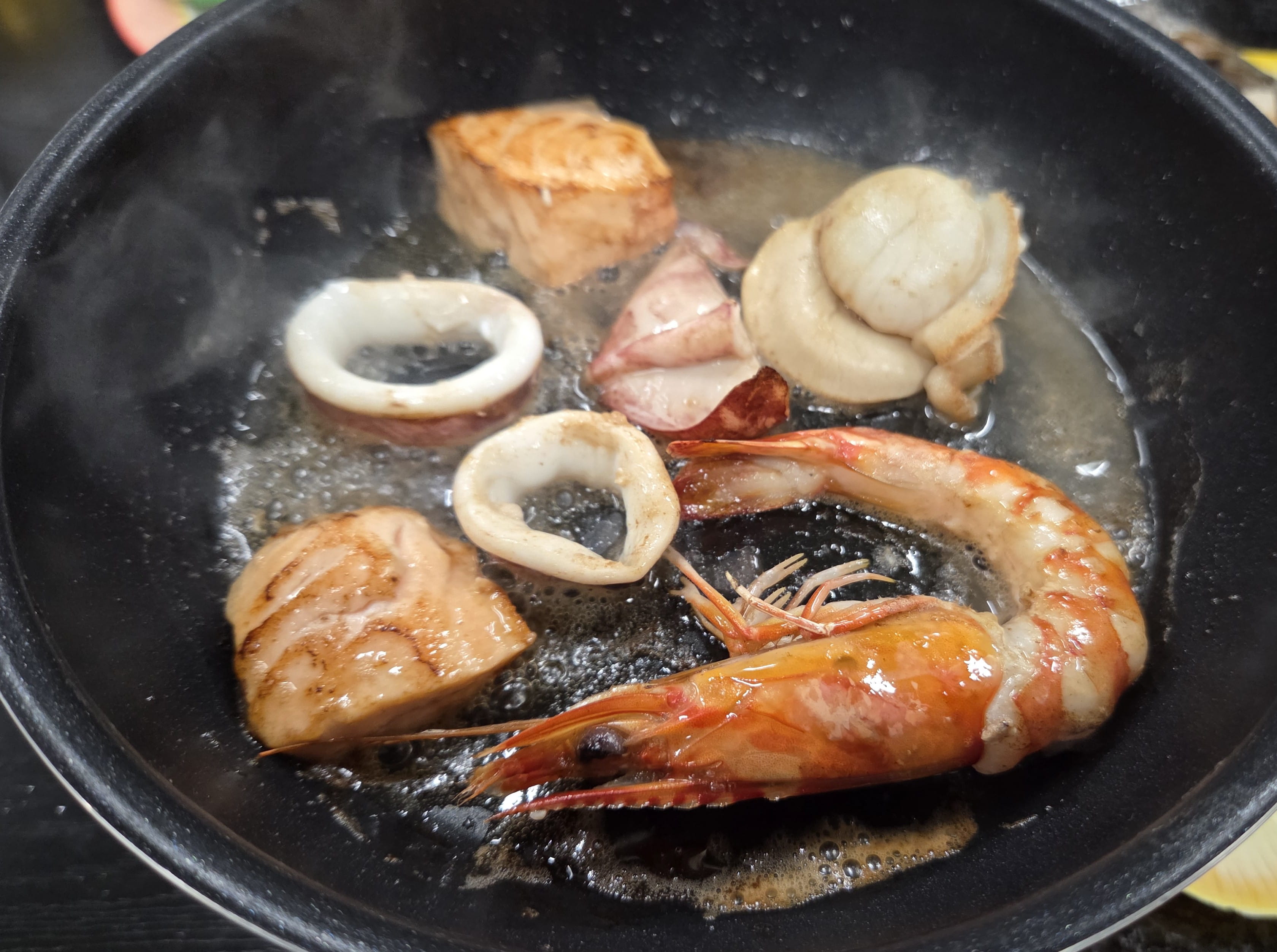
We returned to the hotel around 5:50pm. Rei and I hurried to the family baths. Both baths were available, so we took one to have a quick bath before going to dinner at 6:30pm. We had another fantastic Japanese dinner (with instructions too).
We were lucky to have great weather so far. Tomorrow is “guaranteed” to rain, and it even can be a storm! So, we spent most of the dinner time discussing our options to no avail. The conclusion was to check tomorrow’s weather live to decide.
Day 7: To Koguchi (小口)
Today we were supposed to take a bus to Ukegawa (請川) and then walked around 10 miles to Koguchi on a forest trail. This route involved a steep downhill on an unstable terrain. We were told that there would be heavy rain today, and the trail could be unsafe. Most hikers in the group, including Rei, refused to walk today, so we decided to go for an alternative plan.
We checked out around 8am and took a hotel shuttle ride to the Yunomine Onsen bus station. The first thing we did was to climb a nearby small hill to get the #23 stamp we missed yesterday.
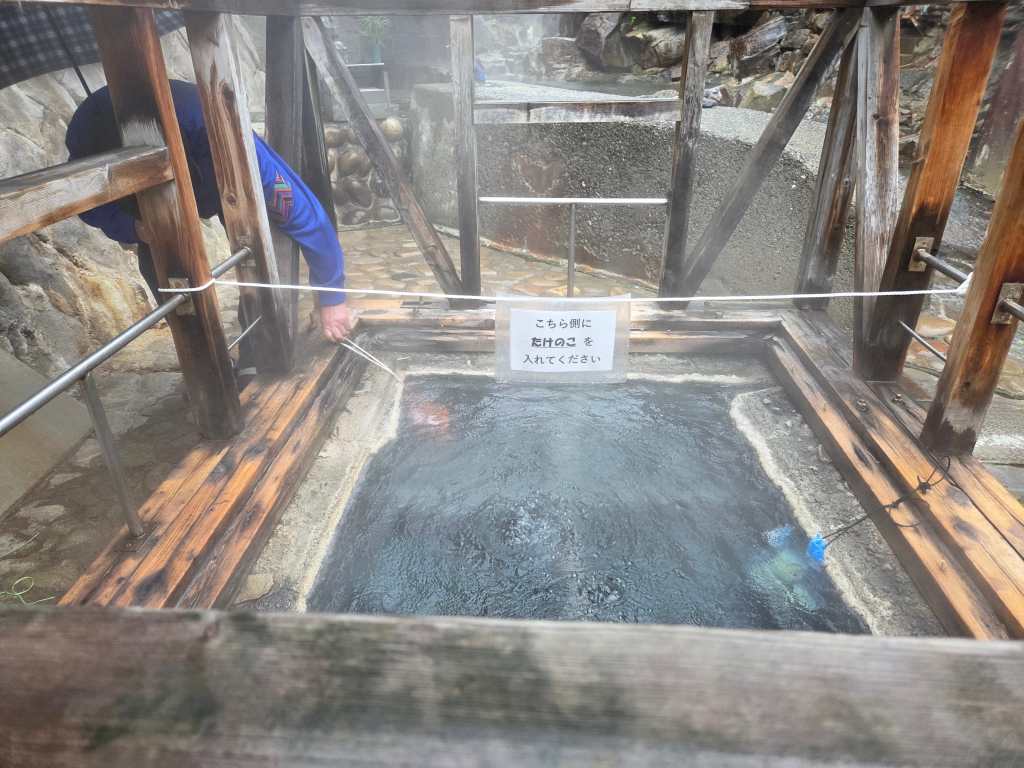
There was an outdoor open-aired hot spring along the creek. I thought it was an outdoor bath, but I saw a guy placing a bag of eggs and vegetables into the hot spring. It suddenly dawned on me that the small pool was for cooking instead of bathing!
Afterwards, we took a different bus to Hongu to spend the morning there. The bus was crowded, and we saw many visitors in Hongu. It seemed that many people were doing Plan B today.
Yesterday we only had time to stop by the information center to get our Dual Pilgrim certificates. This morning we had time to explore the Kumano Hongu Heritage Center.
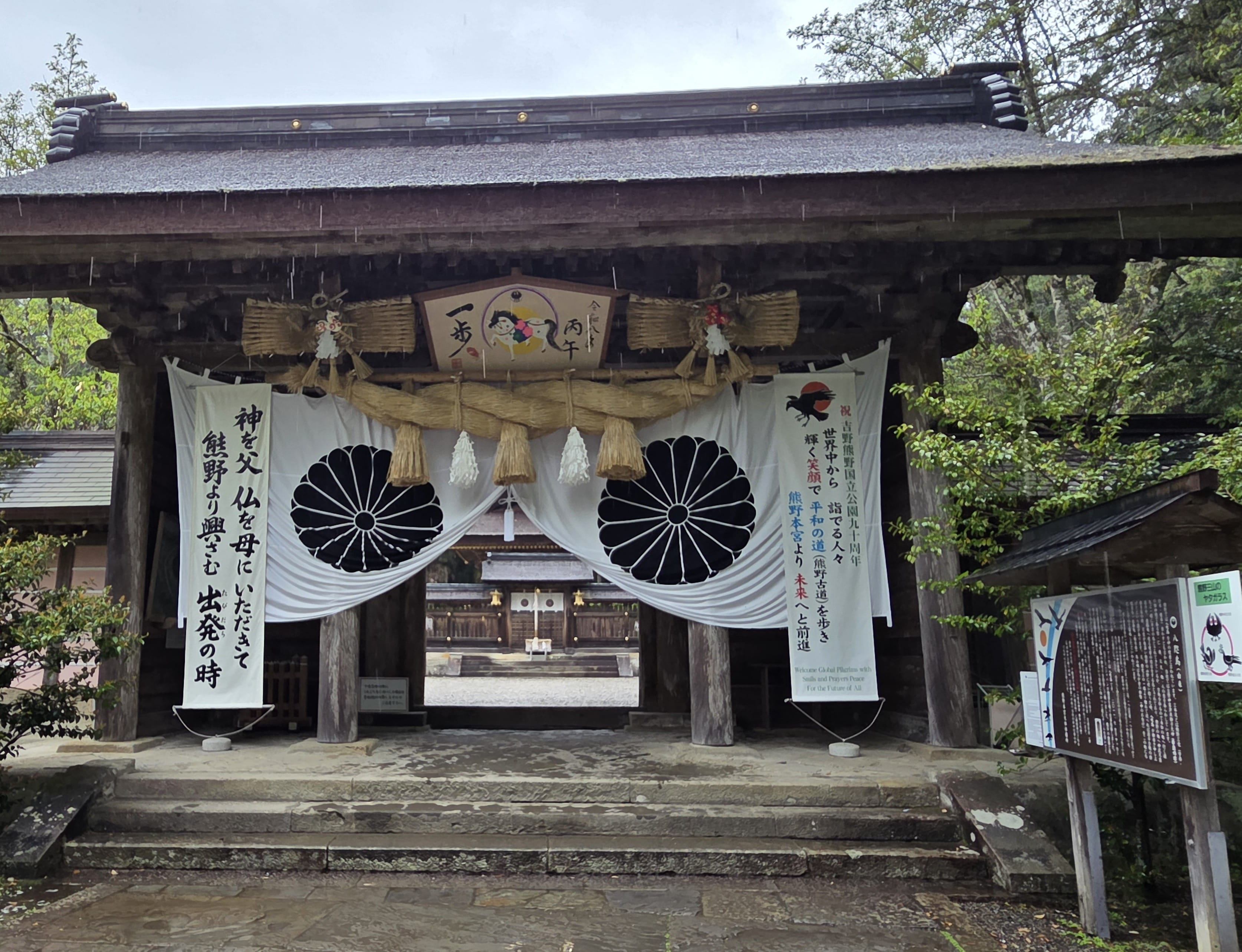
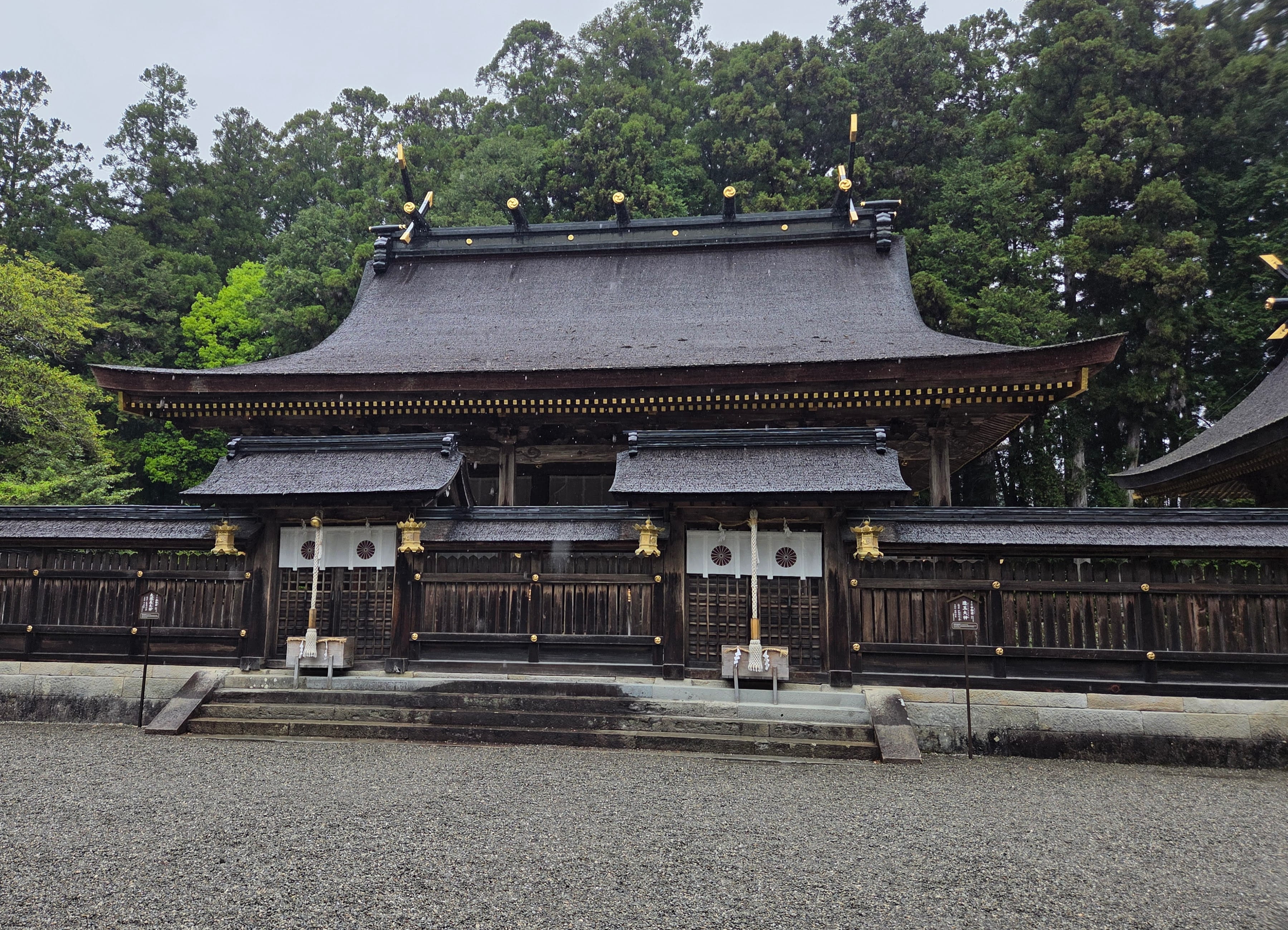
Then Rei and I climbed a lot of stairs to reach Kumano Hongu Taisha. There were 3 connected temples with 5 praying points. The buildings were magnificent. It was still very early, and there were only a few other visitors onsite. The Taisha was closed for inside visit, and people could only pray from outside. The correct praying process is: make a small donation, deep bow twice, clap hands twice, say your prayer, and then deep bow one more time.
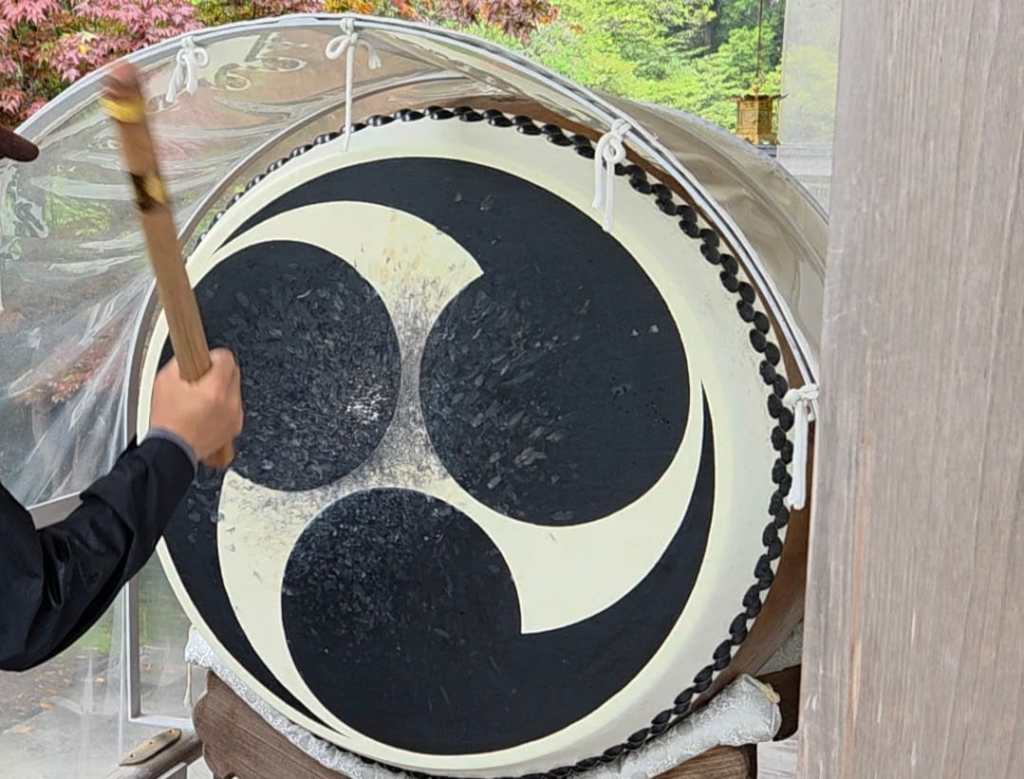
Two friends who also completed dual pilgrim wanted to participate in a drum ceremony, which only qualified pilgrims could perform. The four of us filled out a form after they checked our qualification. An official staff member led us to a big drum and showed us how to beat the drum using a provided stick. We four took turns to beat the drum and to video one another performing the ceremony.
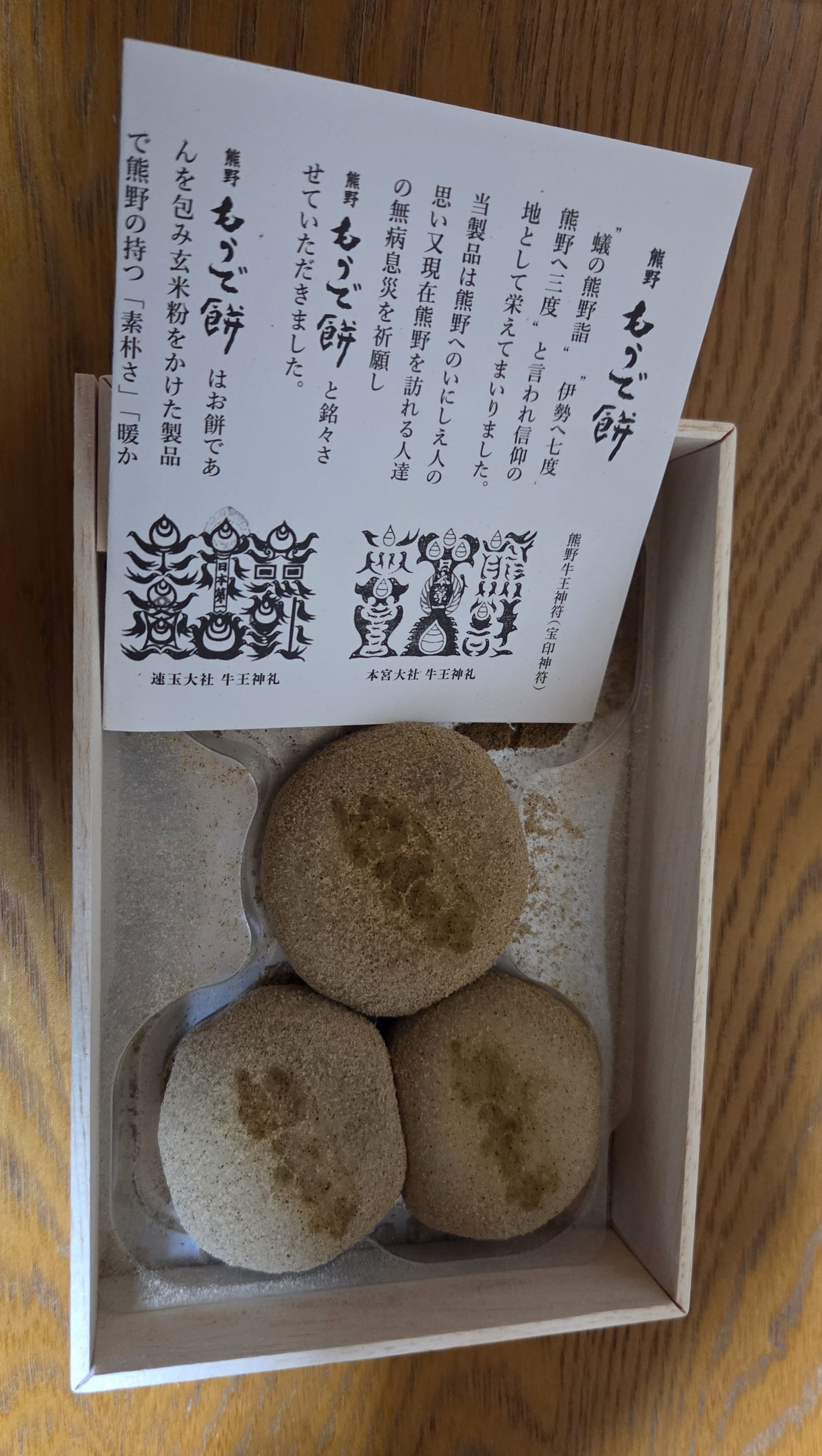
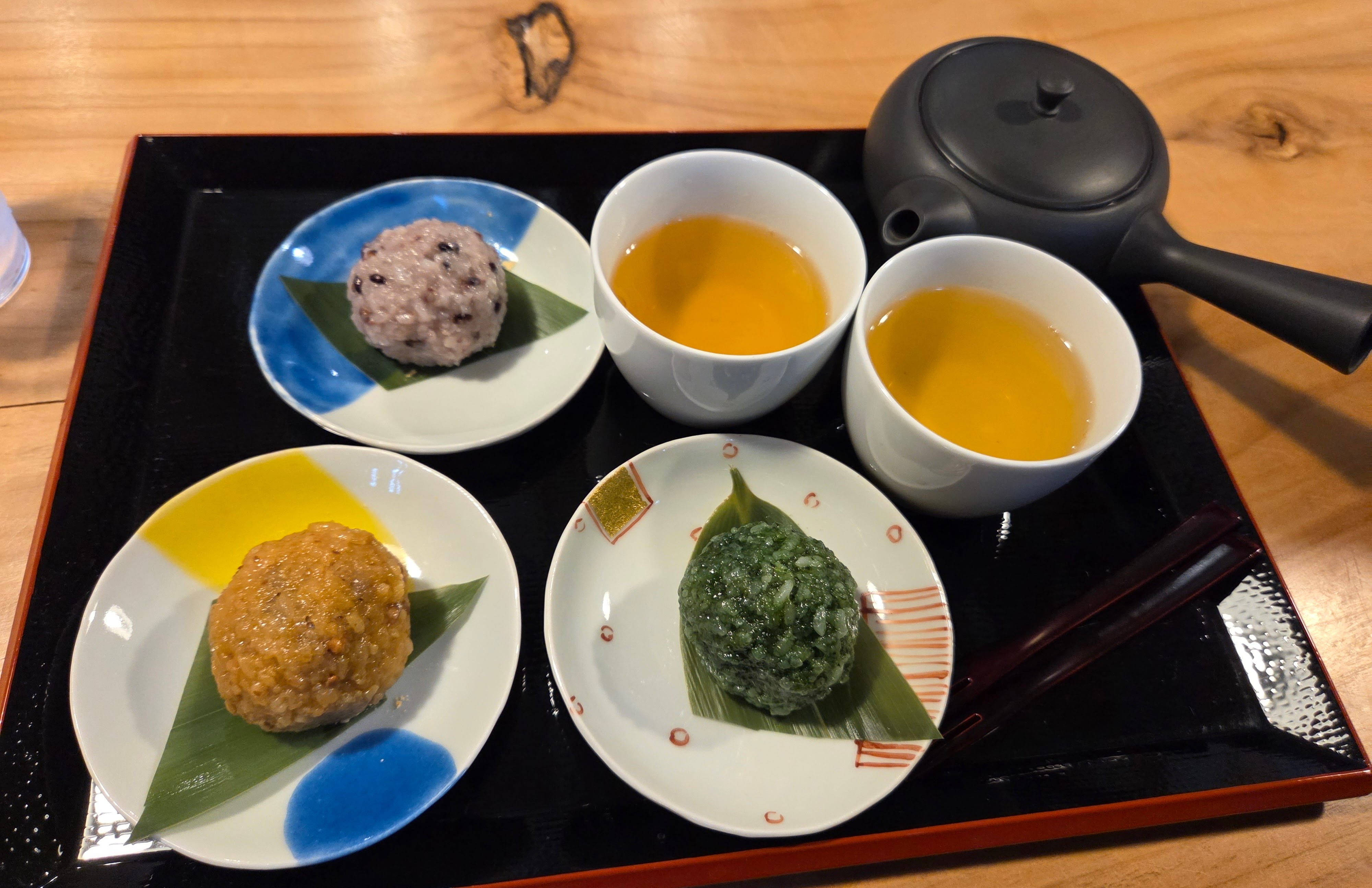
We had extra free time to explore the area. Since it was raining, there wasn’t too much we could do. Rei and I bought a box of Hongu red bean mochi and went to a cafe to have Japanese tea and another kind of famous local rice cakes with red bean paste inside.
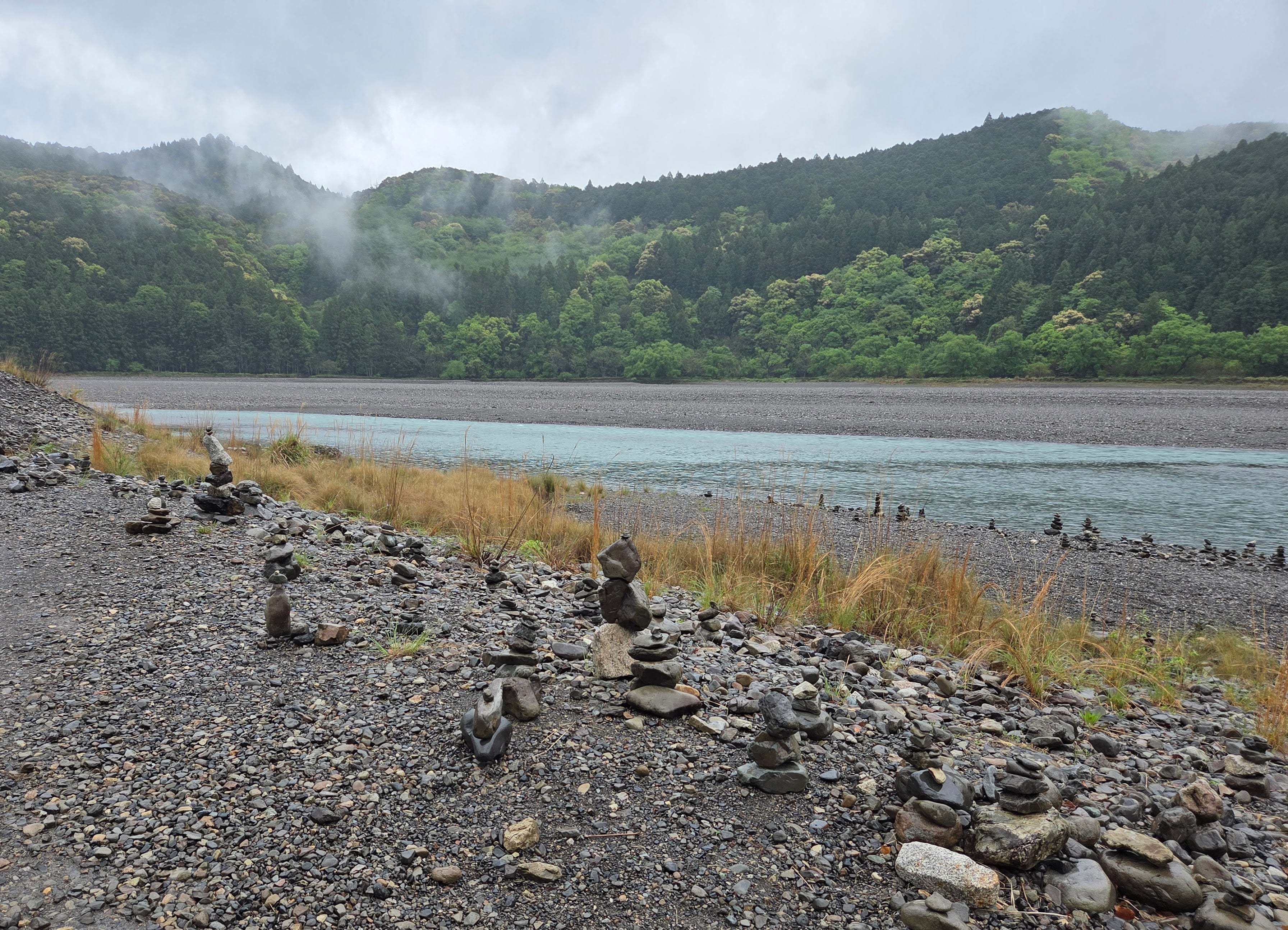
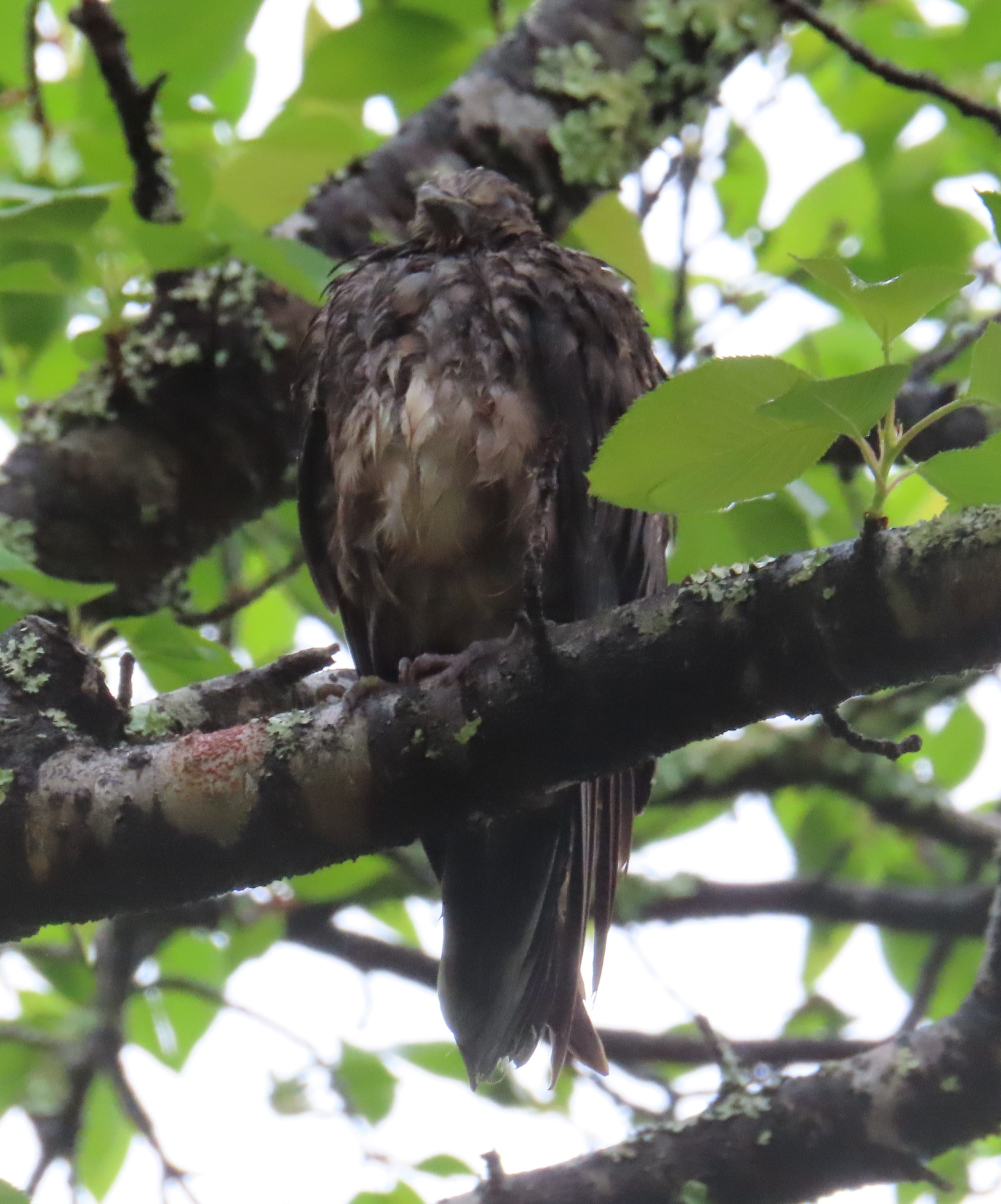
Since we needed to catch a bus at 12:51pm, we had an early lunch in a Japanese restaurant with friends. After lunch, we still had time to walk to Kumano-gawa river bank to take some photos. I saw a bird hiding in tree branches, but I couldn’t identify it, and Merlin Bird ID couldn’t identify the bird either. It’s pretty big, and I thought it’s probably a Brown-eared Bulbul.
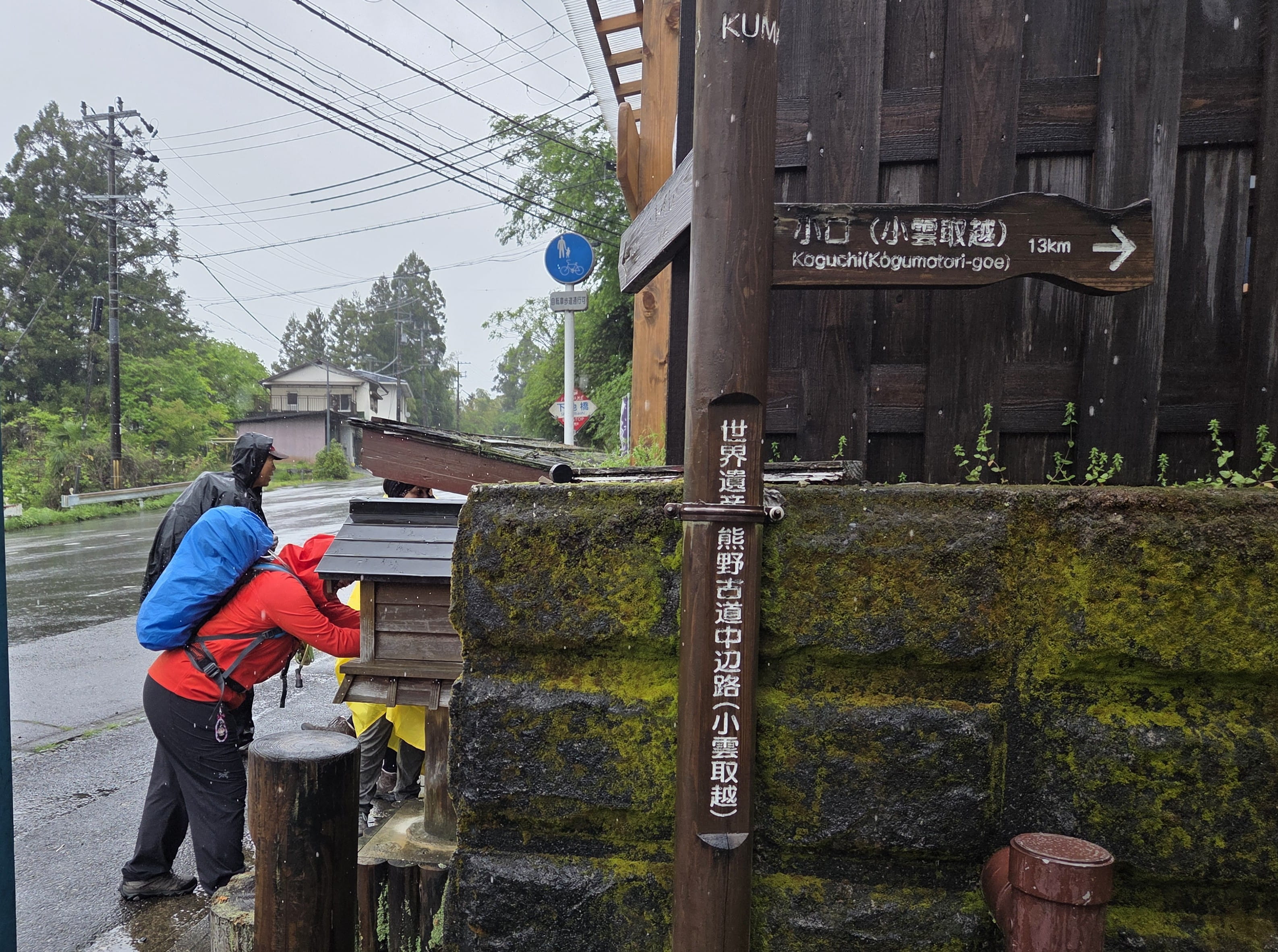
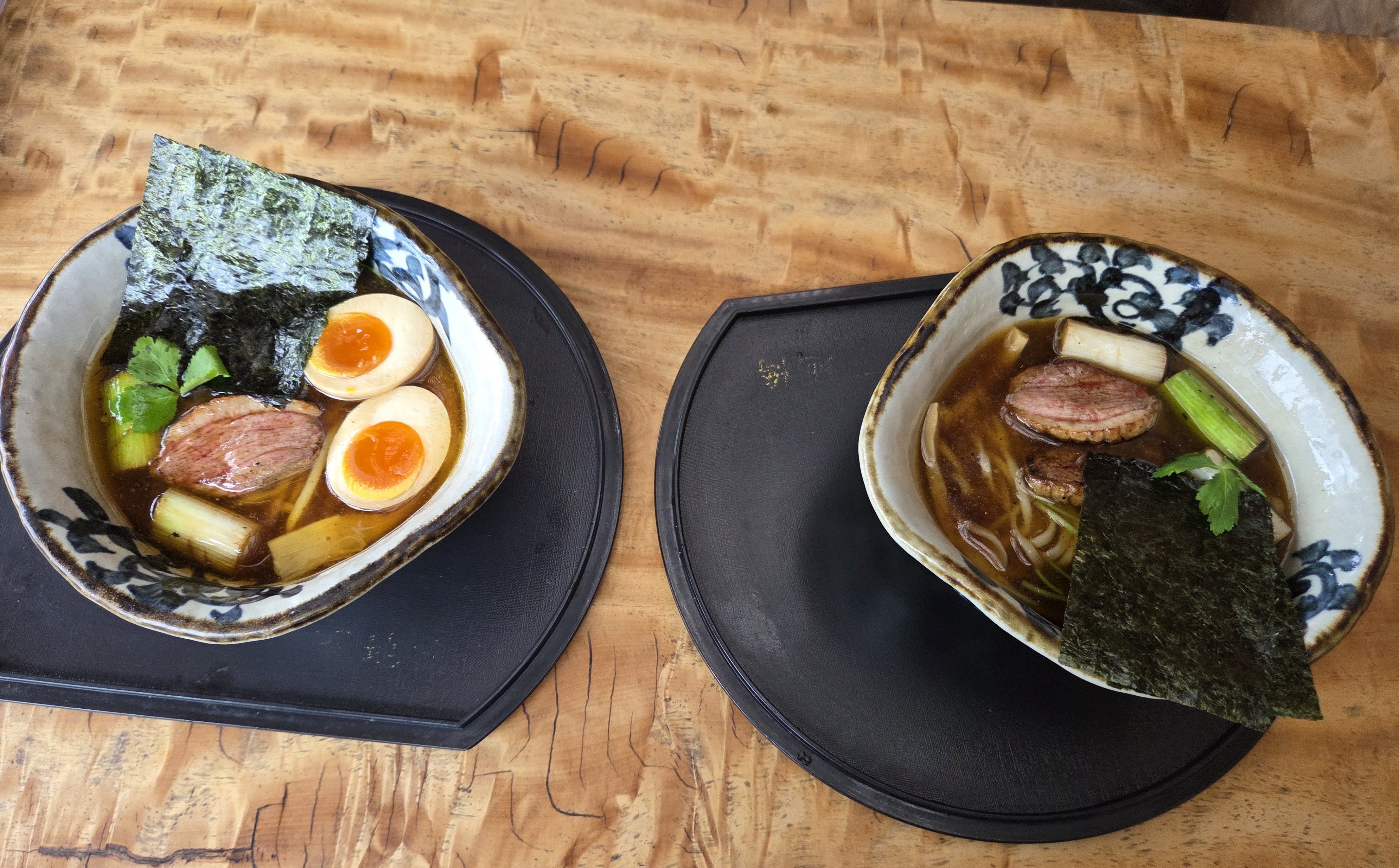
We took a bus ride to Ukegawa, today’s supposed trailhead, to get Stamp #41. To reach tonight’s lodge in Koguchi, we would have to take 2 bus rides. We had plenty of time before the first bus arrived, so the group decided to have second lunch at a ramen and fried chicken restaurant right by the stamping station.
There was another group of hikers eating at the restaurant. Today was their planned rest day, so they didn’t need to worry about the weather. (Great planning!) We also saw some hikers walking down the Kumano Kodo trail right by the restaurant.
“They walked from the other direction, which was easier.” (Rei tried to justify his decision of skipping the hike today.)
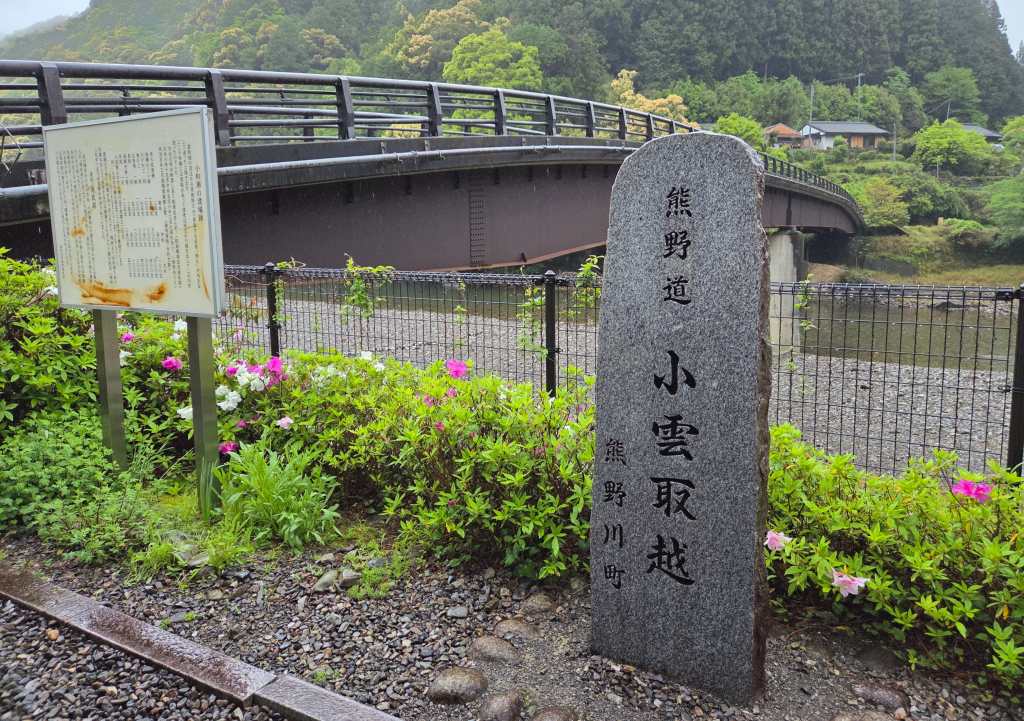
After the first bus ride, we had to wait for half an hour for the second bus to arrive. We got off that bus 2 stops before Koguchi at Kowaze bus stop in order to get Stamp #39. The kind bus driver was very concerned. He asked us multiple times whether we were sure that we got off at the correct bus stop.
It was not easy to stamp the Kumano Kodo walking passport in such a rainy day. The passport got wet, and the ink would bleed.
We met a hiker walking down from the mountain. Rei asked him whether it was a very difficult hike (still trying to justify his decision). The hiker didn’t think the walk was difficult, but he did mention that he got very wet.
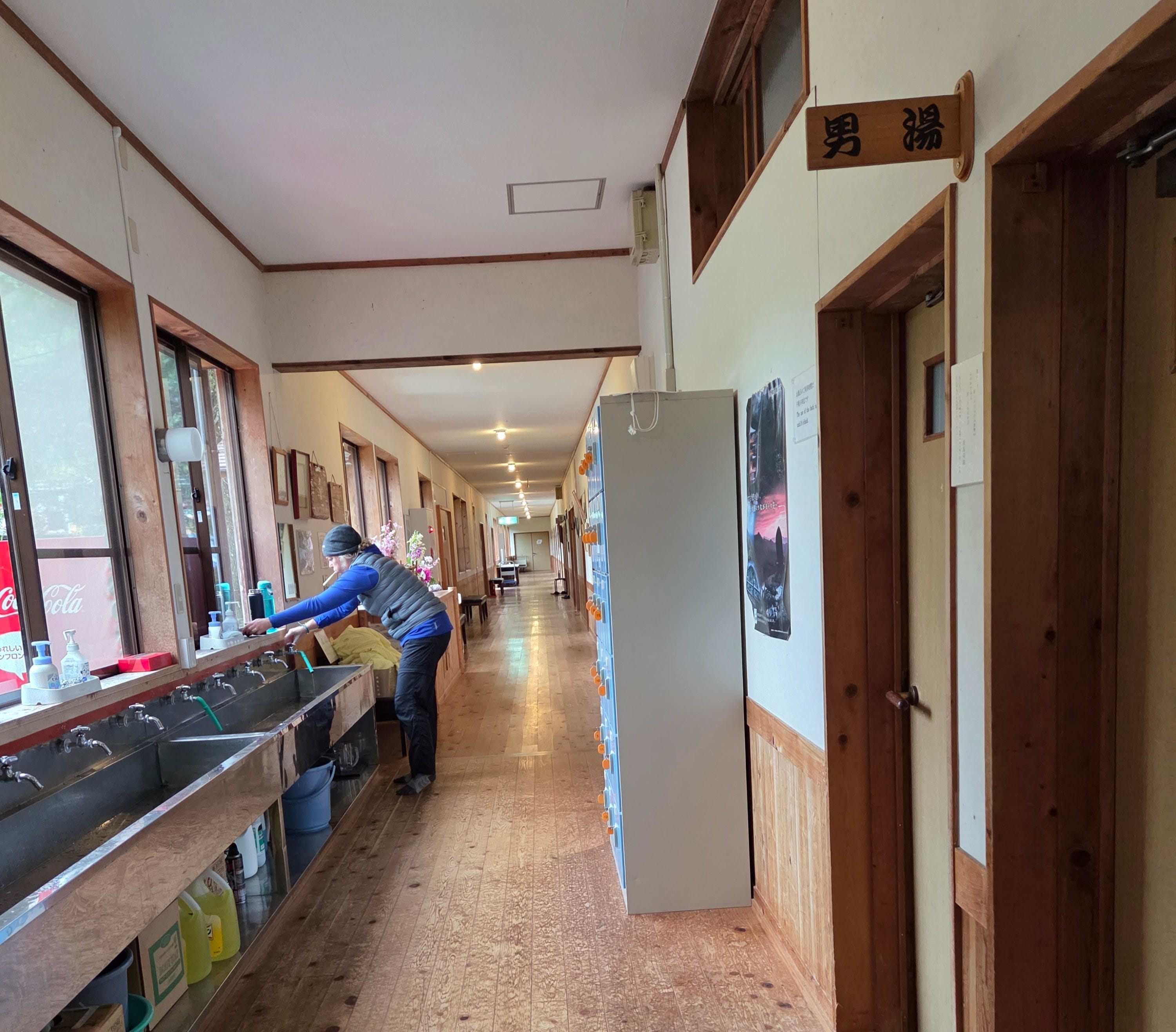
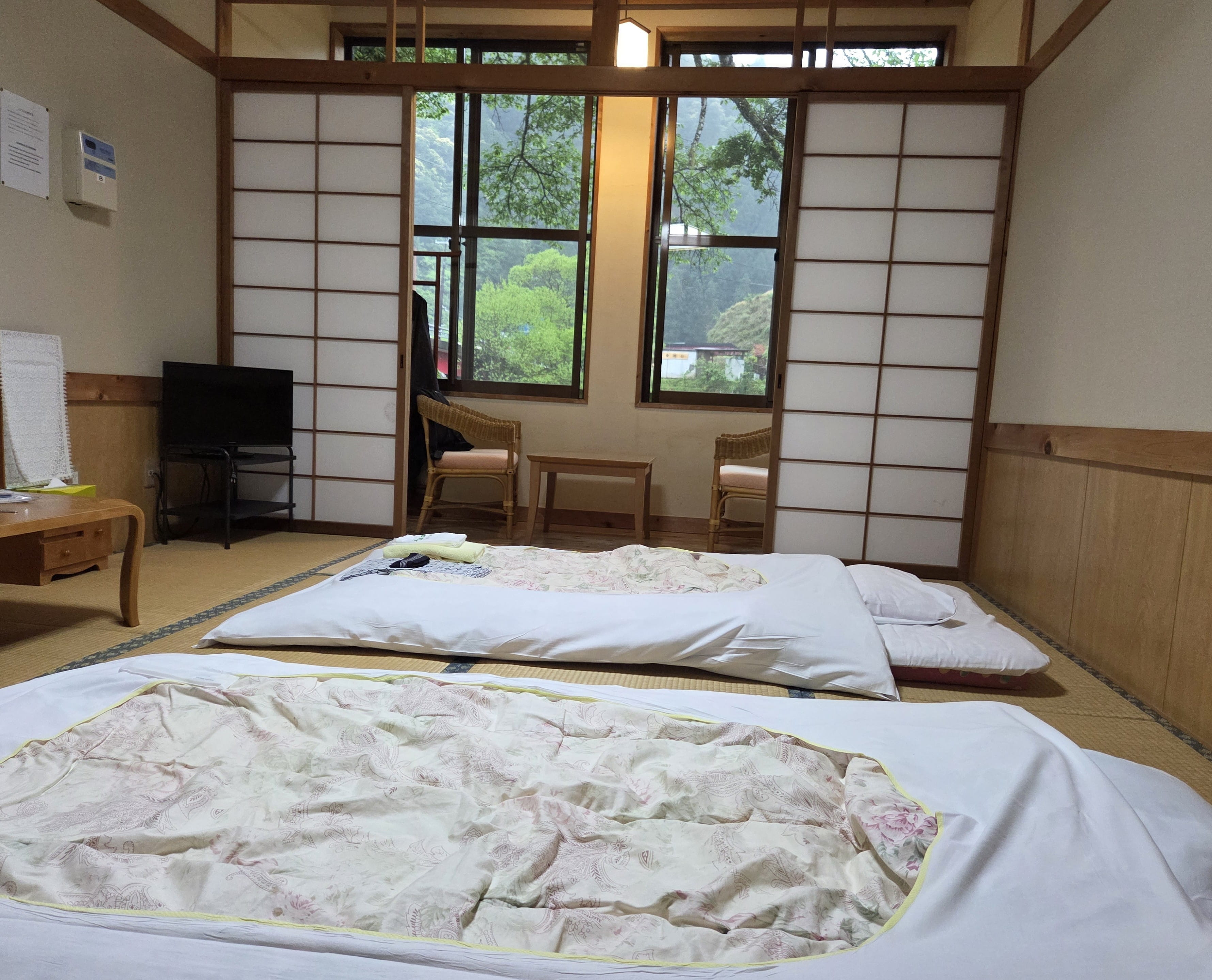
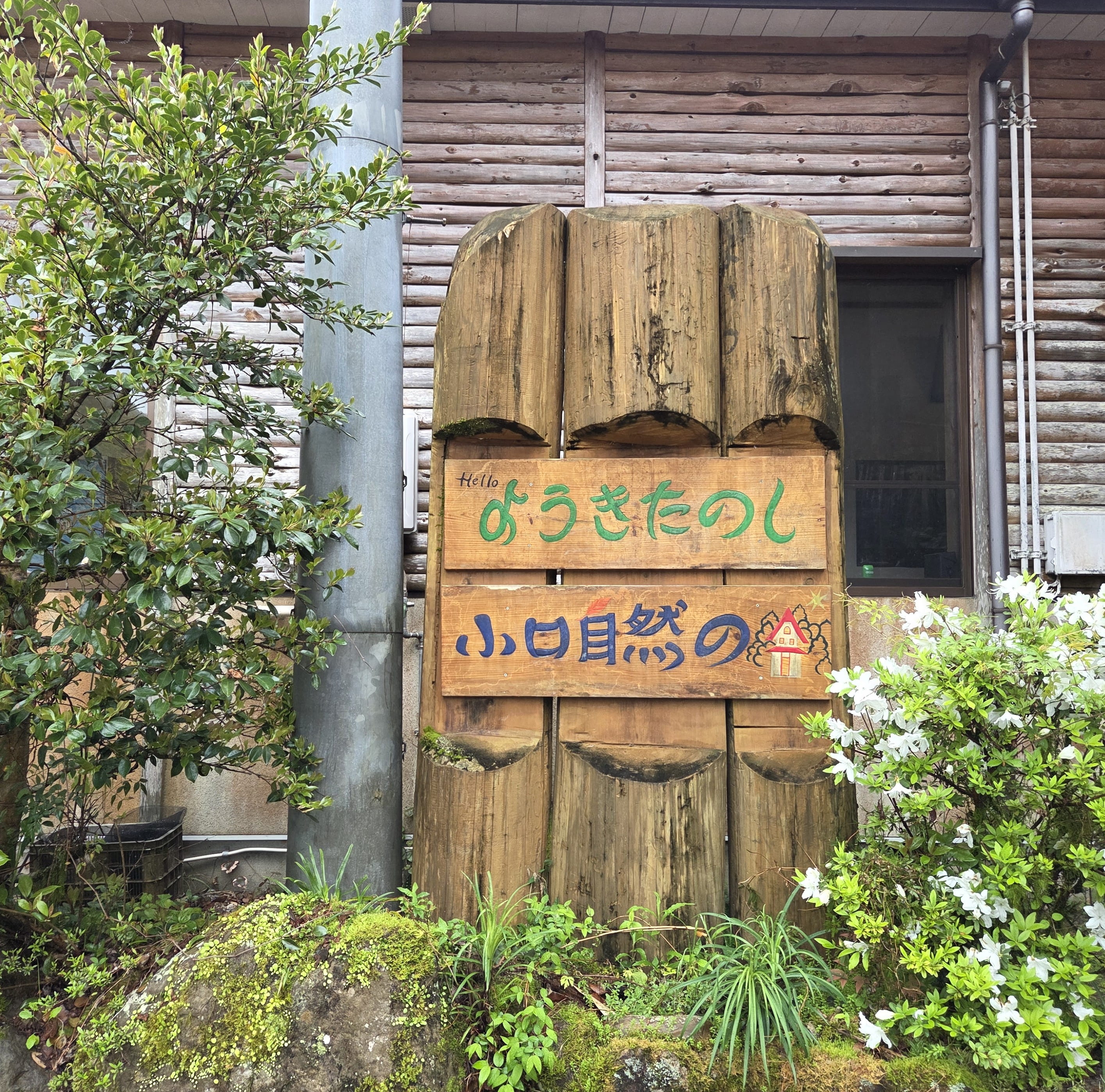
The next bus wouldn’t come until another half an hour, so we walked 10+ minutes to reach tonight’s hotel Koguchi Shizen-no-ie Lodging. It’s worth mentioning that the lodging was repurposed from a former junior high school that’s closed. The building reminded us of old school days, though the inside of our room looked just like a regular Japanese style hotel room.
The 5:30 dinner was announced through the school broadcasting system. The dinner wasn’t as elaborate, but the food still tasted good.
Day 8: To Nachi (那智) (15km)
Breakfast was at 6:15am. It’s “cafeteria style” — we all carried our own trays to wait in line and selected our food. It was simple but nutritious. We checked out before 7am because we needed to start today’s hike earlier. They sent us off with a horn blow, which was pretty interesting.
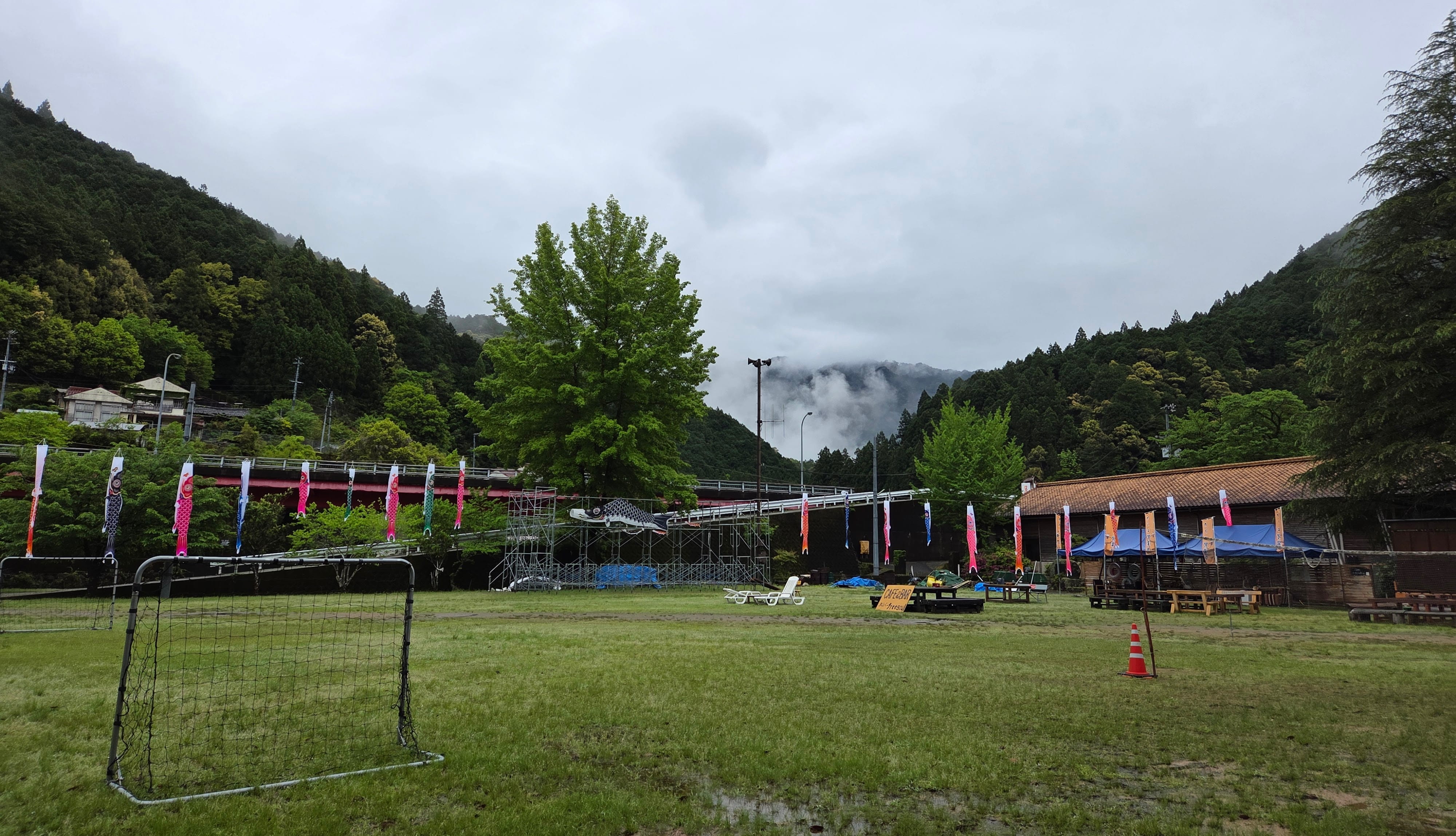
The weather was foggy this morning, but it didn’t rain. The scenery was serene and dreamy. It was a short walk to the trailhead. The stamping station #38 was right at the trailhead.
Walk Japan provided us with a booklet with very detailed information. There’s a problem with too much information: friends saw that we needed to ascend about 800m in the first 5km and were very worried. However, today’s hike ended at the famous Kumano Nachi Taisha (熊野那智大社) next to the spectacular Nachi Waterfall, Japan’s tallest. So, no one wanted to give up.
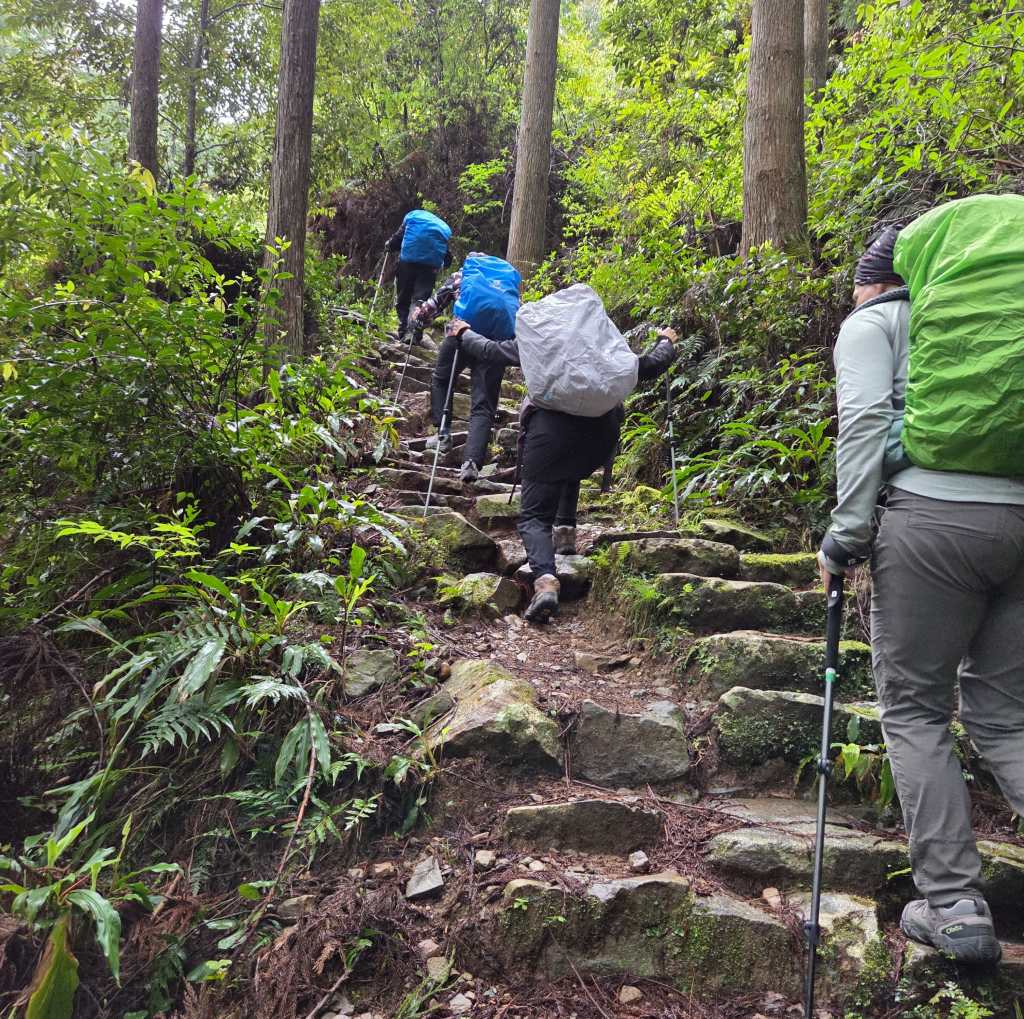
The hike started with a very steep climb on the stony steps. Since it’s early in the morning, and we were all still fresh and energetic, we were doing fine.
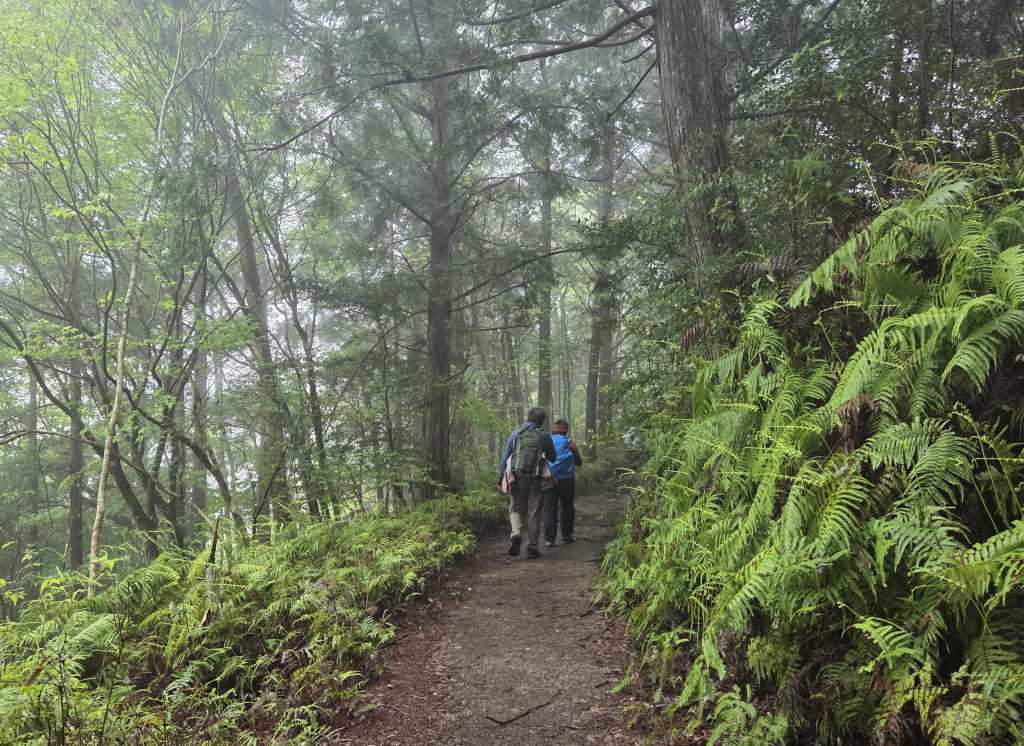
Luckily, there were several stretches with gentle slope that provided us with some relief. It was still foggy. Several groups of very strong hikers passed us. We were very impressed, because our group members were all experienced hikers.
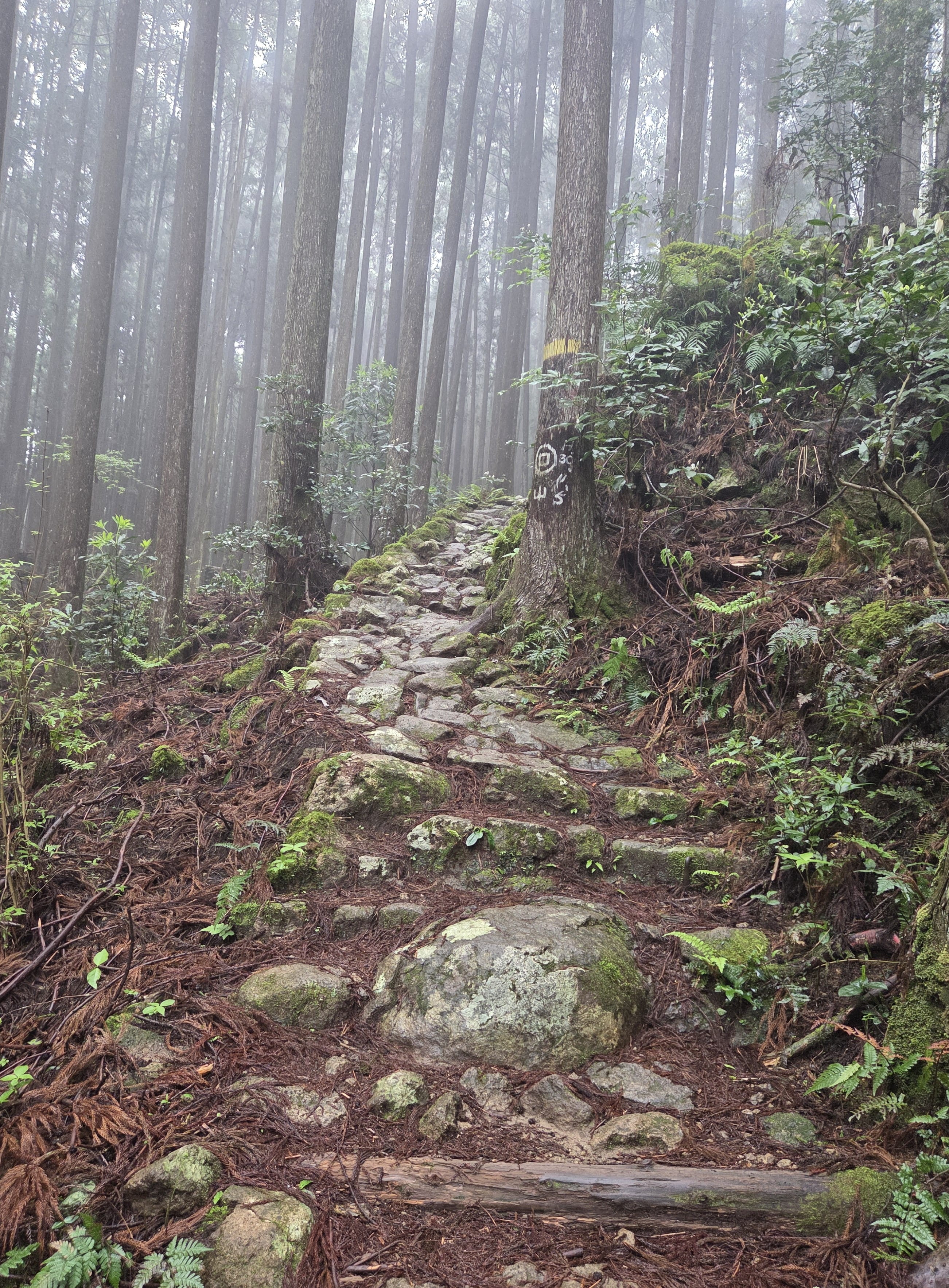
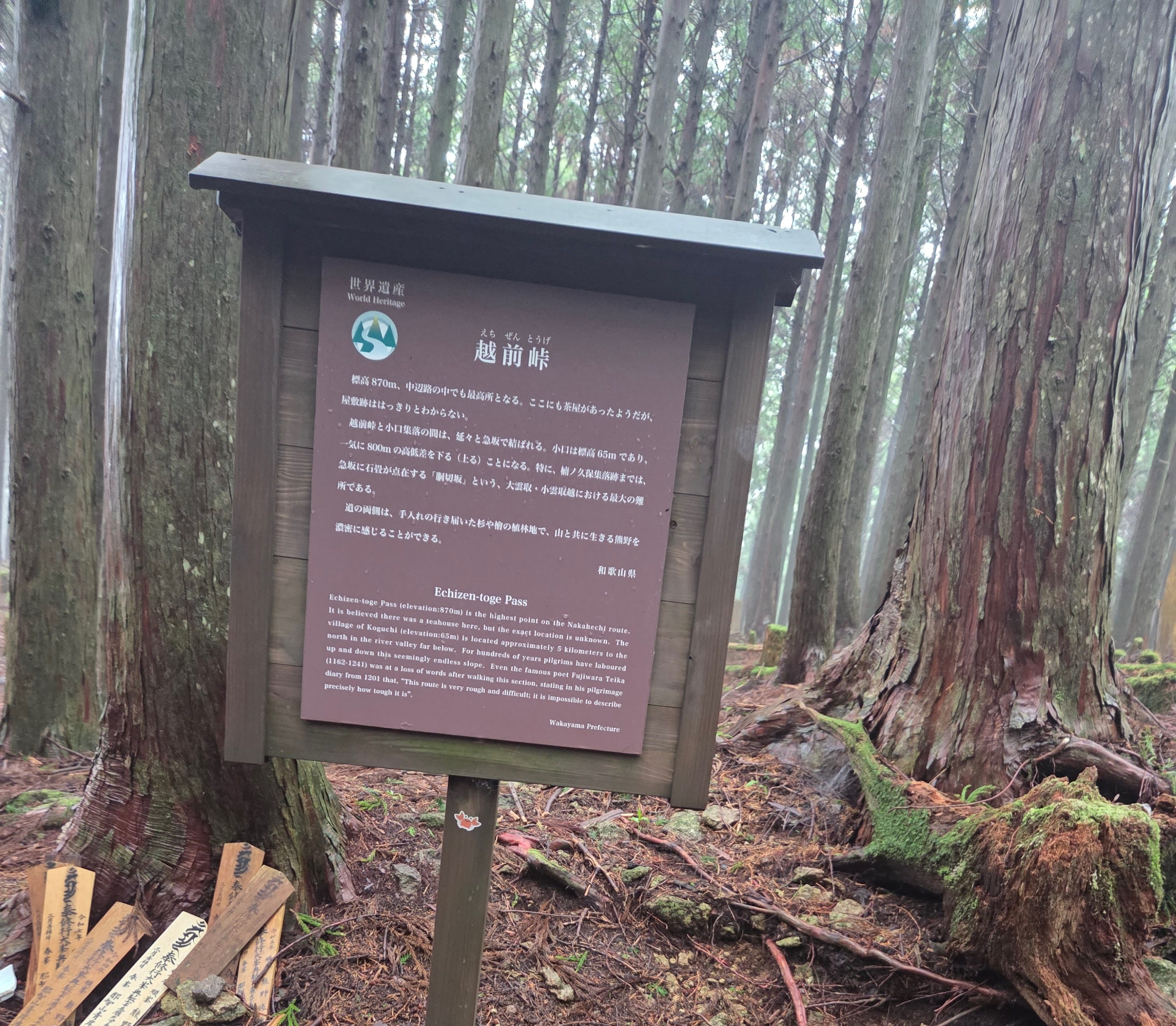
It was a long, brutal uphill climb. Several group members (including Rei and myself) were exhausted. Kumano Kodo was more challenging than I thought! We finally reached Echizen-toga Pass after 2 hours of ascending, and were very proud of ourselves.
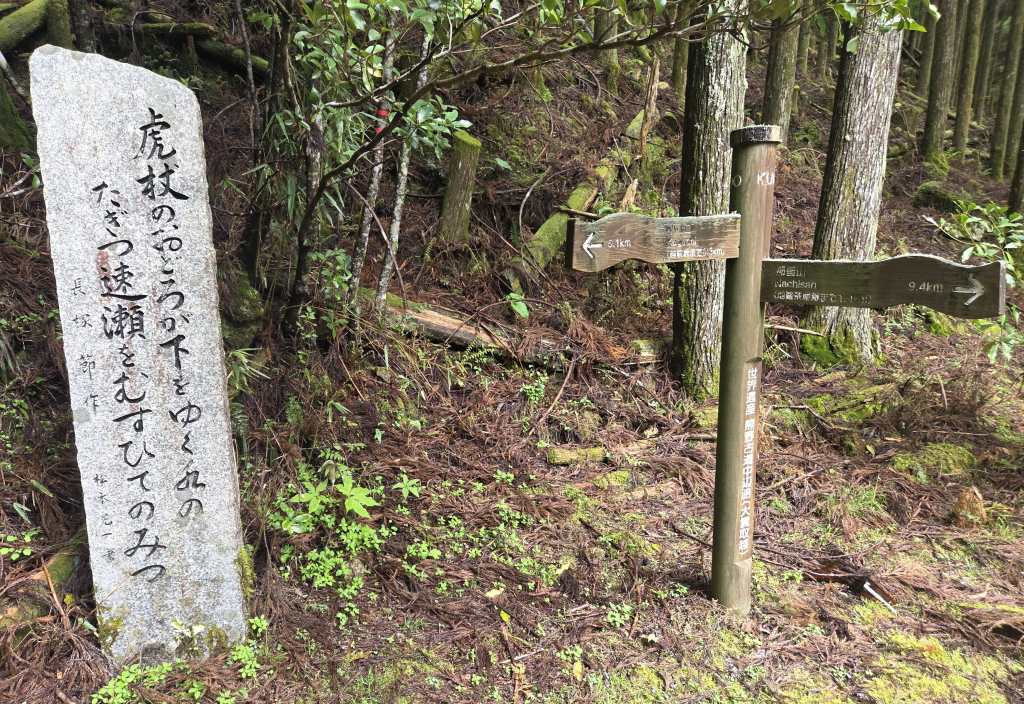
This section of the trails had many poem monuments. Unfortunately, none of us knew Japanese, and there was no English information. I wished that Sister (our daughter) was here with us; she’s fluent in Japanese.
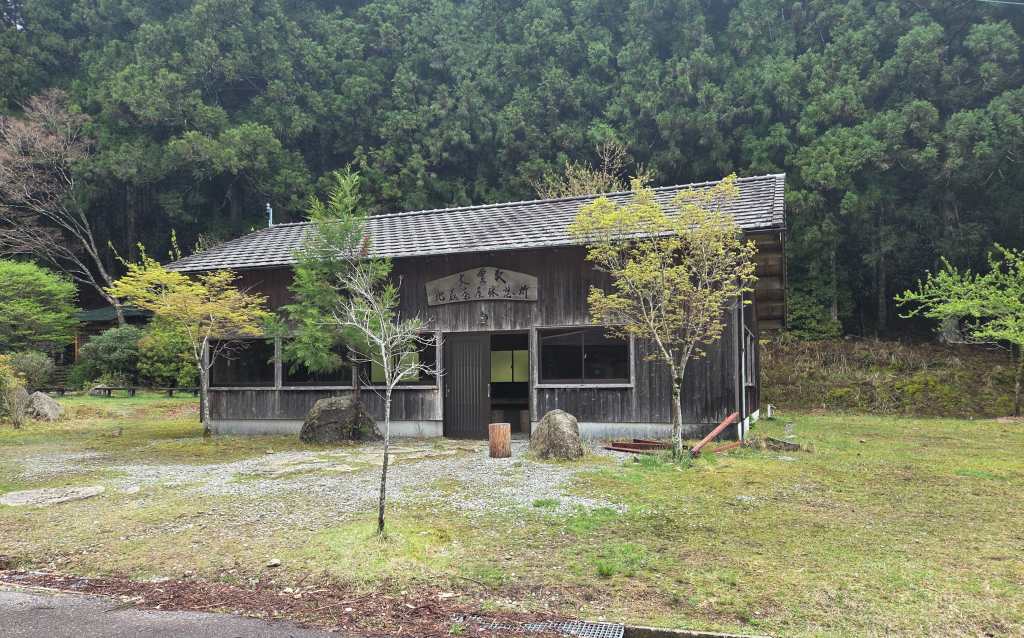
We reached Jizo-jaya Teahouse remains, today’s lunch stop, at 10am. There’s another stamping station (Stamp #37). The place also had a shelter and restrooms. Though it was still very early, we decided to have lunch there. We were provided with a small Japanese bento this morning. The bento had egg, fish, deep fried tofu, and two rice balls — great for a light lunch.
We were already done with the challenging section. Though there were still up and down sections, we managed just fine. We were hiking along a creek with small cascades. Due to yesterday’s rain, the creek had a lot of water. This again reminded me of hiking in Mount Tam and Samuel P. Taylor State Park.
The last section was a downhill trail. Some stretches were quite steep. Some stones were covered with moss, so we had to walk carefully.
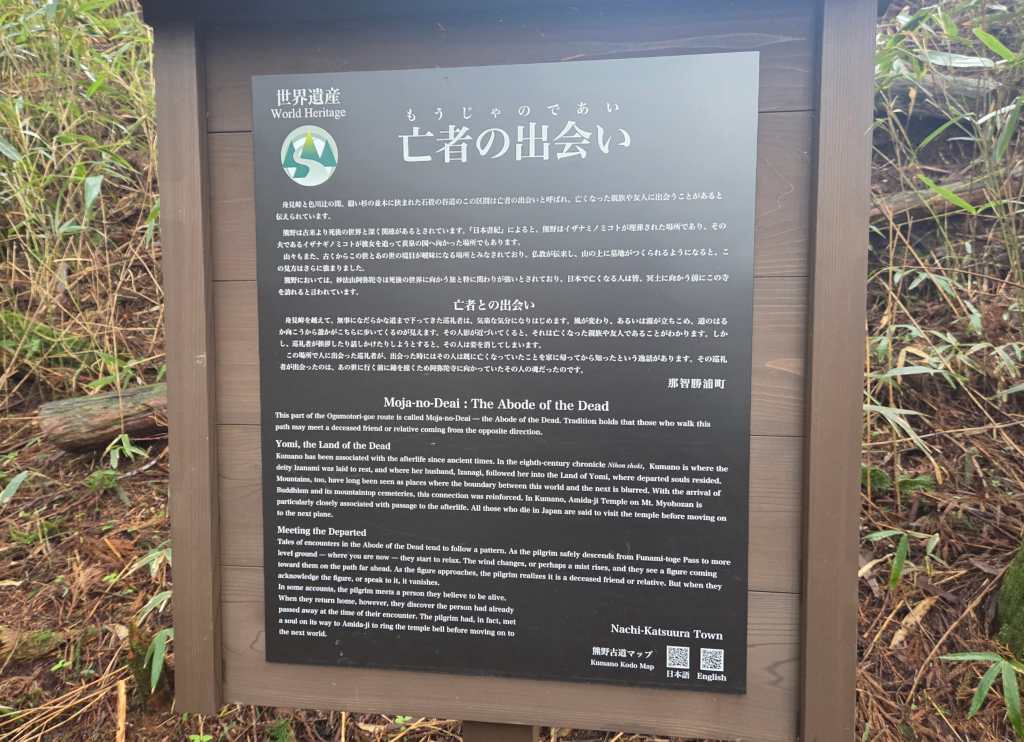
We walked past an eerie site Moja-no-deai Abode of the Dead. It was said that hikers might spot a deceased friend or relative walking toward them around this region. When they tried to talk to the friend or relative, the person would just disappear. It’s kind of creepy!
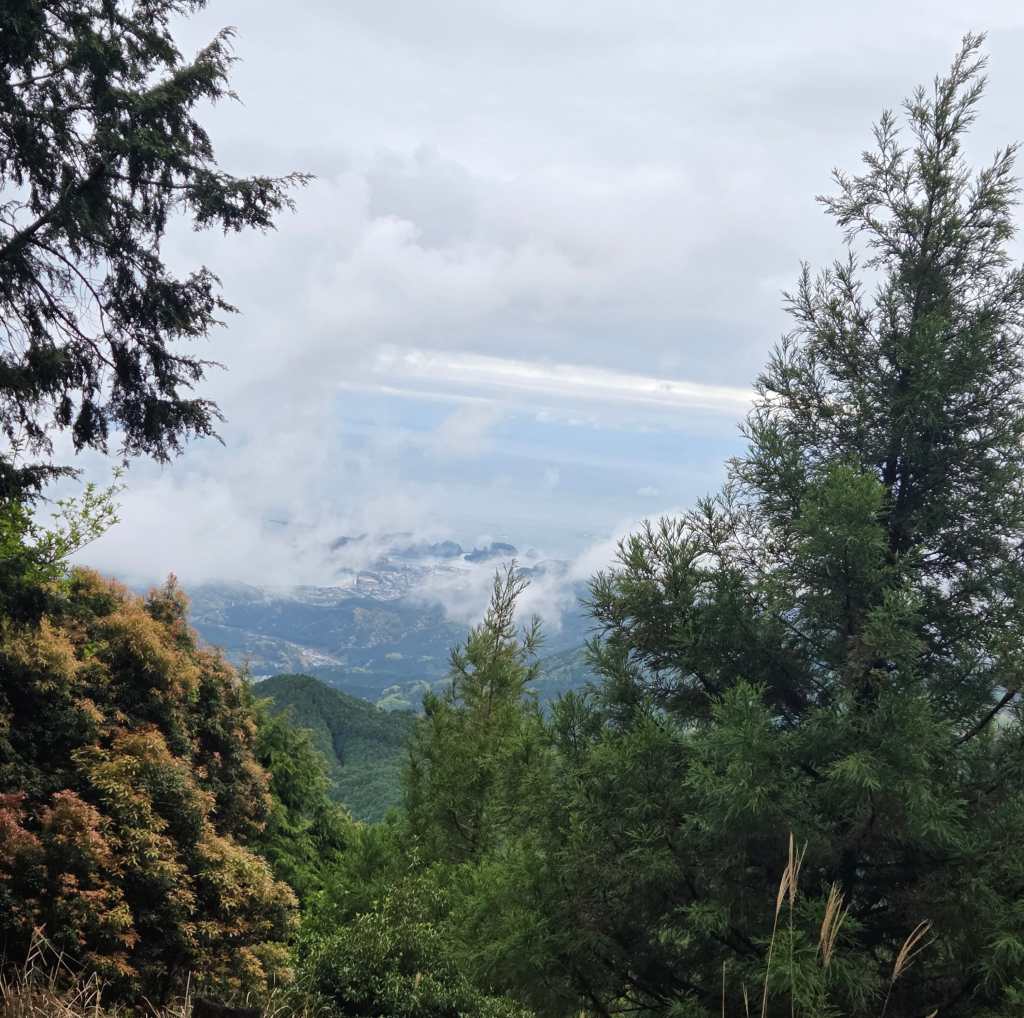
There was a lookout point providing a splendid view. However, I had no idea what the view was, partially due to the fog and cloud.
We finally arrived at Kumano Nachi Taisha (熊野那智大社) around 1:30pm. It was good timing too, because a light rain just started. There were two stamping stations at Nachisan Seiganto-ji (Stamp #36) and Kumano Nachi Taisha (Stamp #35), respectively. We got stamps and worshiped at both temples.
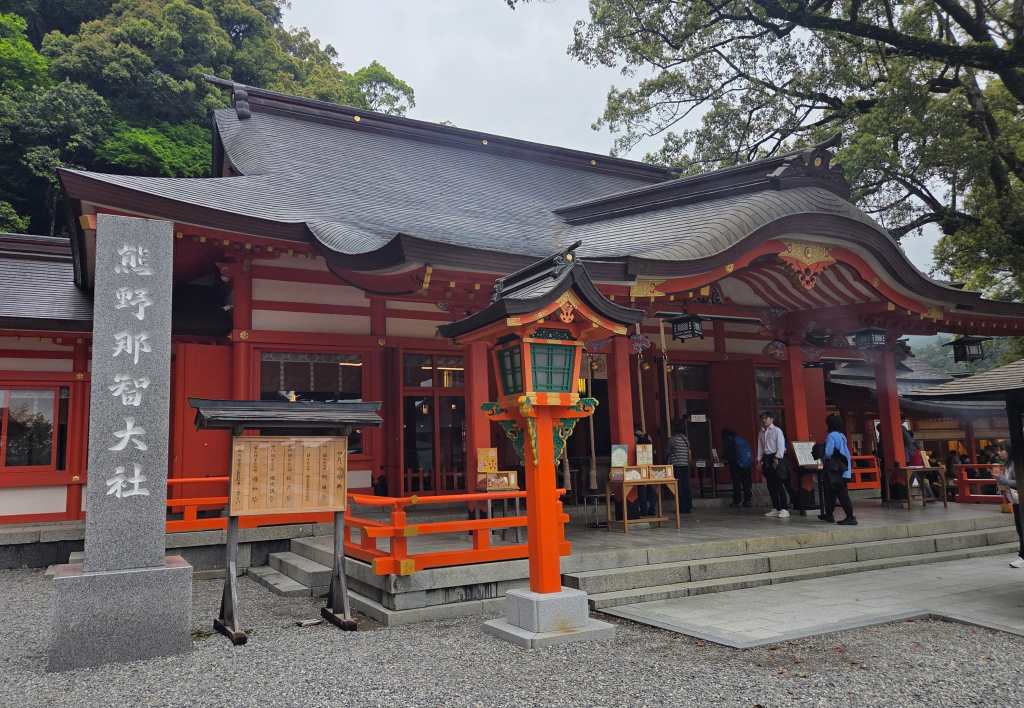
Kumano Nachi Taisha is one of the 3 major temples in the region. We already visited Kumano Hongu Taisha, and we would visit the last one tomorrow.
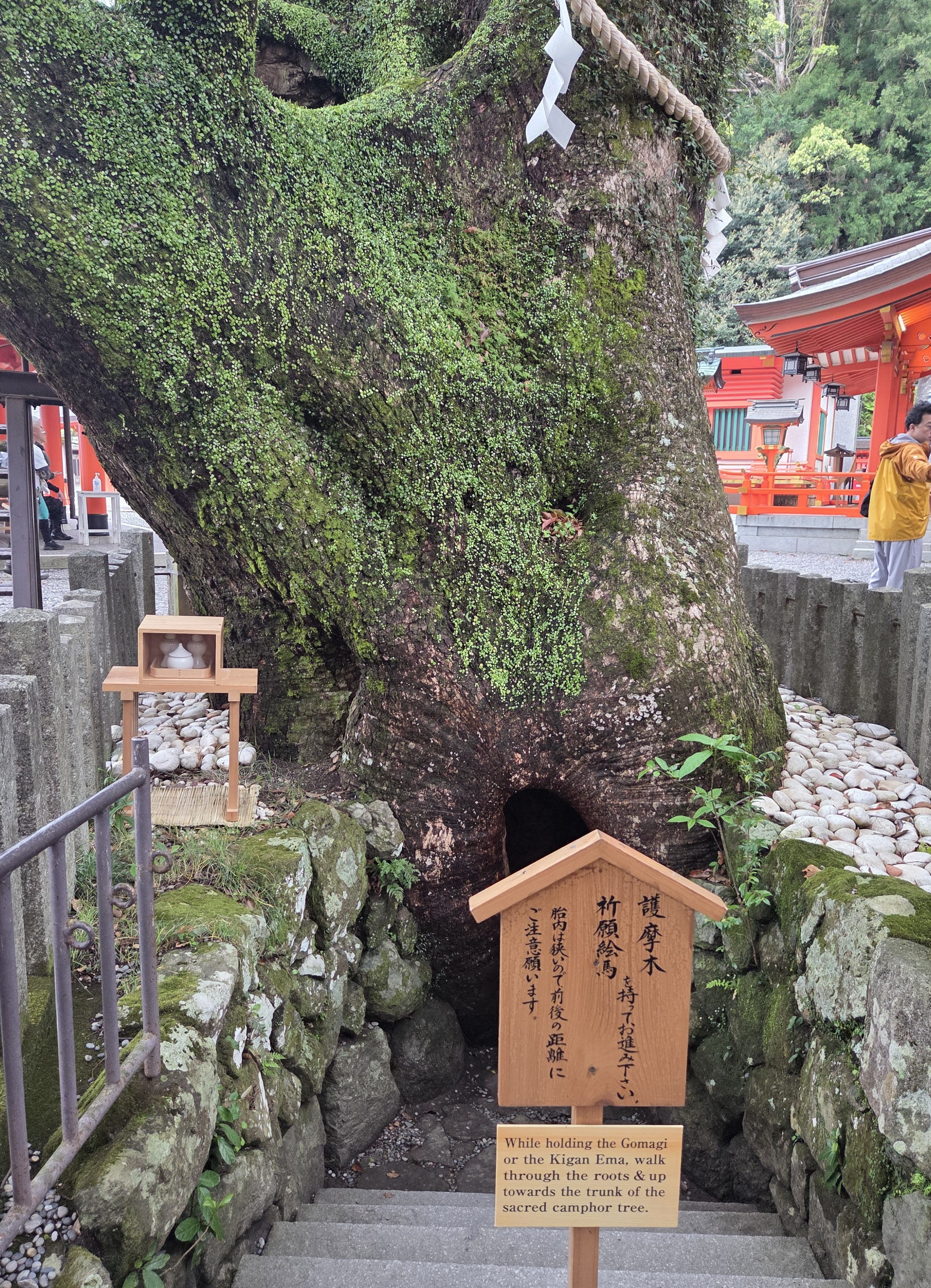
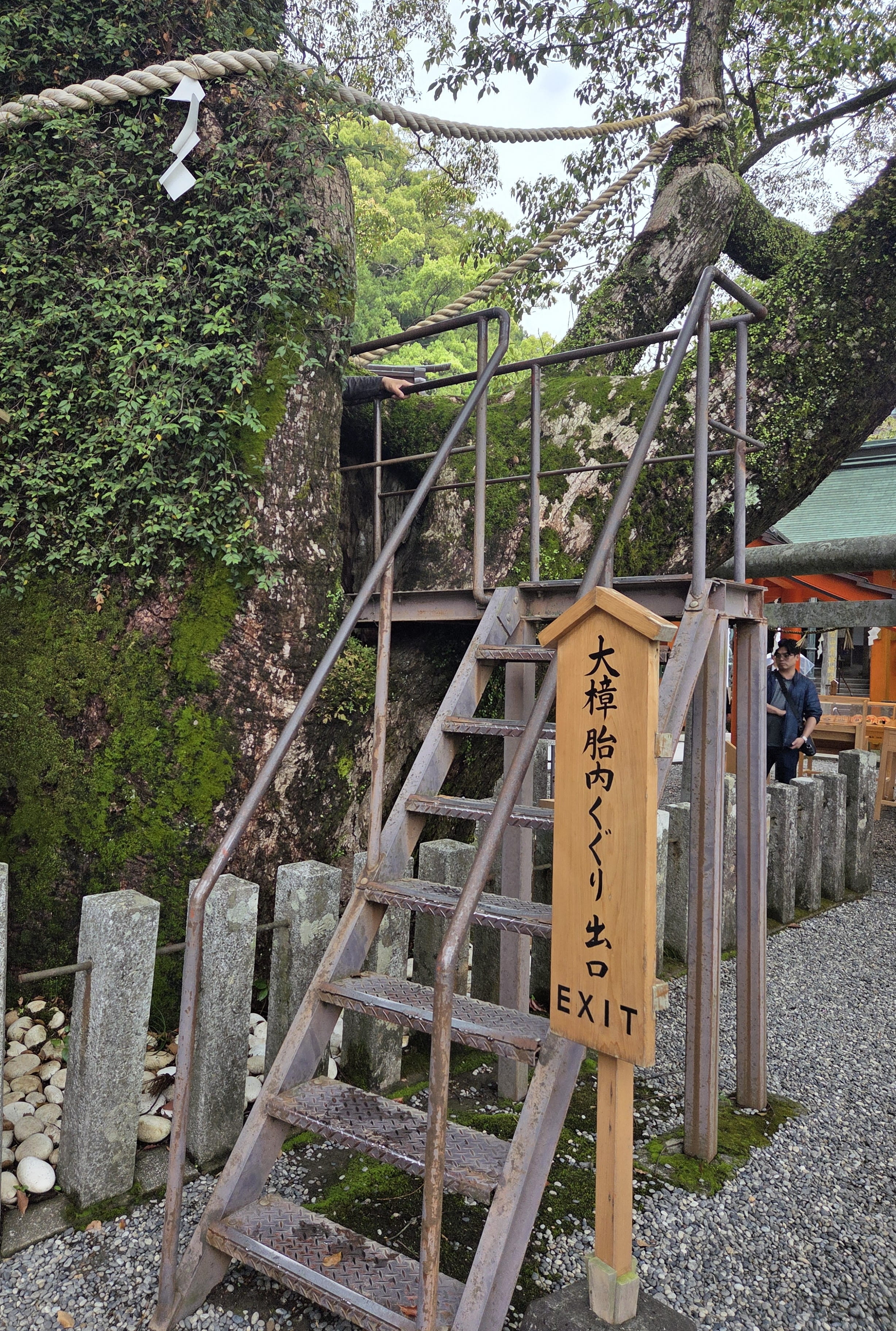
There was an ancient tree close to the Taisha. People could go through a narrow hole to enter the tree and then climb up by a stair. (It’s best to leave your large backpack outside, because the path was very tight.) We all tried. It was quite fun.
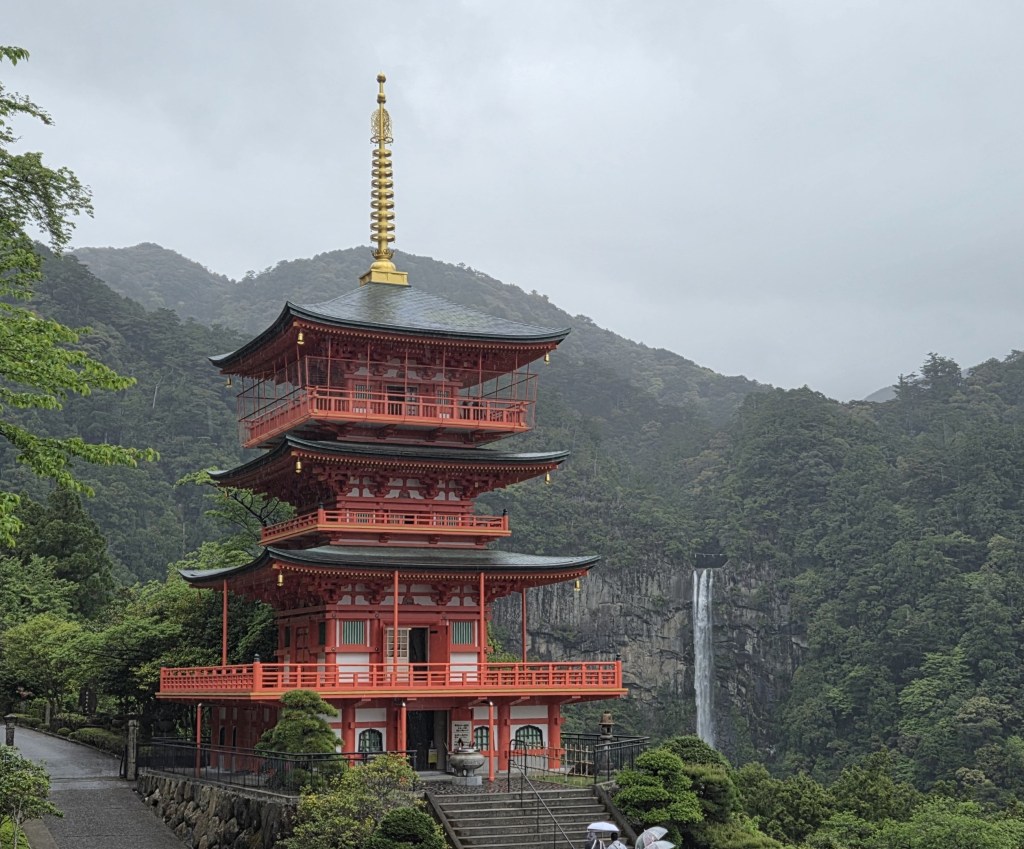
We passed the photogenic three-storied pagoda, but we didn’t enter. The pagoda required an entrance ticket; moreover, we didn’t have time. It was a long way down to reach the Nachi Waterfall. With a drop of 133m, the waterfall is Japan’s tallest. It’s a beautiful and impressive waterfall.
We got Stamp #34 near the waterfall. Though there’s another stamp (Stamp #33) at the compound, we decided to skip it in favor of just taking a bus ride from the waterfall bus station. We needed to reach tonight’s hotel near Kii-Katsuura Station (紀伊勝浦駅) early so that we wouldn’t miss the dinner.
The bus was at the bus station when we got there. We quickly boarded the bus. After arriving at Kii-Katsuura Station, we first went to the station to purchase tomorrow’s train tickets to Shingu.
Friends wanted to buy ice cream from a store across the street from the station. Rei also bought a vanilla one and a green tea one to share with me. (He wanted to buy a 2-scoop ice cream cone but ended up with 2 ice cream cones instead.) The ice cream was very delicious.
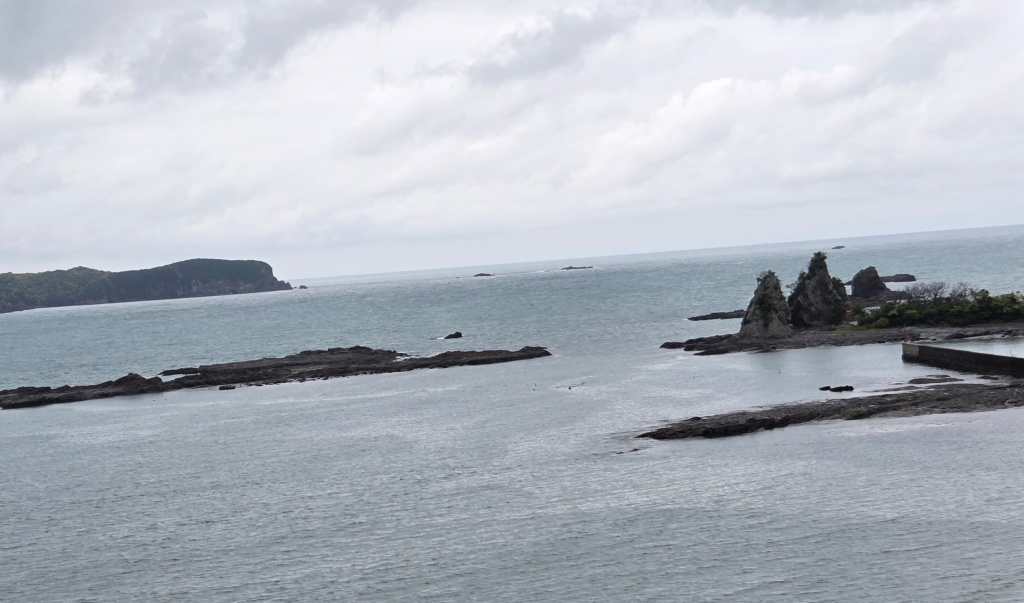
We stayed at Kamenoi Hotel Nachikatsuura tonight. After checking in and entering the room, we found out that our room was facing the ocean and it had a splendid ocean view! Friends’ rooms were adjacent. We were all awestruck.
The hotel had both indoor and outdoor onsen. Rei immediately went for an onsen bath. When I went to the female outdoor onsen, I was the only one there. No one showed up when I was there, so I basically had a private bath!
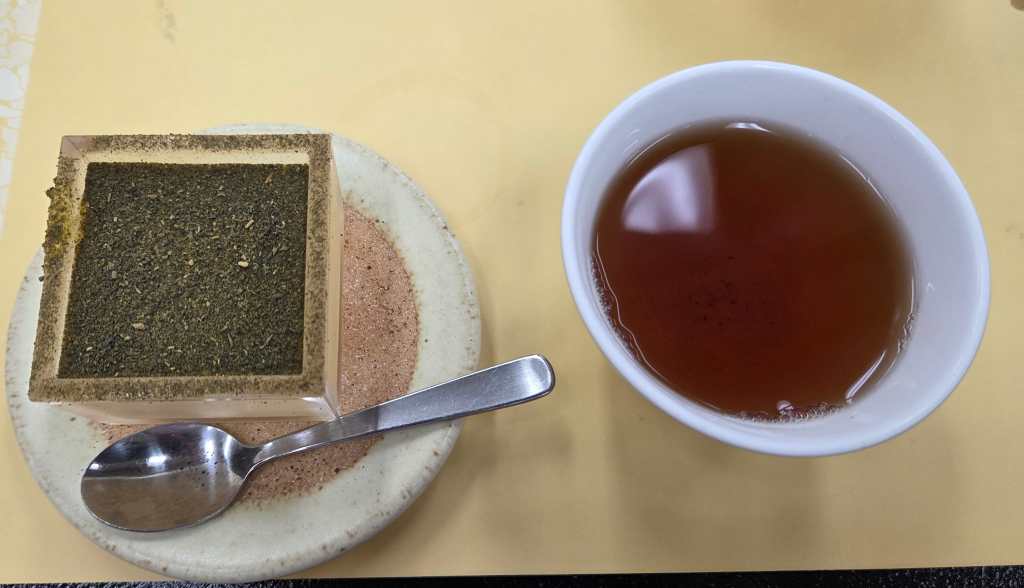
The dinner was again Japanese style with 9 courses. We especially enjoyed the green tea tiramisu dessert.
Day 9: To Shingu (新宮)
Today would be our last day of the Walk Japan tour. We’re done with hiking. We would just take a train ride to Shingu to visit a few temples/shrines and collect more stamps.
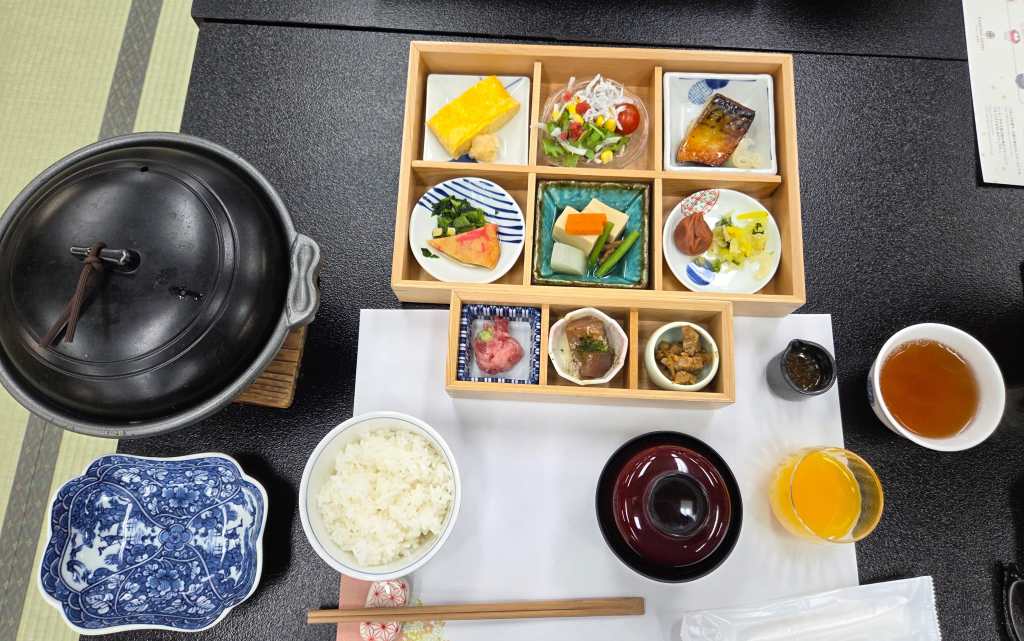
We had another amazing Japanese breakfast this morning. Then we checked out and carried our luggage to the train station to take the 9:00am train to Shingu. The train arrived at 8:50am and stopped on the track. We had no idea that’s the 9:00am train until a helpful station member informed us.
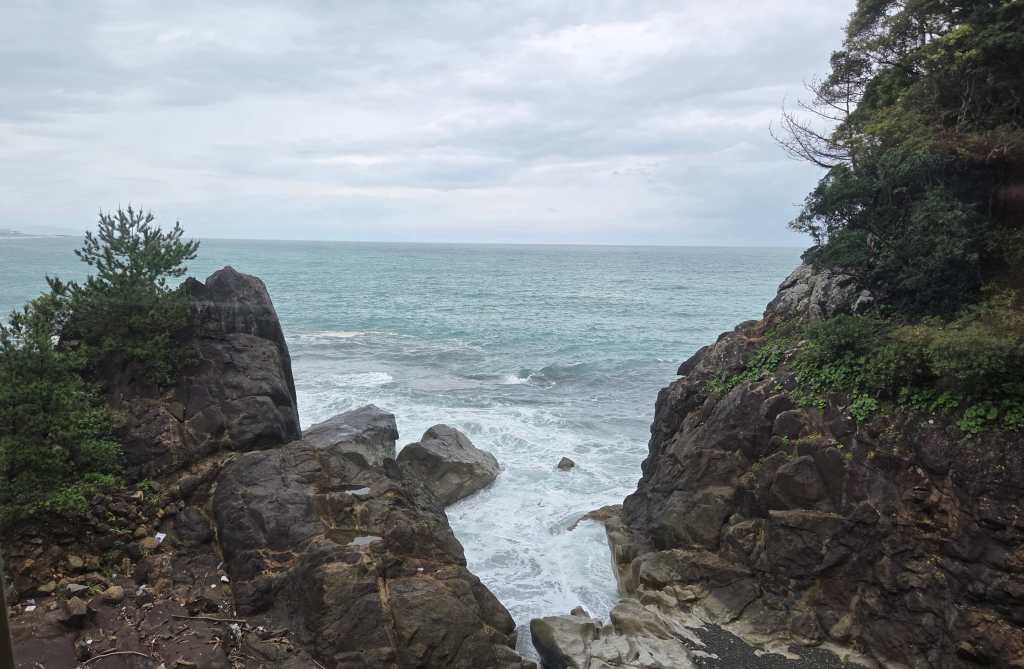
The train was pretty empty. In Car 2, there was only one other passenger besides our group. The train ran along the coast, providing us with a superb view. We were all busy taking photos.
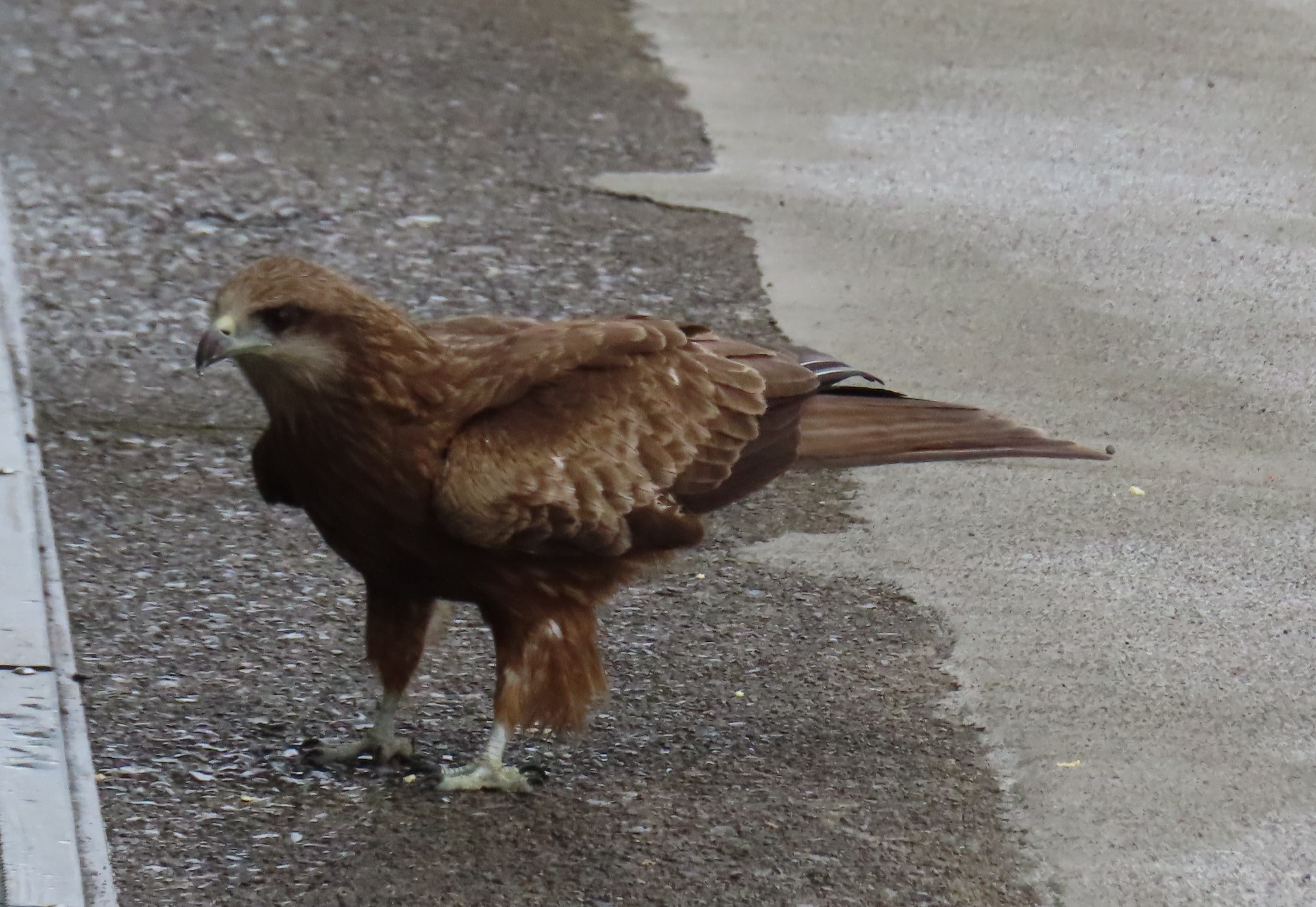
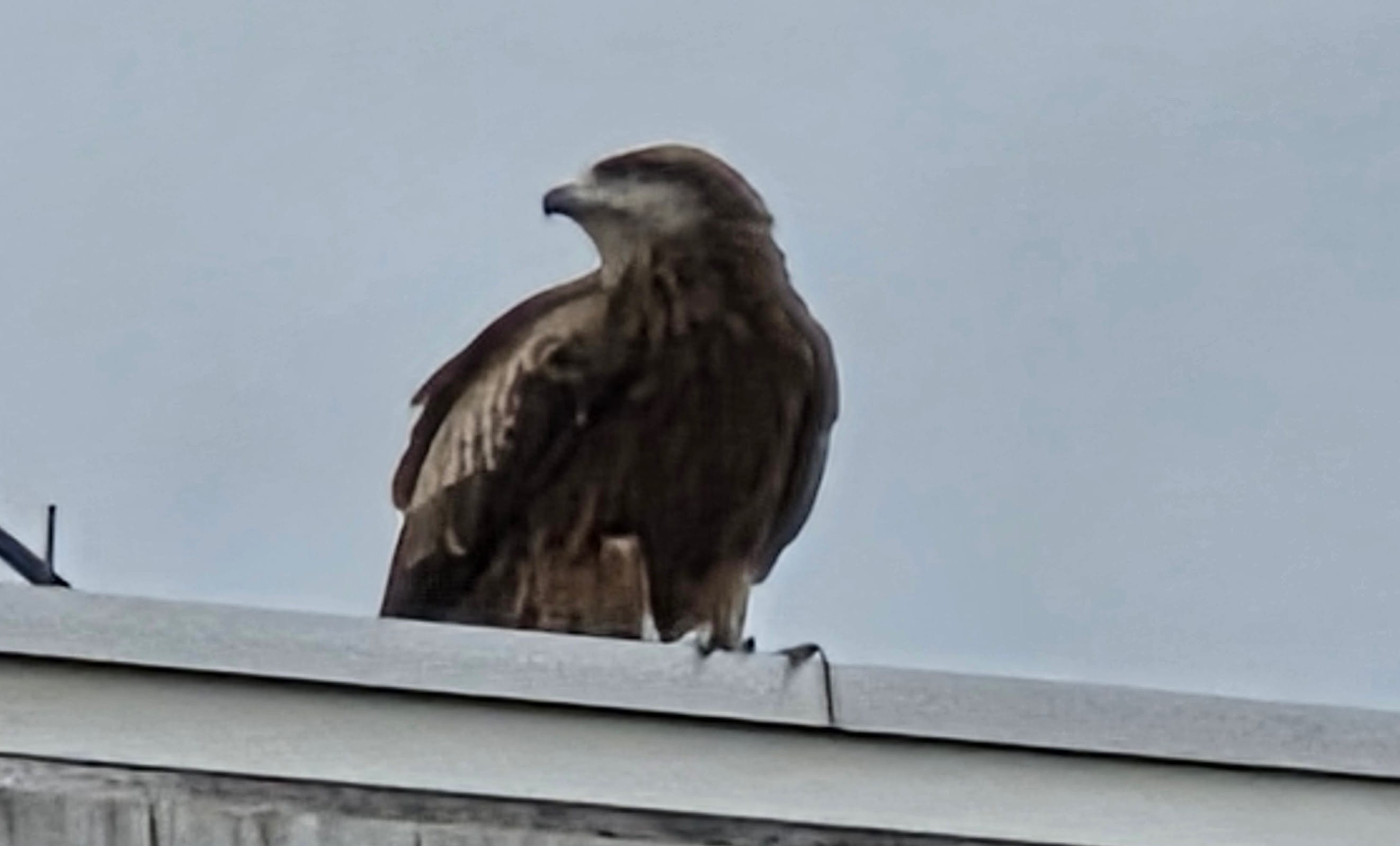
It was a short train ride. When we left the station, we saw 3 Black Kites soaring above us. One bird came very close for us to take pictures.
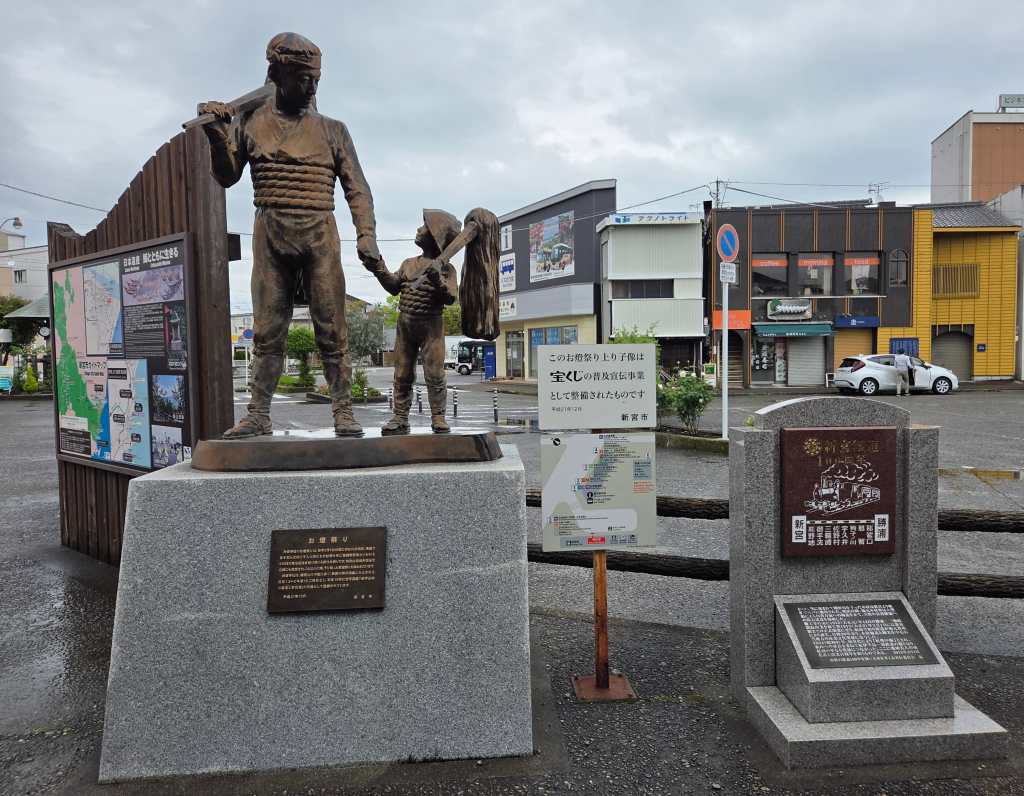
In front of the station exit, there’s a statue of a father and son preparing for the famous Oto Matsuri festival. Many people participate in this annual festival to run down the 538 steps from the Gotobiki Rock above the Kamikura-jinja. Participants carry a flaming torch to form a fire dragon. (More on Gotobiki Rock later…)
Rei and friends have been looking for a baseball cap with the famous 3-legged crow, the symbol of Kumano Kodo, on it. They finally found the hats in the small station shop. Luckily, there were three in stock, so that they didn’t need to fight!
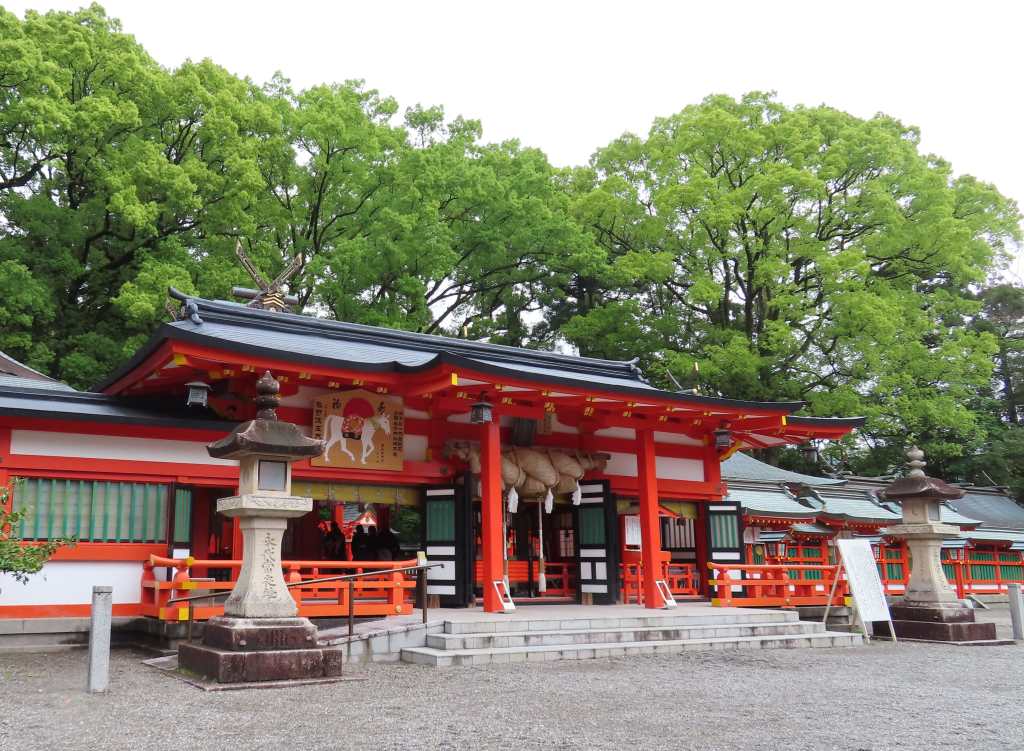
Our group first walked to Kumano Hayatama Taisha (熊野速玉大社) to worship and to get a stamp (Stamp #25). Hayatama Taisha is one of the 3 major Kumano taishas (the other two are Kumano Hongu Taisha and Kumano Nachi Taisha that we’ve already visited). The place was very busy with a lot of worshipers and tourists. (I waited for no one was around to take the above photo.)
Then we walked to Kamikura Shrine (神倉神社) to get another stamp (Stamp #26). There’s a very steep stone staircase leading up to Gotobiki Rock (538 steps). Gotobiki Rock is a sacred place, where the Kumano gods originally arrived before they divided to the 3 taishas.
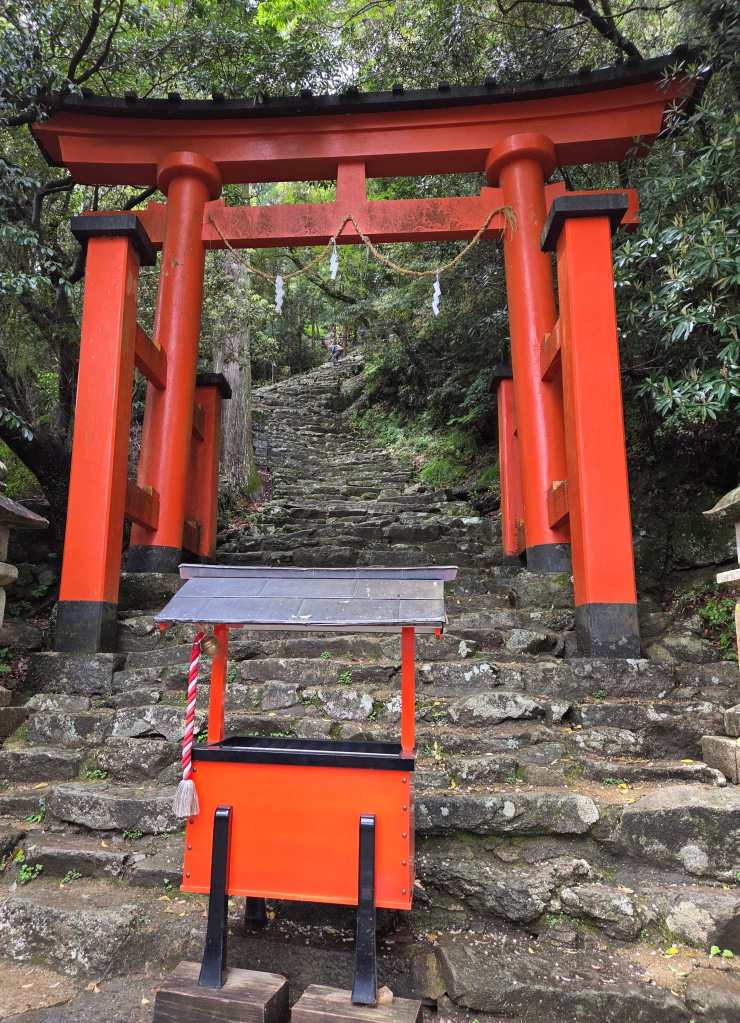
Some group members wanted to climb the rock, while others wanted to visit Asuka-jinja (阿須賀神社) to get the third stamp of the day. Therefore, we split into two groups. Rei and I were taking the 12:45pm train to Nagoya, and we wouldn’t have enough time to climb the rock, so we were leading the Asuka-jinja group. (We learned later that two friends fell during the climb, but they were not injured.)
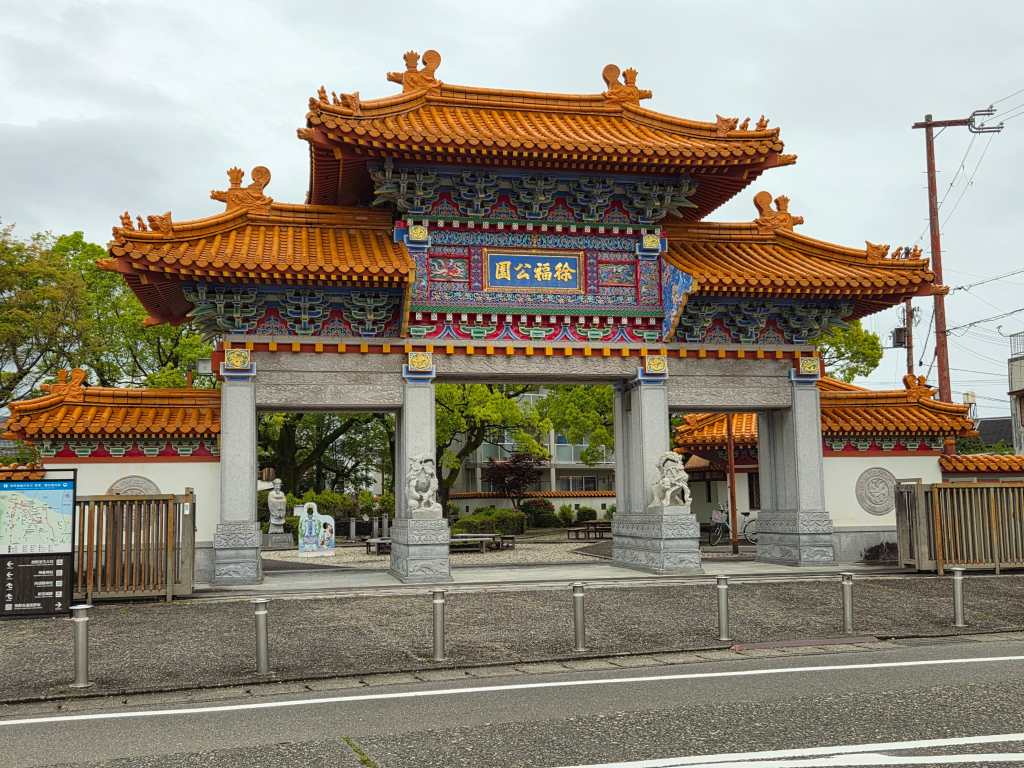
On the way to Asuka-jinja, we walked past Jofuku Park (徐福公園), but we only had time to take a couple of photos of its elaborate gate.
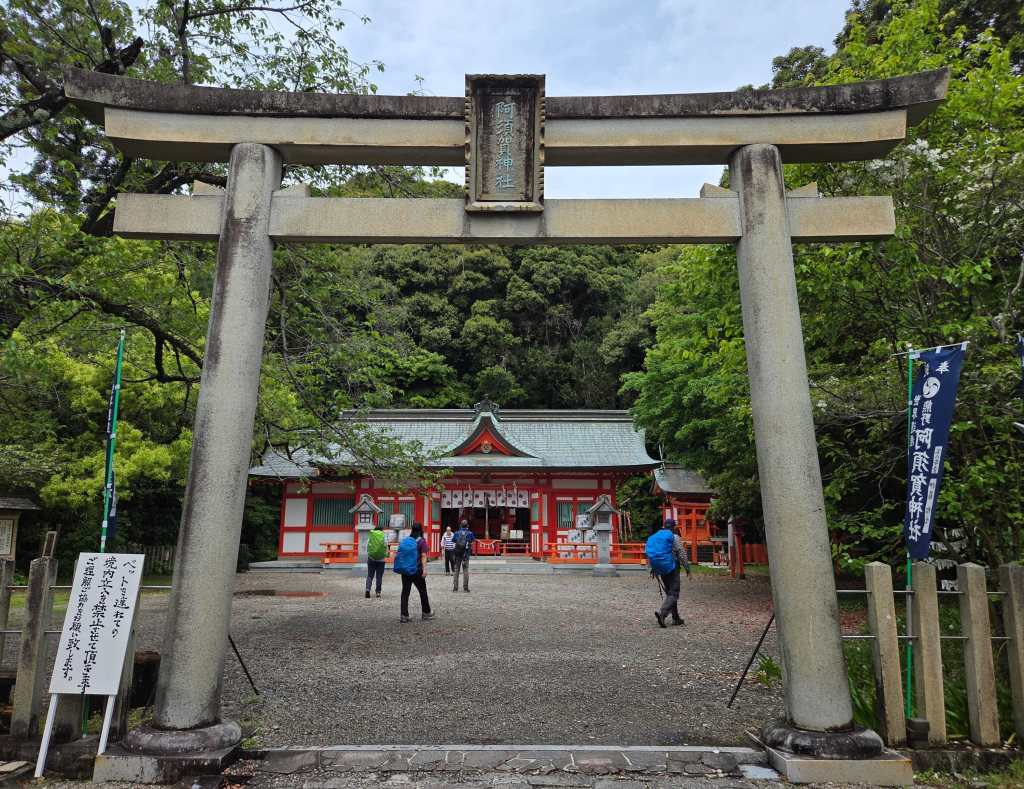
Asuka-jinja (阿須賀神社) is another world heritage site with connection to Jofuku, who was sent by Chinese Emperor Qin Shi Huang to find the elixir of life. It is said that Asuka-jinja’s location was where Jofuku first landed in Japan.
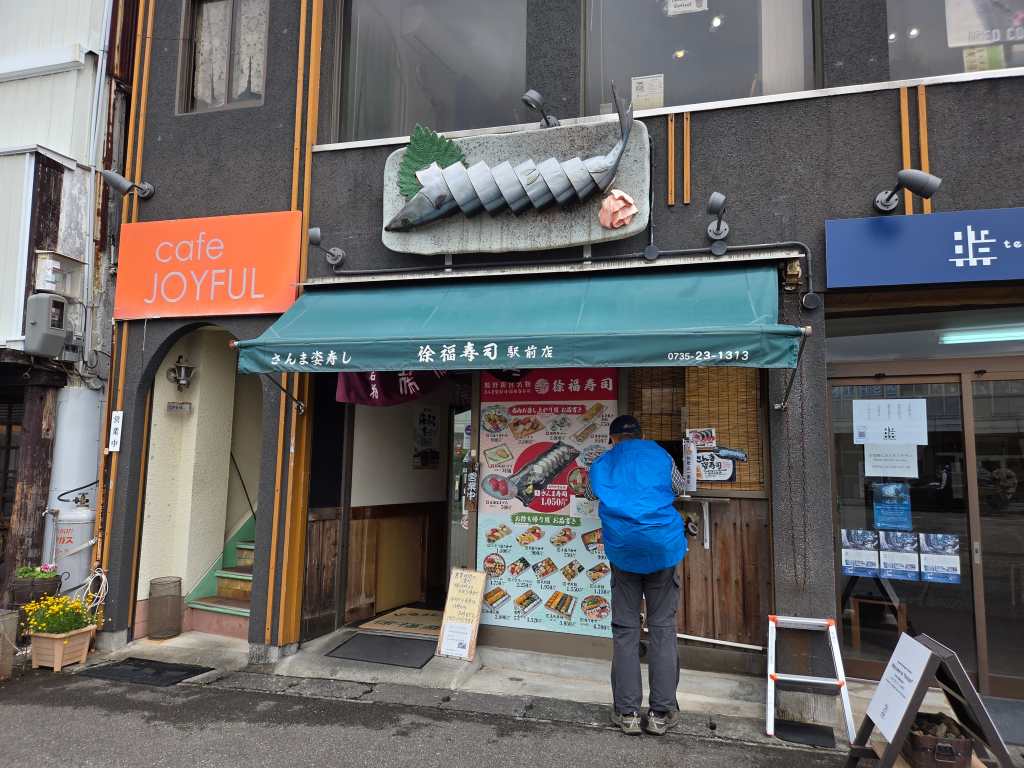
After the Asuka-jinja visit and stamp collection (Stamp #27), we walked back to the train station. We found a place near the station selling sushi bentos and bought 2 bentos there before boarding the train to Nagoya.
The last hotel we stayed in Nagoya was too small, so we switched to the Marriott Hotel located above the train station. After checking in and taking a shower, we went out to find a coin laundromat to do laundry.
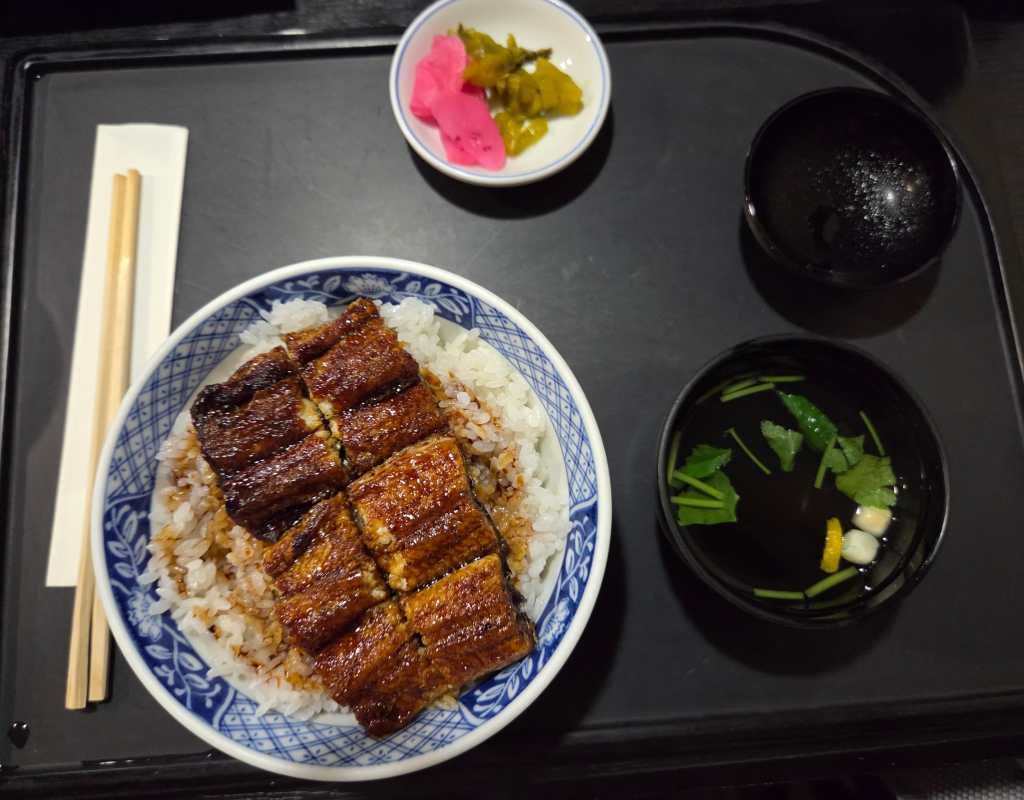
Rei originally wanted to buy an eel rice bento for lunch today, but they were sold out. So we found an eel rice restaurant to have dinner.
Day 10: Kamikochi (上高地) and Takayama (高山)
We booked a 3-day tour with KK Day to go to the Japan Alps. The tour met in front of the Nagoya train station at 7:20am. After checking in, we all followed the guide to board a big bus. There were 42 people in total.
The first destination of the day was Kamikochi, a magnificent natural reserve in northern Japan Alps. It would take us 4 hours to reach Kamikochi. The guide explained to us that it used to take only 3 hours. However, a portion of the road was damaged by a mudslide, and we would have to take a longer detour to arrive.
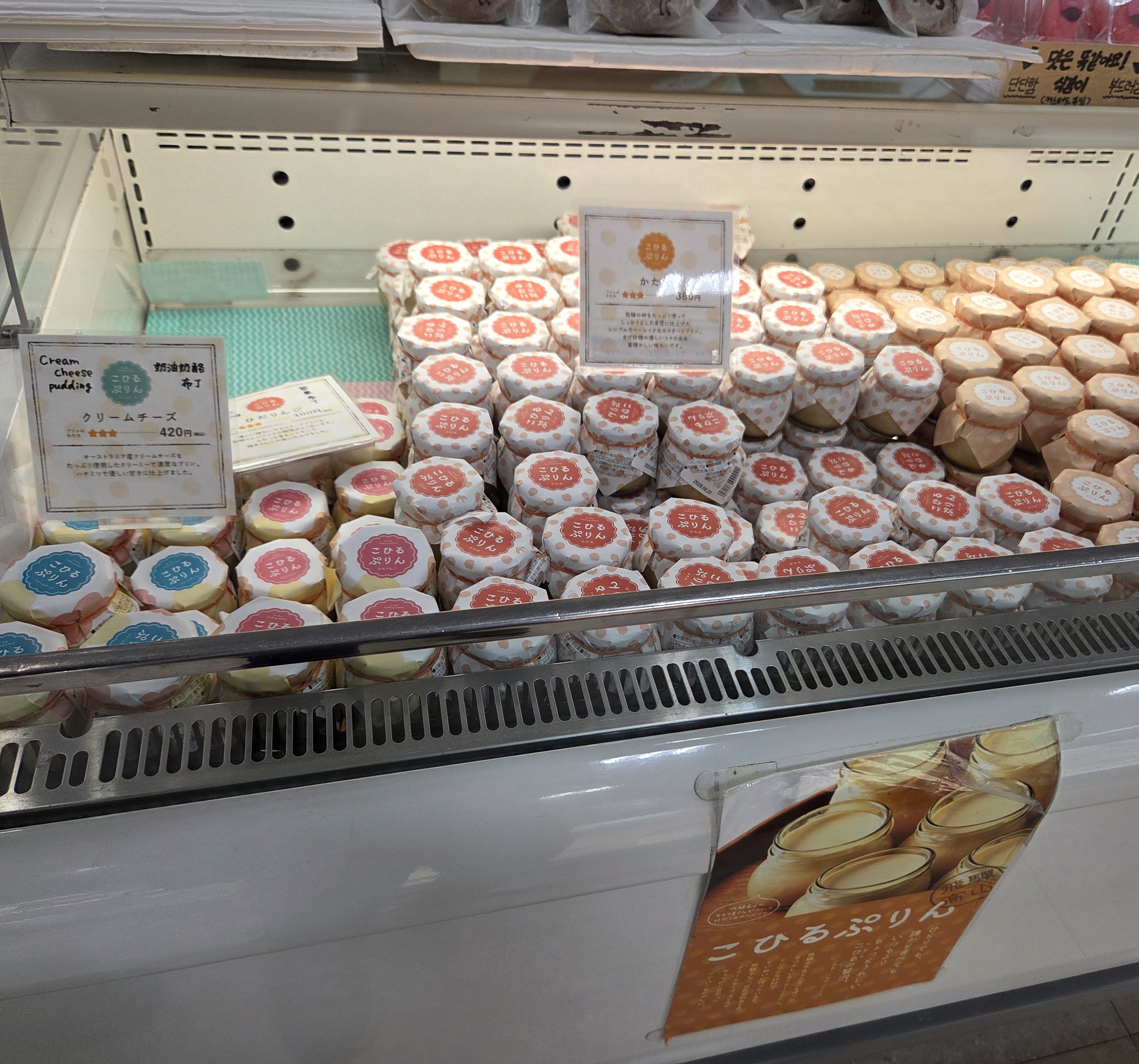
We had a bathroom break at a rest area around 9am. The guide informed us that the region was famous for its pudding dessert (custard), so we all went to buy some pudding. I bought one to share with Rei.
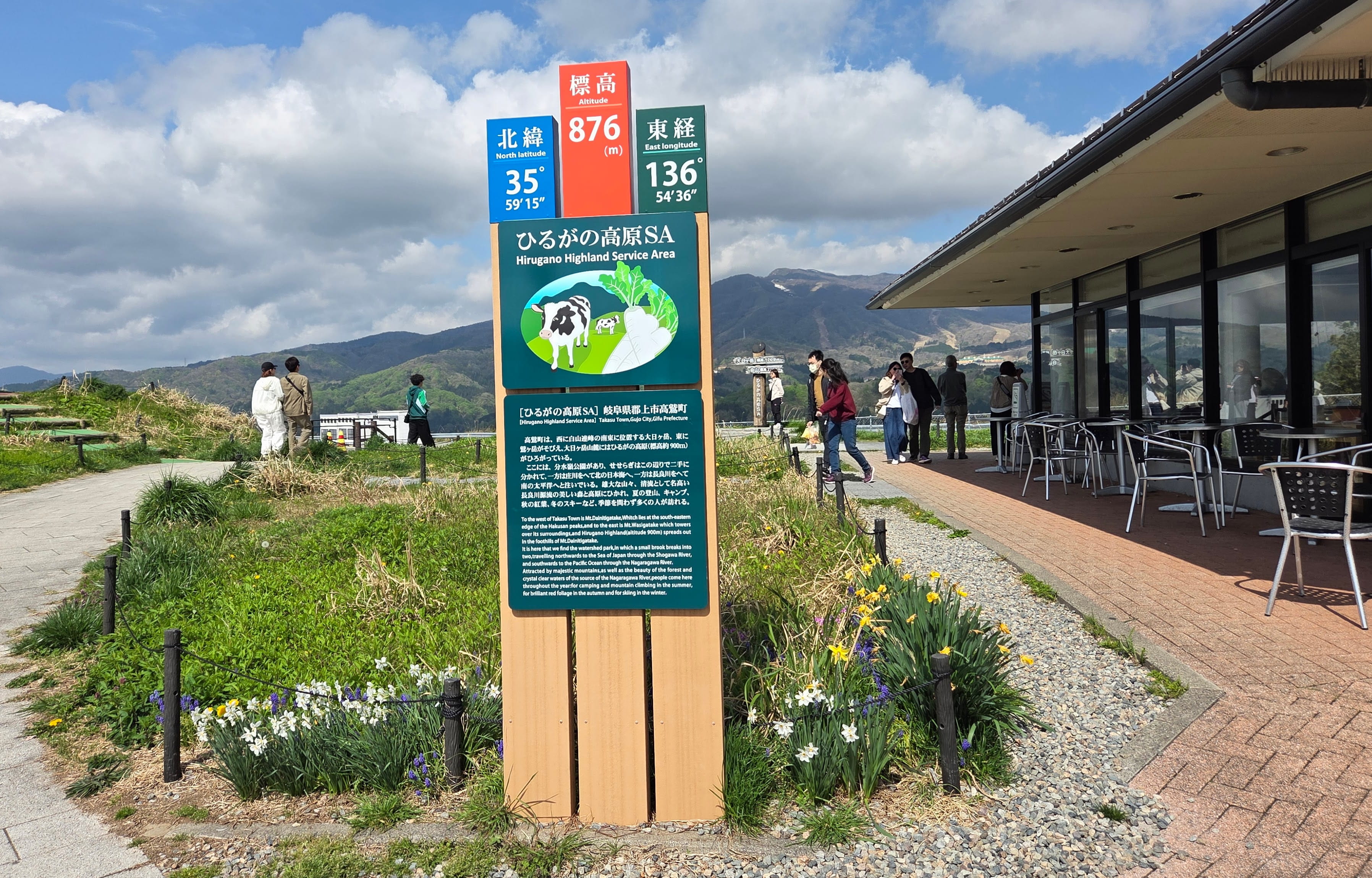
There was a lookout point, where we could see snowcapped mountains of Japan Alps. The place was crowded with many tour groups.
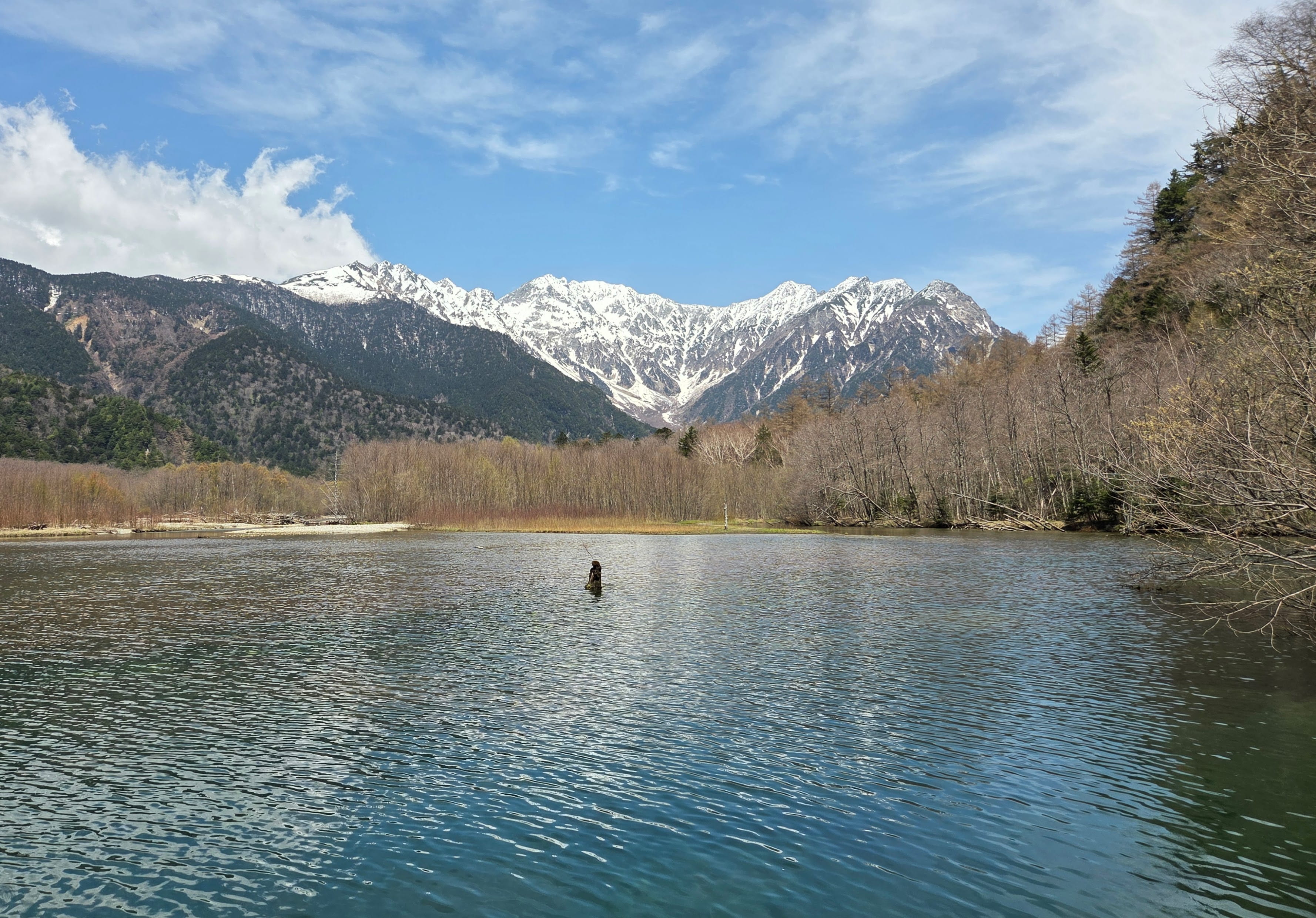
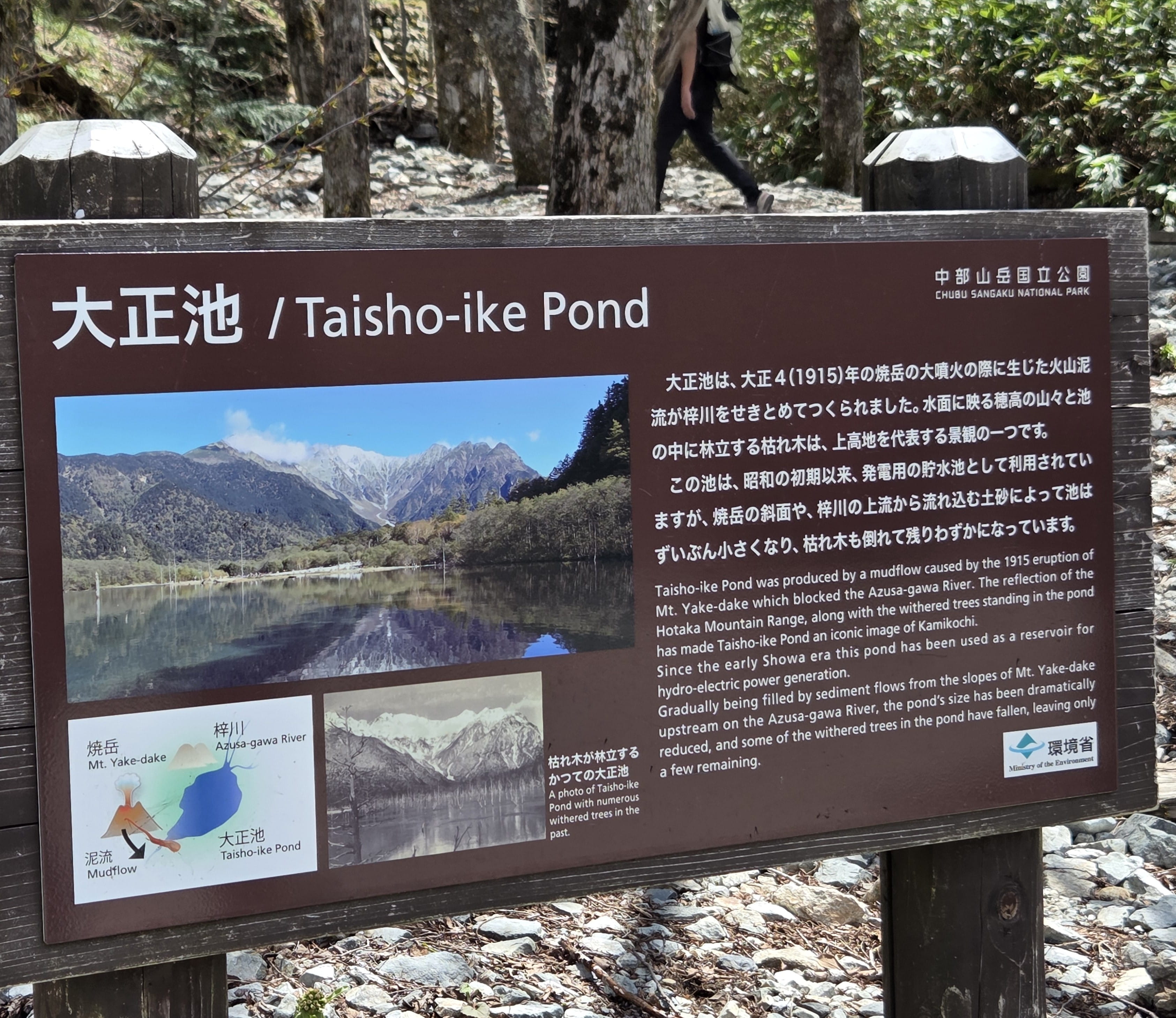
The road to Kamikochi was very scenic. We were in a mountainous area. The bus passed many tunnels with the longer ones taking a couple minutes to go through. After another two hours of drive, we finally arrived at Taisho Ike Pond, a placid alpine lake that beautifully reflected the surrounding mountains.
After taking photos at Taisho Ike Pond, we started our short hike to the famous Kappa-bashi Bridge. The guide told us that the trail was around 4km, and it would take us more than an hour, not counting extra photo stops.
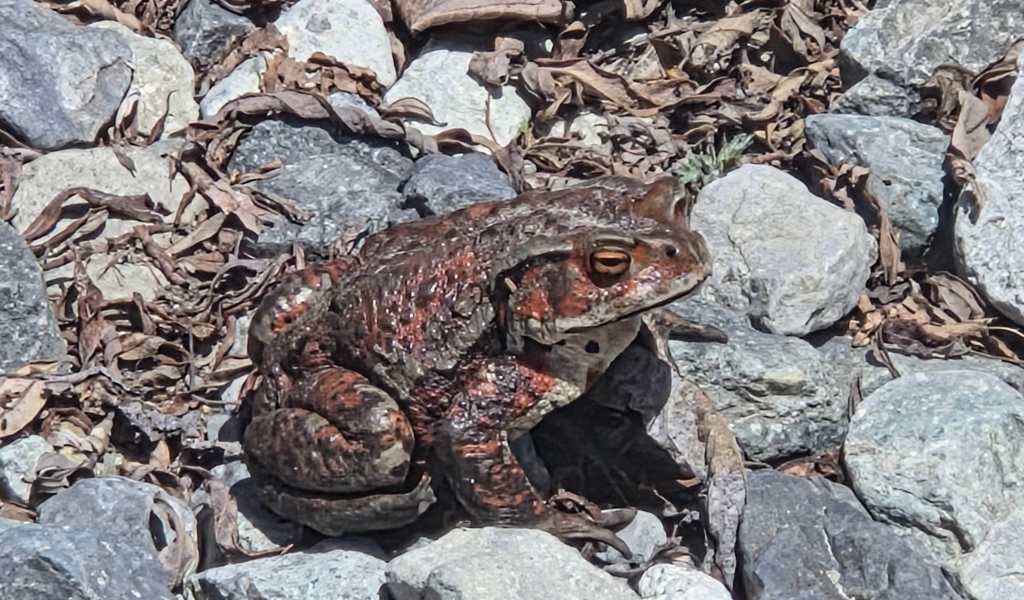
I spotted a giant brown frog along the trail. I have never seen a frog so big! Other hikers were all taking pictures when they saw me photographing the frog.
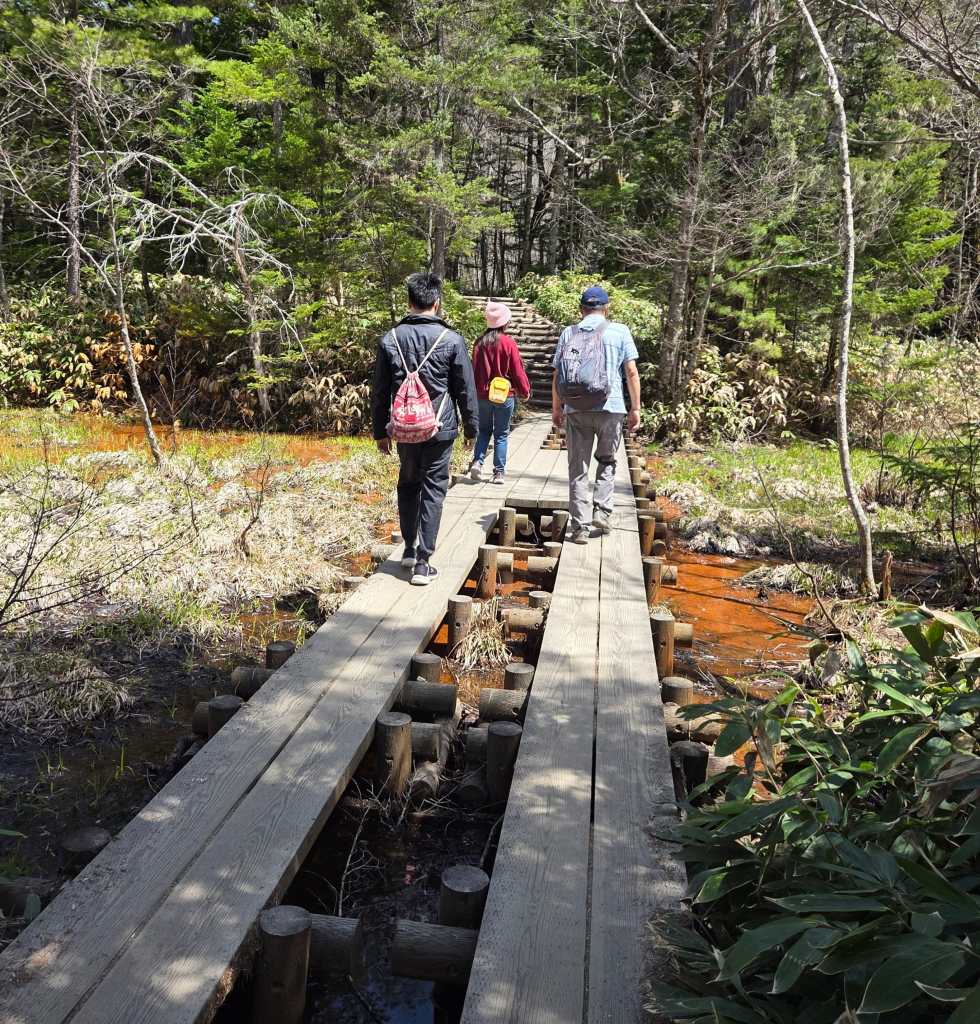
The trail passed a wetland. Wooden planks lined the trail to protect both the wetland and the hikers. This was a really easy walk compared to Kumano Kodo.
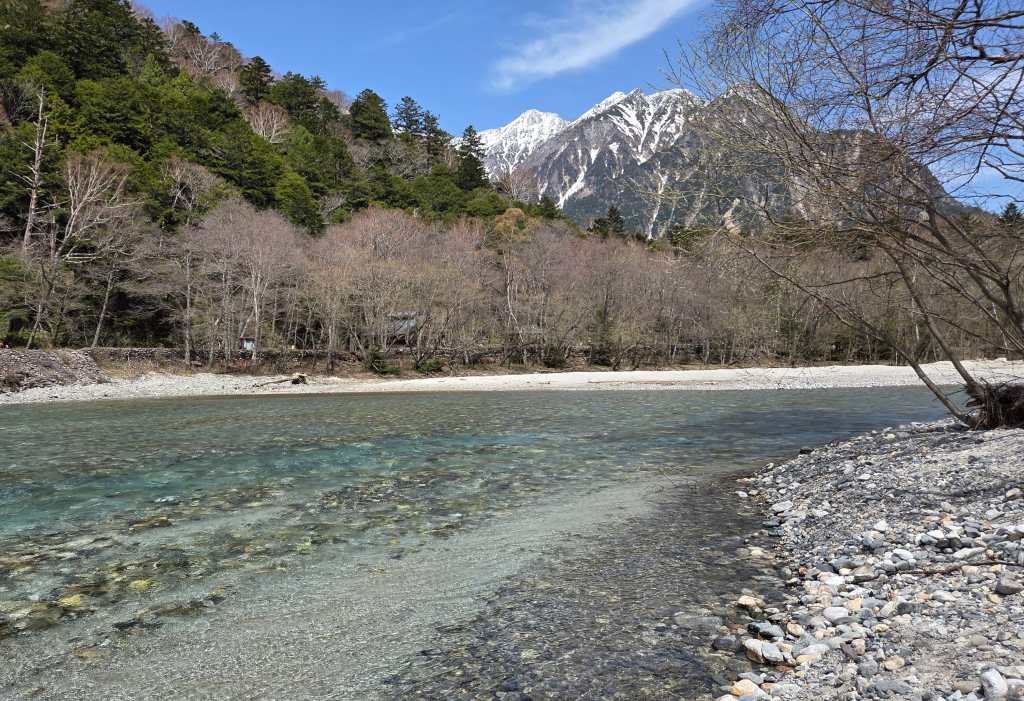
Soon we were walking along Azusa River. The water was so clear that we could spot fish swimming. This was a very scenic trail. We made numerous photo stops so that it took us about one hour twenty minutes to reach Kappa-bashi Bridge (河童橋). The place around the bridge was also crowded with tourists.
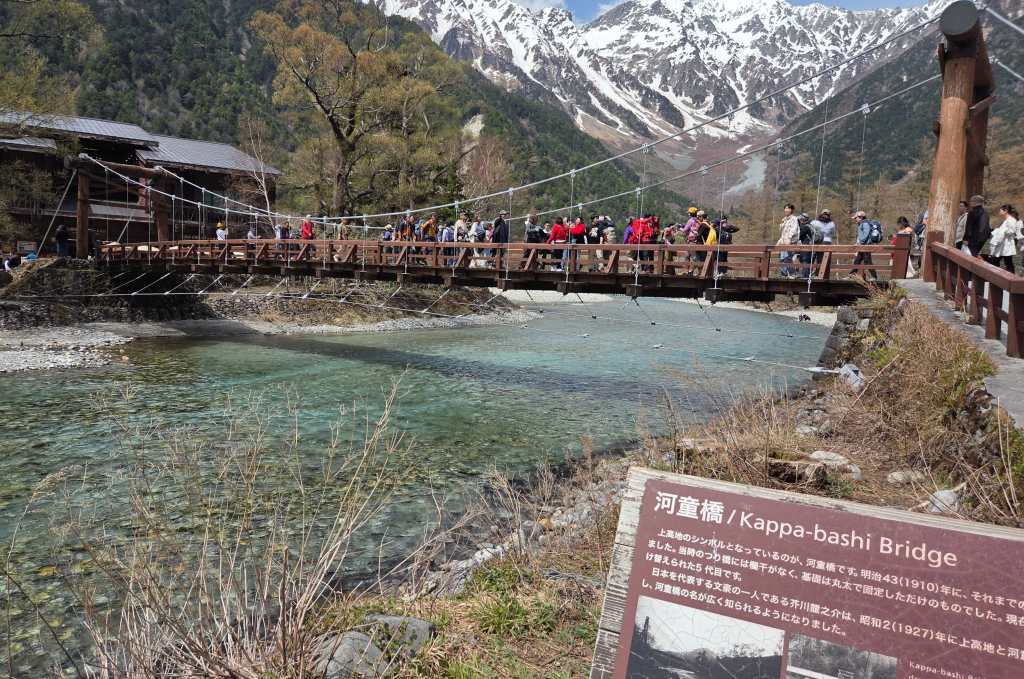
Kappa-bashi Bridge was a famous suspending bridge over Azusa River. (Kappa were Japanese demons.) The bridge was photogenic and very popular with tourists.
There’s a store selling souvenirs, lunch plates and desserts. I wanted to buy a bear bell, but they were all very expensive. We ended up purchasing some desserts only.
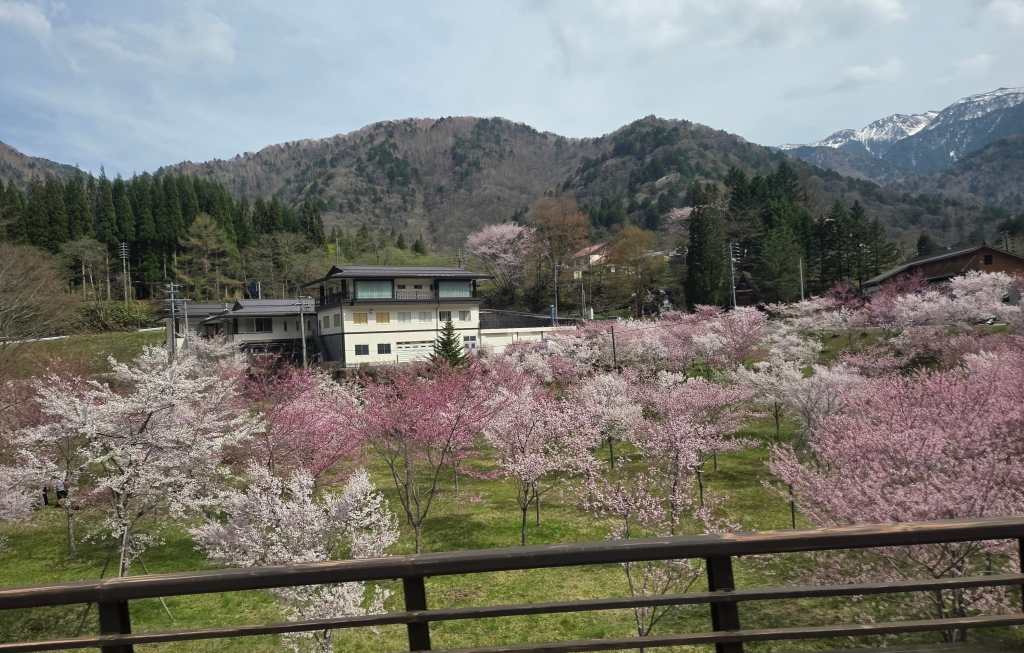
It’s another very long drive to reach Takayama, the second destination of the day. The drive was again very scenic. Cherry blossom started earlier this year, and has already ended in the lowland. However, we could still see cherry blossom in the mountains, and it looked amazing!
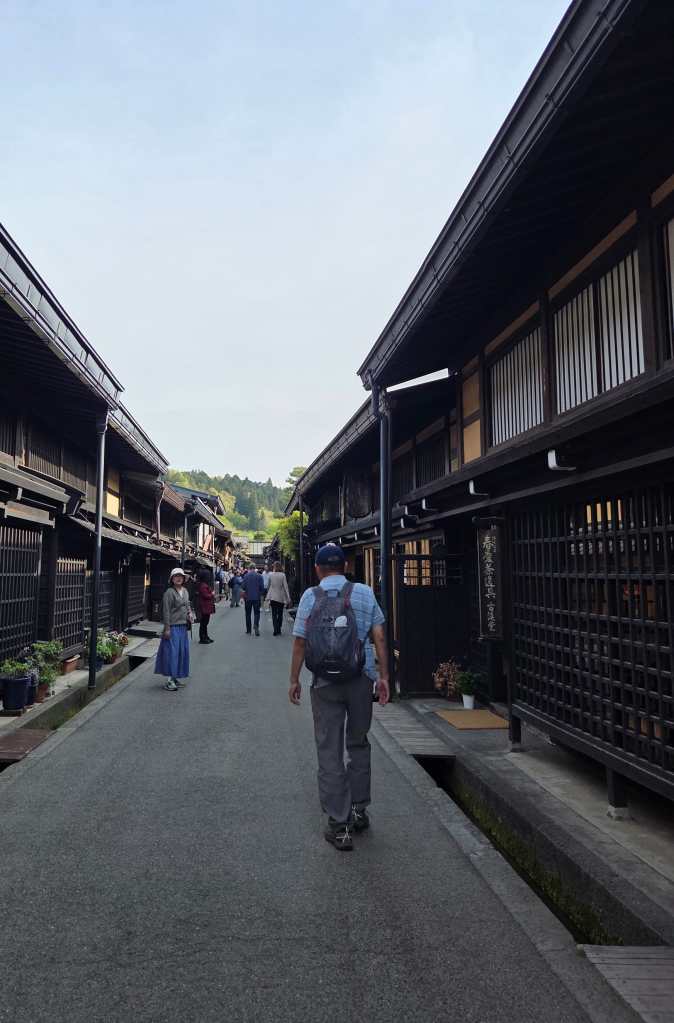
Takayama has a famous old street Sanmachi Suji that’s a historical landmark. There are traditional Japanese stores selling souvrnirs and food, especially the regional famous beef, wine and pickles.
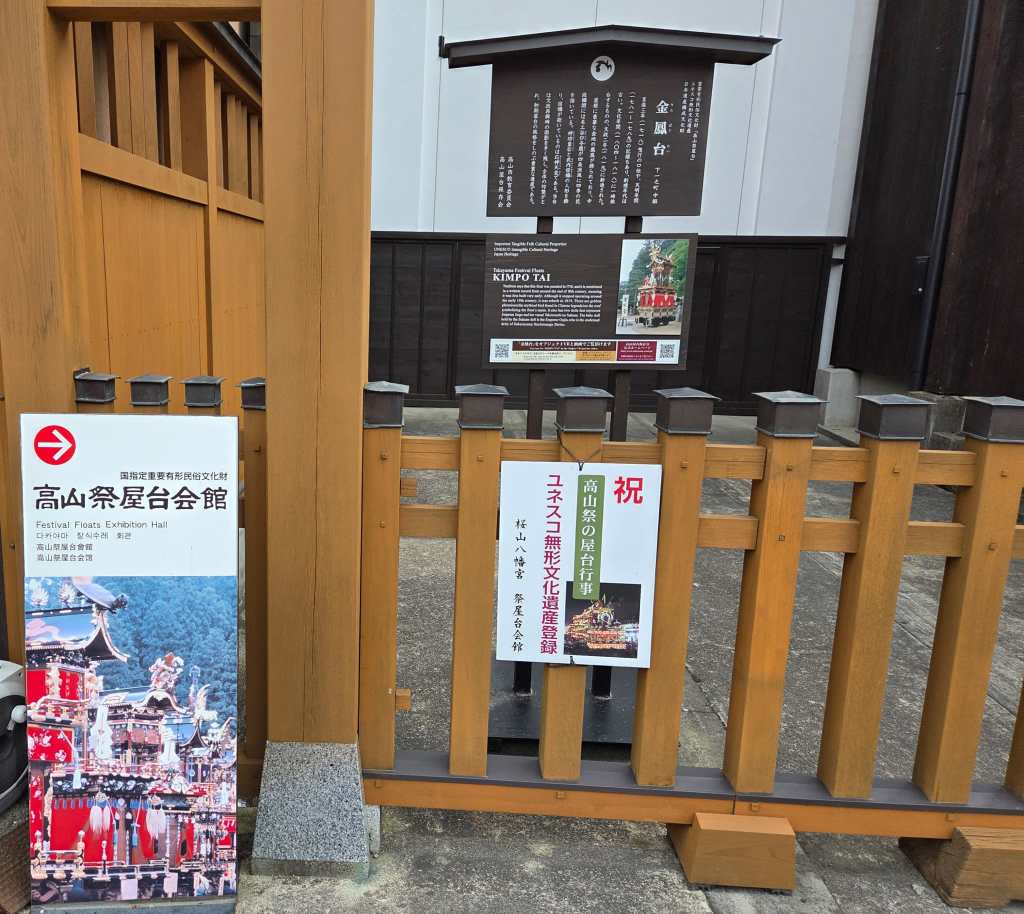
Takayama also has biannual festivals featuring spectacular floats. Though it’s not the time of a festival, we could still see signs on the street showcasing some famous floats.
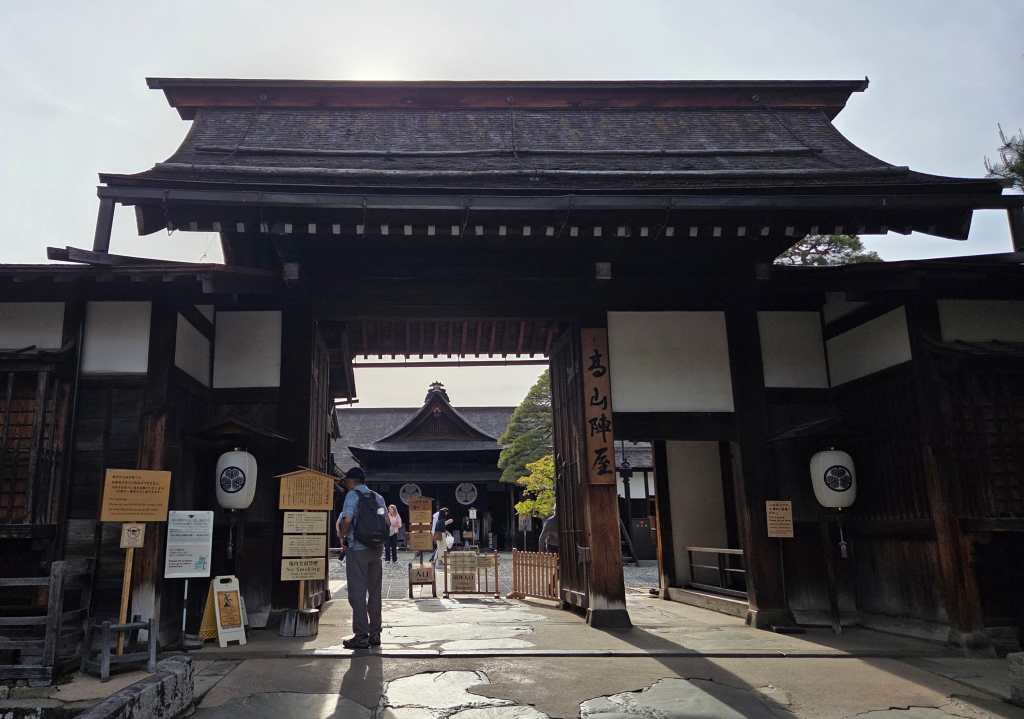
I saw a sign showing that Takayama Jinya (高山陣屋) was only 100m from our current location, so Rei and I decided to take a look. Takayama Jinya is a national historic site. It was a government office from 1692 to 1868, the year that Meiji Restoration started. Now it’s the only such building remaining in Japan.
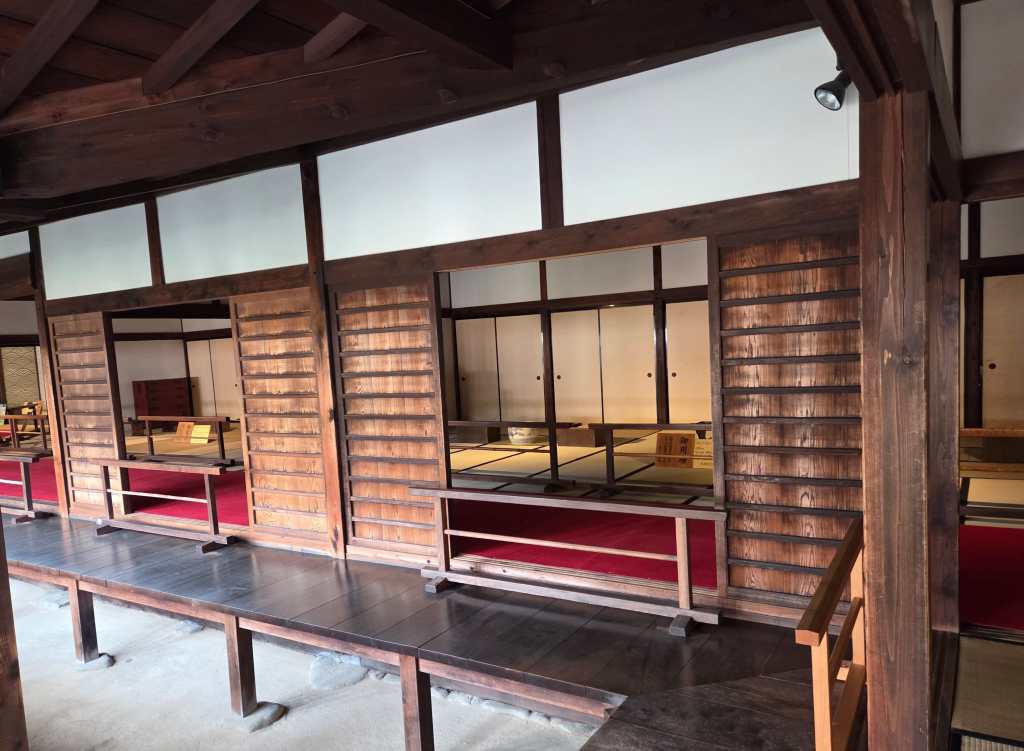
We paid 500 yen per person to enter. The jinya was very large. There were many rooms serving different purposes. For example, there were different waiting rooms for people of different ranks too.
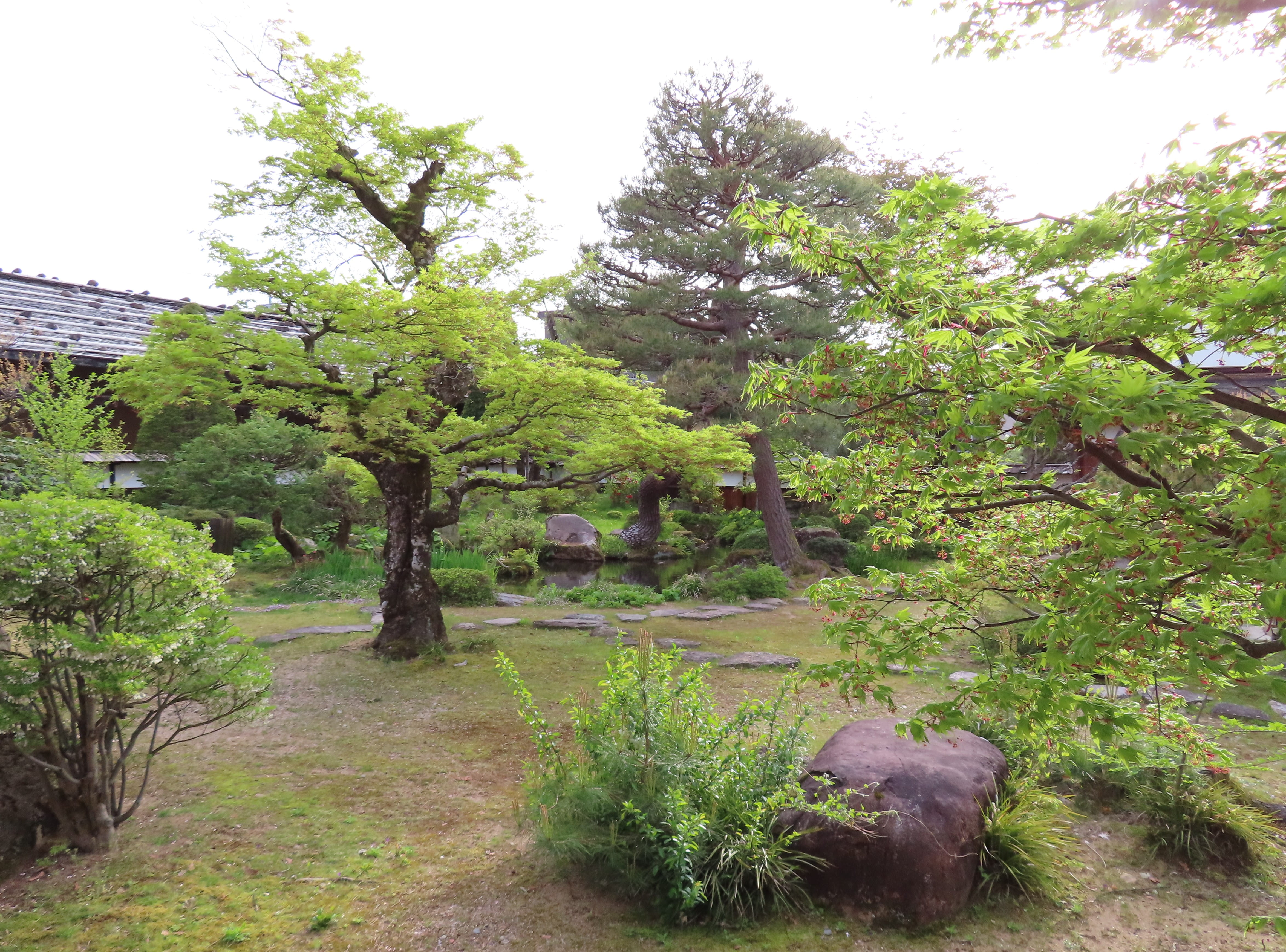
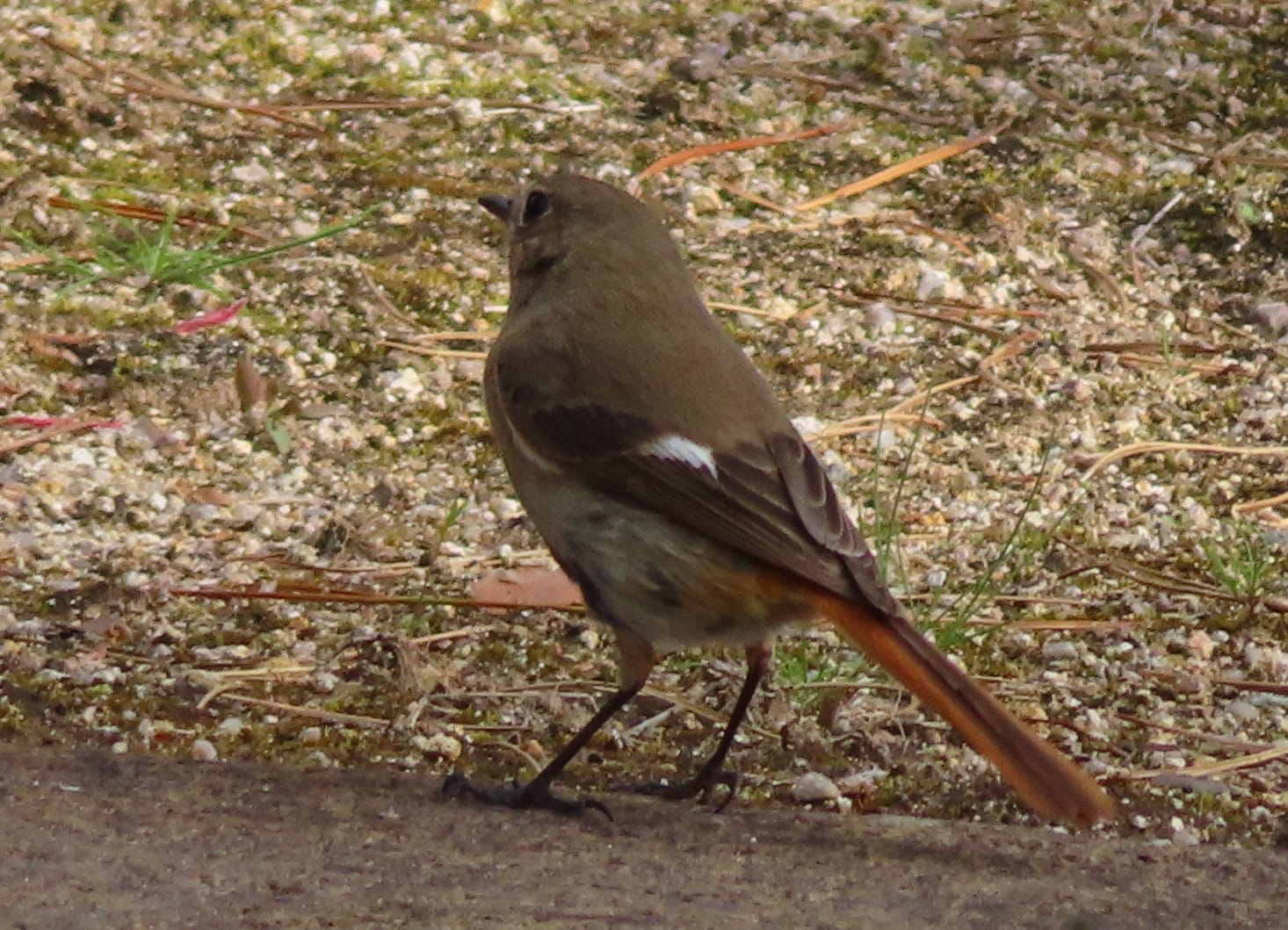
We could see the serene and verdant courtyard, but we were not allowed to enter. There were a pair of Daurian Redstarts at the courtyard.
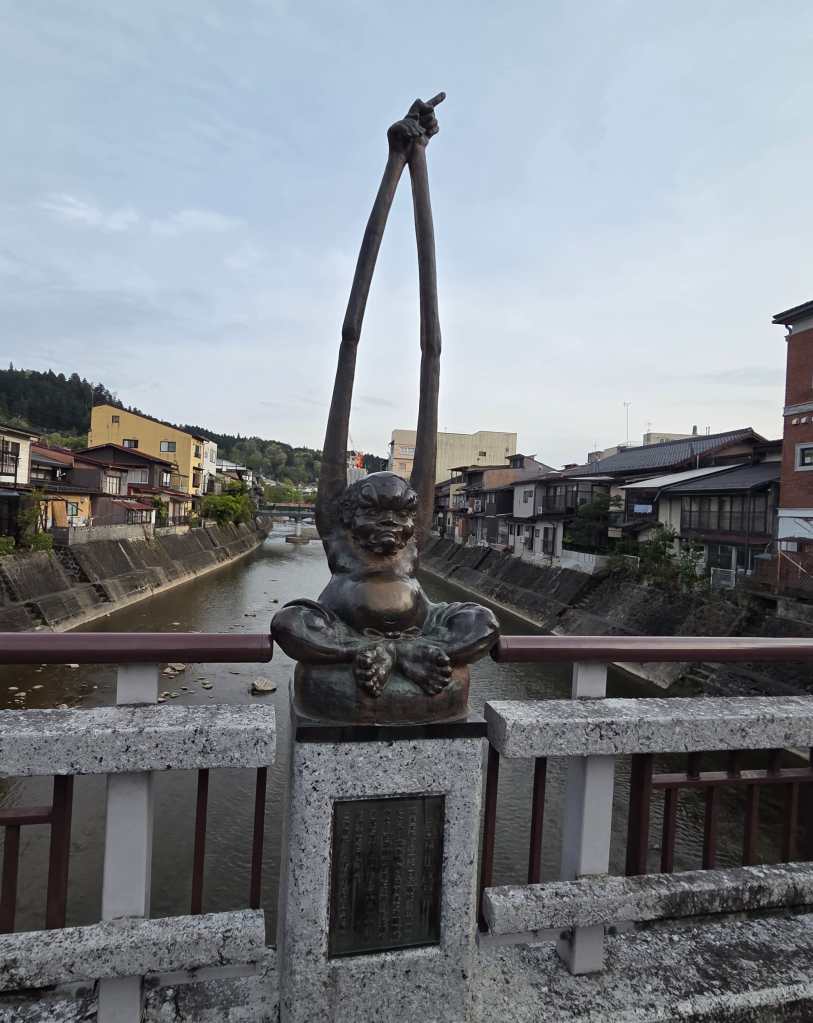
We had to return to our bus by 5:15pm. Therefore, we could only have a quick visit. On the way back, we crossed a bridge with two bizarre statues: a statue with extremely long arms, and the other with extremely long legs. Takayama was a quaint town worth exploration, but we didn’t have enough time.
Day 11: Tateyama Kurobe (立山黒部)
Today’s itinerary was Tateyama Kurobe Alpine Route. It would be a very long day. We were told to have breakfast at 6:00am, and the bus would leave at 6:30am.
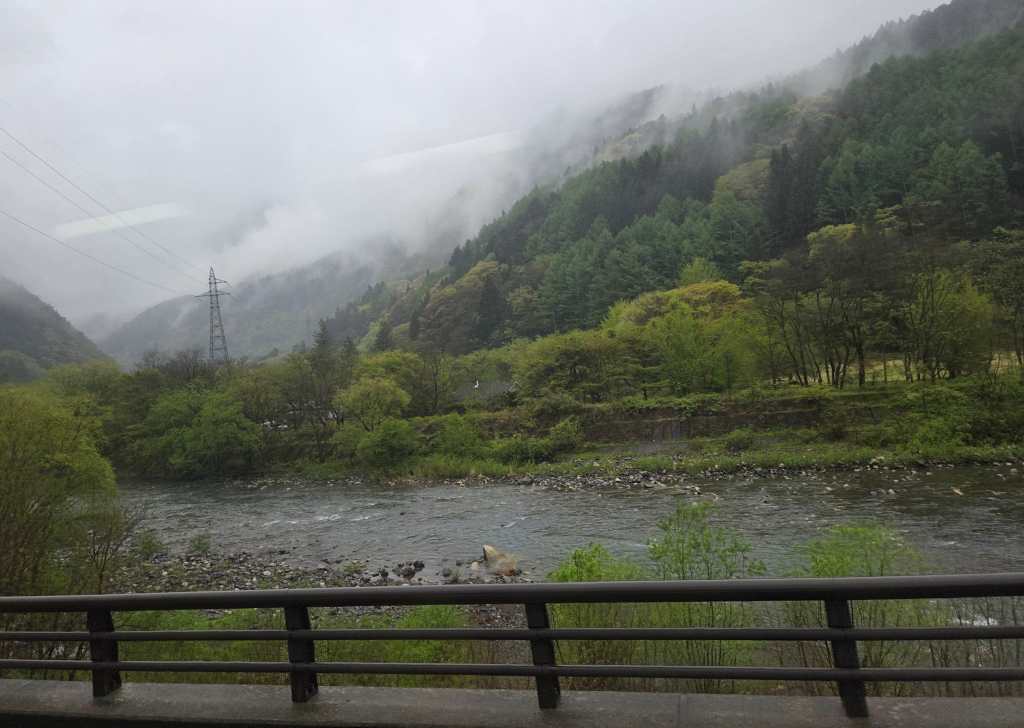
It was raining this morning. The bus ride to Ogizawa (扇沢), the starting point of the Alpine Route, would take 4 hours! The road trip was very scenic. It was in a mountainous region. I saw some waterfalls on the way. The bus ride was so long that most people fell asleep during the trip. We had 2 bathroom stops before finally arriving in Ogizawa around 10:30am.
The guide gave us a short introduction of the Tateyama Kurobe Alpine Route. The route was first built to transport construction materials and supplies for Kurobe Dam, the tallest dam in Japan. Kurobe Dam was constructed to control the flow of Kurobe River and to provide electricity. Since it was in a remote mountainous region, the dam took 7 years to complete. Later, the route was repurposed, and it’s now a famous and very popular tourist destination.
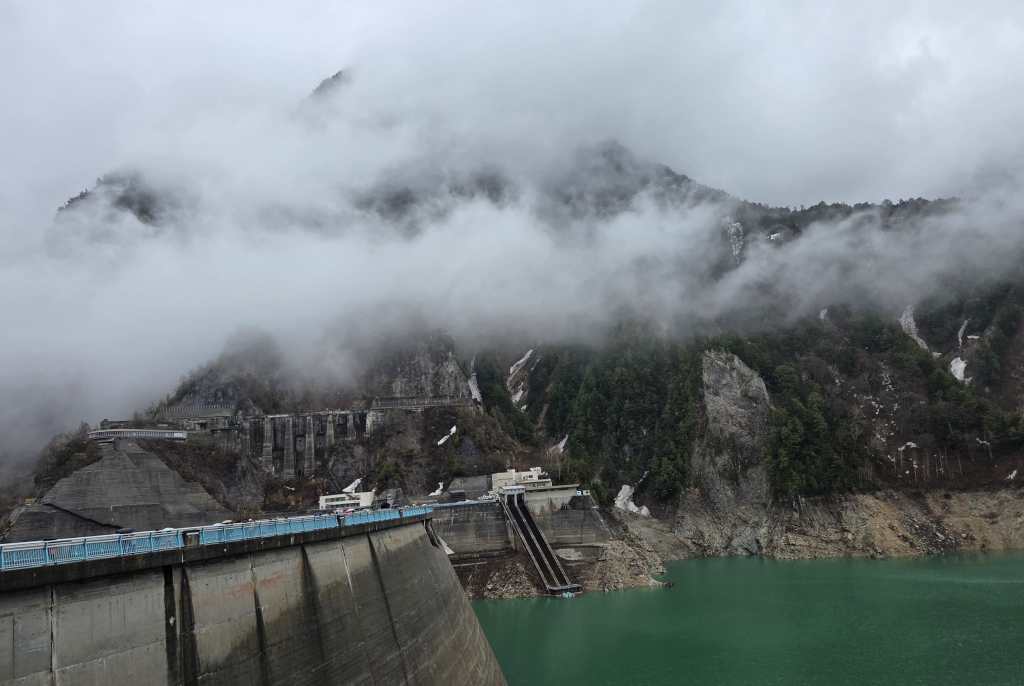
The first section of the route between Ogizawa and Kurobe Dam was by an electric bus. The bus drove through a very long tunnel to reach the dam. There was a light rain when we got off the bus. The view at the dam was splendid! There were a lot of tourists taking photos.
It’s a short walk from the dam to Kurobeko (黒部湖), where we got on a cable car to reach Kurobedaira (黒部平).
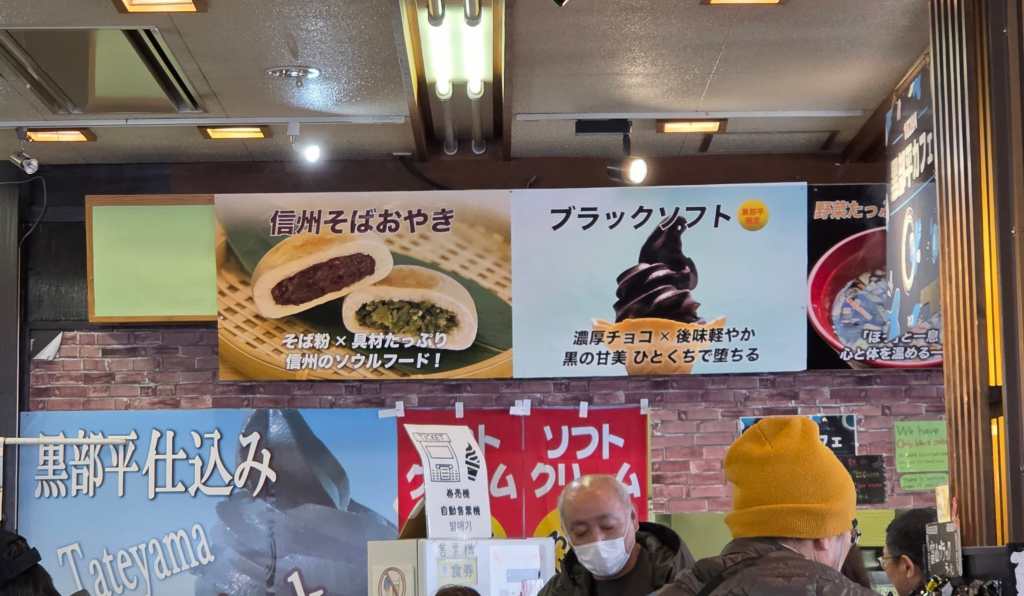
We had a longer stay at Kurobedaira to eat and to shop. We saw many people buying a black ice cream, which was said to be the famous product of the place. I was curious, but Rei didn’t want to try.
Afterwards, we took Tateyama Ropeway to reach Daikanbo (大観峰). Because the weather was foggy, we didn’t get a good view. Then, it was another electric bus ride through a tunnel to reach Murodo (室堂).
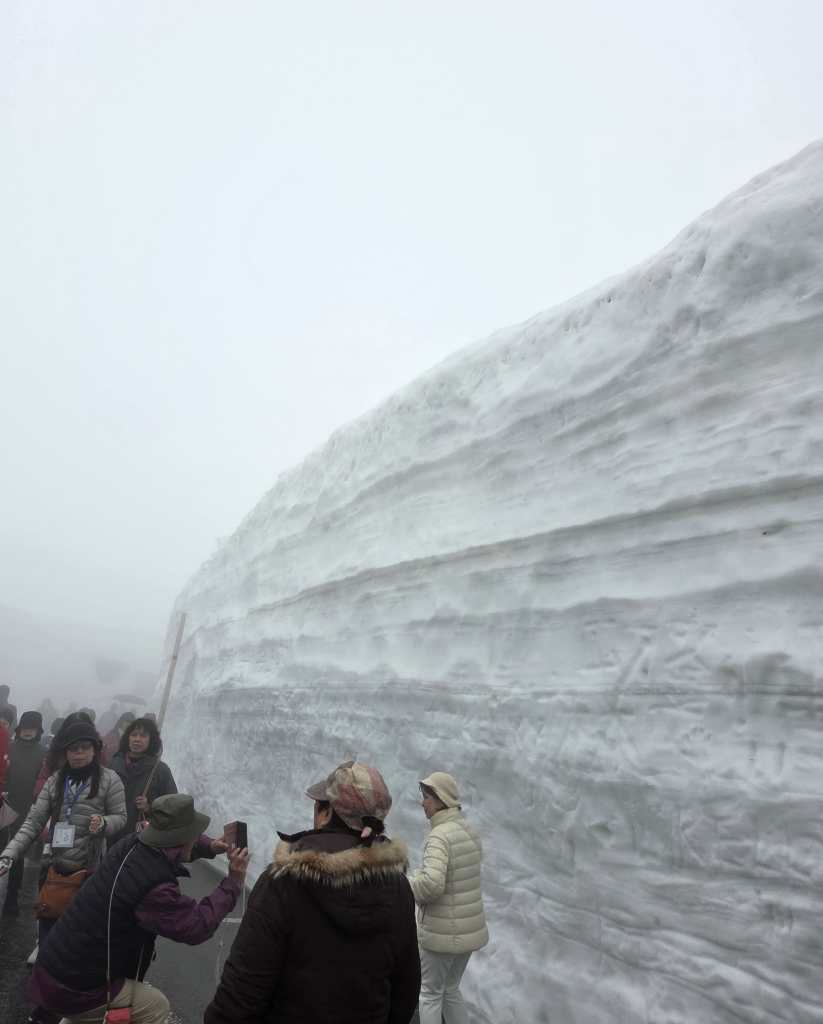
Murodo was where the famous Tateyama Snow Wall was located. The snow wall could only be visited between mid-April to mid-June. It’s super popular with tourists. When we arrived, the place was full of people! Though it was foggy, we could still see and take photos of the snow wall, and everyone was taking photos and/or posing for photos.
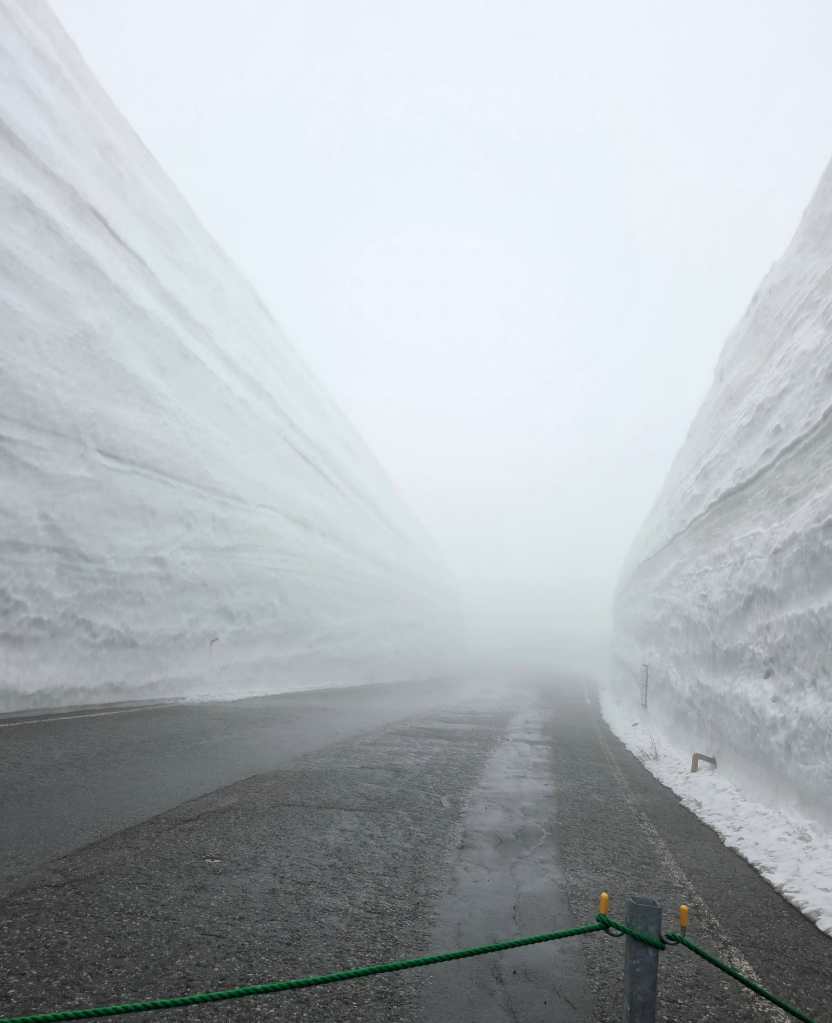
At some popular spots, we even had to line up to take turns to photograph! Rei suggested that we walked to the end of the walkway, where it was less crowded to take photos.
It seemed that some visitors were from a warmer region and they didn’t see snow often, so they were playing in the snow despite the weather. Rei and I have seen enough snow, so we simply returned inside after the snow wall visit.
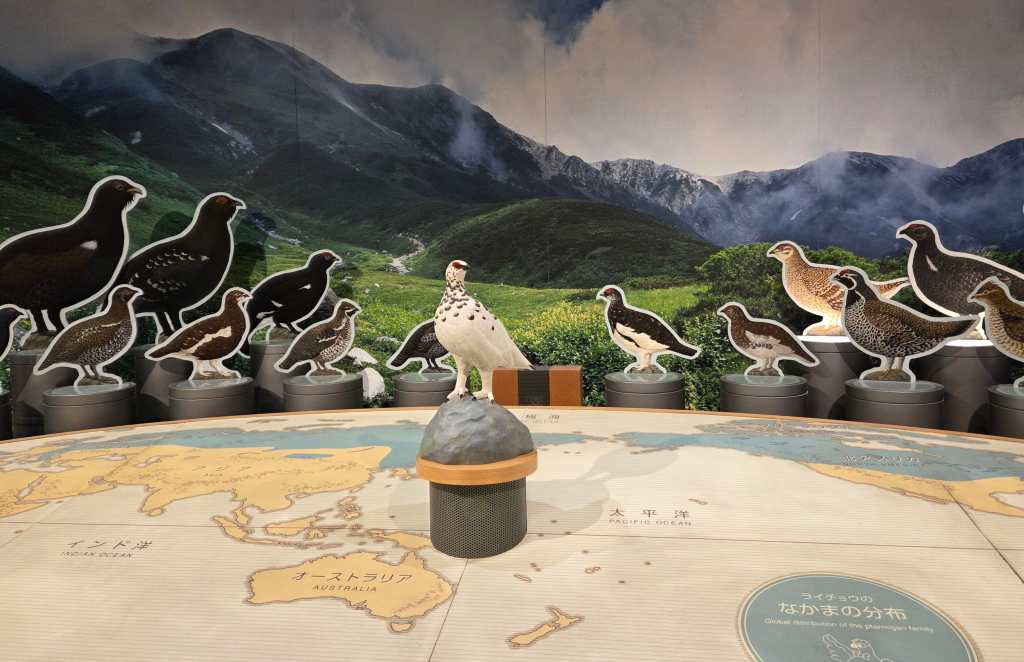
The nearby Tateyama Nature Conservation Center was dedicated to the conservation of Tateyama Thunder Birds, which are Japanese Rock Ptarmigans. The center had an auditorium with a great video selections. When we arrived, it was showing the four seasons of the place. Autumn was the most spectacular season with amazing fall colors!
The guide told us that the group would stay at Murodo until 4:10pm. There were many nearby places we could explore. However, it was still rainy and foggy, so people all stayed inside. Rei and I went to have some noodle soup and did some shopping in a store. Rei got a Tateyama Kurobe Alpine baseball cap, I got a beanie hat with a Thunder Bird in front, and we also bought cookies for the kids.
There’s still a lot of time left, so we returned to the conservation center to watch a Thunder Bird video.
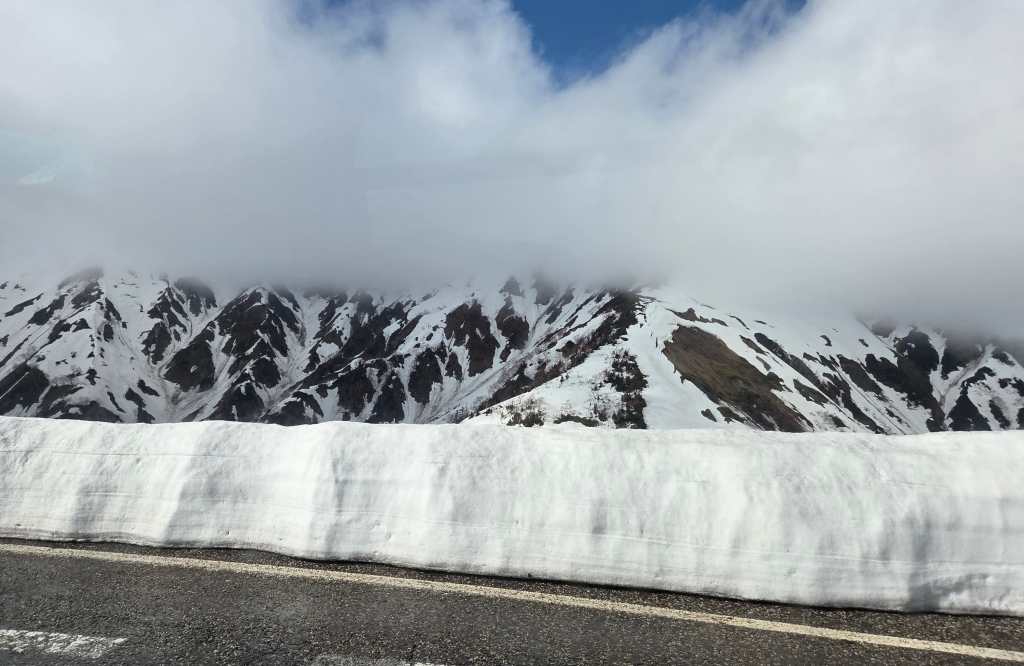
Finally it was time to take another bus ride to Bijodaira (美女平). We thought this would be a boring bus ride, but it turned out to be the highlight of the day. The bus first drove past the snow wall, which was closed to pedestrians by the time, so it was very serene and scenic.
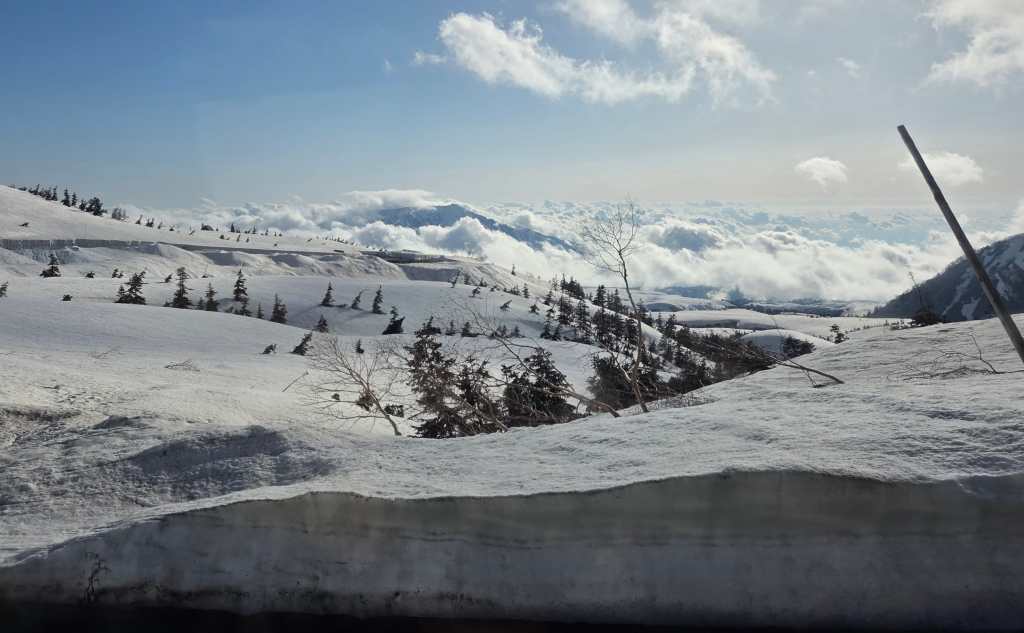
Then the sun came out, the snow field looked brilliant under the afternoon sun! Since we’re high up, we could also see a sea of white clouds. The entire mountain area with snow field was a pristine winter wonderland. I took so many photos that I finally decided to switch to video instead!
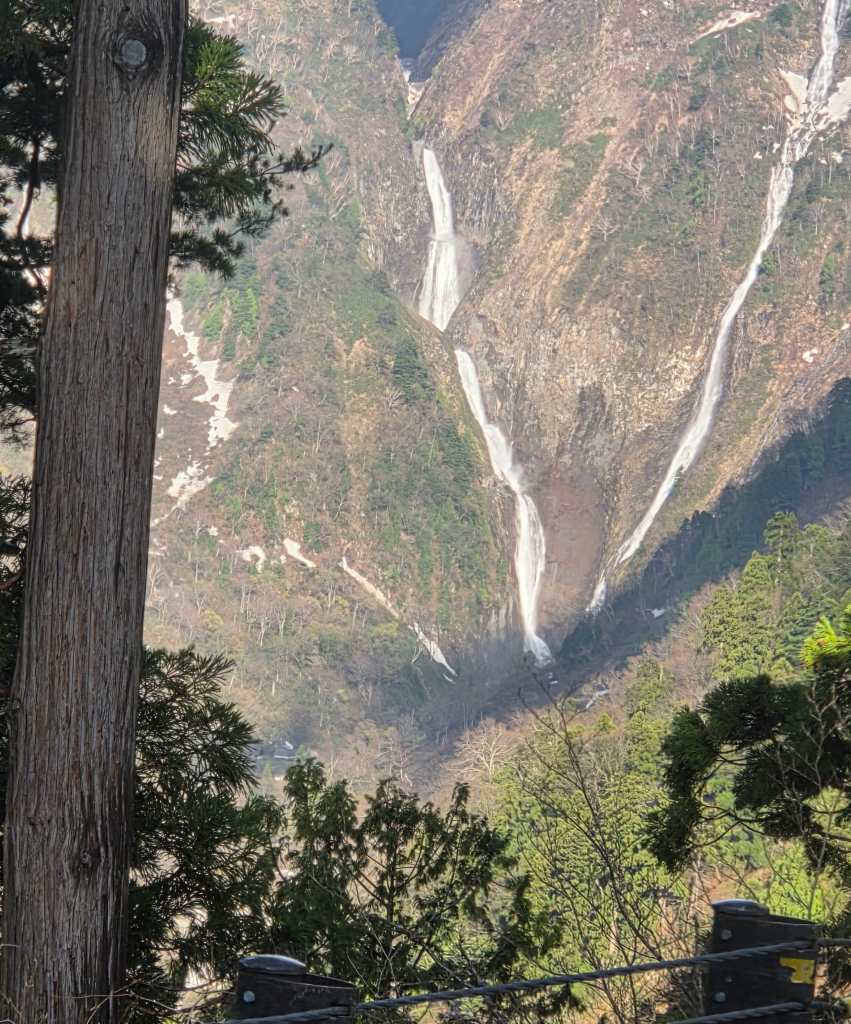
The bus drove past a beautiful high waterfall, Shomyo Falls. We couldn’t get down, but the driver did slow down to allow photo taking. I was lucky to sit on the right side of the bus that facing the waterfall!
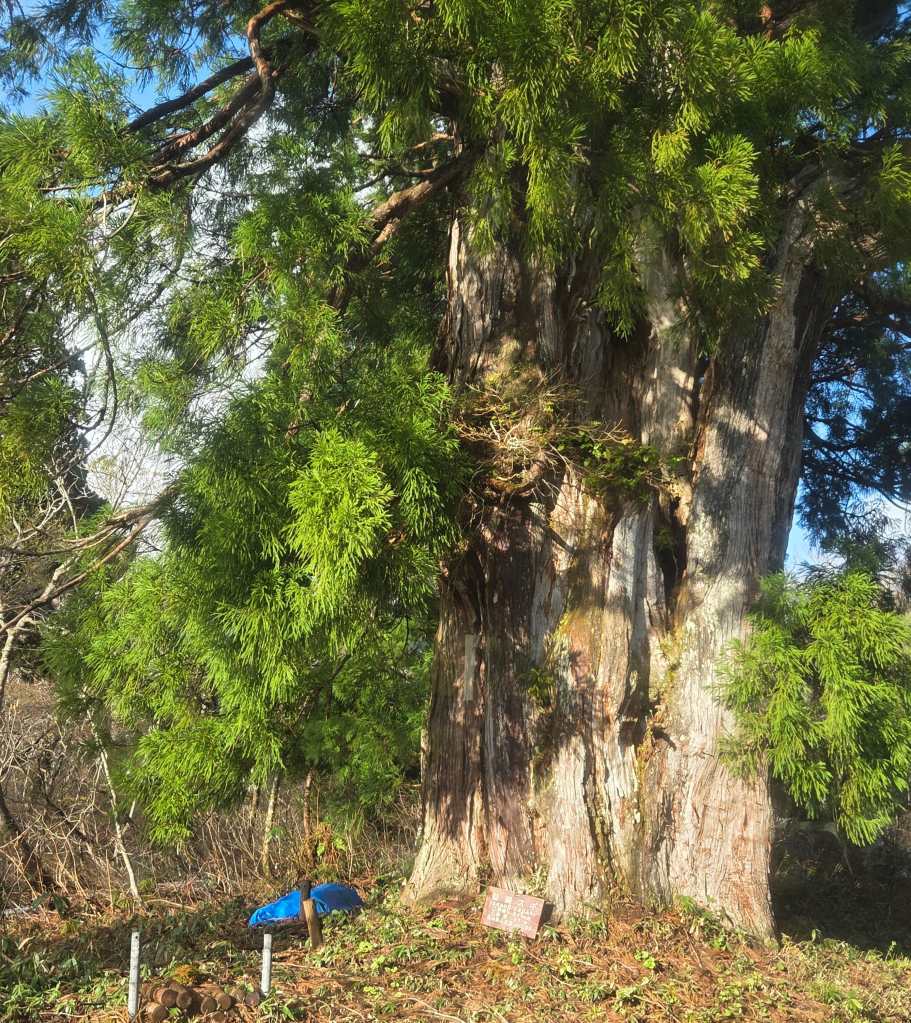
We also drove past an ancient Tateyama cedar tree, which was also on the right side of the bus. So, if you take the same trip, remember to sit at the right side of the bus!
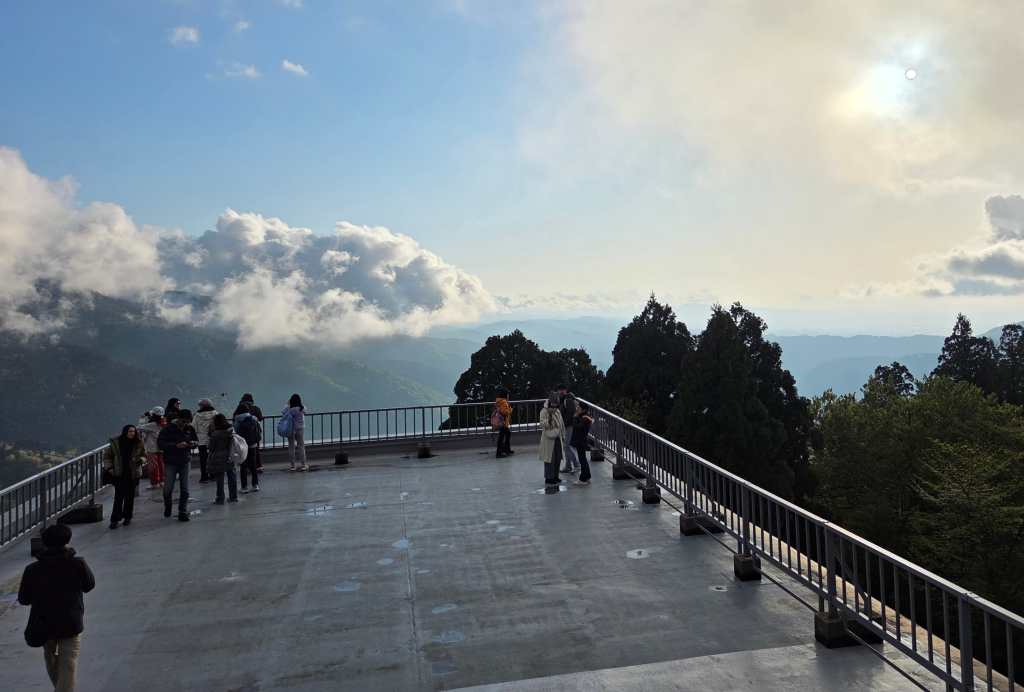
There’s an observation deck at Bijodaira that offered a beautiful mountain view, though I didn’t think the view was as amazing as we’ve seen on the bus.
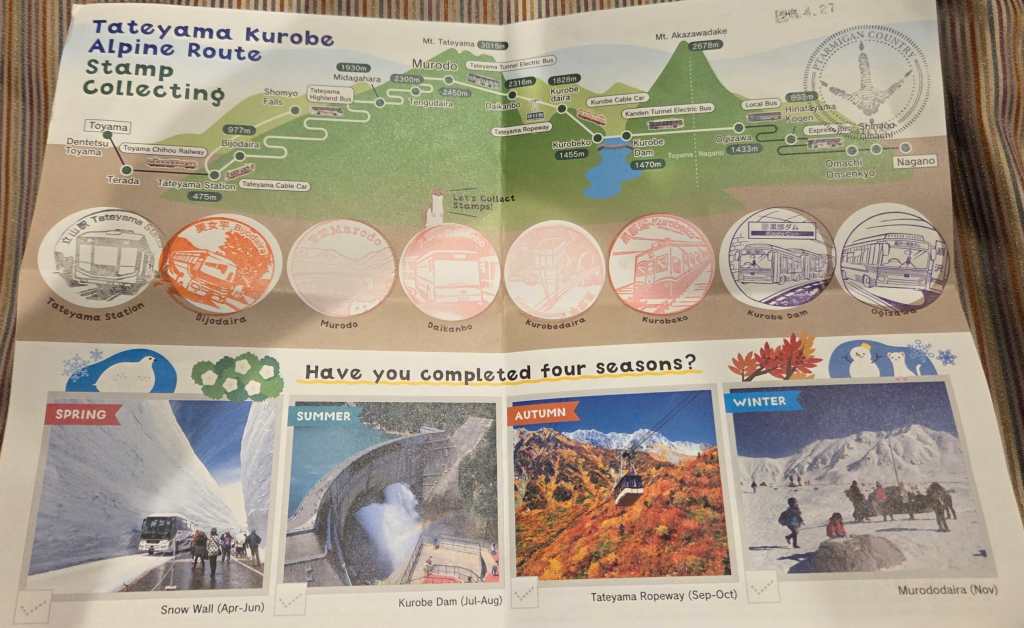
Another cable car ride took us to Tateyama Station, where we collected the last stamp (there were 8 in total) to complete the alpine route.
It’s another long bus ride to reach tonight’s hotel in Kanazawa (金沢). When we arrived, it’s already 7:30pm. The guide informed us that Kanazawa Station was a famous Instagram spot.
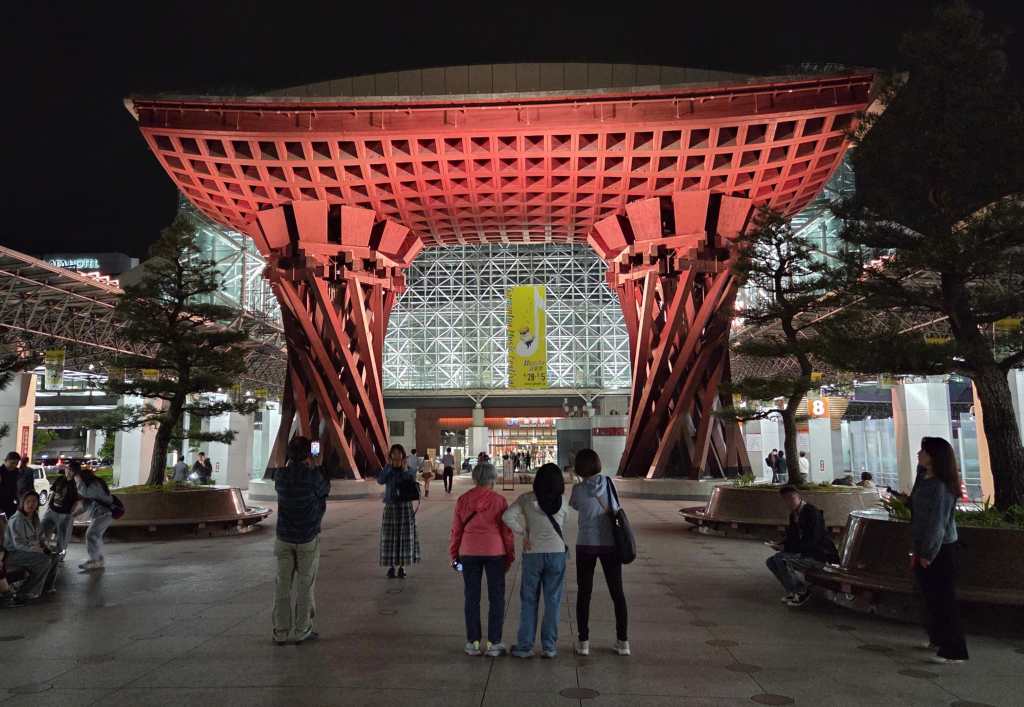
After checking in, Rei and I walked to Kanazawa Station to take photos. We also bought take-out food for dinner. Rei got a beef bento, and I got some bakery.
Day 12: Kanazawa (金沢市) and Shirakawa (白川村)
Today we had a later departure time at 8:40am. I thought the guide told us that the breakfast time at the hotel started at 6am, and we could go anytime after that. Rei insisted that the guide told us to go to breakfast at 6am. When we went to breakfast at 6:05am, we didn’t see anyone else from our group. Apparently, they all decided to spend more time in bed.
So, after we finished breakfast, we had about 2 hours until the departure time. Rei suggested that we go to the train station to browse the shops to see what we can buy. After shopping, we still had a lot of time.
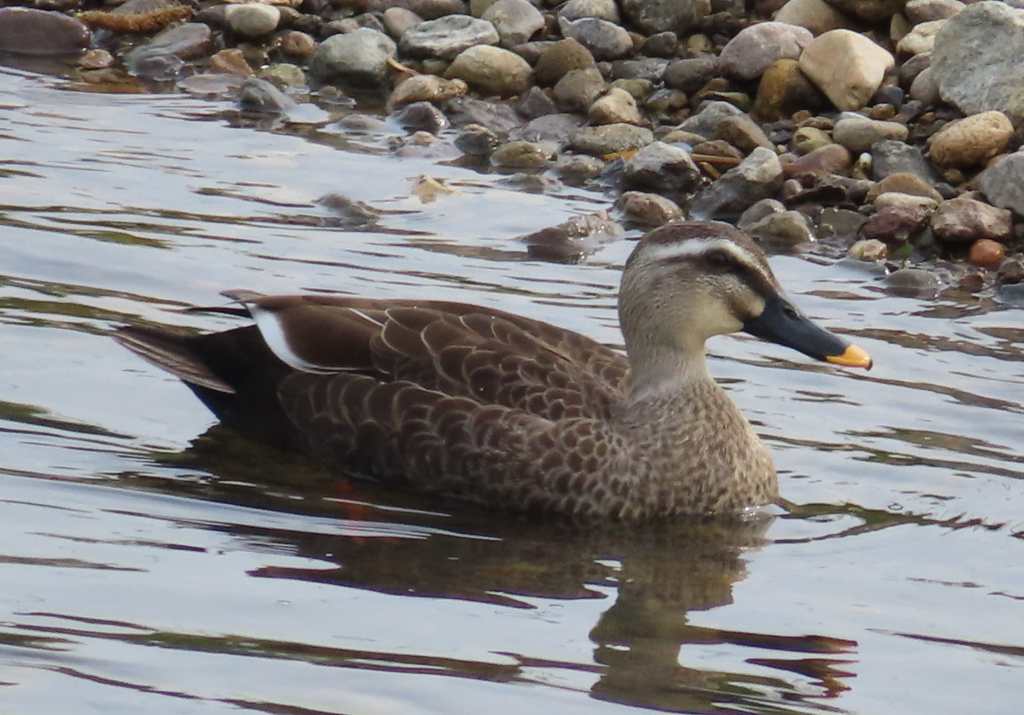
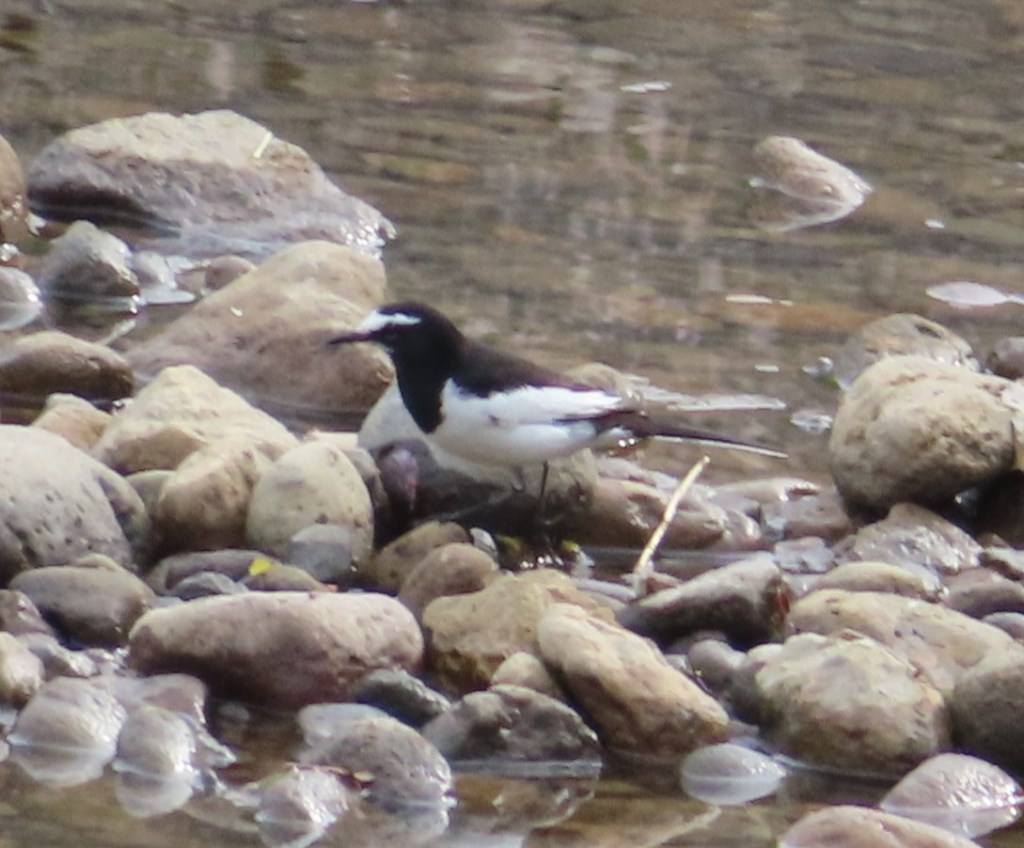
I sugguested that we go to check out the river, which was only about 10 to 15 minutes away from our hotel. Rei checked Google map and told me that it’s a long walk, but we would have time. Though I spotted some birds at the river, it wasn’t anything special.
Rei led us back to our hotel. When we arrived, I told him that it’s not our hotel but another hotel of the same chain! It turned out that our hotel was 13 minutes walk away, and it would cut very close to the 8:40am departure time. So, we ran to our hotel and arrived only a few minutes before the departure time. This was the misadventure of the day.
The first destination of the day was Kenrokuen Garden (兼六園). Kenrokuen in Japanese meant a garden with all 6 important elements: spaciousness, seclusion, artifice, antiquity, watercourses and panoramas.
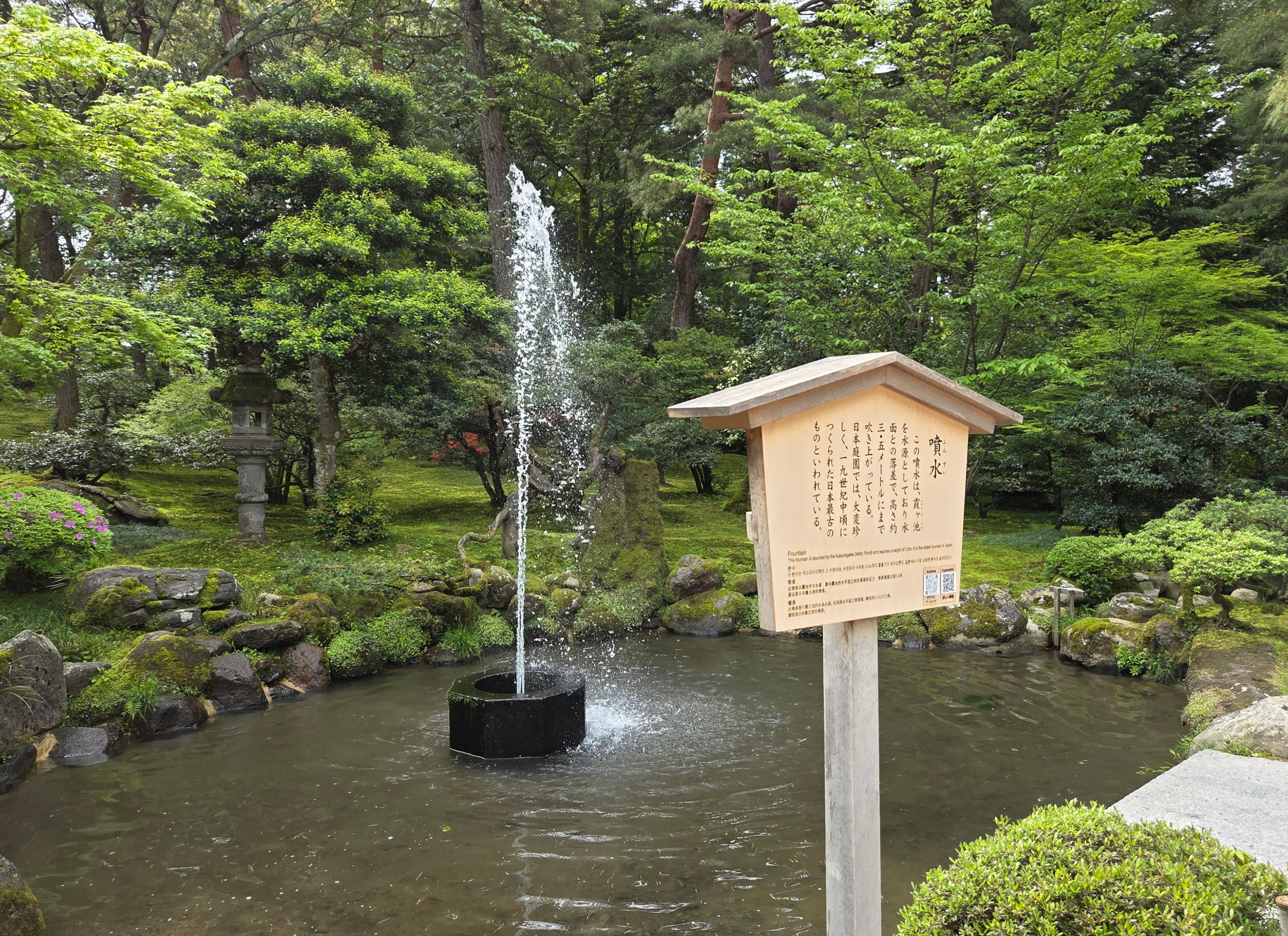
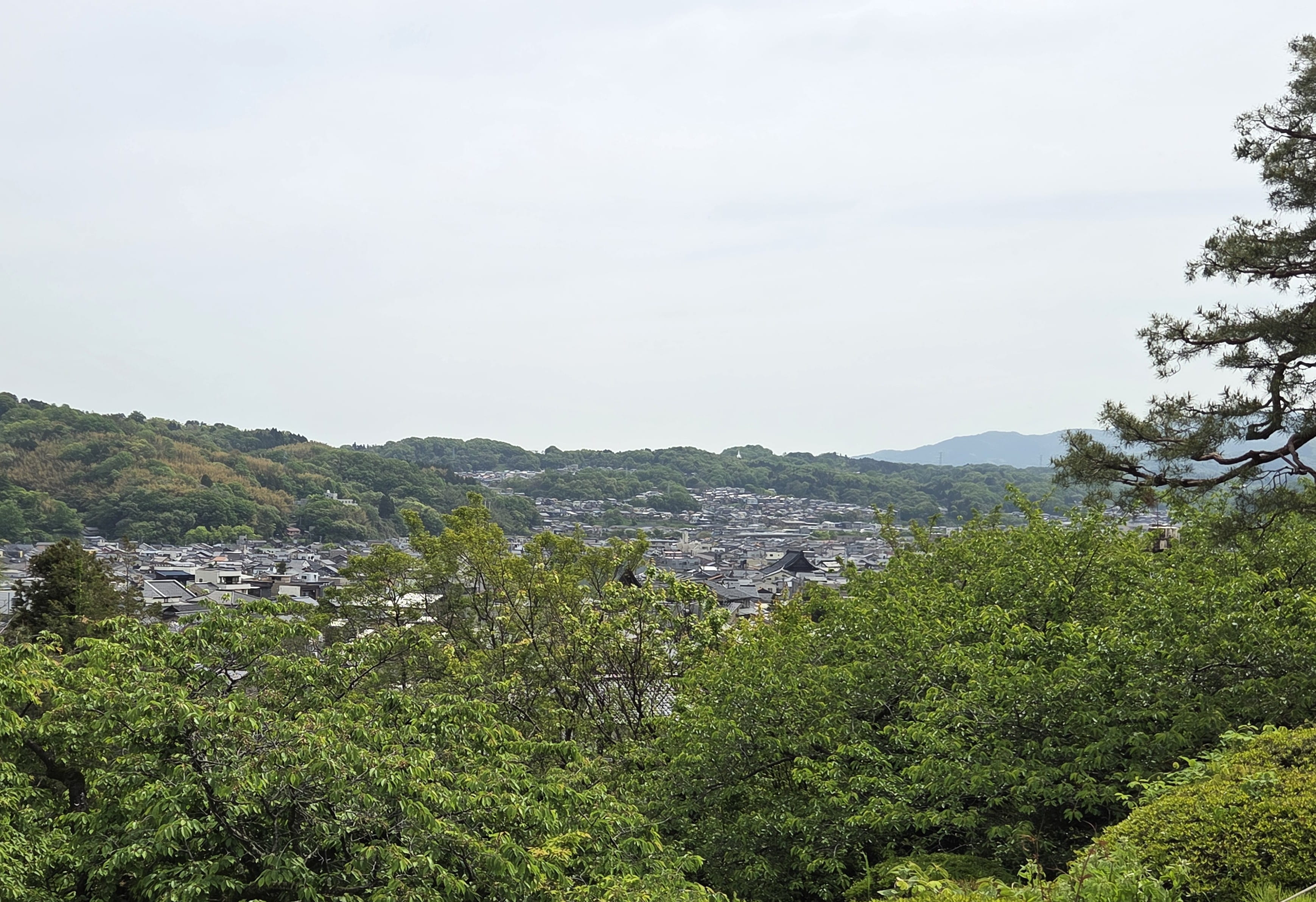
Kenrokuen Garden was built sever hundred years ago (antiquity) and covered a large ground (spaciousness). It’s a serene and secluded garden (seclusion) with the oldest fountain in Japan, a waterfall, ponds and some waterways (watercouses). There were many trees and flowers tended by the gardeners (artifice). It’s situated on a high ground commanding a panoramic view of Kanazawa (panoramas).
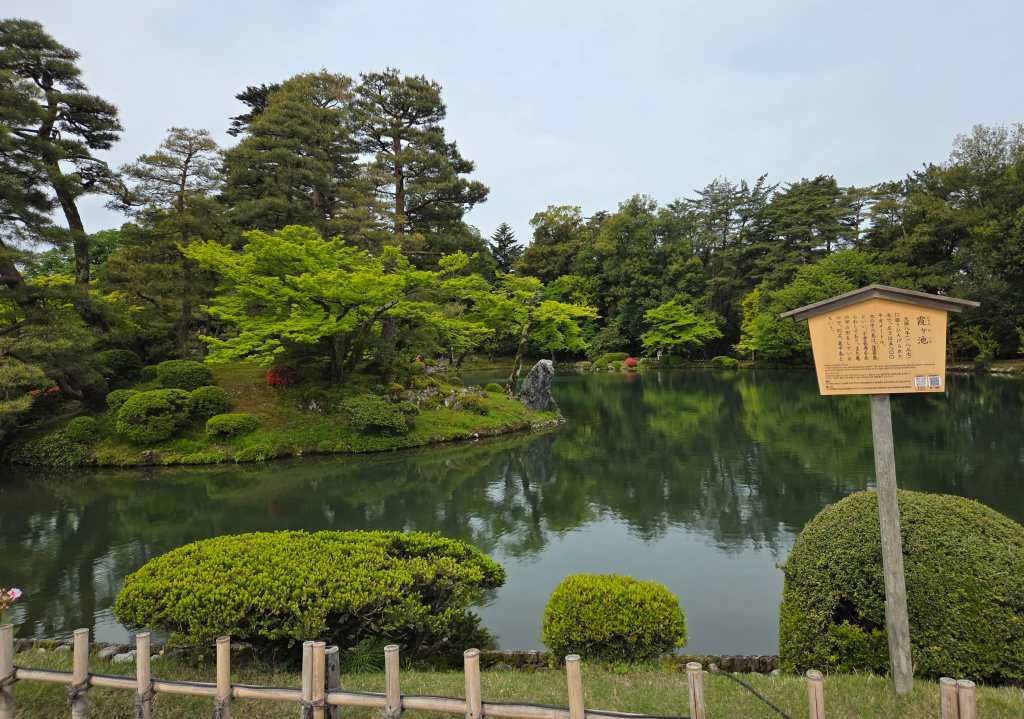
We followed the guide into the garden, and she pointed out the six elements to us. The highlight of the garden was the large Kasumiga-ike Pond with an island that looked like a turtle.
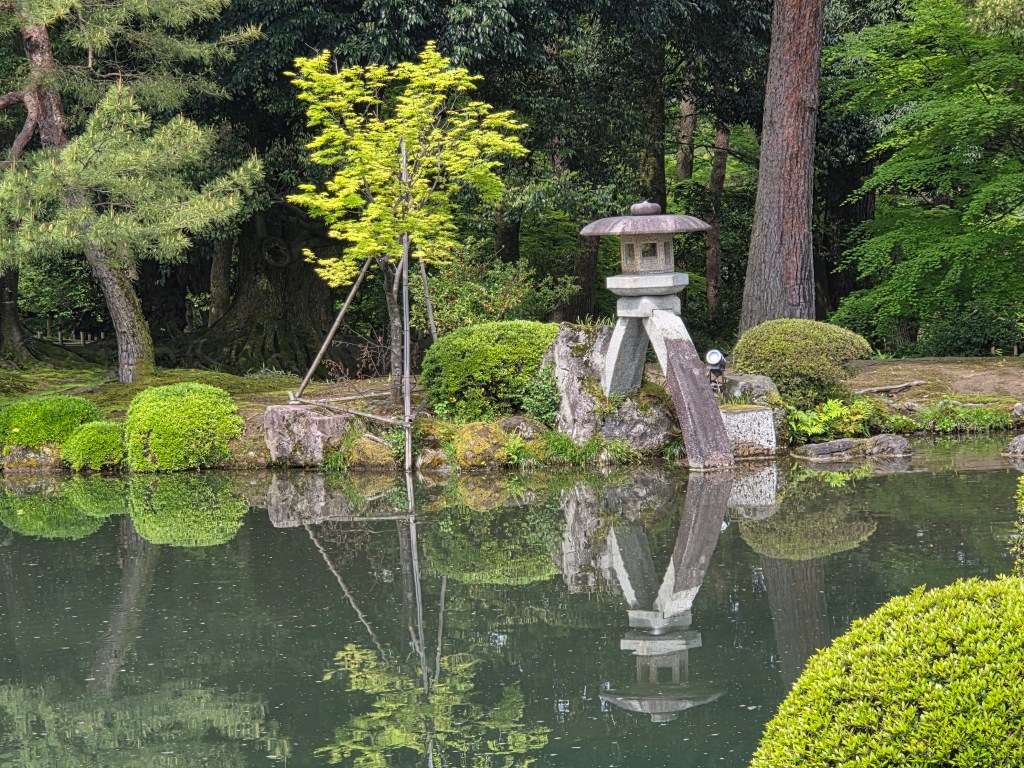
The famous symbol of the garden, Kotoji Lantern, was on the shore of the pond. The pond was man-made, and the dug up soil was piled to form a small hill by the pond.
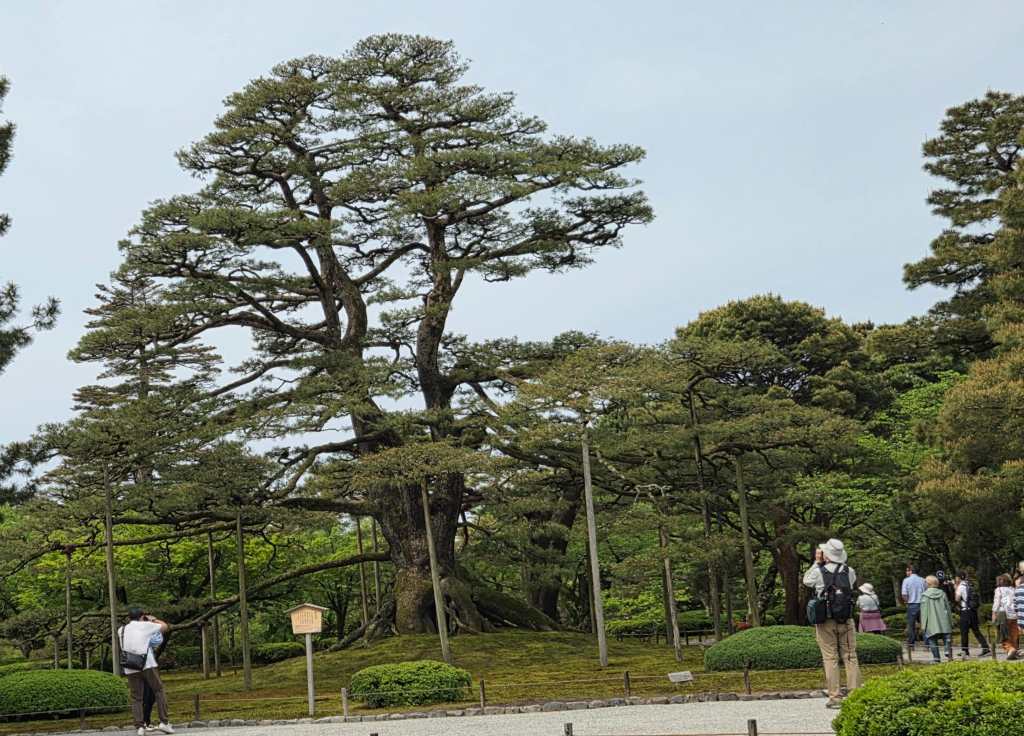
Neagari Pine was taken from the Suemori Castle. The pine was planted on a mound, and the soil was purposely removed to expose the roots.
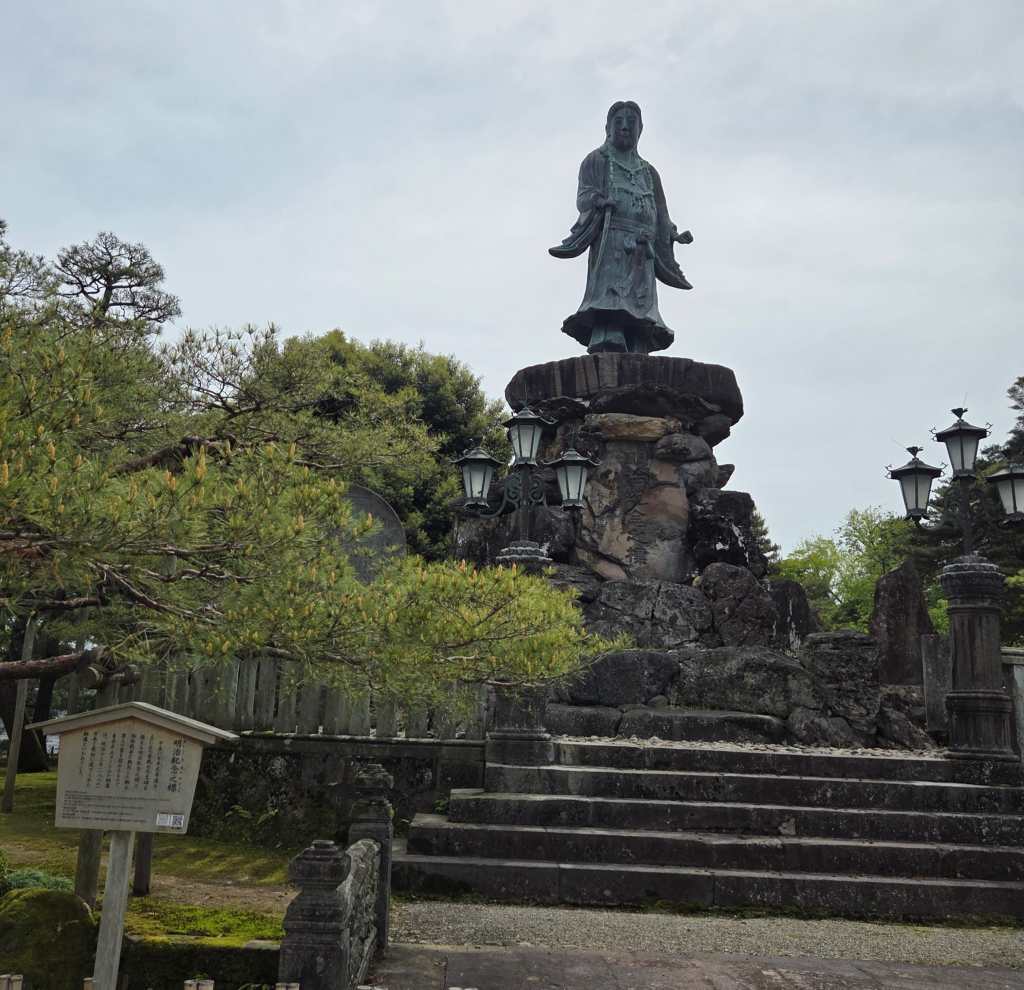
There’s also a “bird proof” statue in the garden. It was said that birds didn’t like the metal composition of the statue. Therefore, no birds have ever been found perching on the statue.
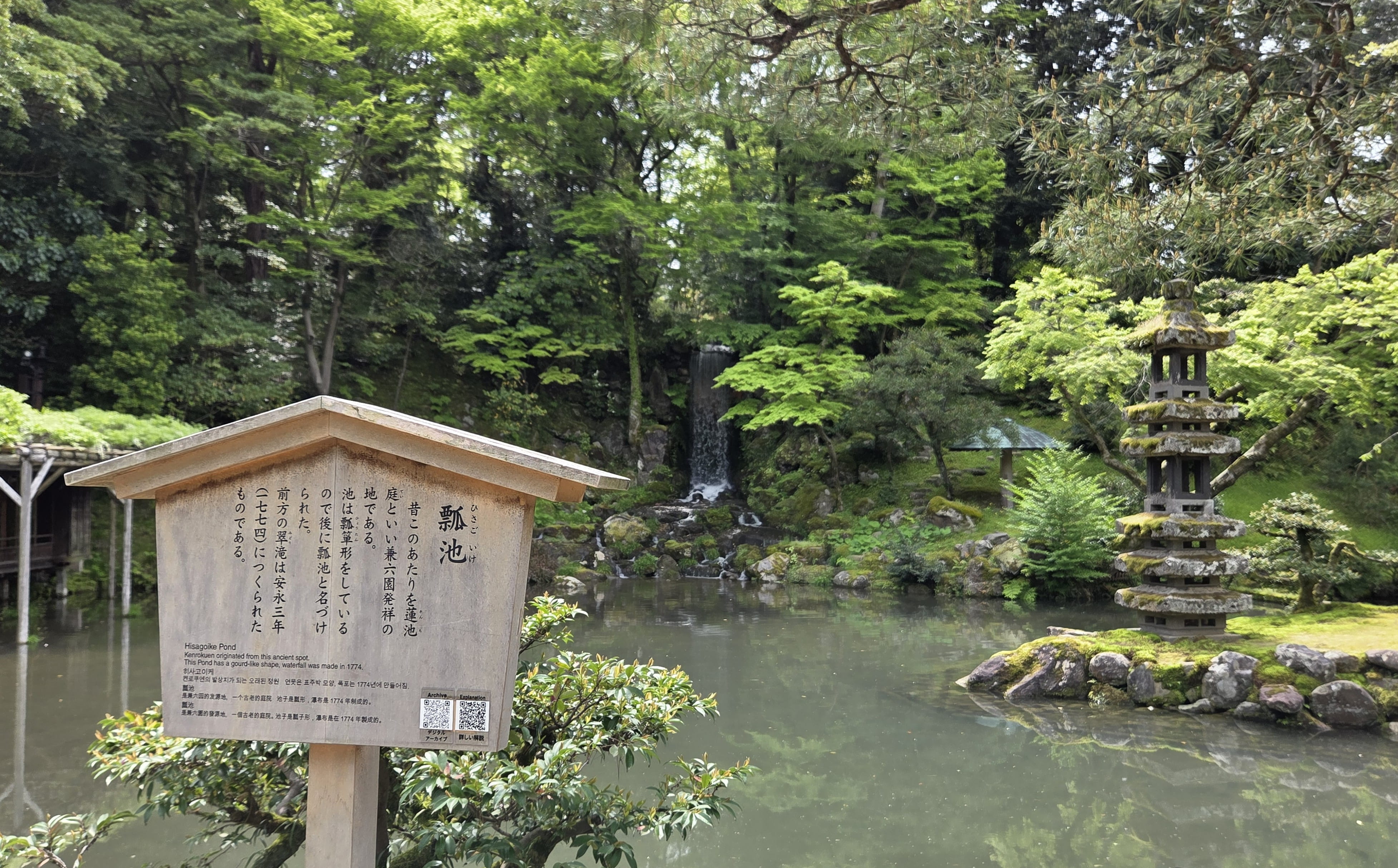
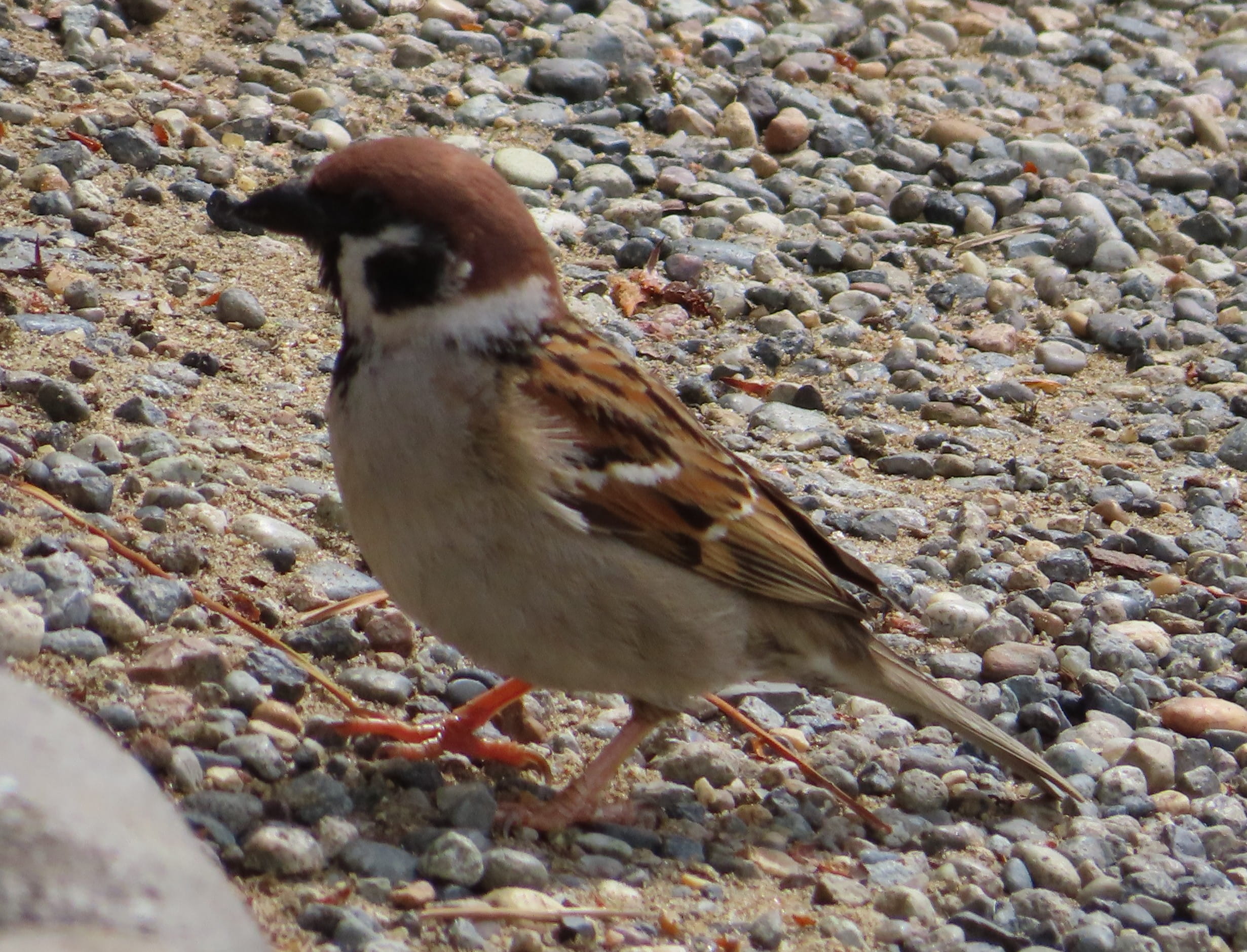
After the guided tour, Rei and I visited Hisago Pond and Midori Waterfall. We saw many large carps in the pond.
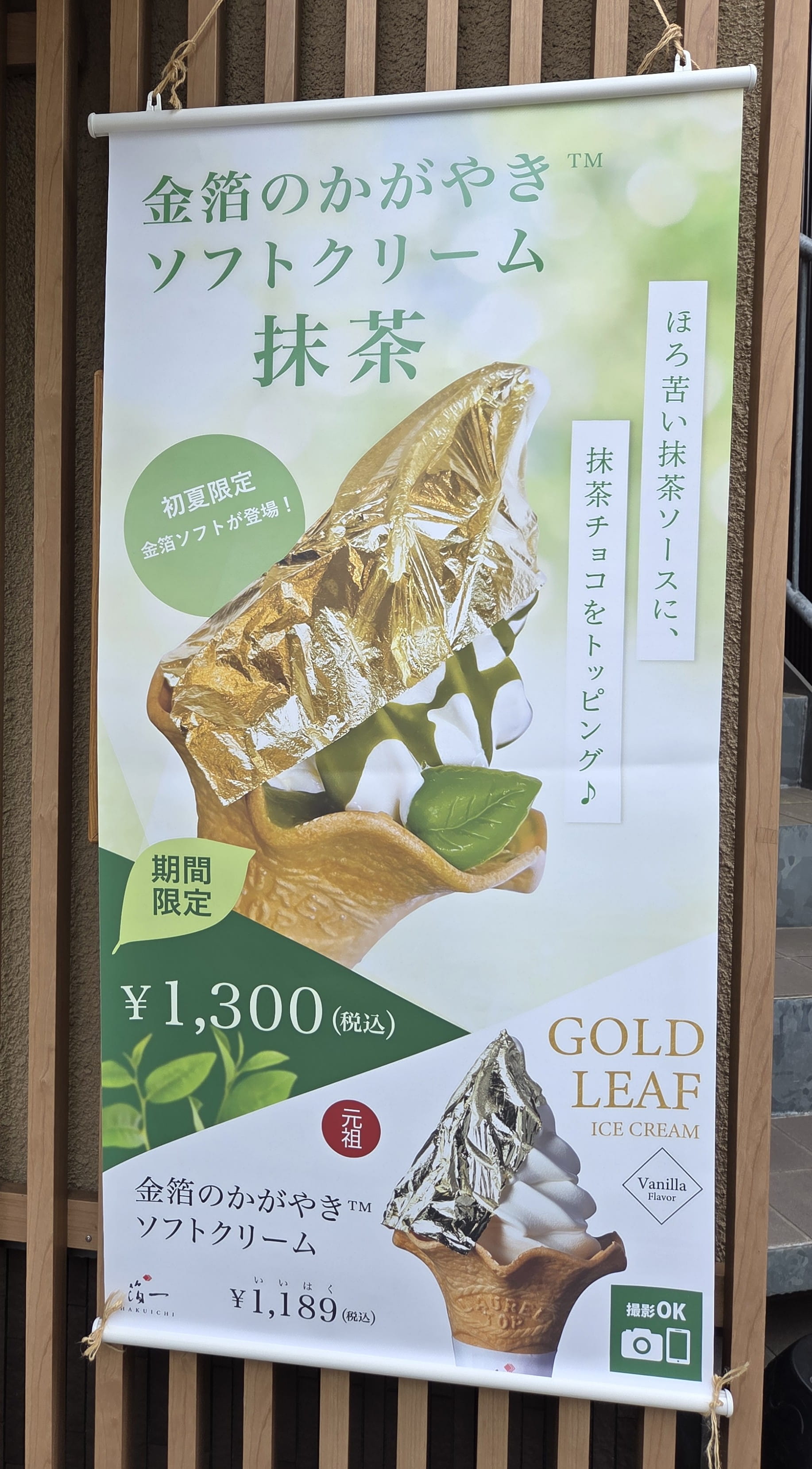
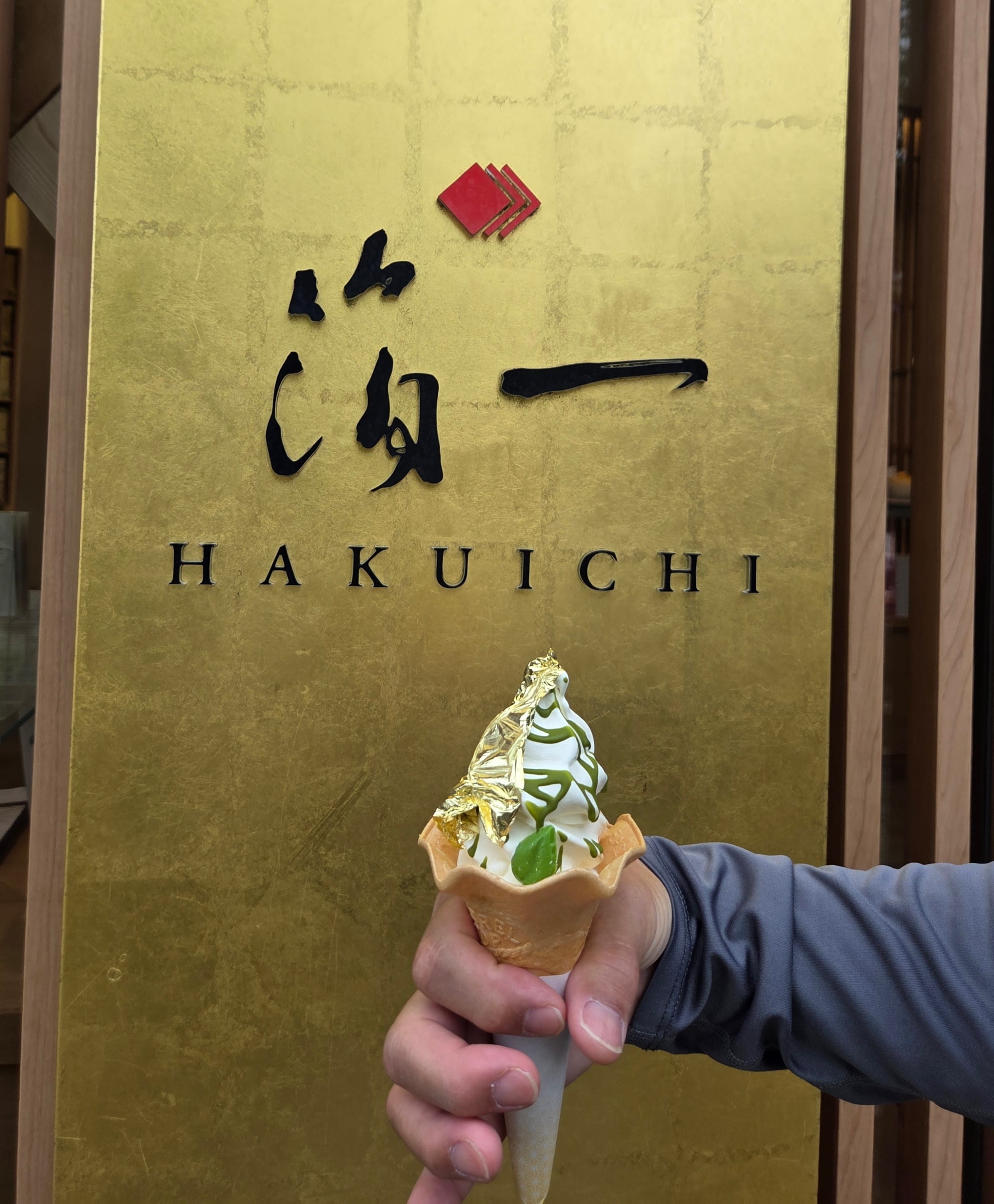
Before returning to the bus, we stopped by an ice cream shop mentioned by the guide. They had ice cream cones covered with a gold leaf, a special product of Kanazawa.
“Is it safe to eat gold leaf?” asked Rei.
“Locals have been eating gold leaf ice cream for ages without any issues,” I replied.
“Maybe it’s only harmful to foreign tourists?“
Even though Rei was doubtful, he still purchased a matcha ice cream cone with gold leaf to share with me; it cost 1300 yen!
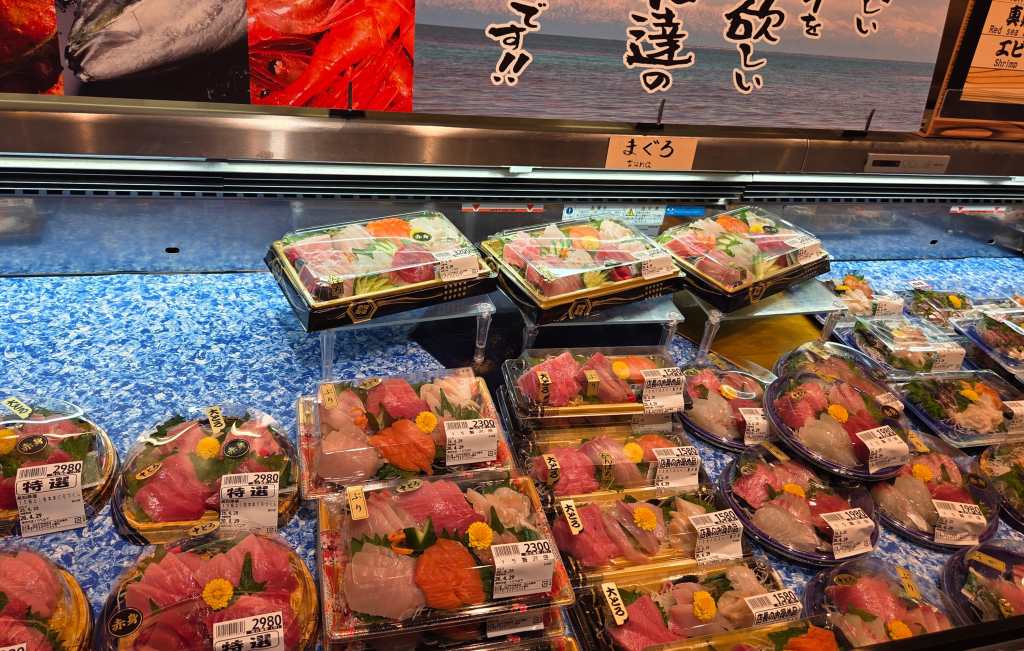
We were taken to the nearby Omicho Market to have an early lunch. The market was famous for fish products. I had a seafood bowl, while Rei ordered sashimi, grilled octopus, and a beer.
The last destination of the day was Shirakawa Gassho Village. It’s a UNICEF heritage site. The village had many wooden houses with steep and thick thatched roofs to avoid snow accumulation.
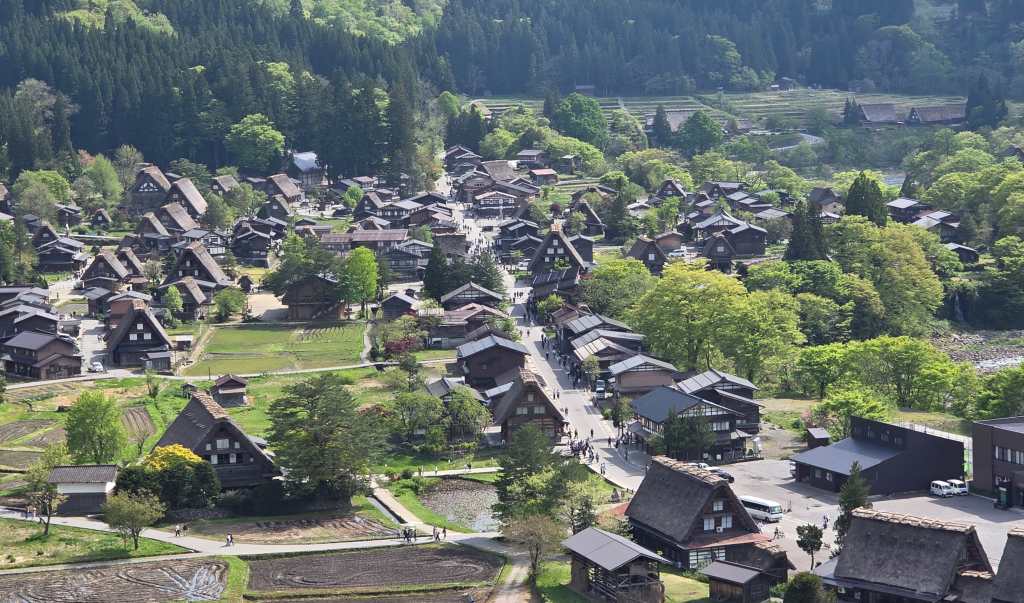
The best view of the village was from an overlook point that required 15 minutes of climb. The view of Shiragawa Gassho Village was marvellous! There were a lot of visitors there taking photos. A lady posed for her friend to take at least 20 photos, and then she continued taking selfies!
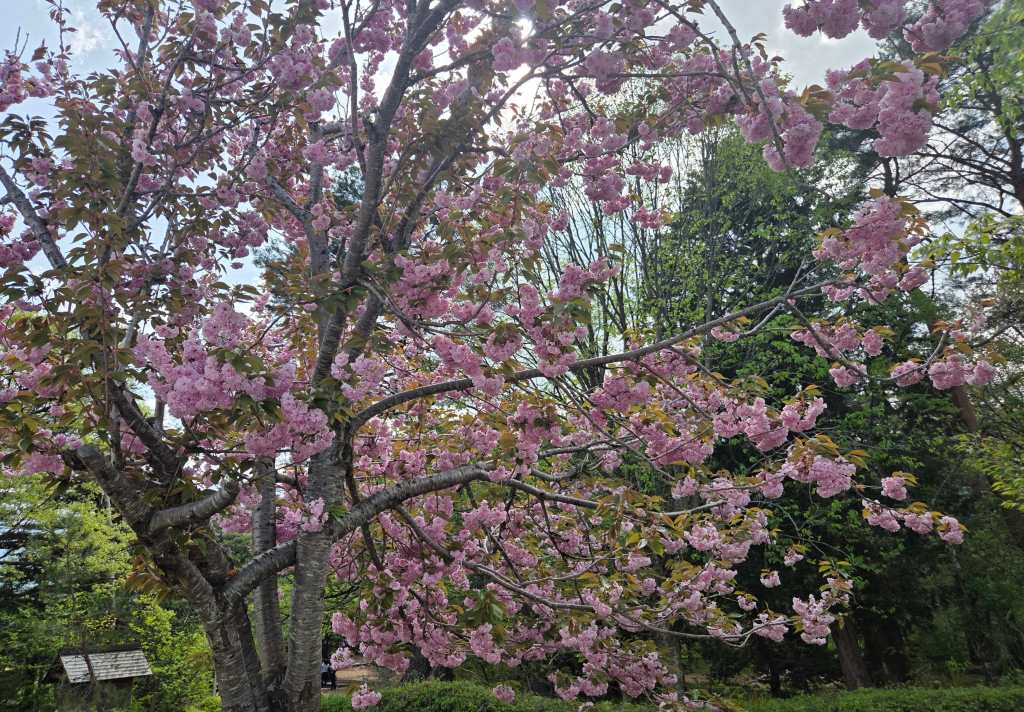
There were also several blooming cherry trees on the hilltop. The place was also swamped with tourists. We had to wait and take turns to take photos.
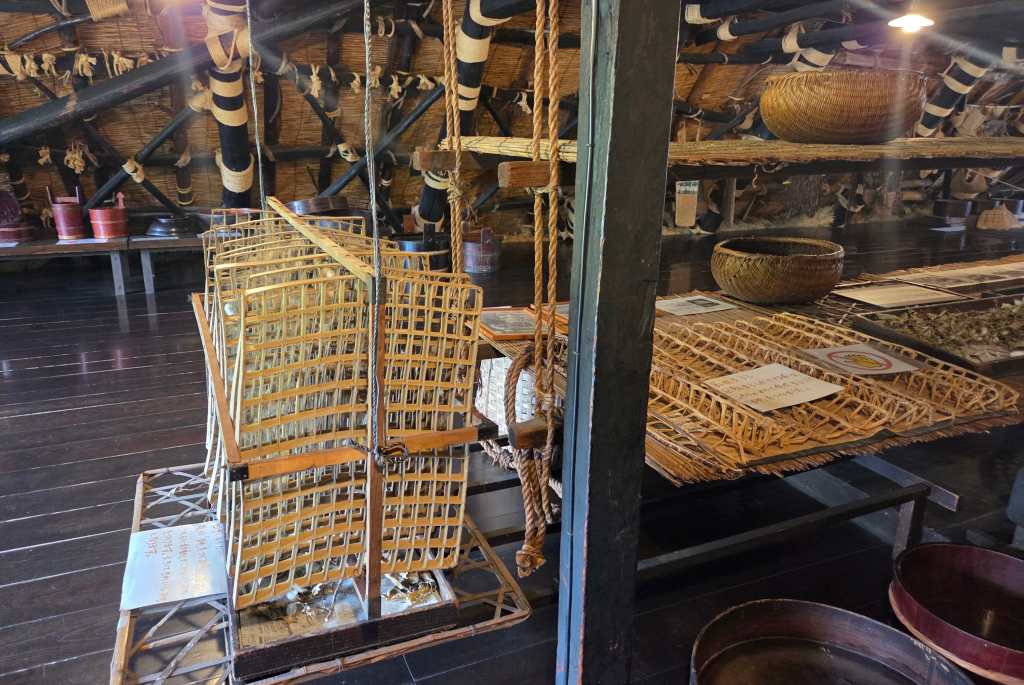
Some houses allowed inside visit with a fee. We paid 400 yen each to enter the most famous house, Wada House (和田家). The inside of this house was surprisingly similar to the traditional German houses we saw in the Black Forest. The most notable difference was that the attic of Wada House was used to raise silkworms.
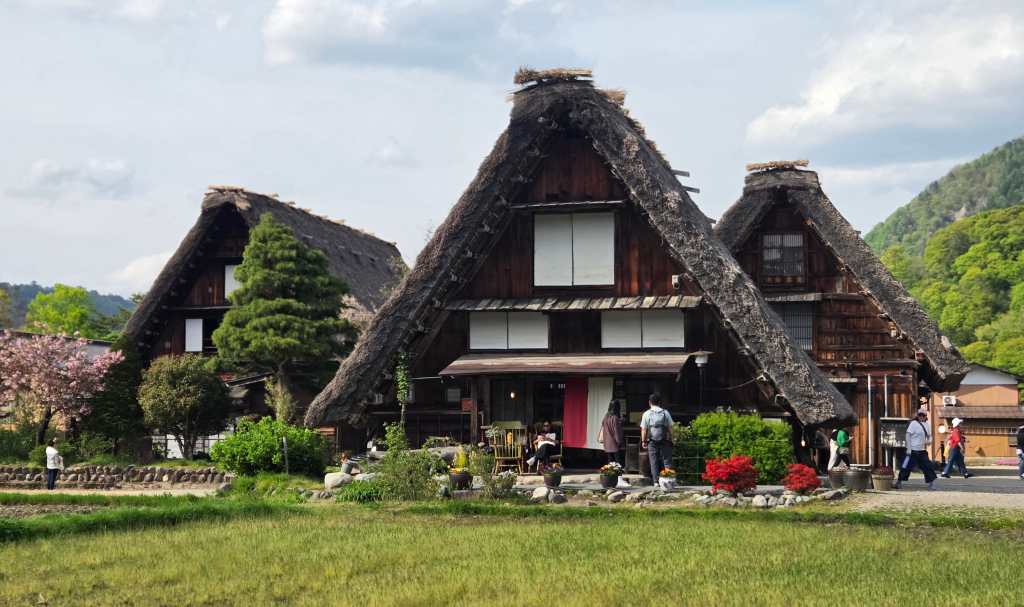
We walked around the village to take more photos of the traditional houses before returning to the bus. This was the end of our 3-day tour. We returned to Nagoya afterwards.
Day 13: To Osaka (大阪)
After breakfast, we checked out of the hotel and took the 9:55am train to Shin-Osaka. Tonight’s hotel in Umeda required a subway ride. It was way too early for check-in, but we were able to leave the luggage there to start today’s sightseeing.
Google map didn’t give a clear direction to Osaka Castle using public transportation, so we decided to walk instead.
“We can also do some sightseeing on the way,” commented Rei.
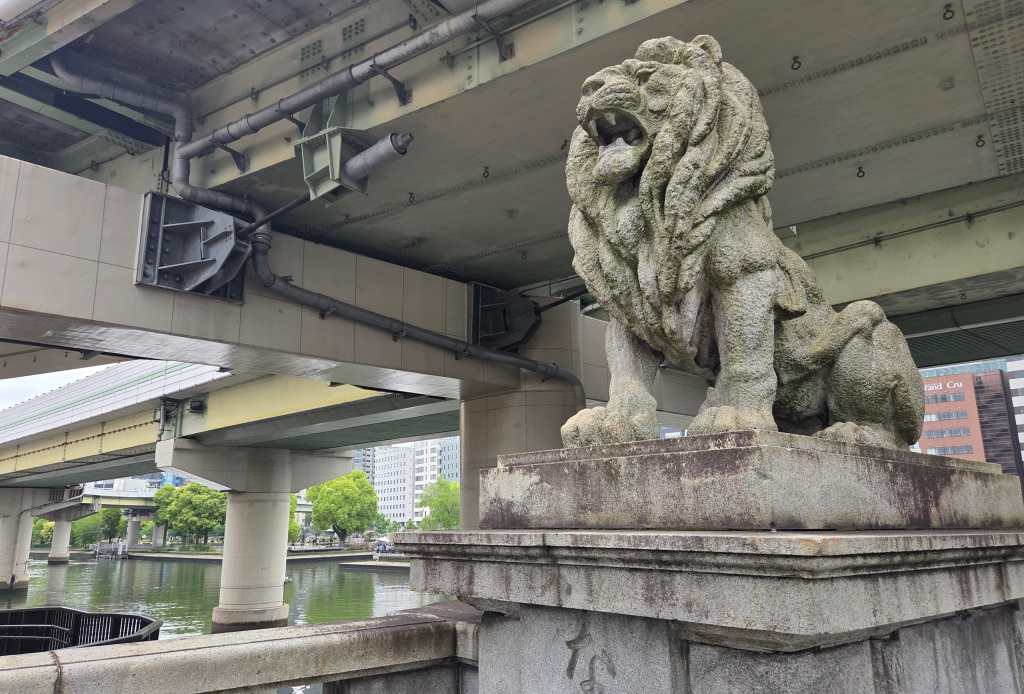
After a short walk, we reached Naniwa Bridge, nicknamed “Lion Bridge” because of the majestic lion statues on the bridge.
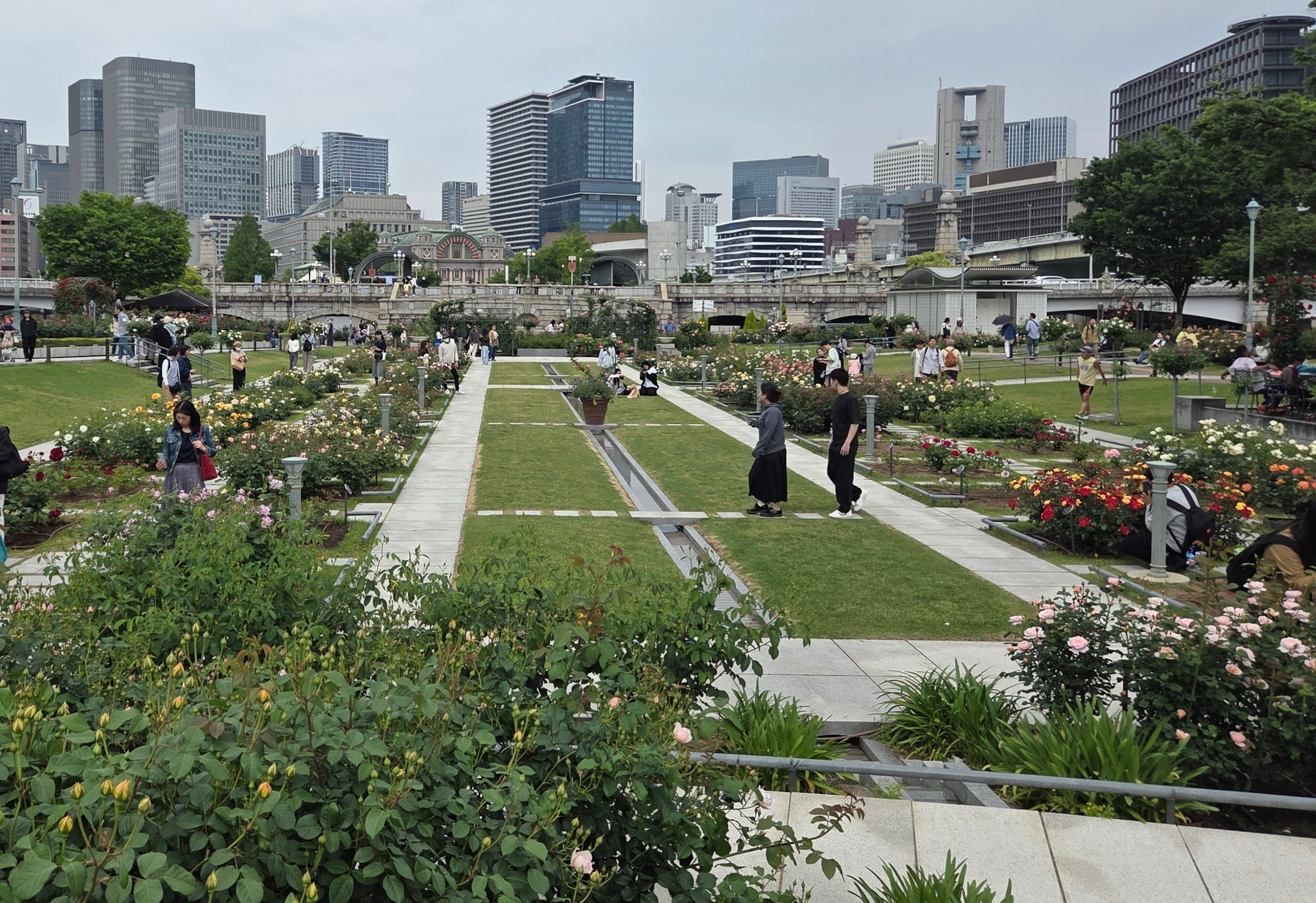
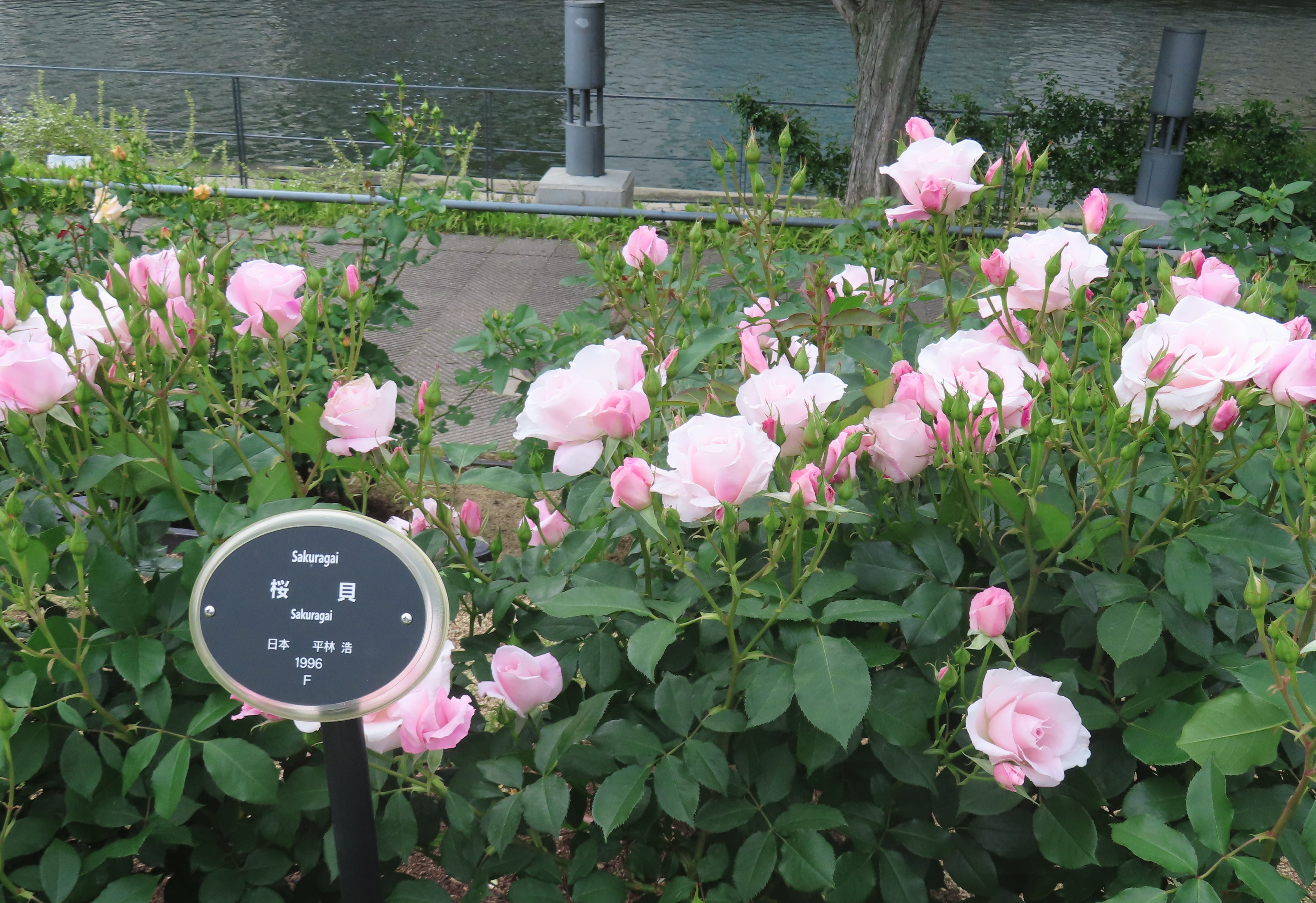
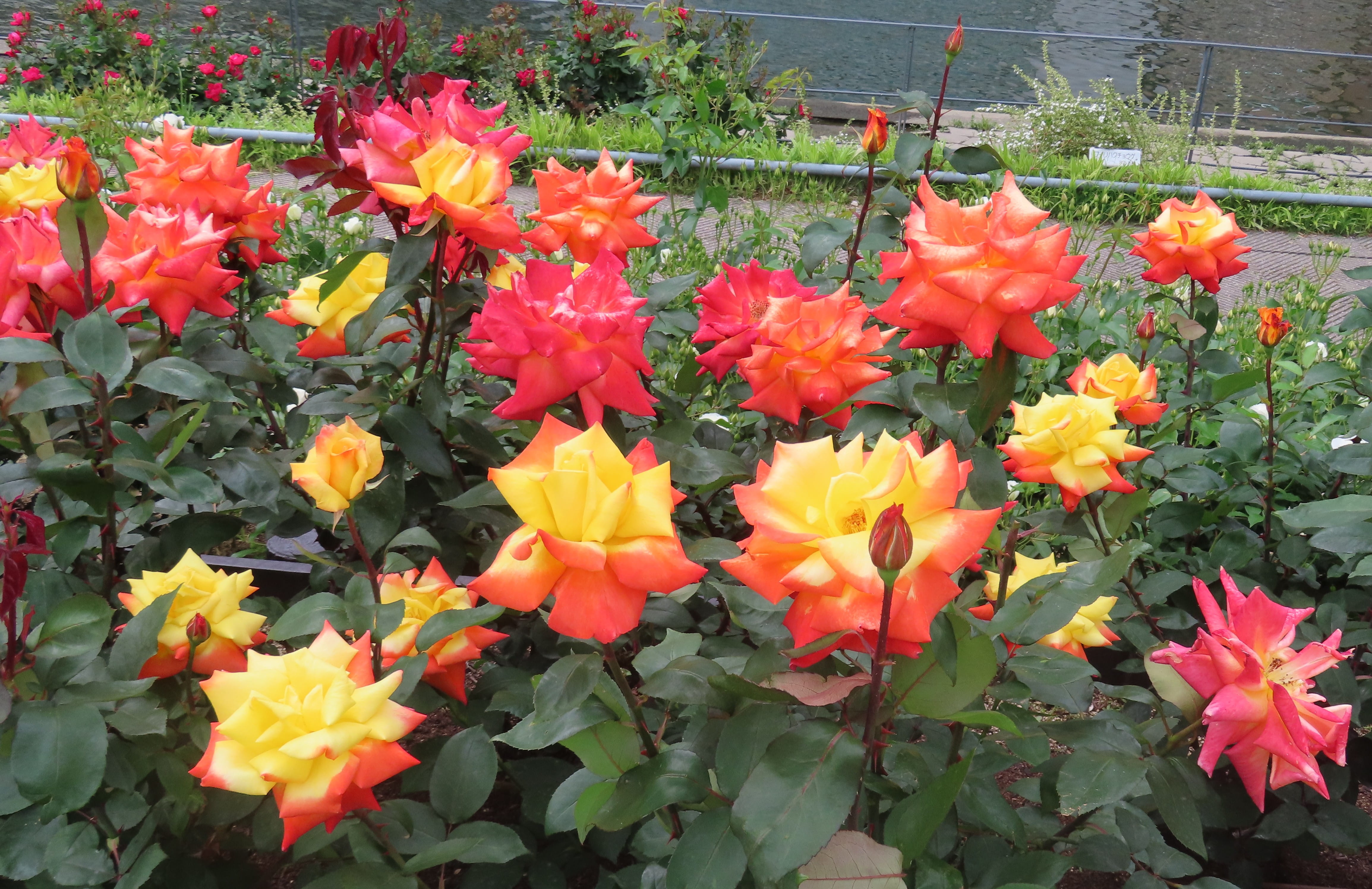
The nearby Nakanoshima Park was full of people, because today was the start of the Golden Week in Japan. The park had a beautiful rose garden with many different varieties of roses.
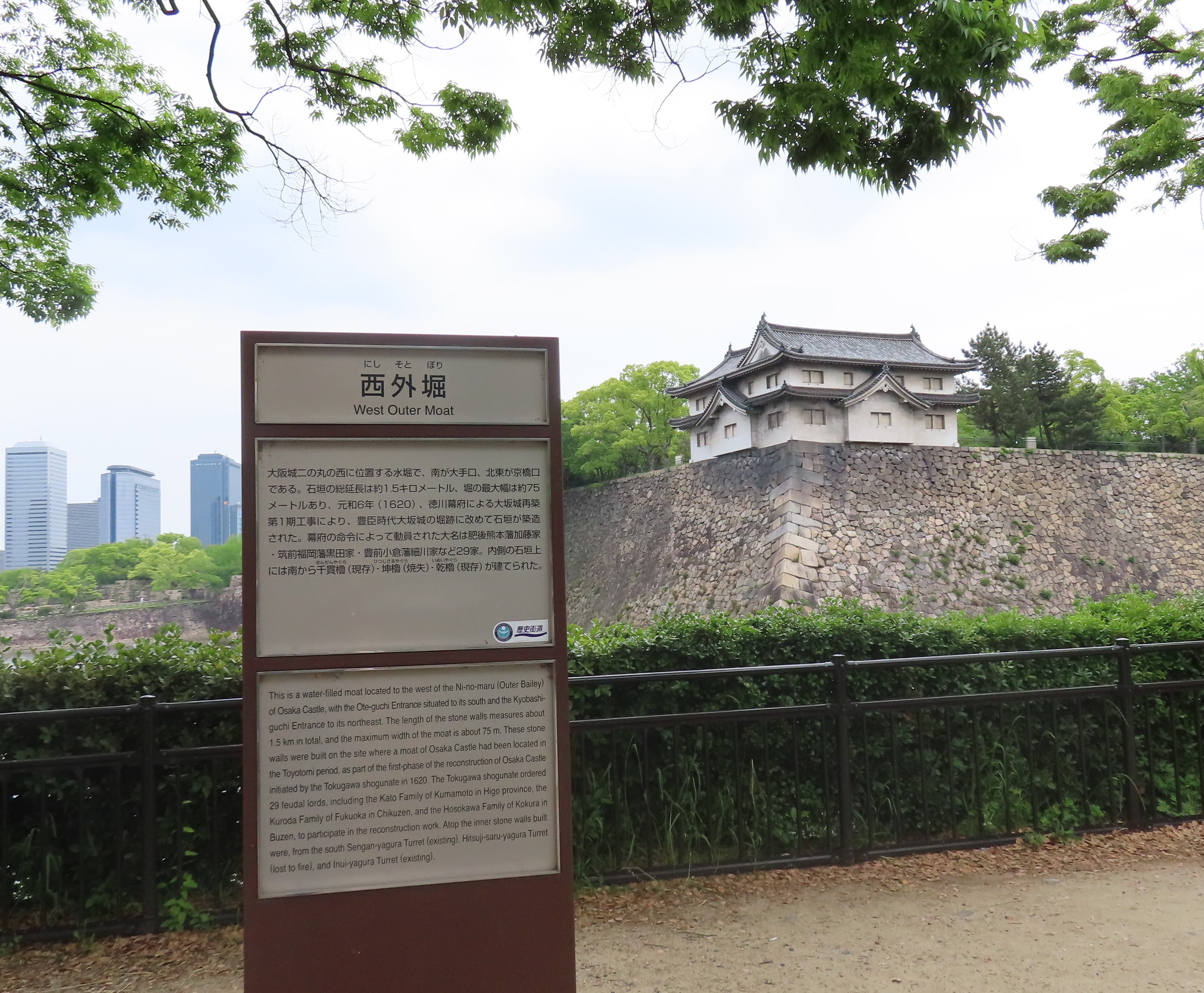
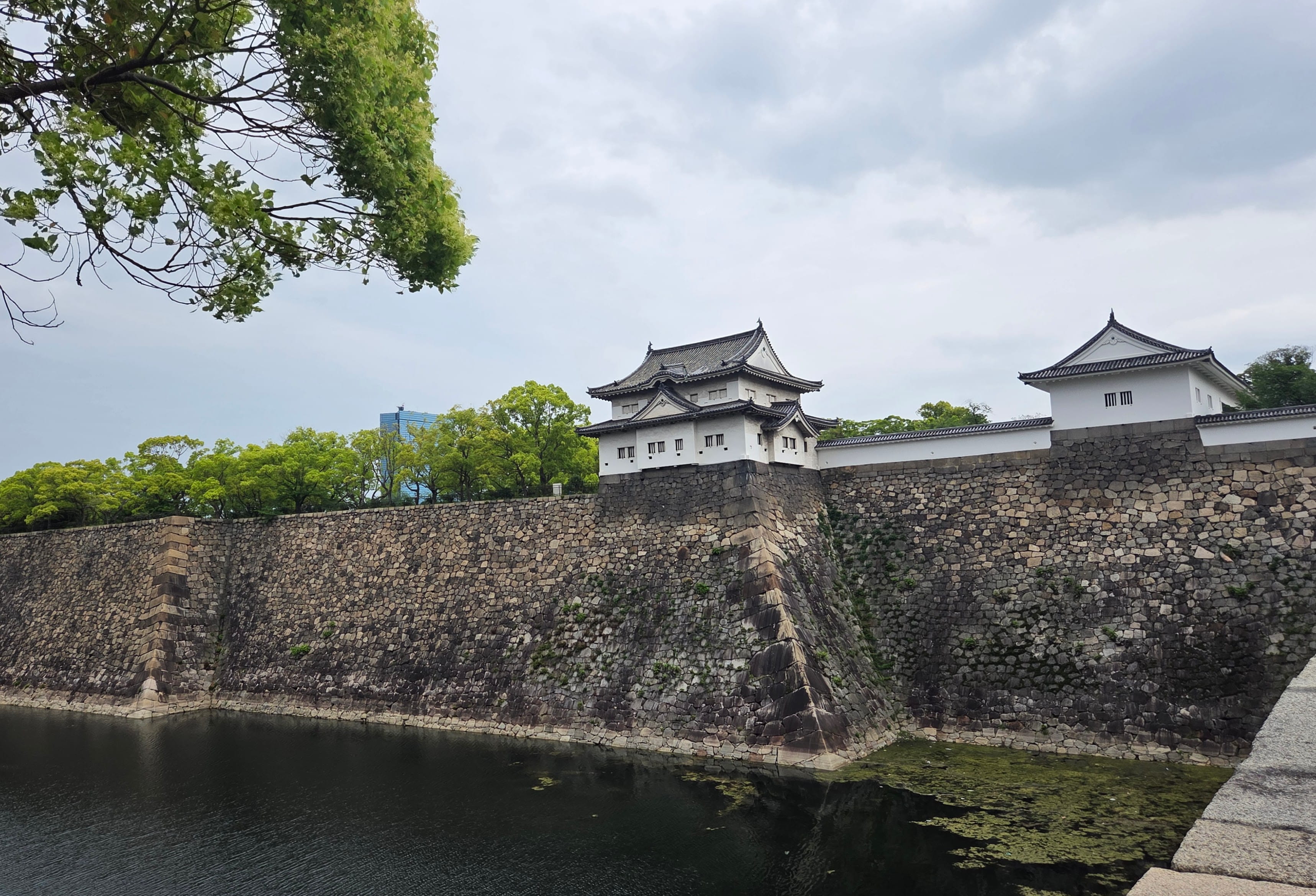
We reached Osaka Castle after about an hour of walk (including photo stops). In addition to the Main Tower, there were also turrets. The entire compound was protected by massive stone walls and surrounded by a wide moat with water.
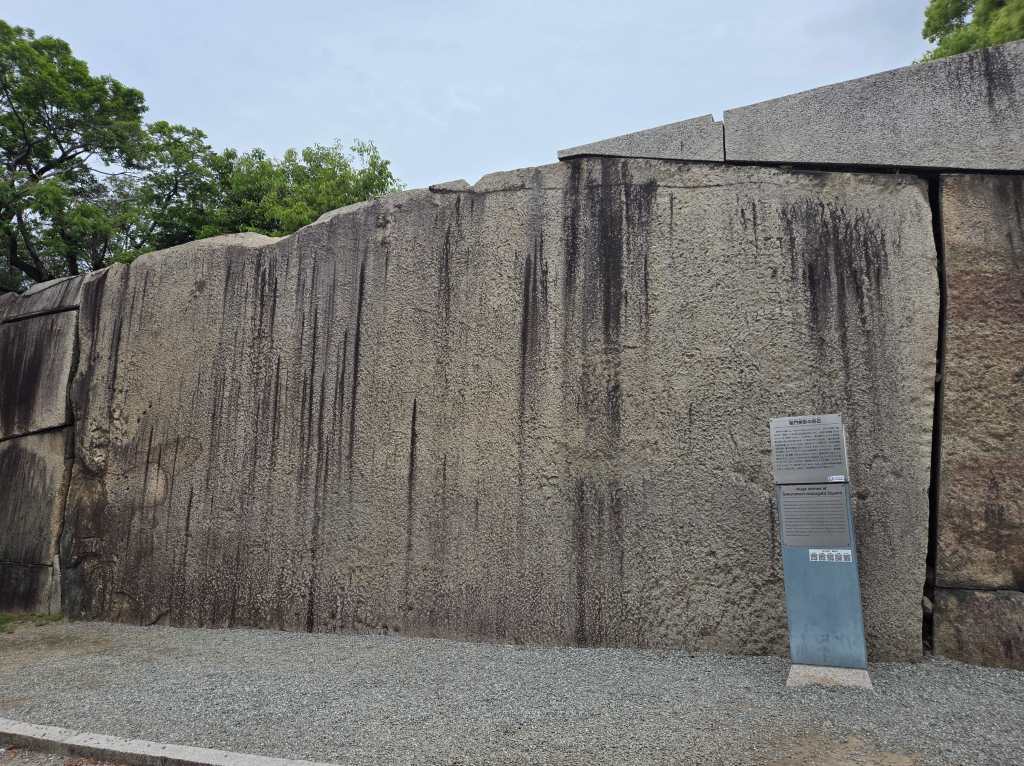
The stone work of Osaka Castle was even more impressive than the stone work of Nagoya Castle. There were several huge stones that made us wonder how the work was done.
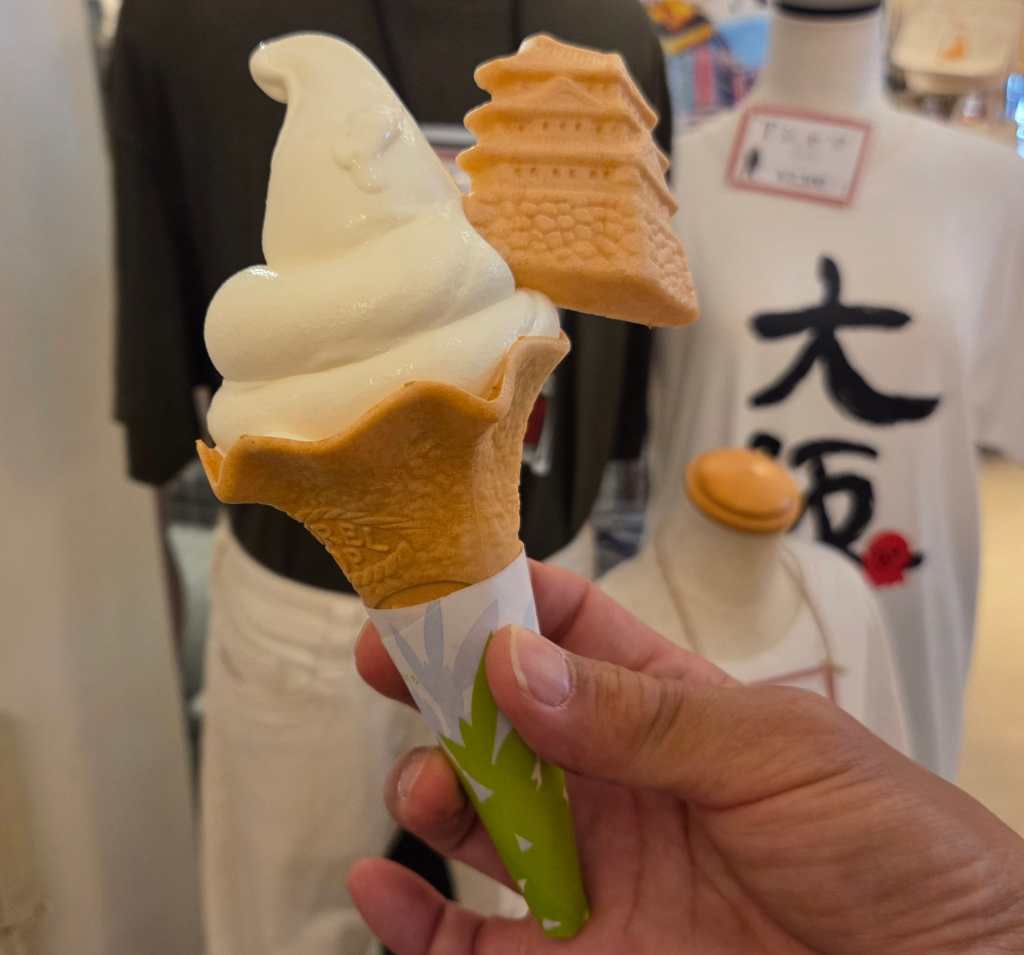
It was already past noon, so we had a lunch break first. Rei bought another ice cream with an Osaka Castle biscuit on it. We really loved the Japanese ice cream cones; they were a lot more delicious than the ones in the United States.
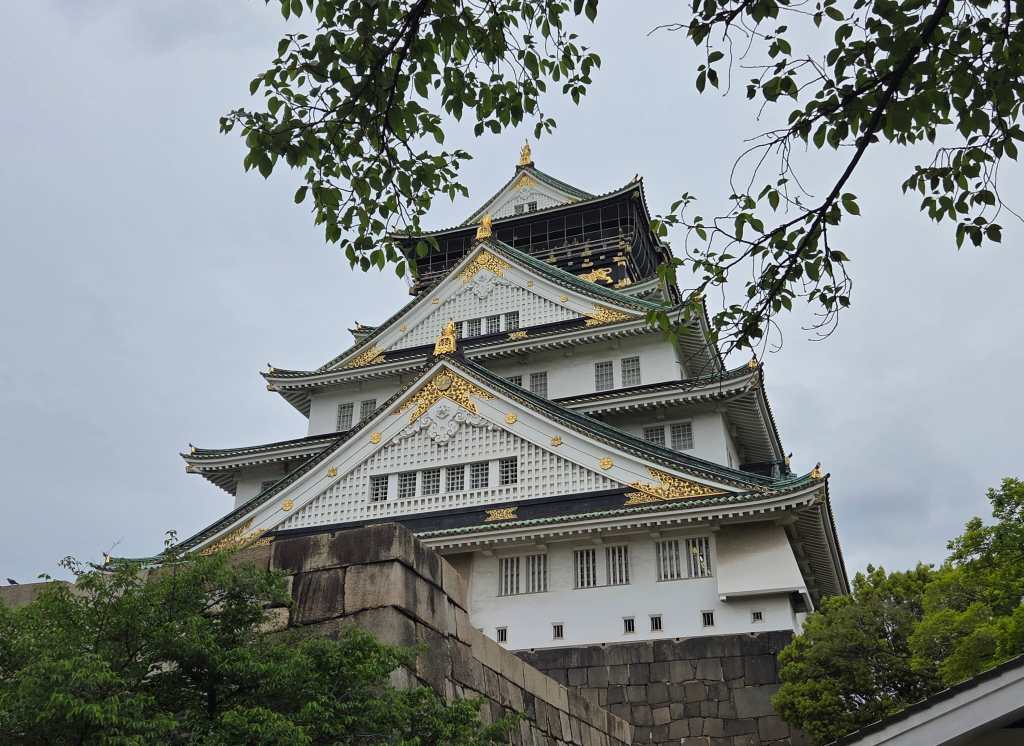
Originally we didn’t plan to visit Osaka Castle (been there before), so we didn’t purchase the entrance tickets online in advance. We had to join a “Disneyland-style” line to purchase tickets from a machine to enter the Main Tower.
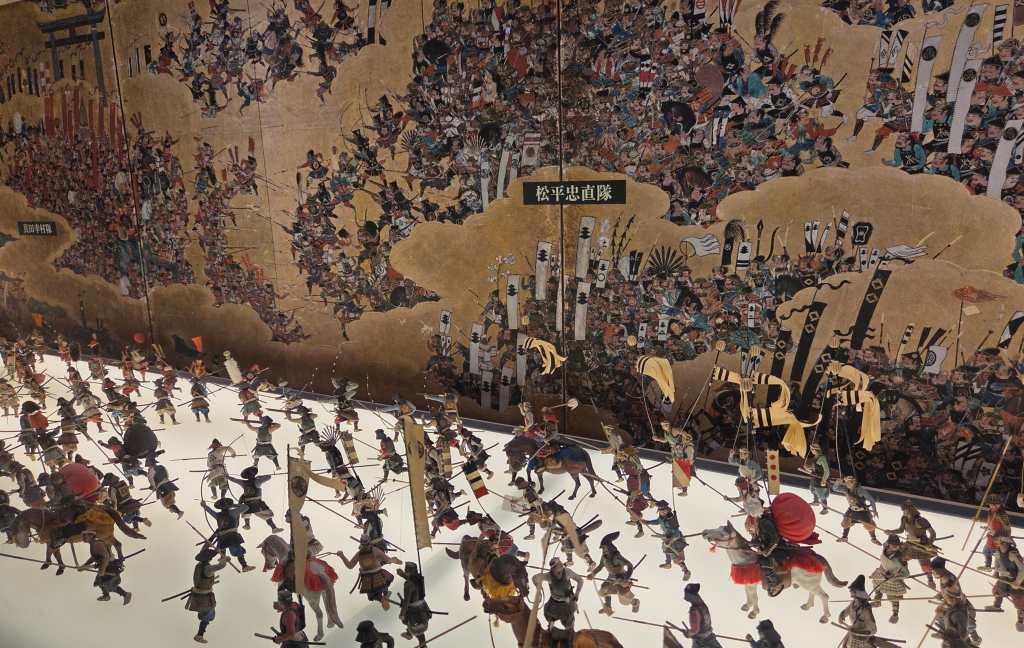
The Main Tower was a reconstruction. It’s now a museum dedicated to Toyotomi Hideyoshi and the Warring States era of Japan. Toyotomi Hideyoshi was considered a hero in Japan for his completion of Japan unification in 1590. The museum had many floors of display. Photos were not allowed on the 3rd and 4th floors.
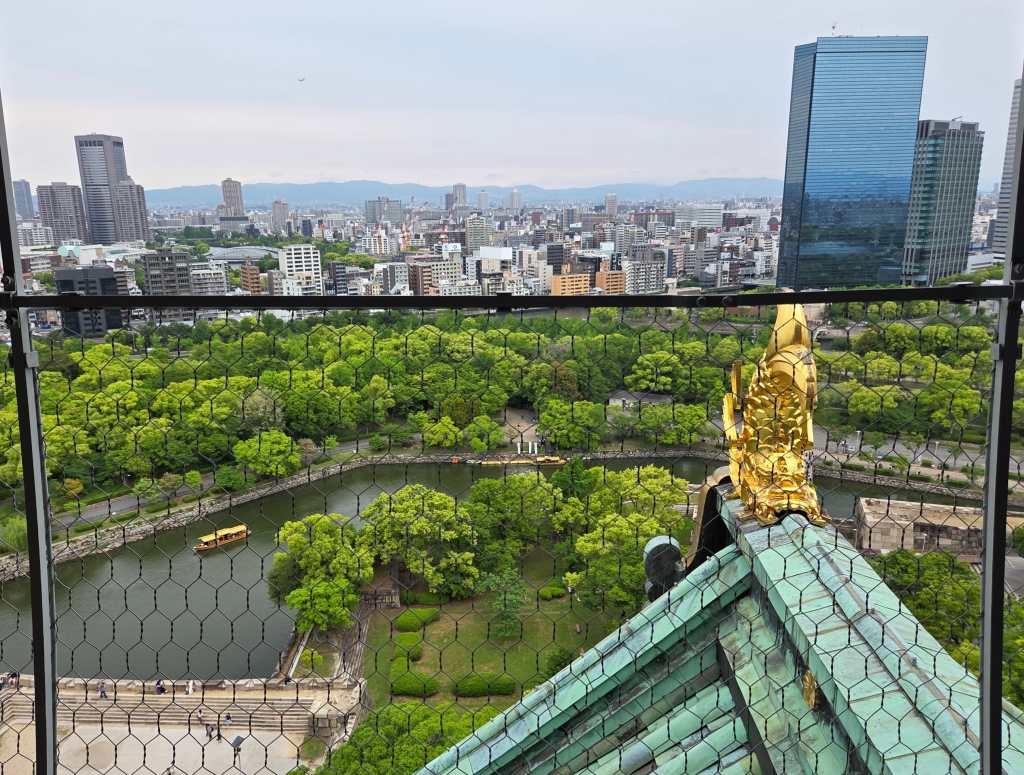
There’s an observation deck at the 8th floor that offered panoramic view of Osaka. We could also see tourist boats sailing on the moat.
We didn’t see many pigeons on this trip, but the gardens here were full of pigeons. There were also crows and sparrows. In addition, I spotted a pair of White-cheeked Starlings.
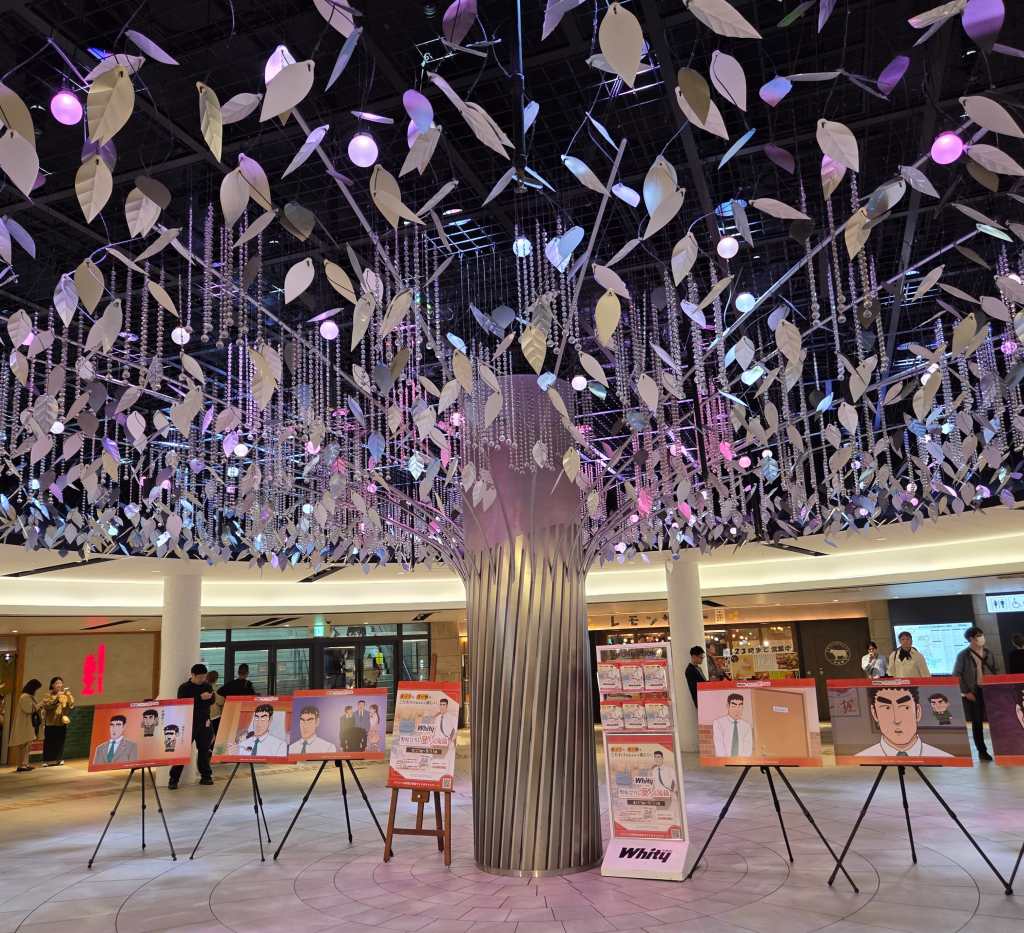
It’s already past 3pm, so we decided to go to the hotel to check in and to rest a bit. We left the room around 5pm to go to Dotonbori (道頓堀) to have dinner. On our way to take subway, we saw a splendid silver tree in the underground mall.
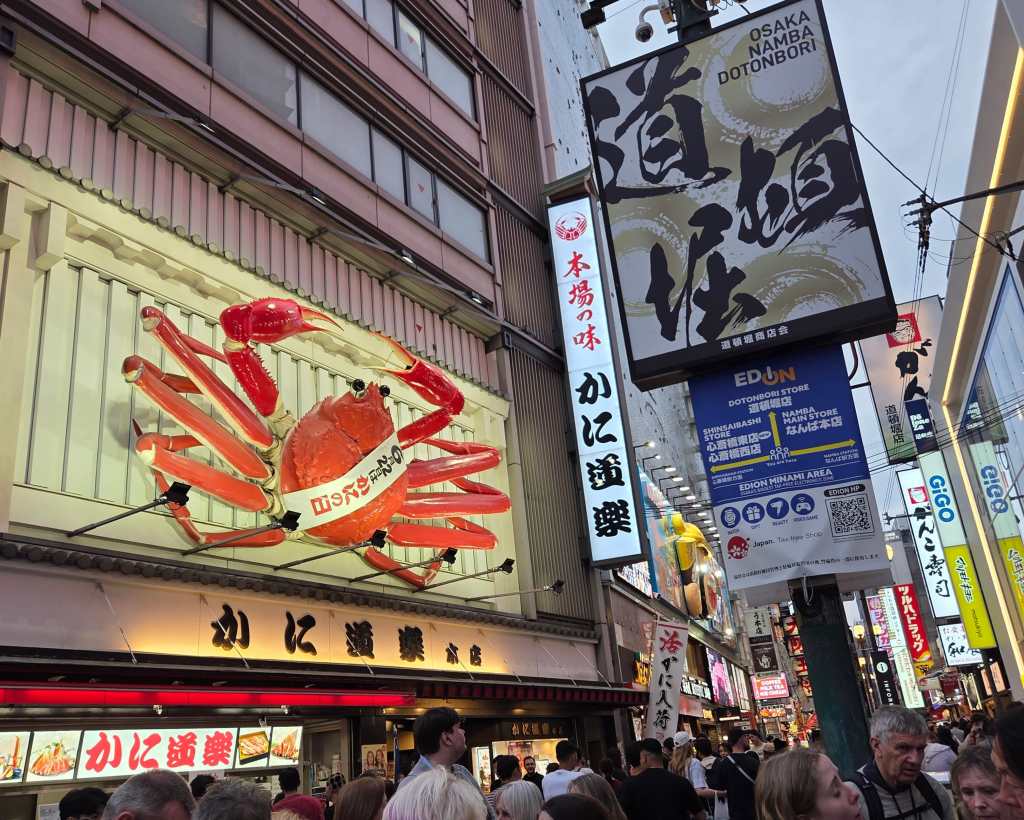
The most famous sign of Dotonbori was a giant red crab of a restaurant. Earlier I suggested that we have a crab dinner in Osaka, but Rei vetoed my suggestion. He said that we already had many fabulous meals on this trip, we could just have a simple dinner. But when we arrived at the famous crab restaurant, he changed his mind and simply entered the restaurant. (Have you recognized the pattern?)
So, we had a long and expensive crab dinner. The “highlight” of the dinner was that Rei knocked over his beer mug, and the beer spilled everywhere. He was very embarrassed. The nice waitresses came to clean up the mess and brought him another beer.
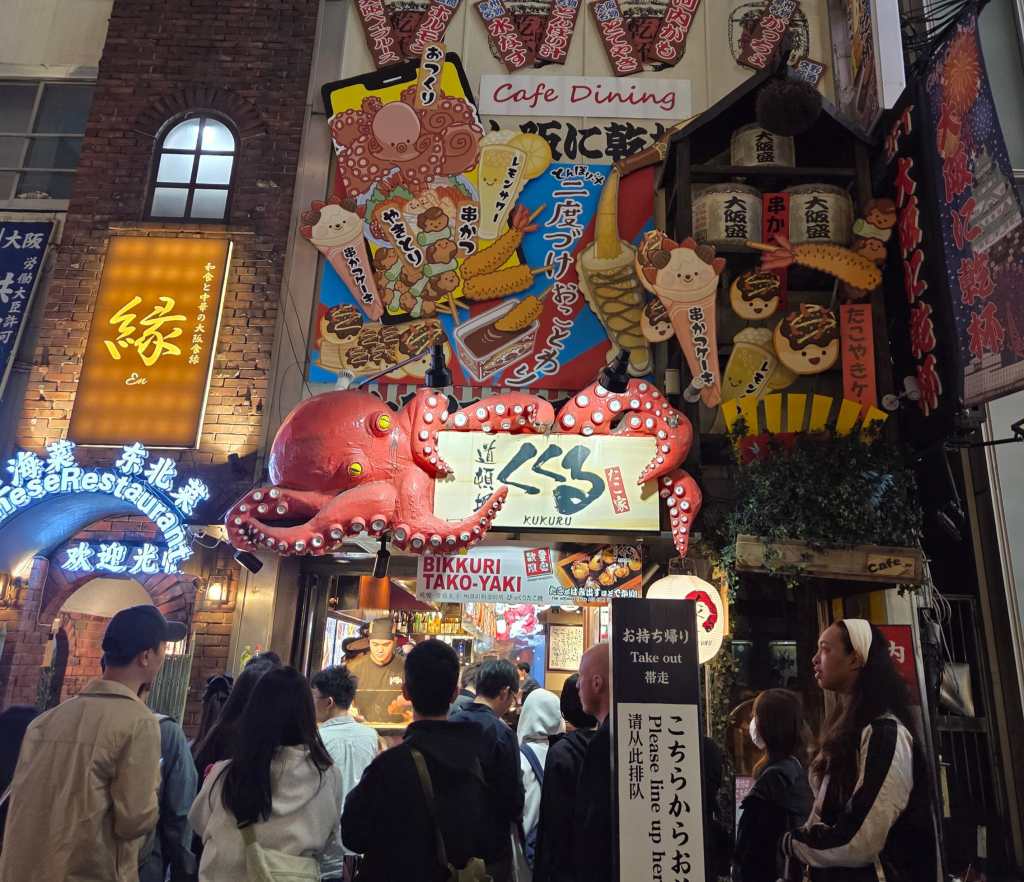
The dinner took almost 2 hours, so we didn’t have time to explore the area more. However, we did see a restaurant selling Takoyaki, the famous Osaka octopus balls, and there was a long line of customers waiting in front.
Day 14: Osaka (大阪)
We’re flying home today, but the flight’s in the evening, so we still had several hours to do some shopping. (In preparation for today’s shopping, we already bought a new big bag last night.) Since there was no hurry, we didn’t get up until after 7am. The Japanese breakfast Umedaholic Hotel provided was pretty decent.
We checked out around 9am, left the luggage with the hotel, and went shopping. There was a light rain. Since many shopping places in Osaka were underground, the rain didn’t bother us.
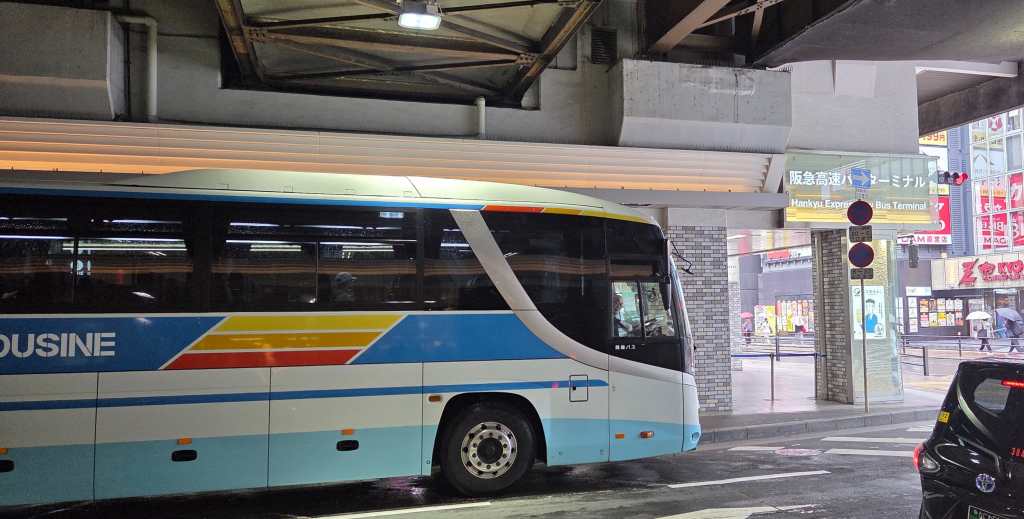
Rei suggested that we first check out where to take airport express bus to Kansai International Airport. The bus station was nearby the shopping mall.
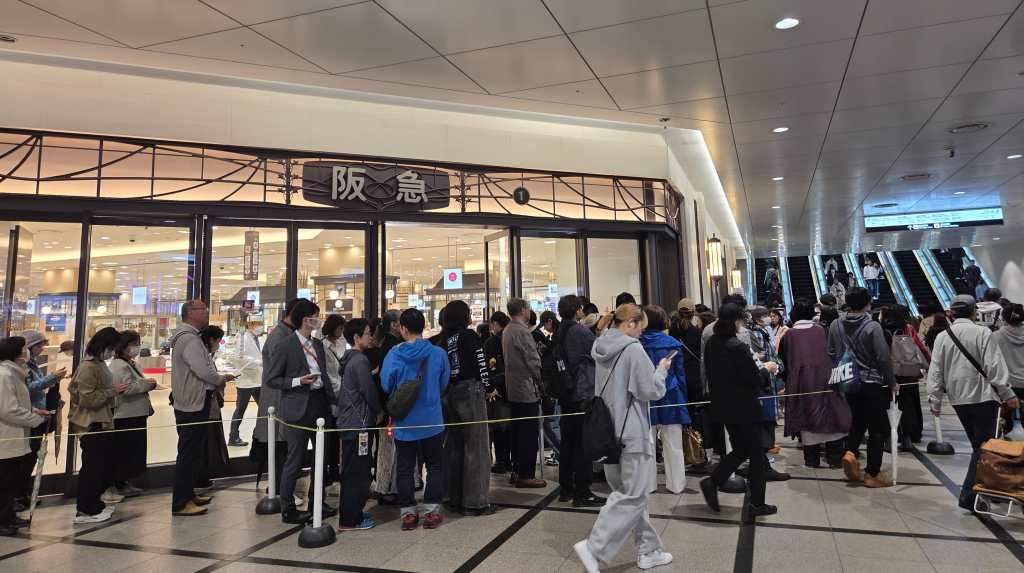
On the way back, we walked past the anchor department store of the mall. It was before the 10am opening time, but there’s already a long line waiting to enter. Since there wasn’t anything else for us to do, we joined the line.
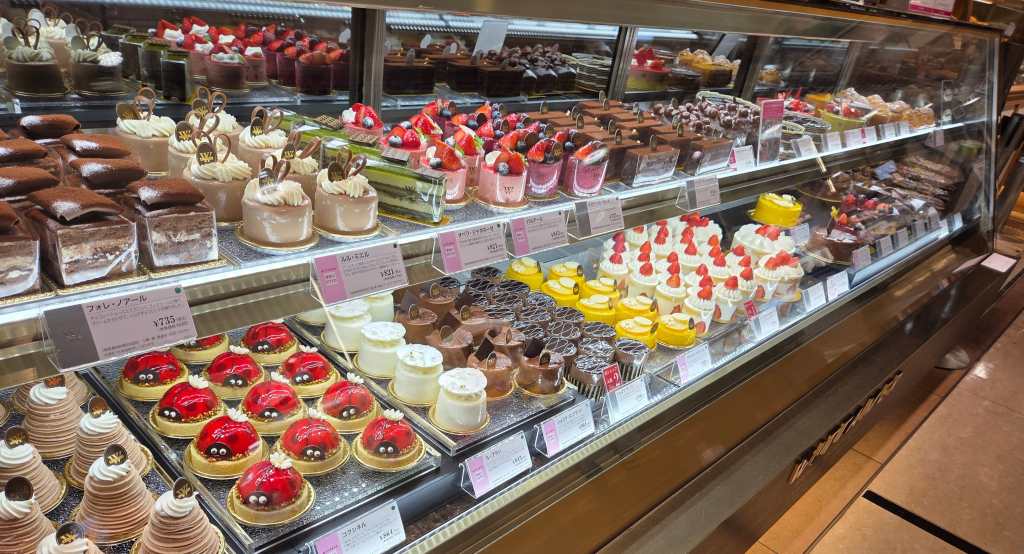
The highlight of the Japanese department stores was their basements, where you would be able to find a plethora of food items. The pastries and cakes looked amazing!
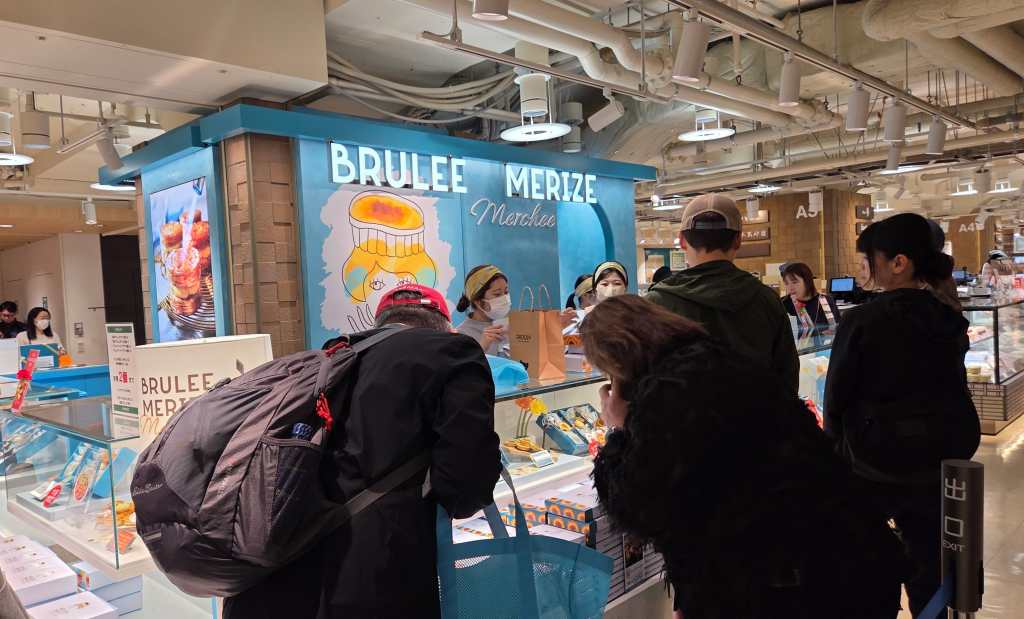
Rei’s philosophy was that the longer the line was, the better the food tasted. So, we only picked stalls with a very long line. At Brulee Merize, we had to wait in line for 20 minutes to make purchases! Moreover, we found out that some popular items had already sold out! This explained why people lined up to enter the department store before its opening.
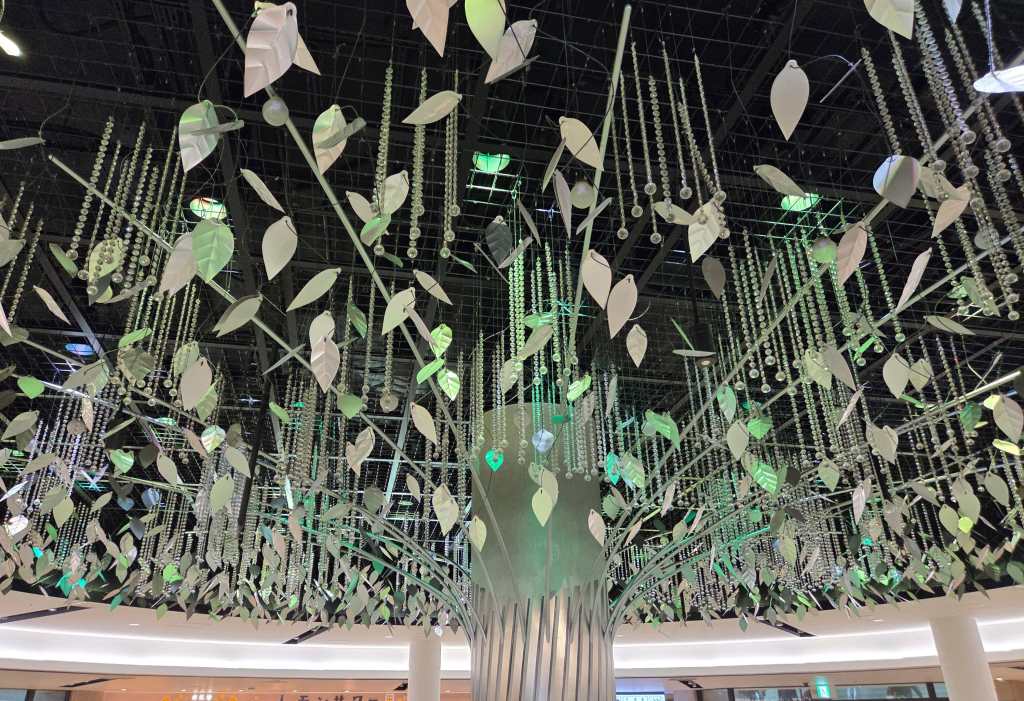
Soon we filled the bag with many new purchases, so we returned to the hotel to pick up our luggage to go to the airport. We walked past the silver tree I saw last night and found out that it changed colors constantly. It’s really beautiful.
There were more stores at Kansai International Airport, and they gave us samples to try. Rei really liked the cookies, so he bought a couple boxes. Later, we found out that fellow passengers bought a lot more; some were carrying a big bag with at least 8 boxes of treats. Therefore, when we had a layover in Taipei, Rei went on another shopping spree.
Practical Information
All of us really enjoyed the Kumano Kodo trip arranged by Walk Japan. We stayed in a variety of accommodations. The onsen hotels had very comfortable Japanese rooms, relaxing hot springs and delicious Japanese food. The repurposed hotel Koguchi Shizen-no-ie Lodging, though not luxurious, gave us a very different experience. We will certainly consider another trip with Walk Japan.
If you have walked a Camino, remember to bring your credential to get a Dual Pilgrim certificate. With the certificate, you can participate in the drum ceremony in Kumano Hongu Taisha. Note that you will need to stop by the Information Center downhill to get the certificate, and the place is closed at 5pm. If possible, I will suggest that you plan an extra day in Hongu.
The KK Day tour was also excellent. We visited many places in the Japan Alps that are difficult to reach using public transportation. However, it was very busy 3 days, and most tourists in the group were in their 20s or 30s. The tour was more for energetic people.
Japan had many great features. The one we appreciated most was that there were clean and free restrooms everywhere. It’s so convenient!
Though credit cards were well accepted, there were still places that only took cash. Therefore, it’s necessary to carry some Japanese yen.
(Click here to find out more about trekking.)
Train Rides
When we took Meitetus Line from Chubu Airport to Nagoya, we received two tickets per person. The smaller tickets were used to enter and exit the gates, while the larger ones were for seat assignment.
For Shinkansen, we also received two tickets per person, and we needed to insert both tickets in order to enter and exit the station gates. If you purchase the tickets online in advance, you need to retrieve the actual tickets from a blue machine at a train station. You will need the credit card and the 4-digit code you used when doing online booking.
For local trains, we only received a small ticket each. There was no need to insert or scan the tickets. The scanning machines at the gates were for IC cards.
Metro/Subway Rides
We took subways in both Nagoya and Osaka. In both places, we purchased one-day tickets to save the hustle. All-day tickets were cheaper on weekends and holidays.
Bus Rides
We only took buses in the Kumano Kodo region. You need to enter through the back door of the bus, and grab a small paper ticket when you get on the bus. Ring before your stop to alert the driver. Exit the bus from the front door. Show the small paper ticket to the drive so that he can compute the fare. Buses don’t accept bills larger than 1000 yen.

