(8/31 – 9/14/2014: Part 1)
In Summer 2014, we took Sister (our daughter) and Cutie (our younger son) on a family vacation to Croatia and Slovenia. Our older son, Brother, couldn’t join us this time.
Since Sister and Cutie were both big Game of Thrones fans (and Daddy too!), Croatia seemed a natural choice of the destination. We also decided to extend the trip to cover Slovenia, and to stop by Venice for a couple days. We went to Venice when we took a Mediterranean Cruise back in 2005. It was a long time ago, and we all loved Venice; it would be great to visit the place again.
This post just covered the Croatia part (with a side trip to Mostar). Slovenia and Venice were in Part 2.
Day 1: Arriving in Zagreb
Our flight arrived at ZAG airport in the early afternoon. We first picked up our rental car to drive to the Zagreb city center and checked into our hotel. Zagreb is the capital and the largest city of Croatia. It’s not among the most popular European cities for tourists, and we didn’t plan to stay here long. We only had the rest of this afternoon and evening to do some sightseeing.
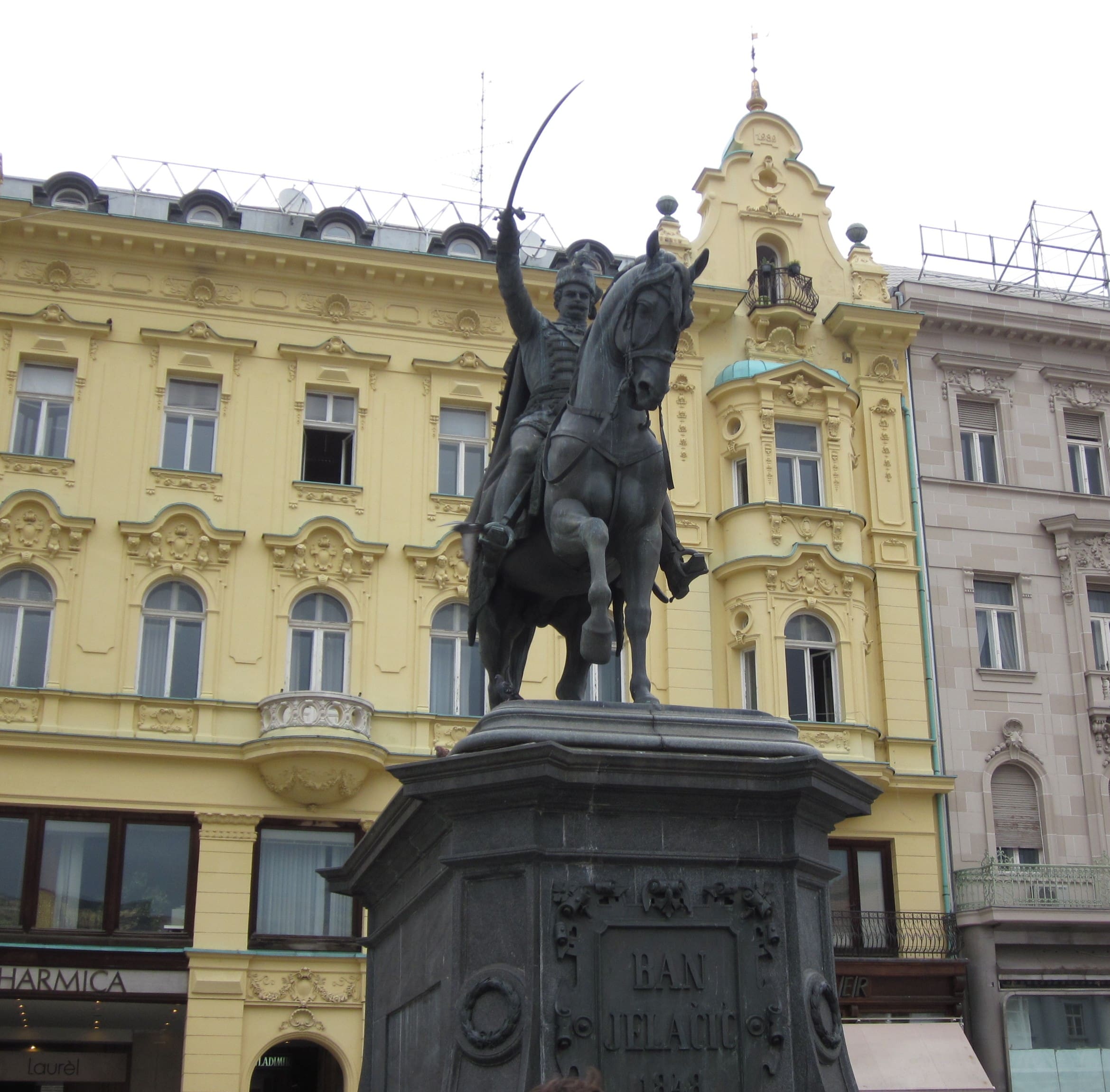
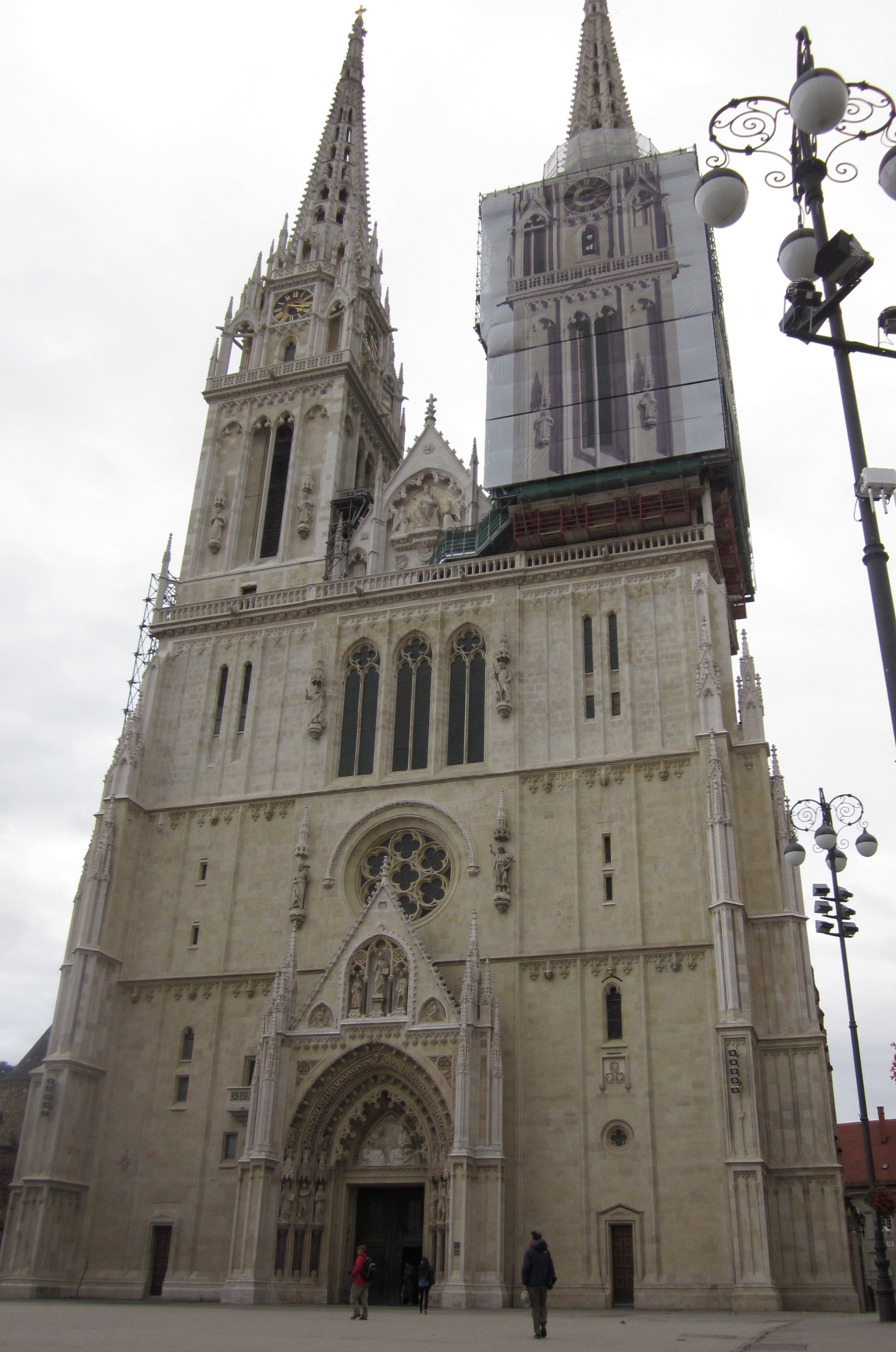
Jelačić Square was at the center of Zagreb and was within walking distance to our hotel. The square was named after Josip Jelačić, a famous national hero, and his statue was standing in the plaza. Most of the attractions in Zagreb were in the center of the city. The cathedral, which was the most important church in Croatia, was also in the center. It was under maintenance during our visit, and part of the building was covered.
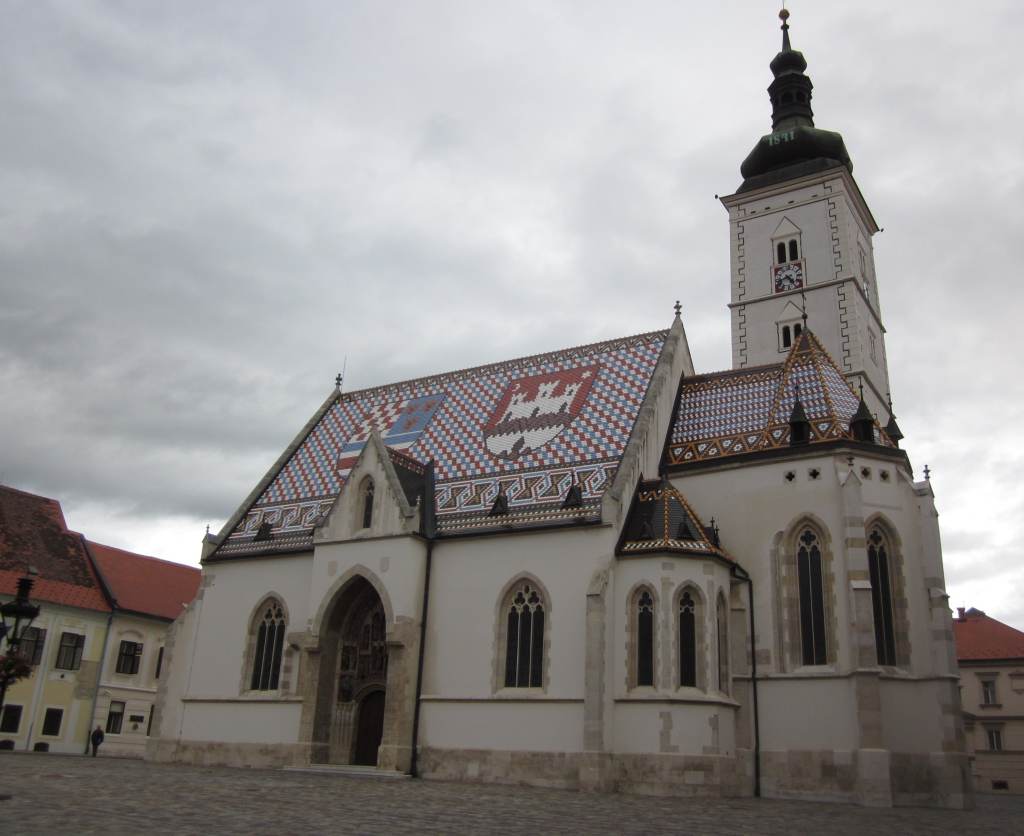
We continued our walk to the upper town to see the Church of St. Mark with its colorful tiled roof. The roof had two coats of arms: The left one represented Croatia, Slavonia and Dalmatia, while the right one was the seal of Zagreb. Unfortunately, the weather was cloudy, so we didn’t get to see the brilliant colors of the church under the sun.
On our way back, not too far from St. Mark, there’s a tribute to the famous scientist Nikola Tesla, who was born in Croatia.
Day 2: Plitviče Lakes National Park
We got up early this morning to drive to Plitviče Lakes National Park, which was about two hours away by car. We saw a couple of extremely beautiful photos of Plitviče a few years ago and knew that we had to visit this place! Tonight, we would stay at Hotel Jezero, the only hotel inside the national park.
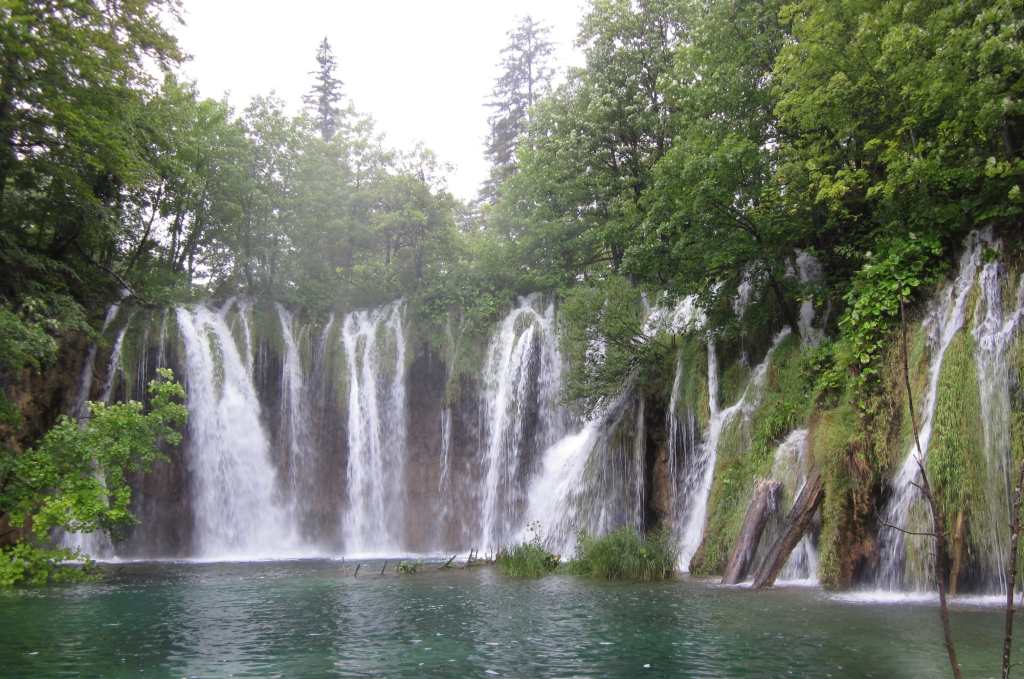
Plitviče Lakes National Park was also nicknamed “The Sixteen-Lake Park.” These 16 lakes were divided into two groups: the Upper Lakes and the Lower Lakes. We started our sightseeing in the Upper Lakes region. It was raining, and quite foggy too. The area received lots of rain, which explained the abundance of lakes and waterfalls in the park.
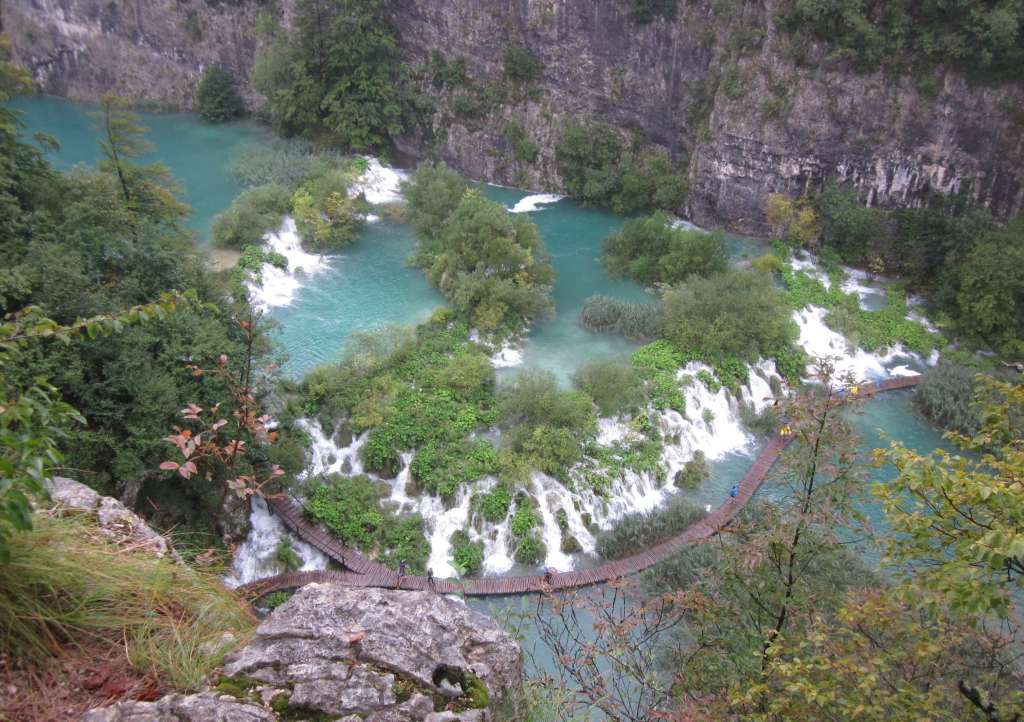
At the bottom of the Upper Lakes, a boat ride took us across the large Kozjak Lake to reach the Lower Lakes. In this part of the park, paths took us to higher ground, and we were able to have a more expansive view of multiple lakes and waterfalls flowing in between. This was also where all those postcard pictures of Plitviče Lakes were taken. Rei considered this park the most beautiful place in Croatia.
We had a quick lunch at a small restaurant with many tourists. Since it was raining and cold, people all crowded into this restaurant to have some hot food and drinks.
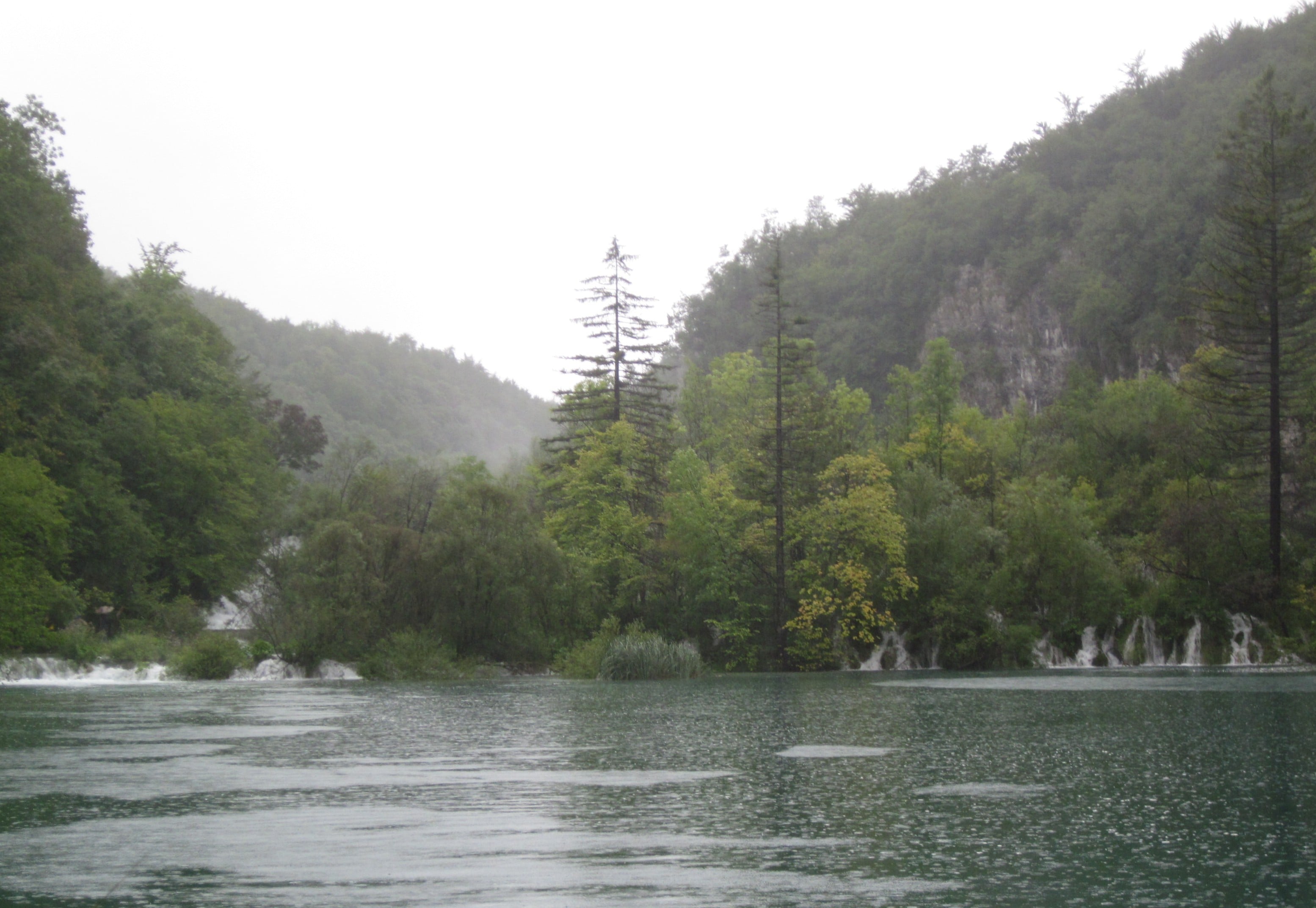
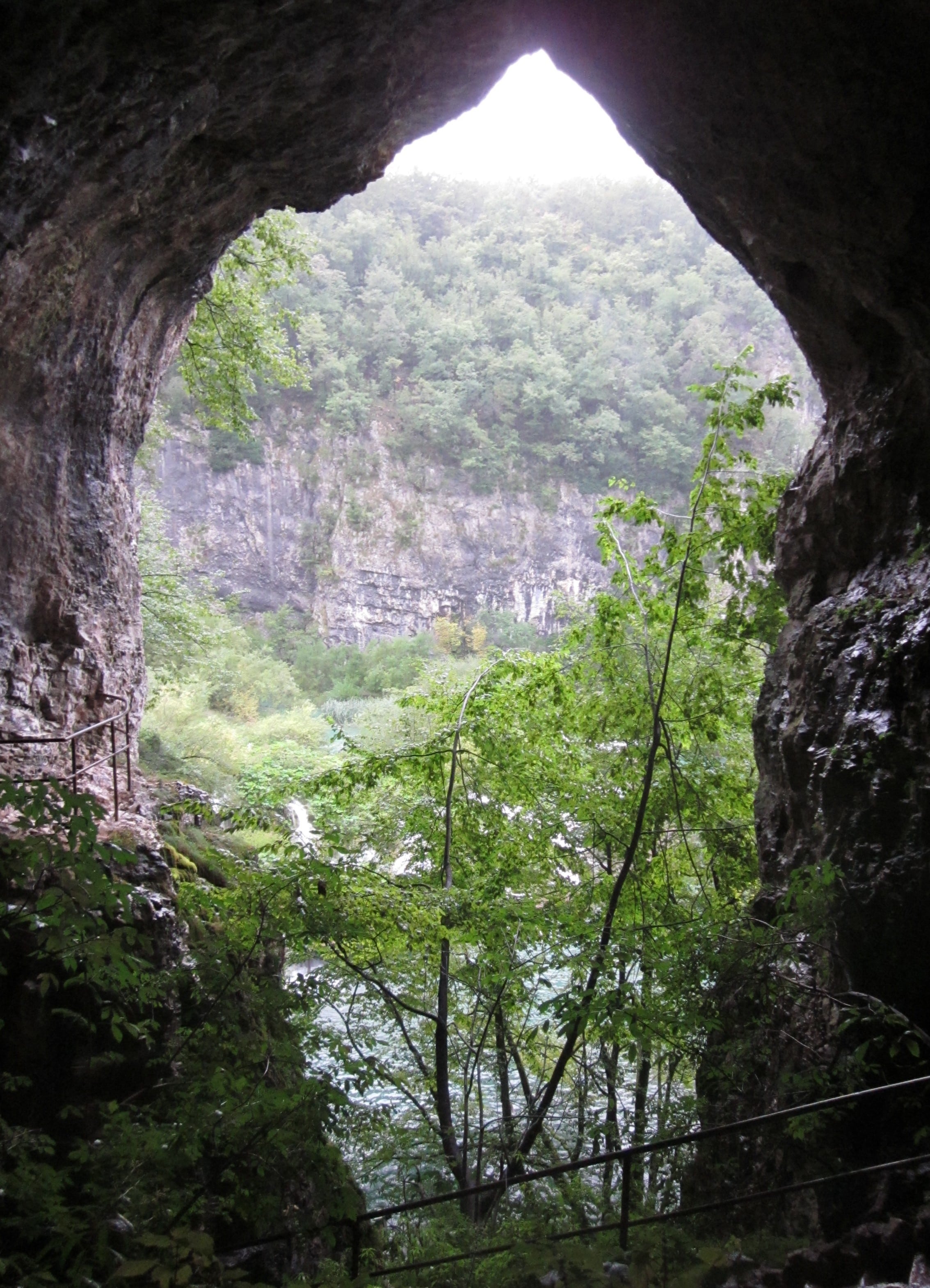
After lunch, we spent more time in the Lower Lakes area watching the waterfalls and exploring a cave before finally returning to the hotel, wet and tired. The hotel had a restaurant, where we had dinner.
Day 3: Krka National Park
We checked out of the hotel in the morning and drove to another national park, also with great waterfalls: Krka National Park. Krka was not as famous and was in a smaller scale when compared with Plitviče Lakes National Park. However, it was closer to cities like Sibenik and Split and was easier to reach.
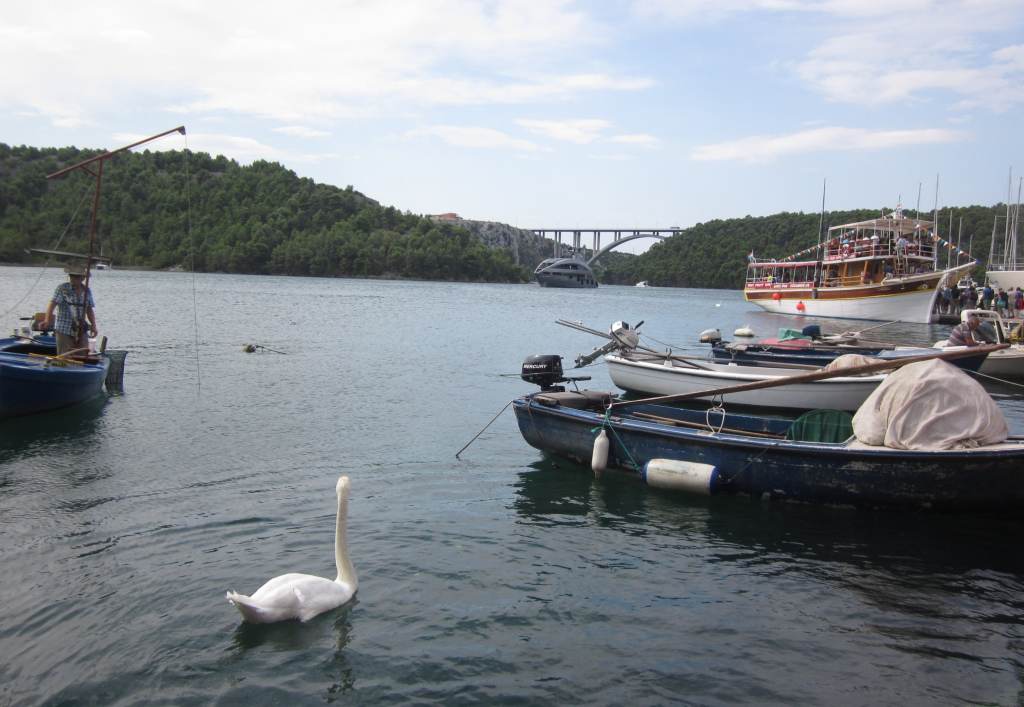
From the Skradin Entrance we purchased tickets for the boat rides into Krka National Park. There were many food stalls nearby selling delicious food and snacks. We had some very tasty fish sandwiches while waiting for the boat ride. It was a very scenic and interesting boat trip with an excellent view of a bridge and mountains. We were able to see waterfalls before we even reached the park.
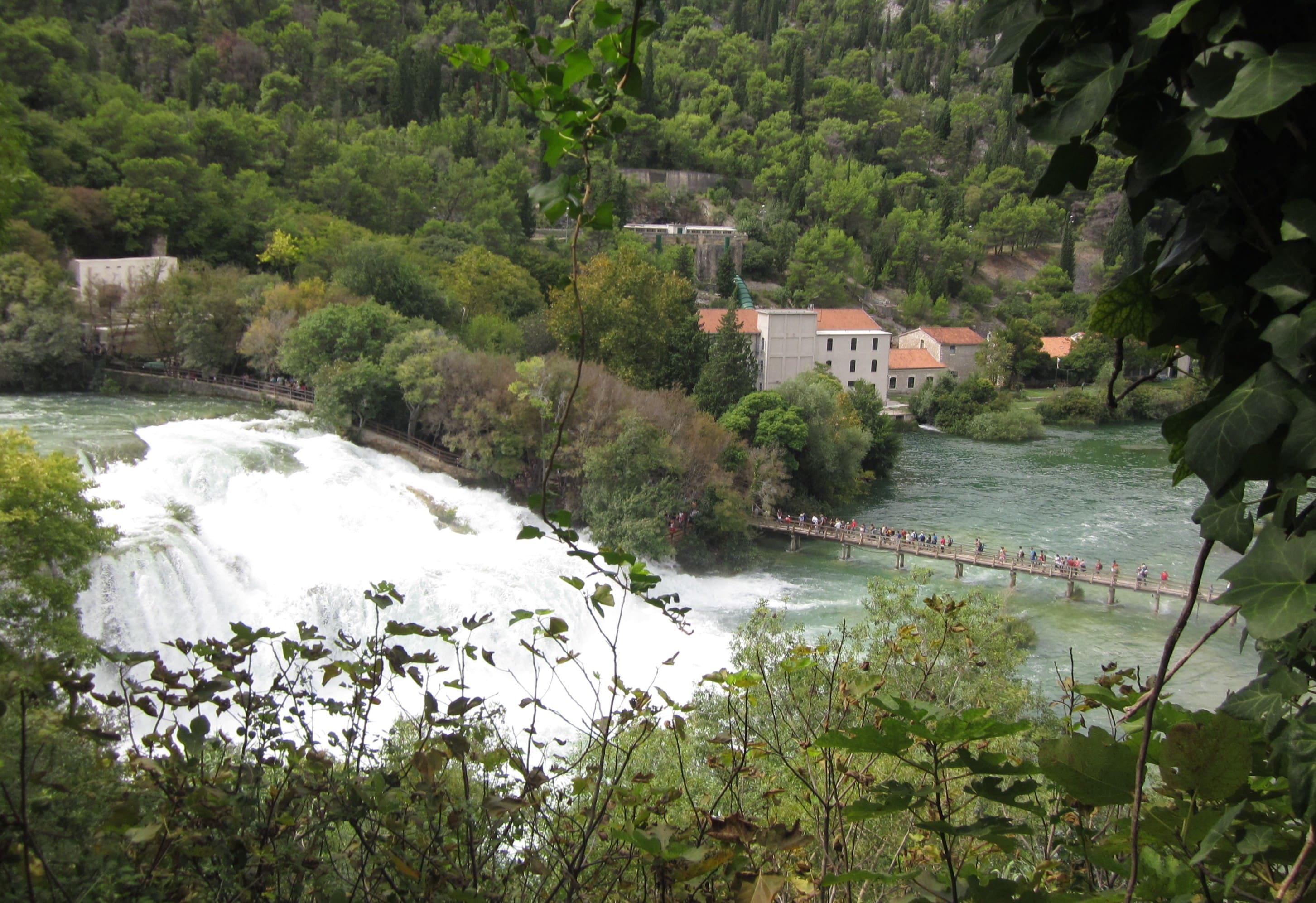
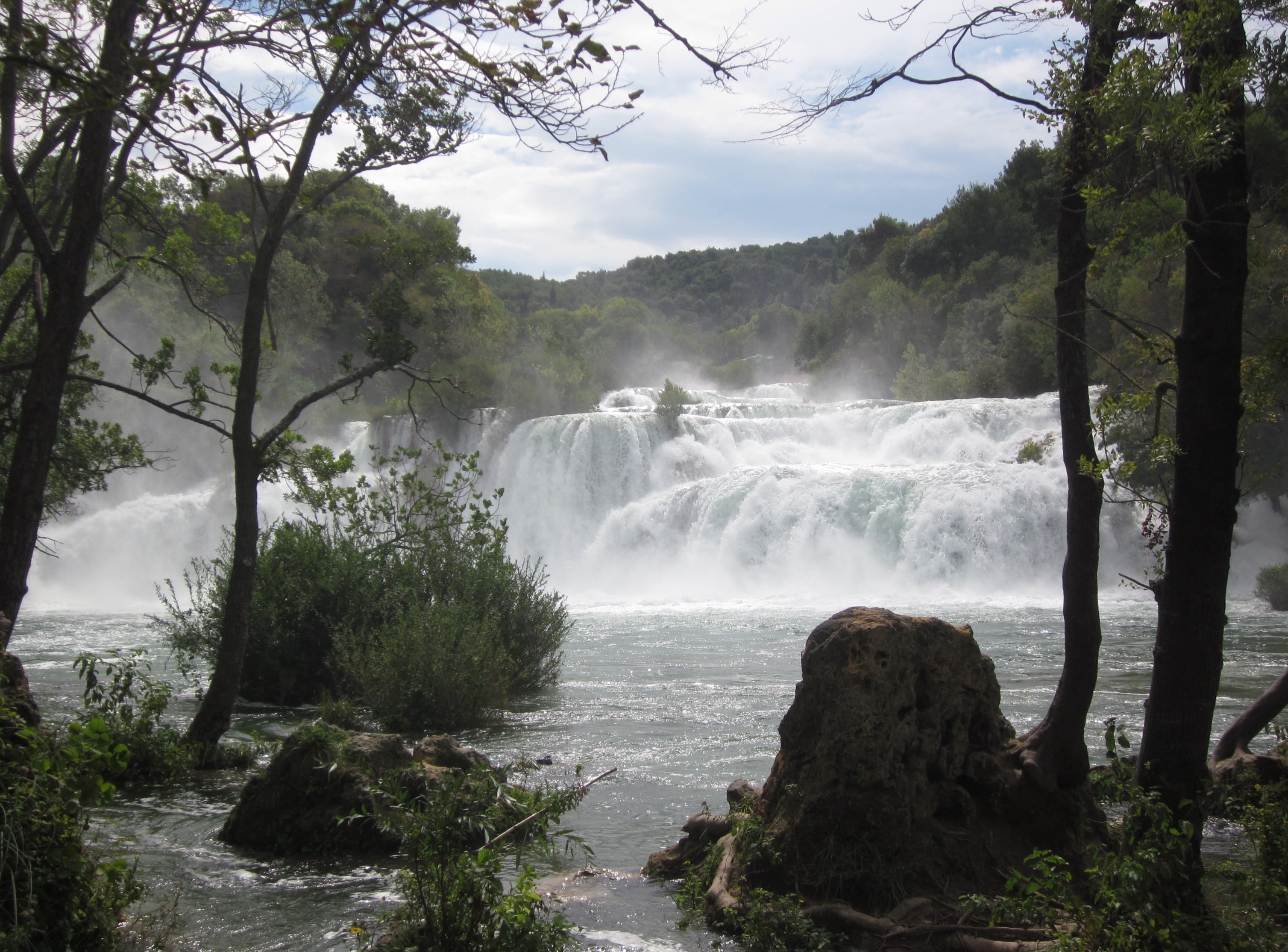
Krka was very popular with families. Since Krka was not on the radar of many international tour groups, most park visitors we saw were local people. There were easy trails for visitors to walk around to see various waterfalls. We had better weather today, and the walk was quite pleasant. There’s a swimming area under the falls too. Unfortunately, it was not possible to swim on the day we were there, because the water level was too high and it was considered too dangerous. It was a pity, because one of the advantages Krka had over Plitviče was that swimming was allowed in the park!
Afterwards we drove to Split and checked into tonight’s hotel. Split had many excellent seafood restaurants. We picked one with a beautiful ocean view and enjoyed a delicious dinner of burger, pasta and seafood there.
Day 4: Split
This was our Split sightseeing day. Our hotel was within walking distance of Split’s most famous attraction: Diocletian’s Palace. Diocletian was a Roman Emperor. He built his retirement palace here in Split on the coast. The palace, though in the ruined state, was still partially standing. People in Split built houses and stores inside the original palace walls. It was free to enter the palace, only certain special places inside required entrance tickets.
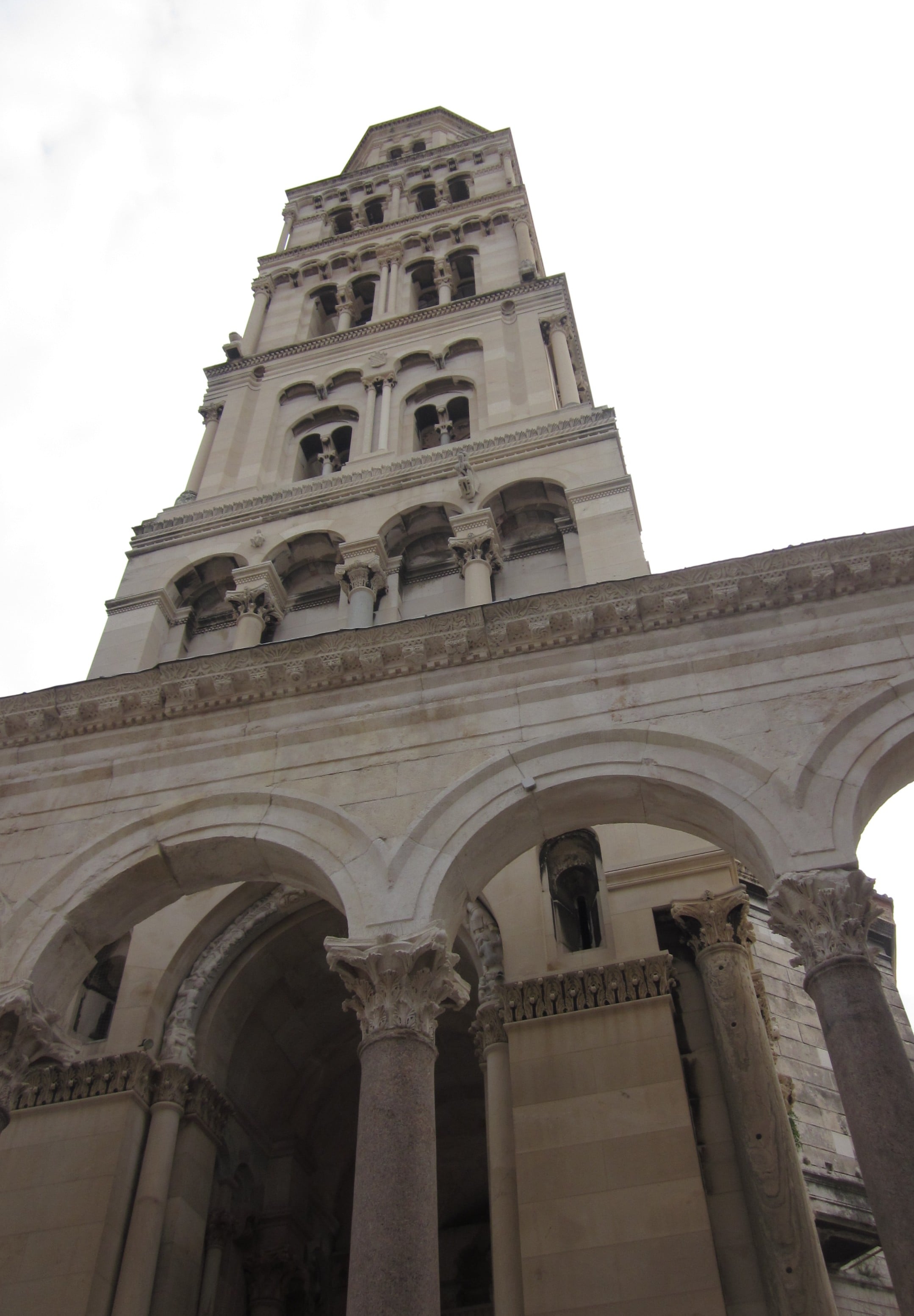
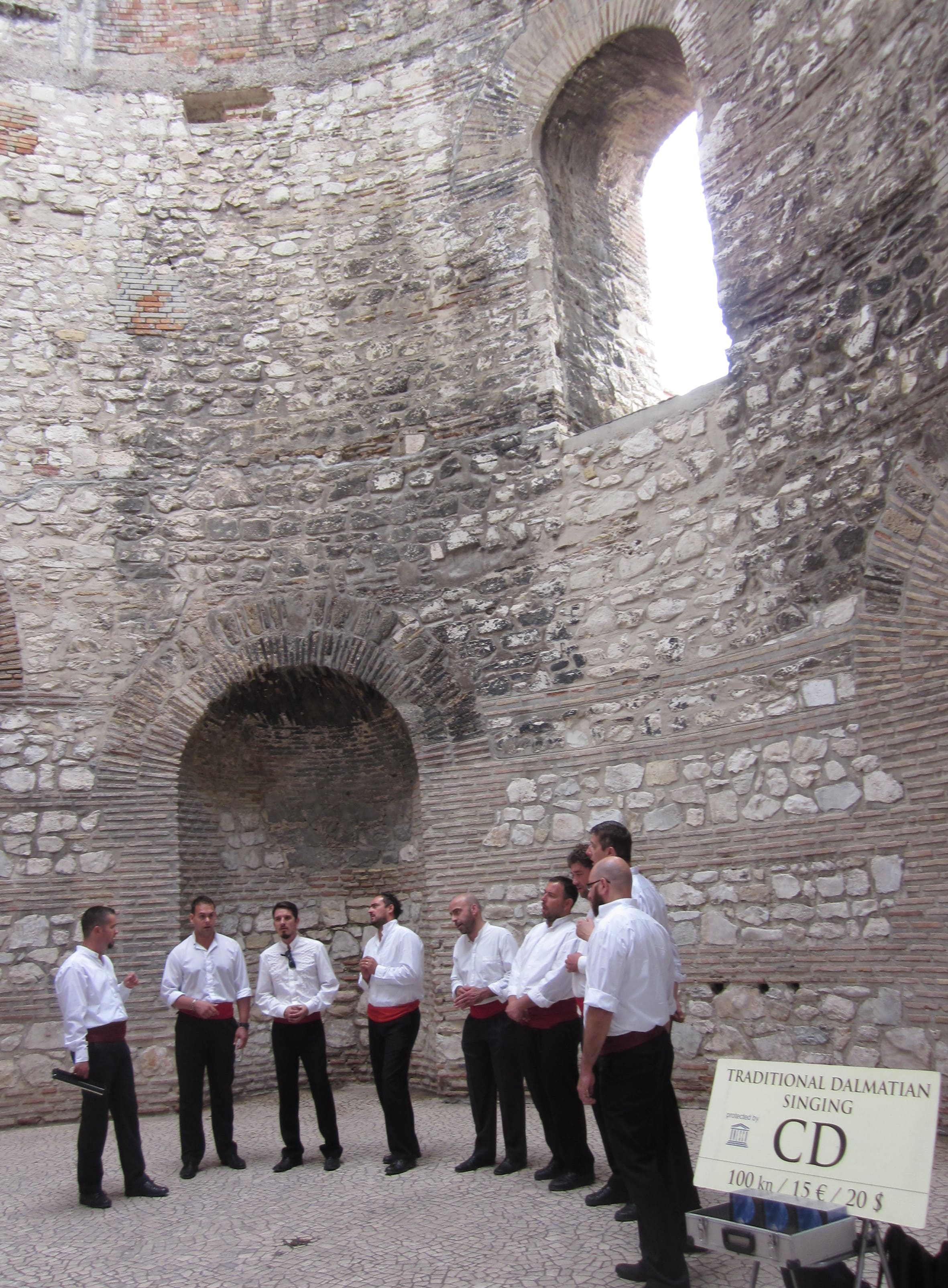
We entered Diocletian’s Palace through the Brass Gate, which was facing the Split Harbor. There was a group of singers performing inside the entry vestibule, which provided extraordinary acoustic effect.
Inside the cellar, which required entrance ticket, we could see the original floor plan of the palace. There’s also a bust of Diocletian which looked very imposing. The cellar looked deserted and a bit spooky. We didn’t stay there long.
The building that was Diocletian’s mausoleum now became Cathedral of St. Dominus for a Christian martyr who was drowned on Diocletian’s order. It’s kind of sarcastic. The original Jupiter’s Temple has been turned into St. John’s Baptistery. There’s a water font in the baptistery that was large enough for a person to submerse inside (which was the old way of baptism).
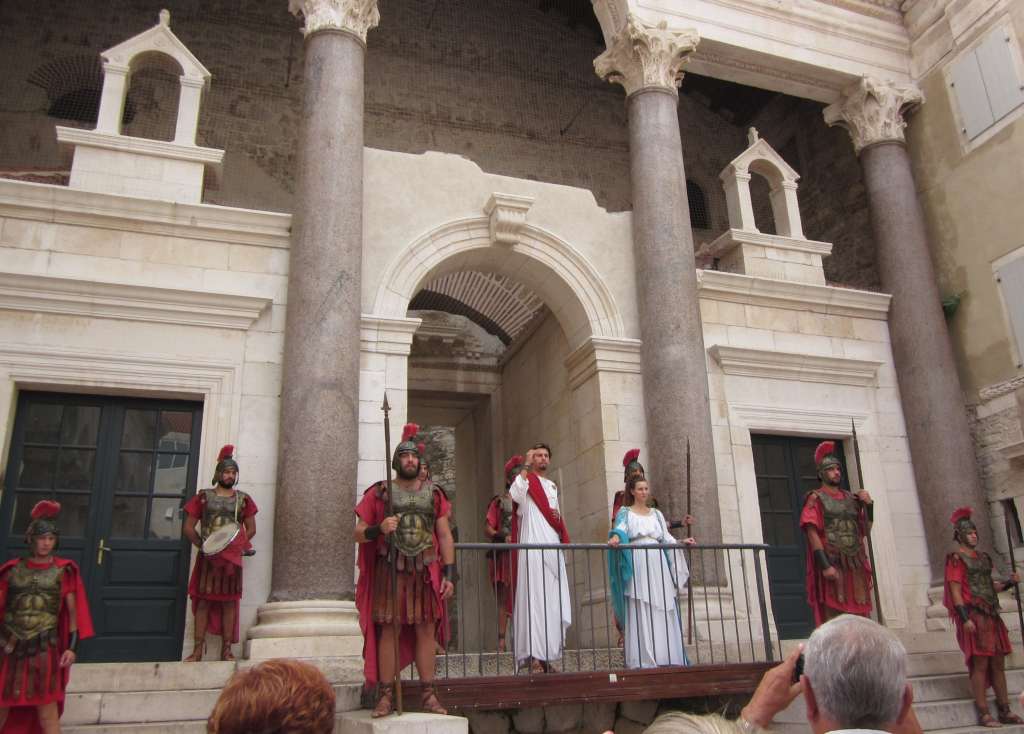
We left the baptistery just in time to watch the free daily show at noon. “Emperor Diocletian” and his empress, escorted by a team of Roman soldiers, greeted the visitors. The “emperor” also gave a speech. This was surely very entertaining.
There’s a famous Bishop Gregory of Nin Status (which looked like a wizard) outside the Golden Gate (opposite of the Brass Gate by which we entered). However, the statue was under maintenance and was covered.
Day 5: Detour to Mostar
We decided to detour to Mostar in Bosnia-Herzegovina to see its famous Old Bridge (Stari Most). It didn’t take us long to cross the border from Croatia to Bosnia-Herzegovina, because there was basically no line.
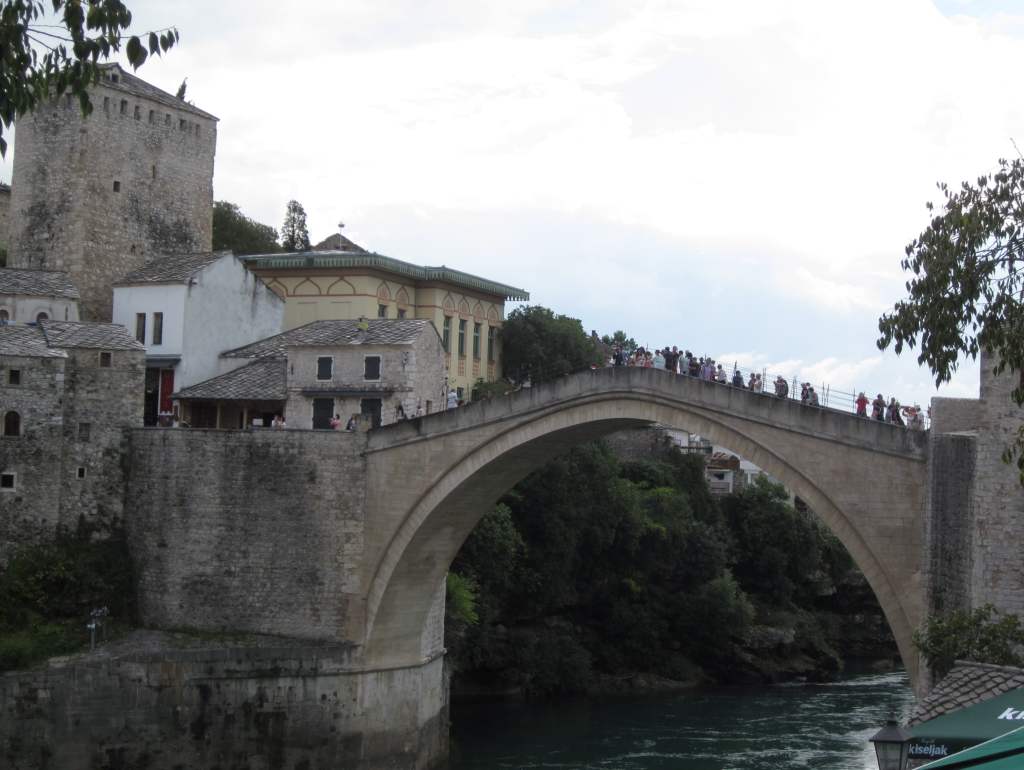
We parked the car in a large parking lot very close to the Old Bridge. Mostar was a site of the 1990s wars among Bosnians, Croats and Serbs. There were still war-torn buildings with bullet holes partially standing in the city as a witness to the troubled past. The Old Bridge was destroyed in 1993 by bomb shells. The current bridge we saw was a reconstruction using new stones from the original quarry. The sight was both amazingly beautiful and extremely sorrowful.
When Daddy told his colleagues that we would also visit Bosnia during this vacation, they asked him whether it’s too risky to go to such a “dangerous” place. It was not so. Bosnia has been quite peaceful nowadays, even though war scars were still plainly visible in many places. We were glad to have this detour to Bosnia, which presented us with a different view and experience.
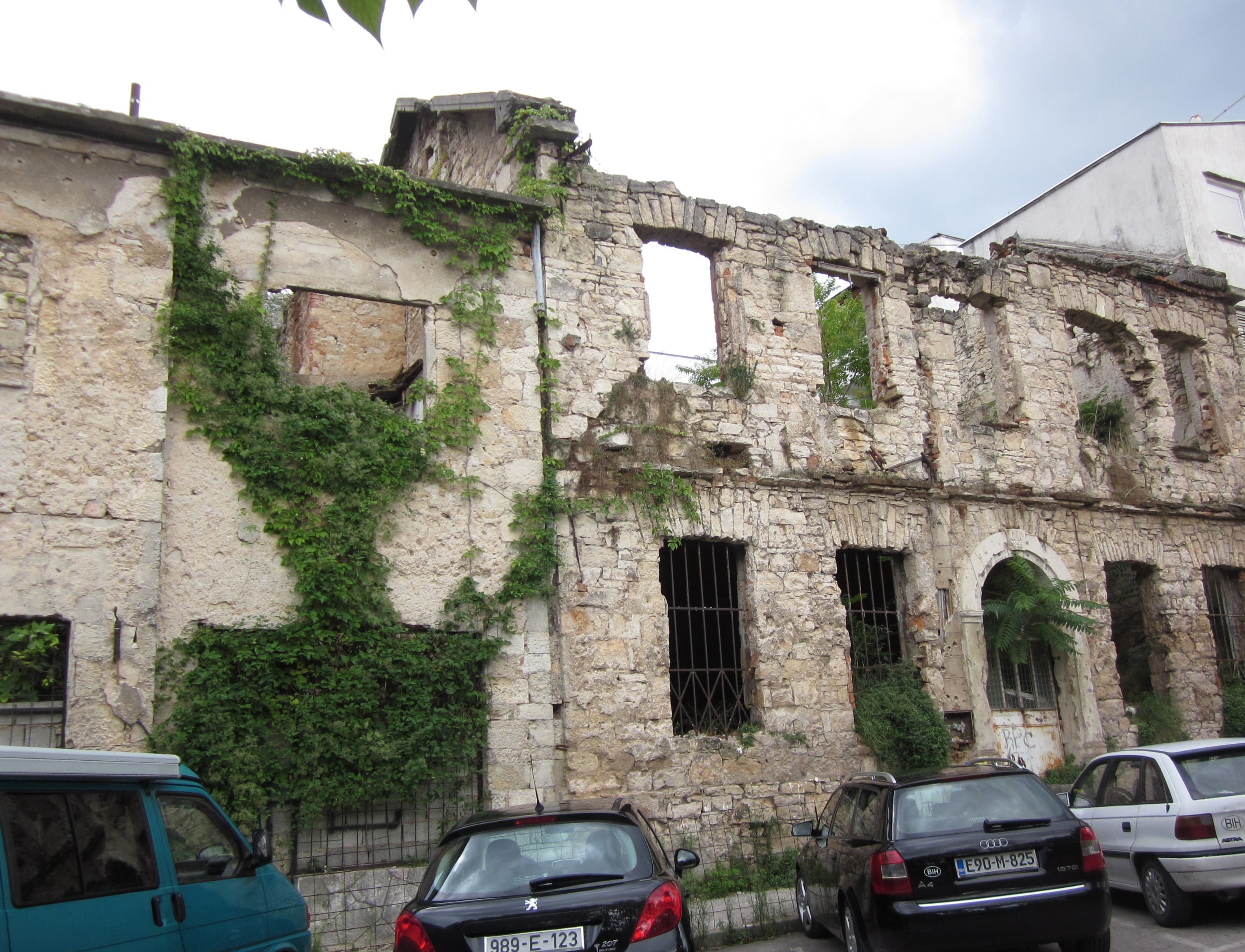
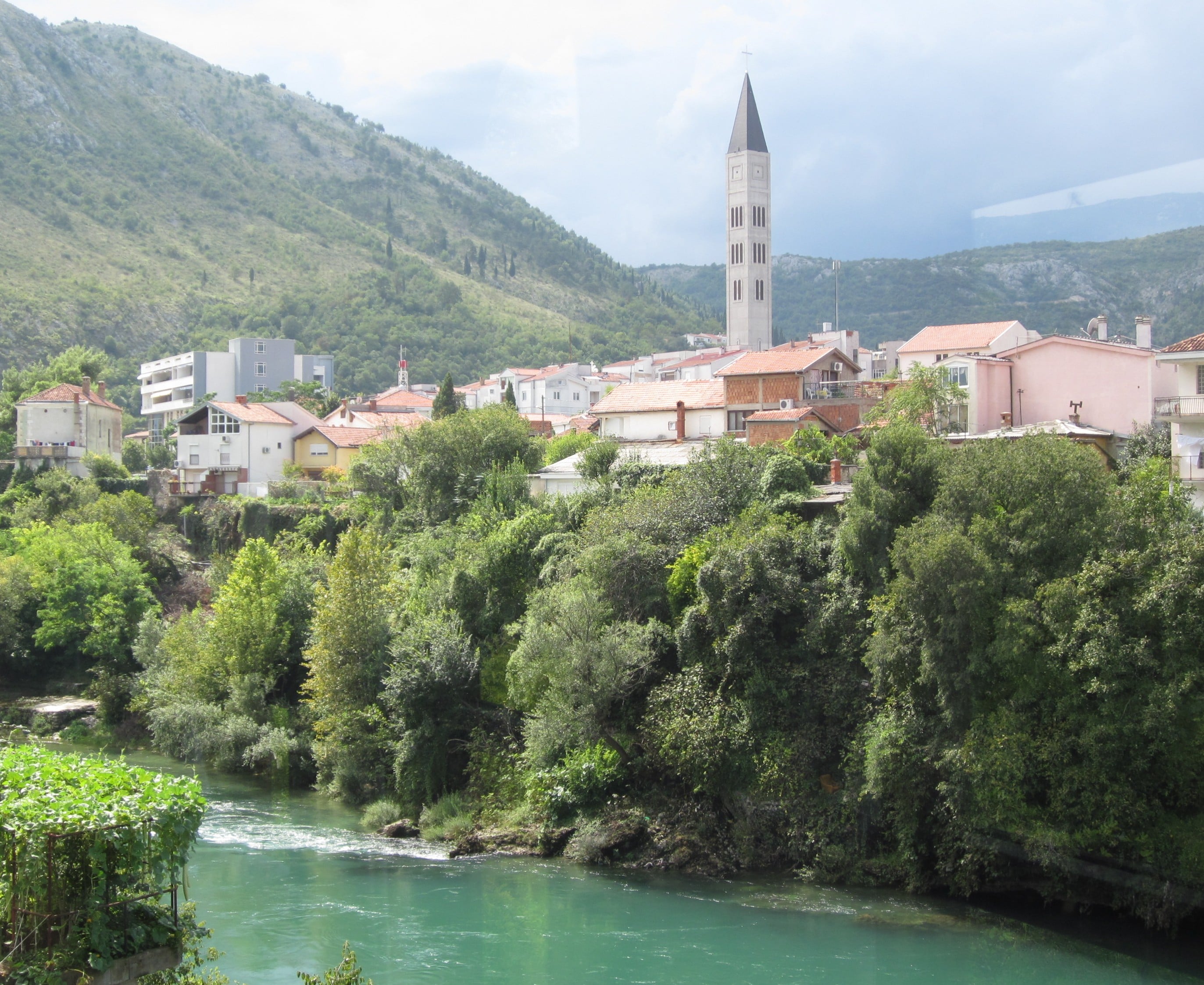
Mostar’s Bosnians were Muslims. There were mosques and Turkish-style homes open to visitors. We walked over the Old Bridge to the other side of the Neretva River to visit the Biscevic Turkish House. We haven’t been to Turkey yet; therefore, this would be our first visit to a Turkish House. Its serene interior showed a big contract to the noisy city outside. There were even some clothes and devices in the house for tourists to “cosplay”! Daddy put on a faz hat and held a smoking pipe for Mommy to take a photo of him.
On our way back, we saw a small shop with a line of people waiting to buy Turkish Delight. From our past travel experience, we knew we had to join the line. We got two boxes of Turkish Delight for 5 euro each. This indeed turned out to be the best Turkish Delight we’d ever tasted! (Again, we haven’t been to Turkey yet.) We ended up finishing both boxes before the end of this trip and regretted not buying more.
Then, we returned to our car and drove back to Croatia. We would stay in Dubrovnik for two nights in a house we rented through booking.com. The place was extremely difficult to find! We got lost several times even with GPS and had to call the owner for directions. However, it was worth the effort, because the house was in a great location overlooking Dubrovnik, and it had three rooms and a washing machine! The owner worked for Carnival Cruise. He told us that his parents bought him this house for him to settle down. However, he’s not ready to settle down yet, so he rented the house to tourists instead.
Day 6: Dubrovnik
We stayed in a house high above with breath taking views of Dubrovnik. However, this also meant a long walk and lots of stairs to climb.
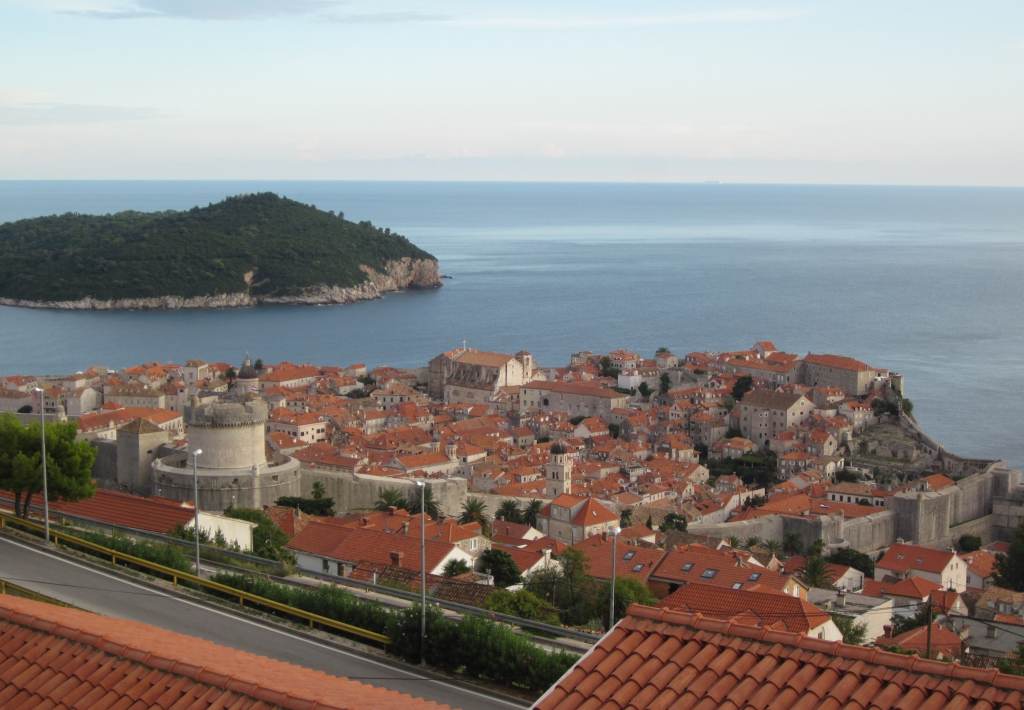
For Game of the Thrones (GoT) fans, Dubrovik was King’s Landing and a must-visit. However, you didn’t need to be a GoT fan to enjoy the Pearl of the Adriatic.
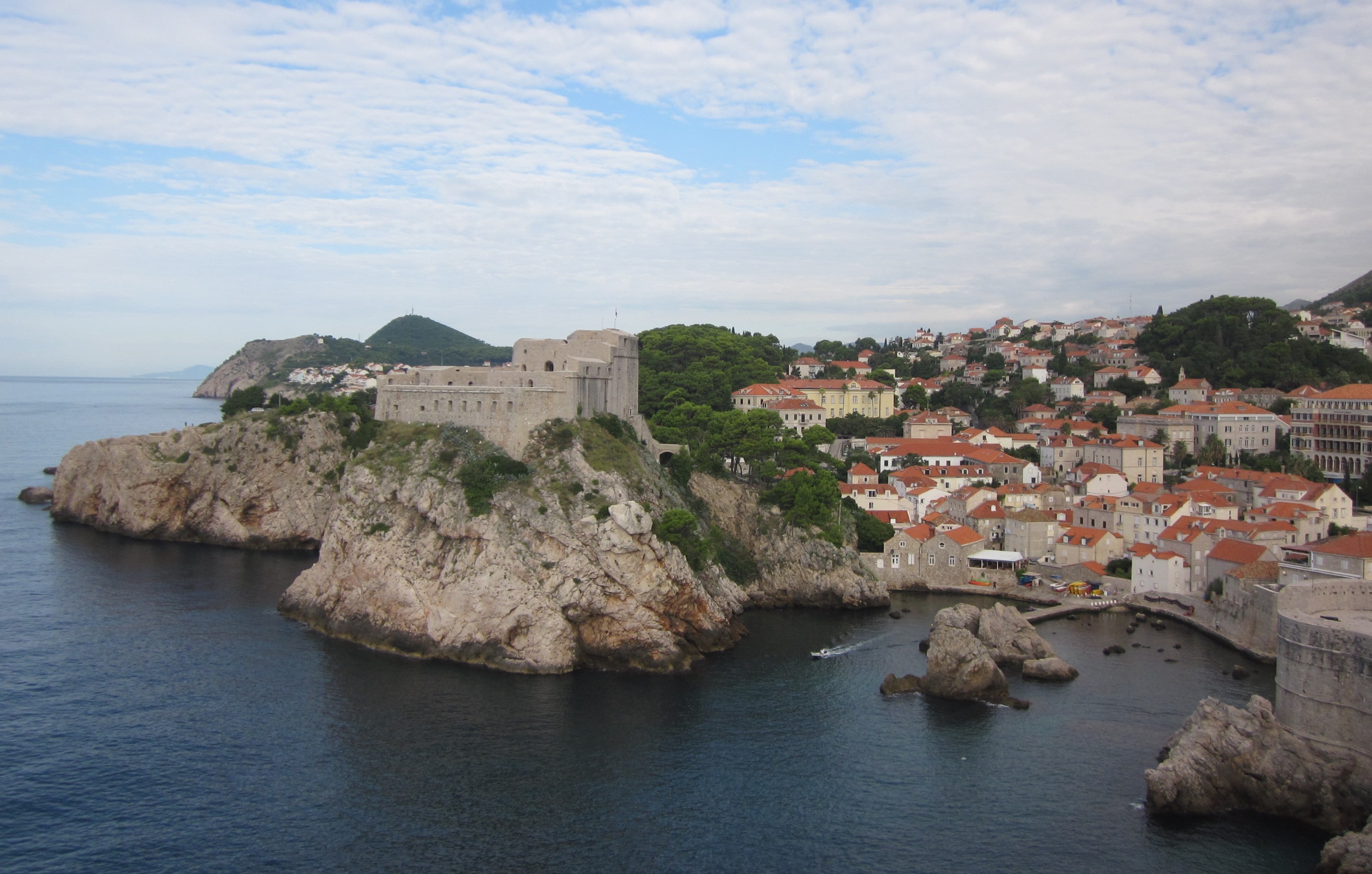
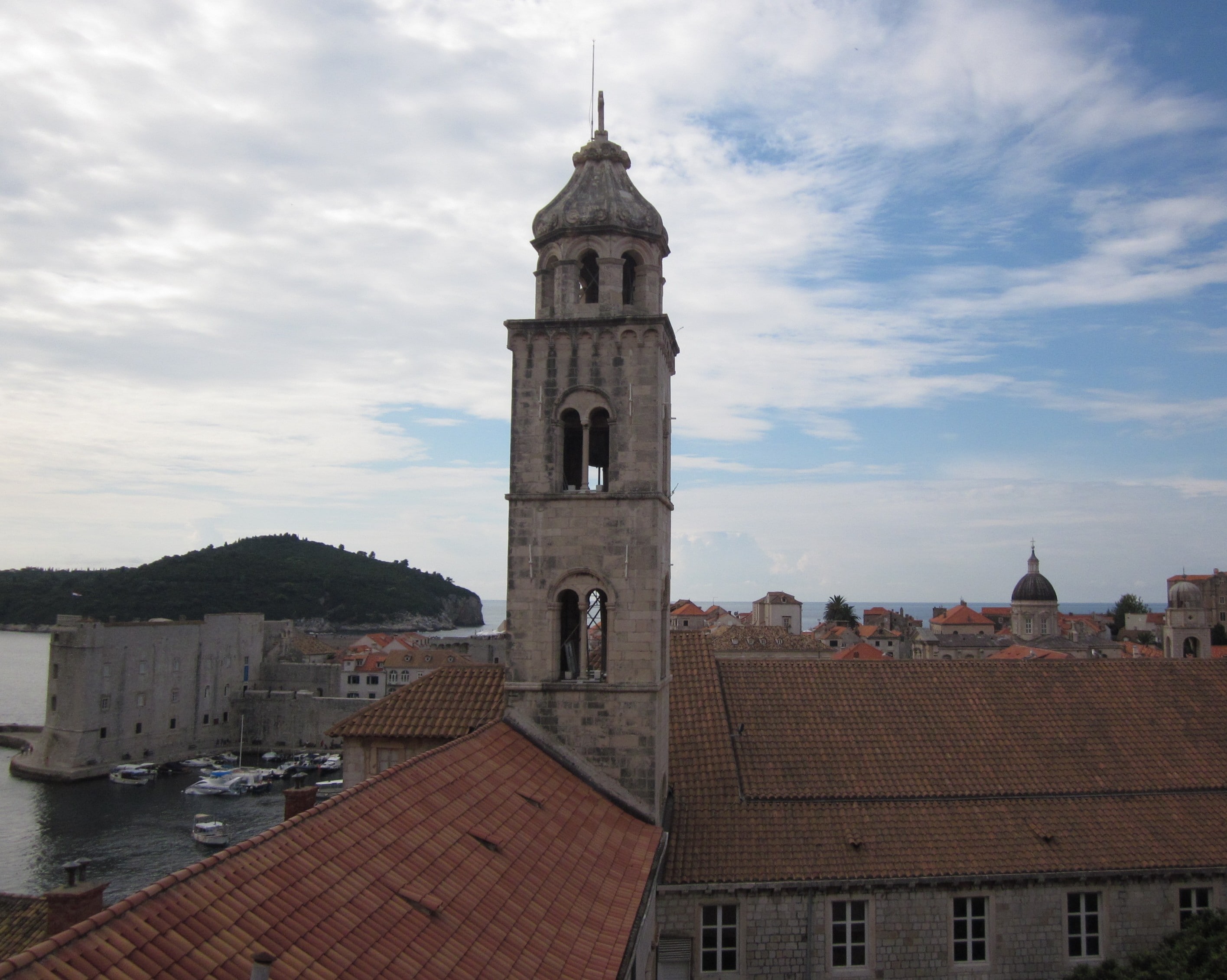
We were lucky to be in Dubrovnik on a glorious sunny day. (We heard that it rained the last couple days.) We decided to walk the Town Walls first before the weather became too hot. The walk was more than one mile long and provided an excellent view of the old town. It was truly amazing, and I took tons of pictures. Being a big GoT fan, Sister willingly let me take a picture of her on the Town Walls, which was very unusual because she hated posing for photos!
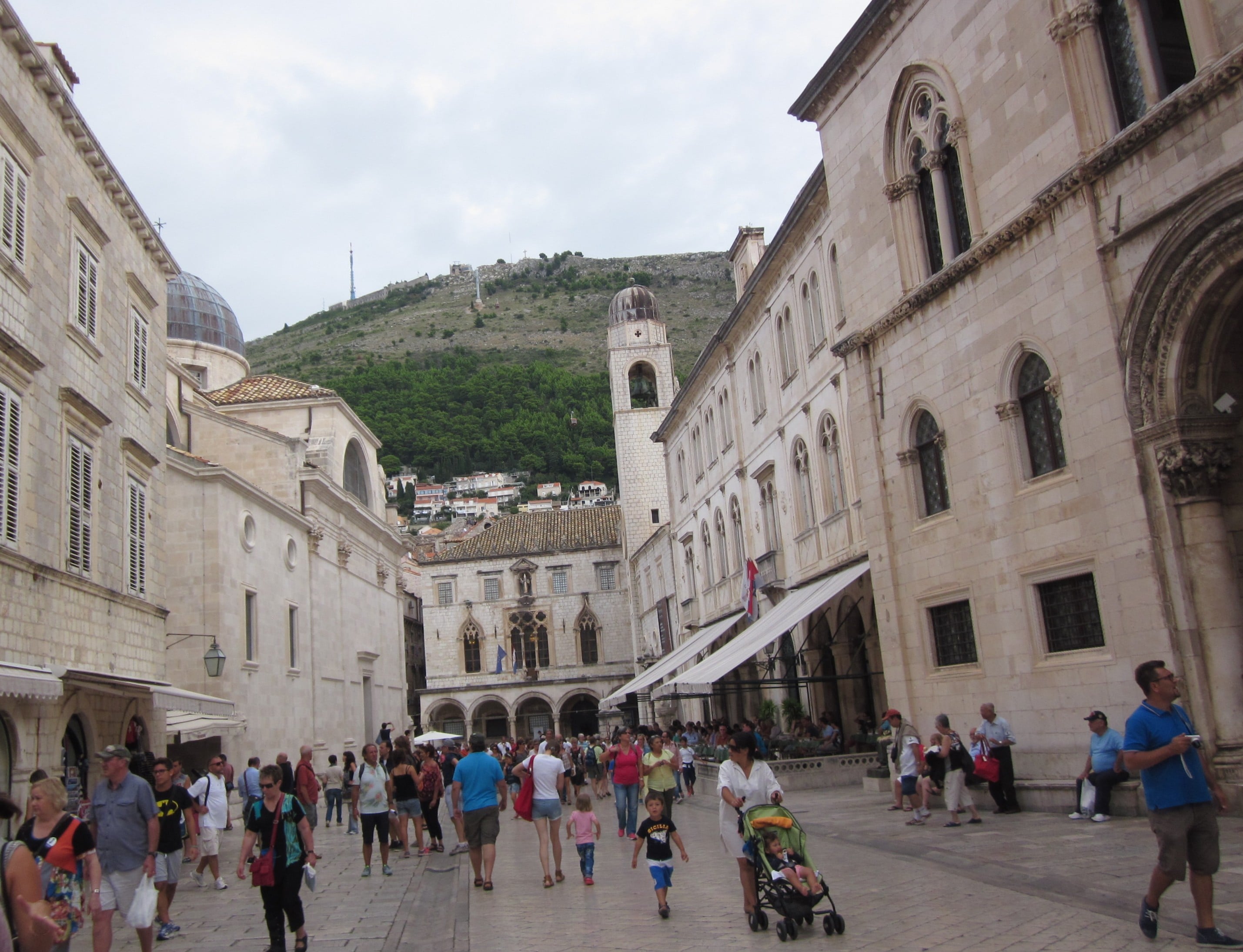
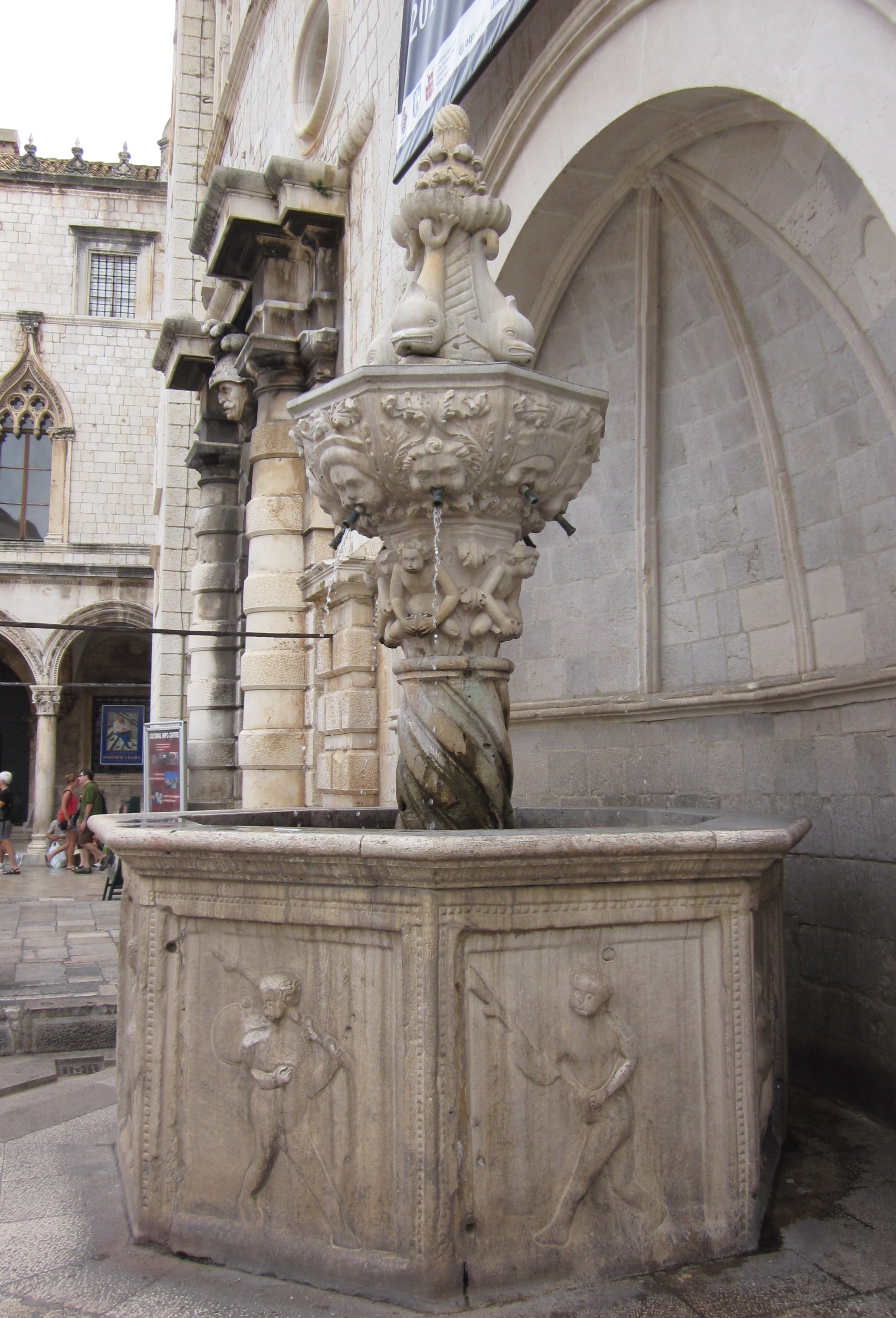
After we descended the town walls, we strolled the main promenade “The Stradun” and enjoyed some good gelato cones. We walked past Onofrio’s Fountains (both Big and Small), St. Blaise’s Church, Rector’s Palace, Dominican Monastery Museum and the Serbian Orthodox Church and Icon Museum, among others. However, we opted not to have any inside visits.
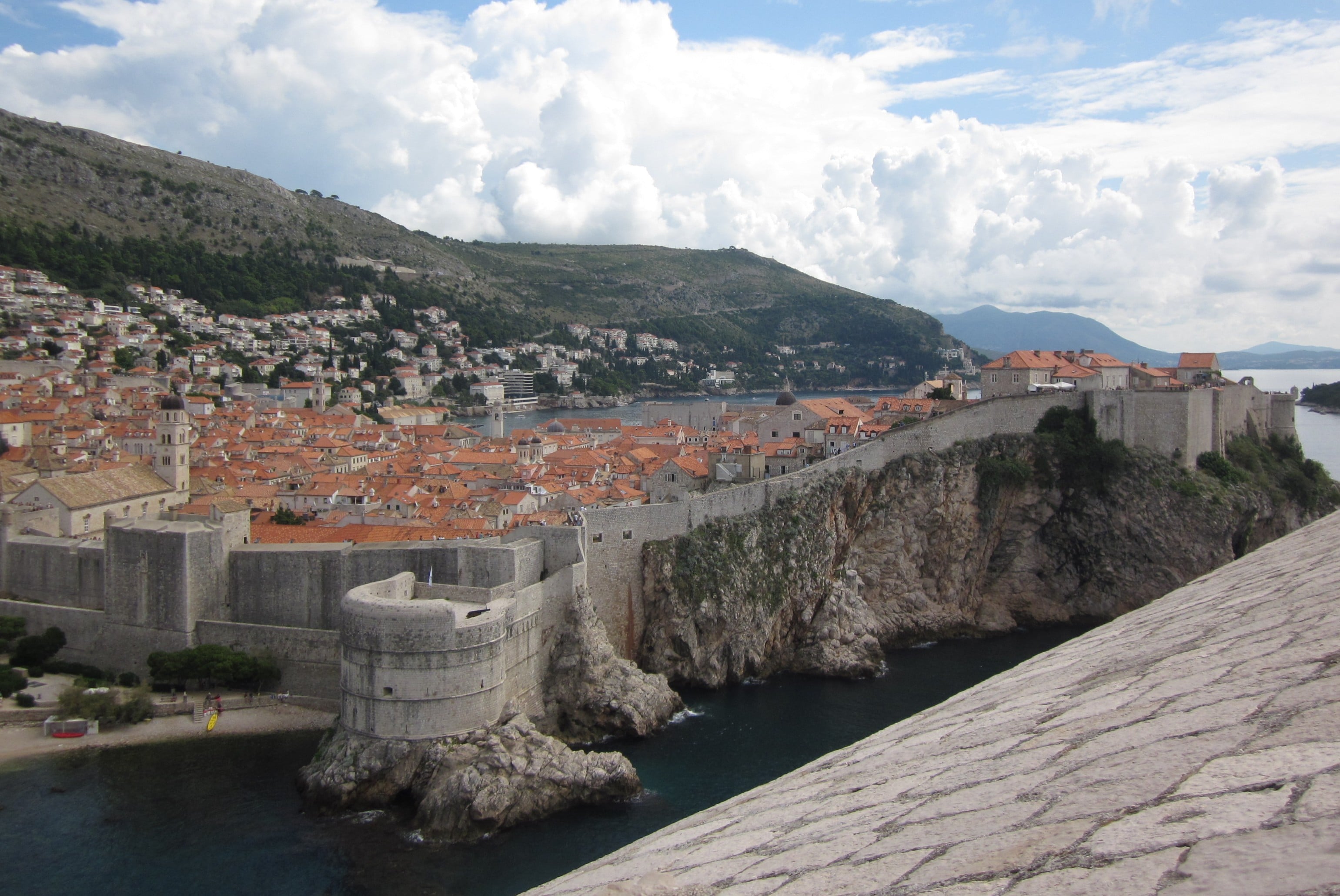
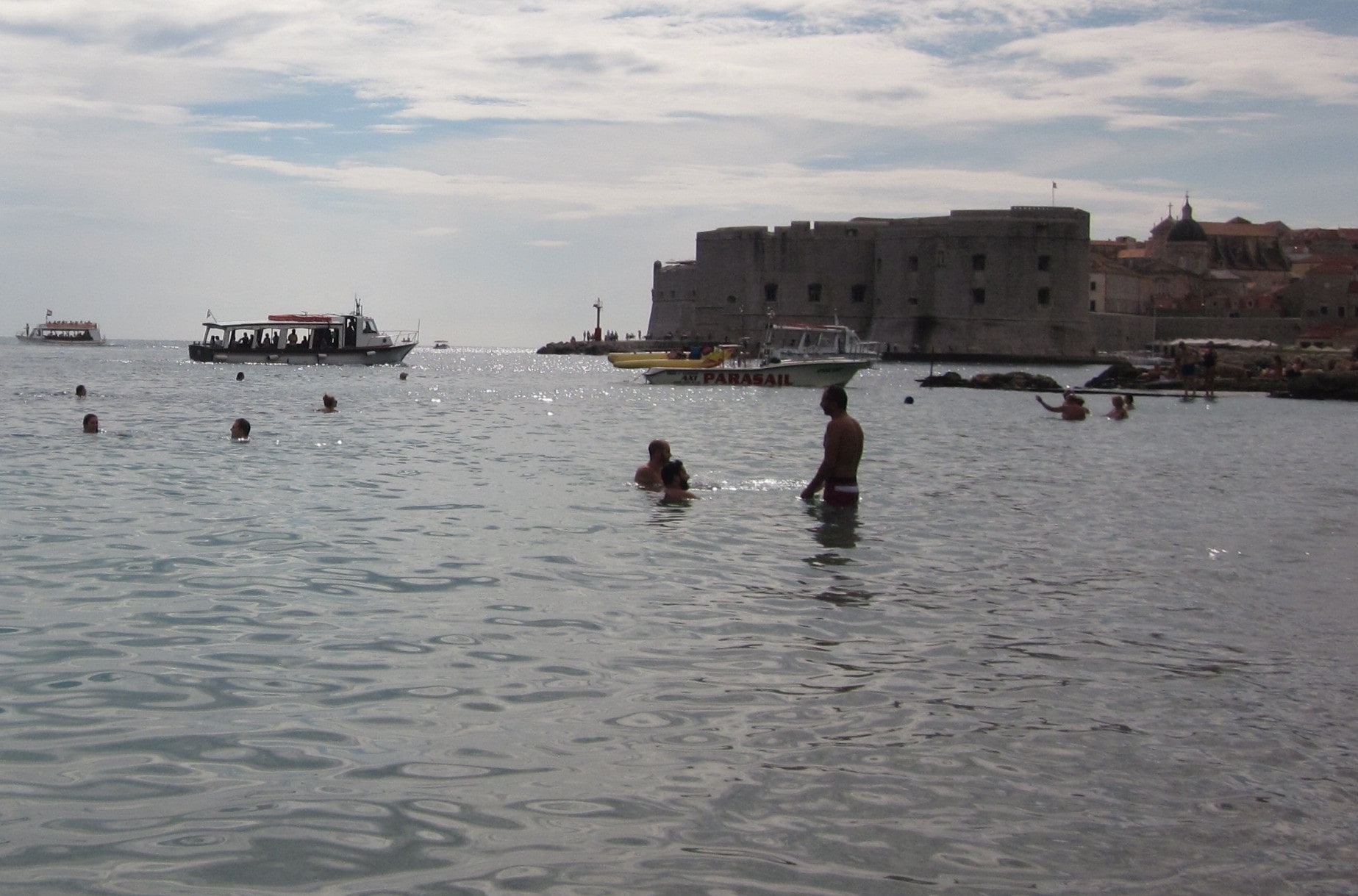
We had a light lunch in one of the restaurants lined the Stradun. In the afternoon, we visited the Fort of St. Lawrence and watched the Dubrovnik old town from a different angle. Then it was time to swim in the Adriatic Sea! Sister declined, saying she just wanted to rest in the house. So only Daddy, Mommy and Cutie went to the ocean. The water was warm, and the view was of course magnificent!
Since Sister didn’t go out with us, we ordered some seafood dishes from a local restaurant near the water to bring back as our dinner.
Day 7: Mount Srd, then Šibenik and Zadar
We decided to visit Mount Srd before leaving Dubrovnik. The mount with a defense site was right behind the old town. It could be reached by a cable car ride or by driving along a precarious road. Since we had a car, we drove the narrow mountain road to Mount Srd. The drive was quite nerve-wracking (and Daddy complained a lot about the drive!), but the view from the top was gorgeous!
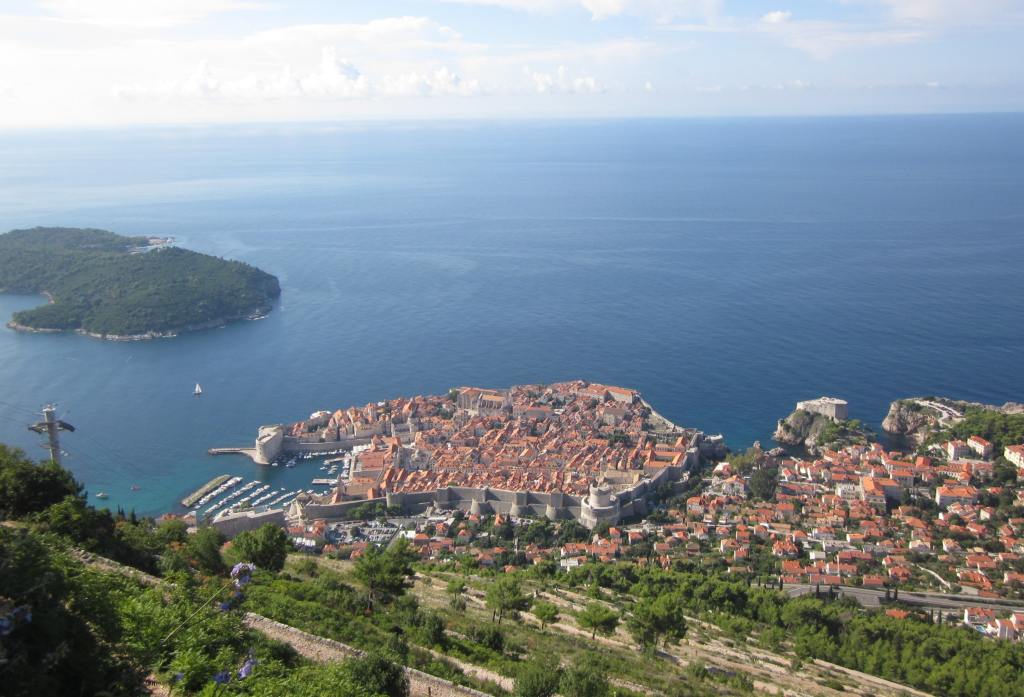
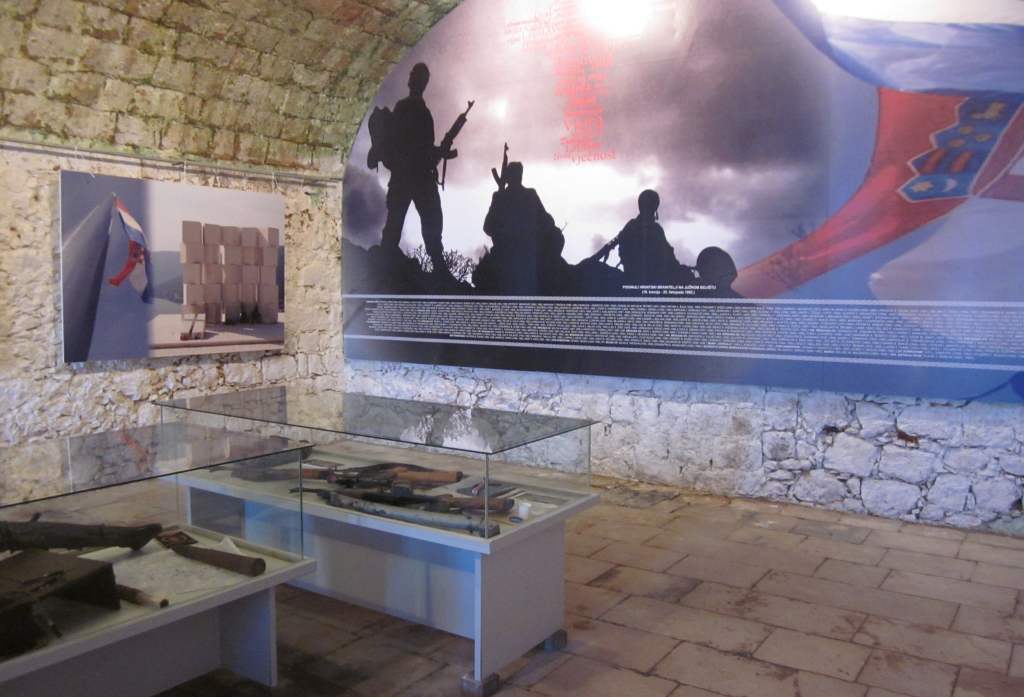
There was a defensive structure on the top of the hill. The place was an important battle site during the Siege of Dubrovnik in 1991, when Yugoslave Army attacked Dubrovnik. It now housed a museum. There was a giant white stone cross standing nearby. The cross was destroyed during the war and was rebuilt later. When we were in Mostar two days ago, we heard the Bosnia side of the war story, and now we learned from the Croatia side of the story.
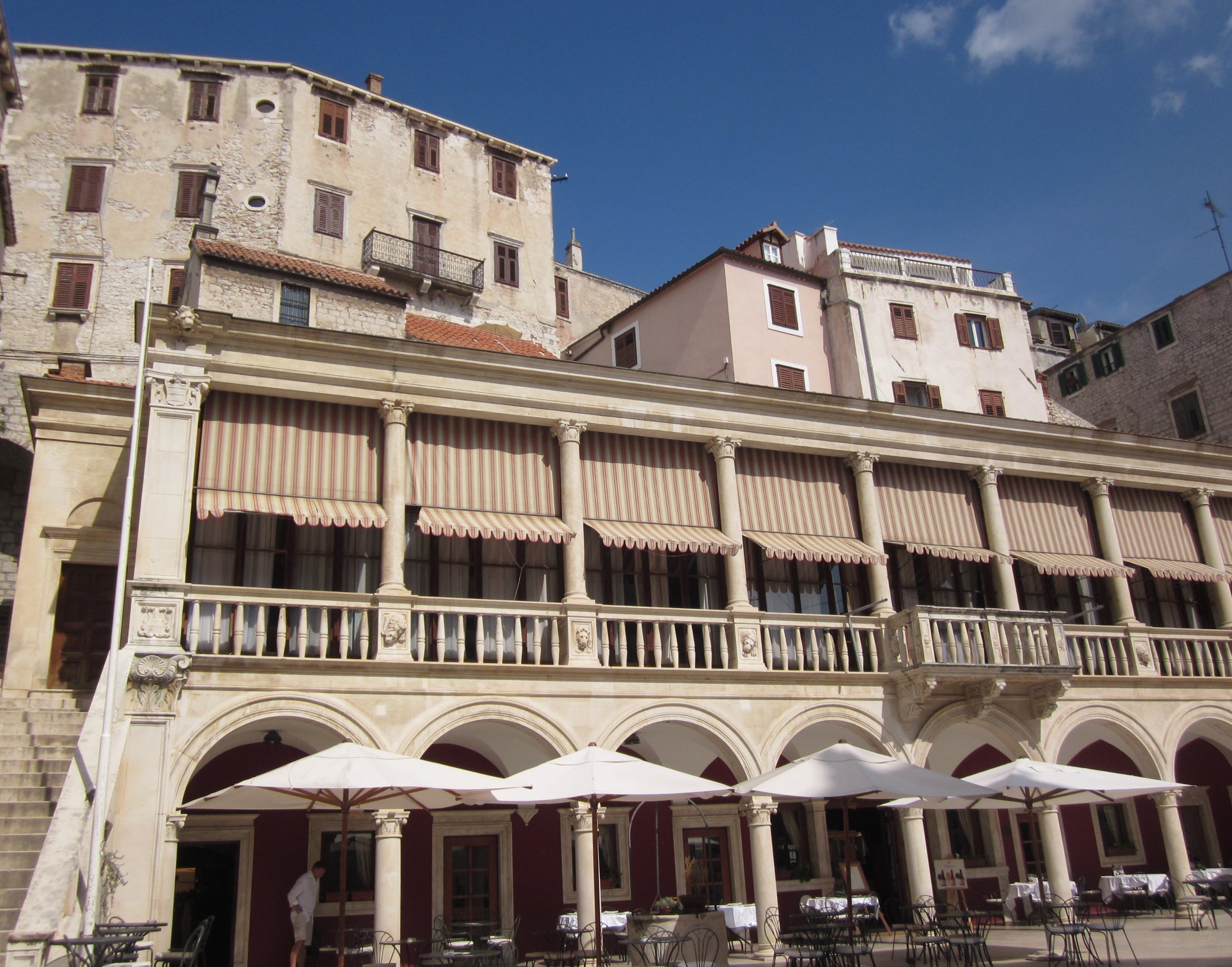
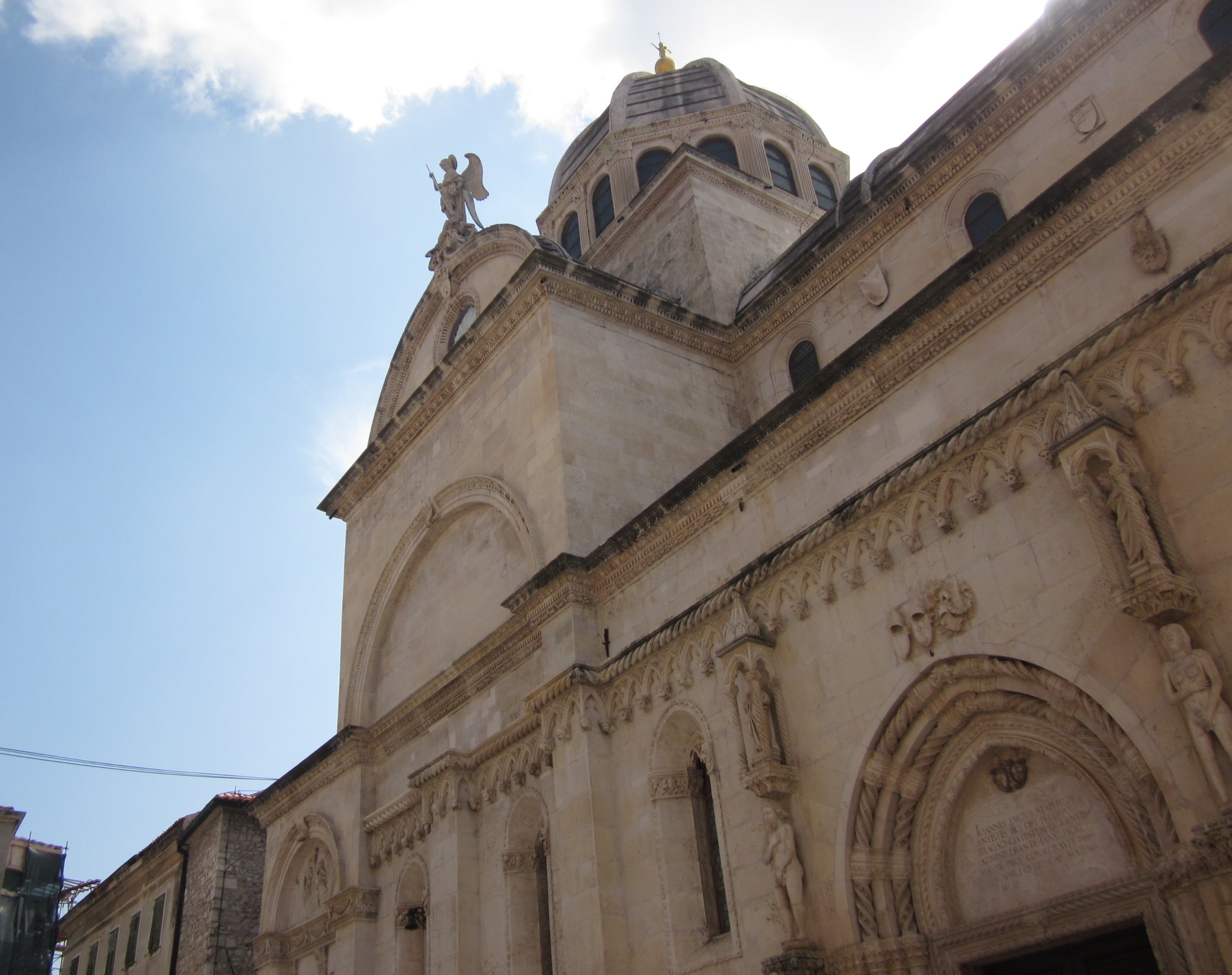
Afterwards, we continued our road trip and had a lunch break in Šibenik. Šibenik is a charming little seaside town with nice seafood restaurants lined the coast. It’s a UNESCO World Heritage site and had a famous church, Cathedral of St. Jacob. The cathedral was built between 1431 and 1535. Many ornate carvings, including statues of Adam and Eve on the outside, decorated the cathedral. It also had a very impressive baptistery.
After a lunch and short stay, we resumed the drive to today’s destination Zadar. Zadar was a small city on the Dalmatian Coast. The city had old architecture and ruins with Venetian influence. However, there were also modern style Sea Organ and Sun Salutation. It’s interesting to see that old and new coexist in harmony in this attractive town.
We rented an apartment to stay through booking.com, but Daddy had difficulty contacting the owner to get the key because he wasn’t familiar with making international phone calls. Fortunately, a kind college professor walked by to offer his help. He managed to contact the apartment owner using his own cell phone and solved our problem. We thanked him profusely. In our many years of extensive travel, we have met many kindhearted people all over the world, who were very willing to provide their assistance to strangers. It’s heartwarming to know that there were so many kind souls around the world!
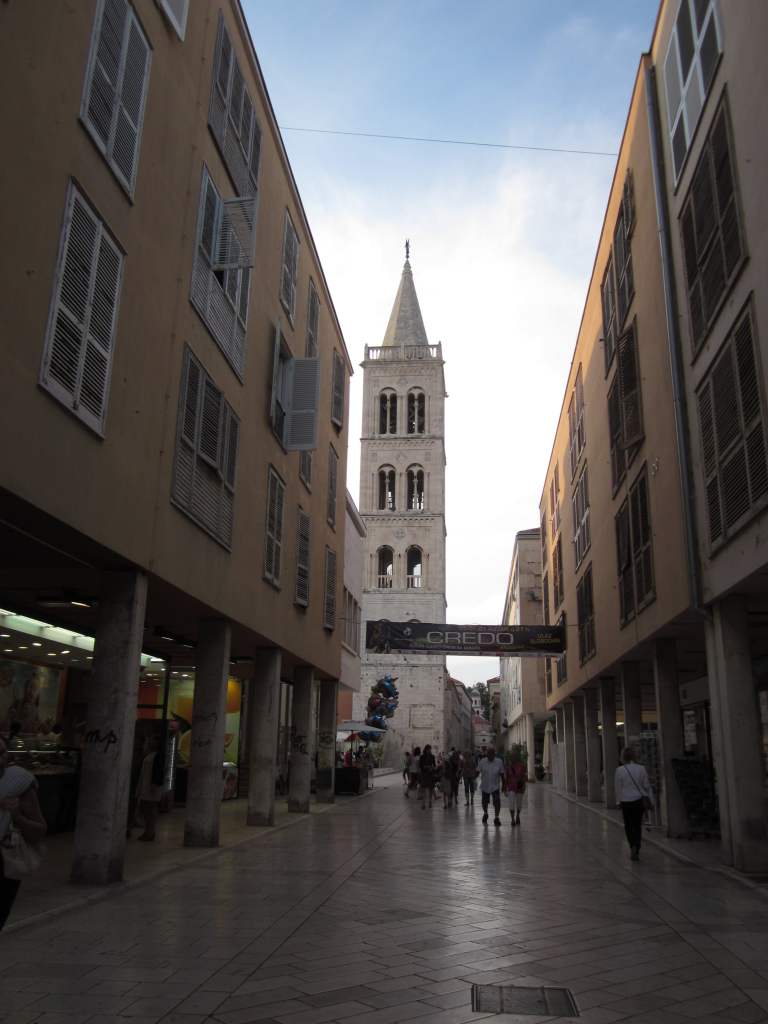
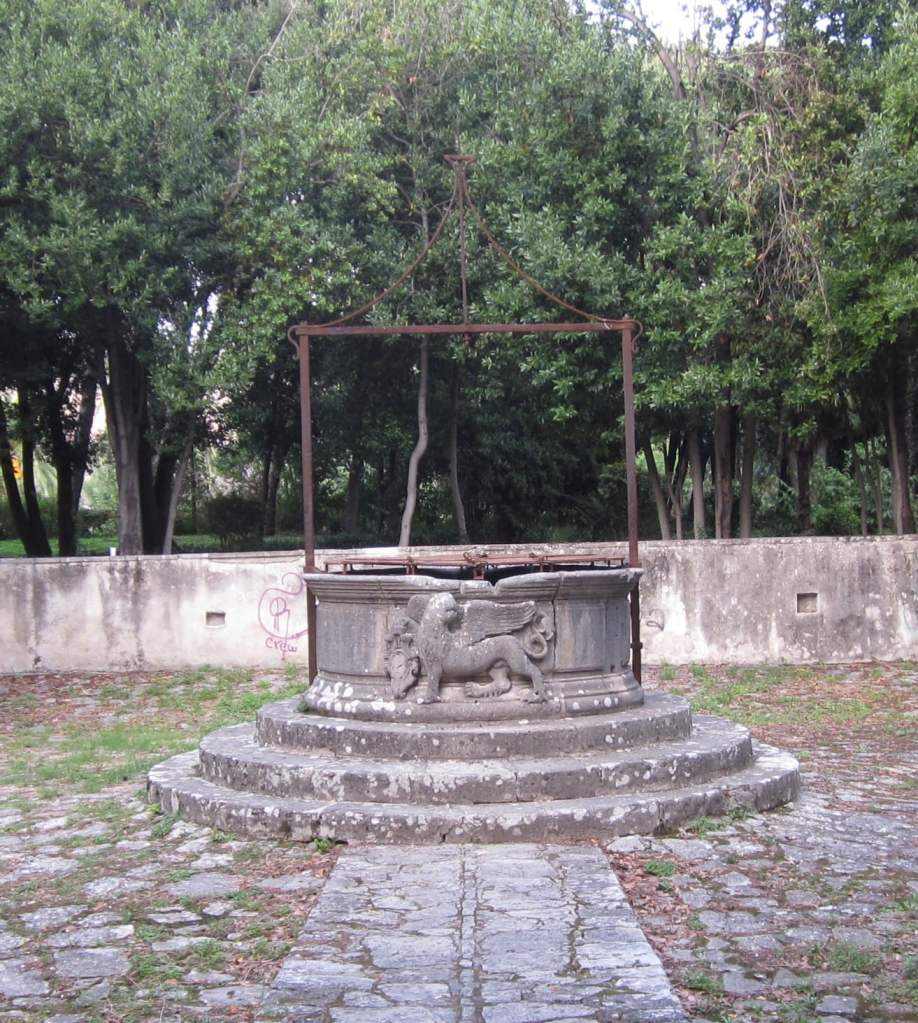
After we gained entrance to the apartment to settle down, we walked to the Old Town, which was only a short distance away. Old Town Zadar had Roman style buildings and medieval churches. Venetian lion with wings was visible in several ruins. Circular medieval St. Donatus’ Church was situated in the Forum.
Since Zadar was not a top tourist stop, it was usually not crowded with tourists. We were able to stroll leisurely in the old town and had some ice cream. There were several excellent seafood restaurants in town.
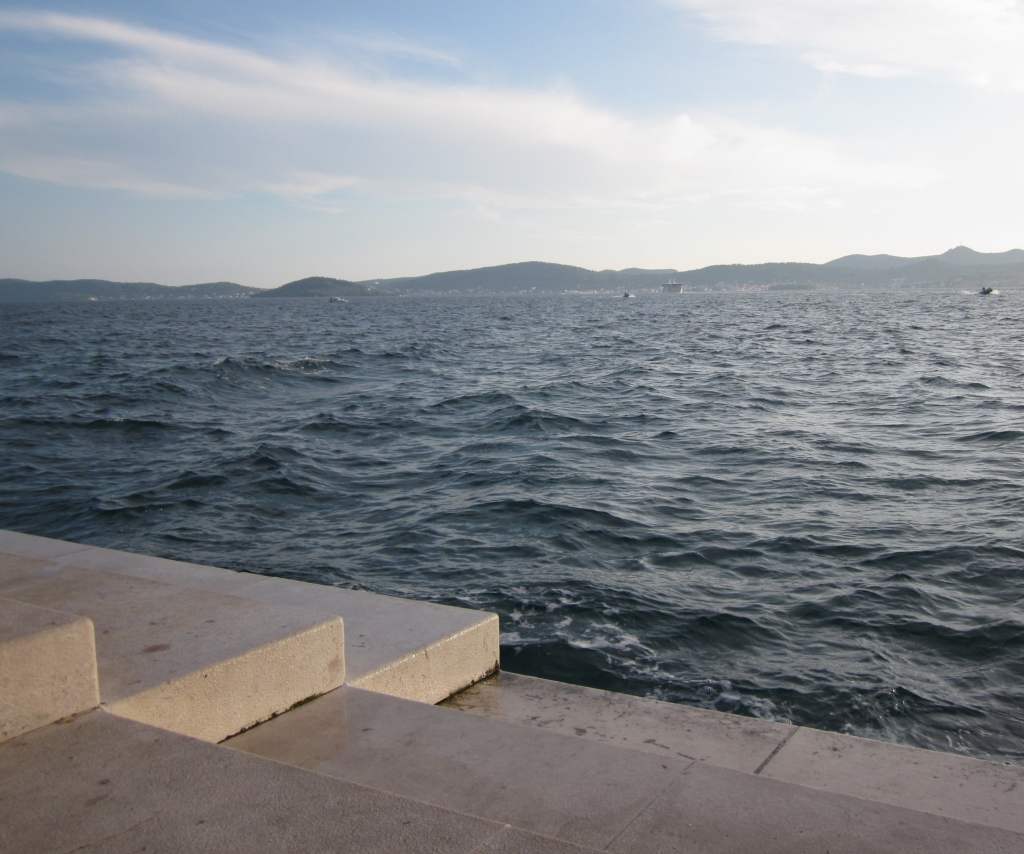
We had an ice cream stop and then continued our walk to the Sea Organ. Sea Organ was located under the stone stairs at seaside. Many pipes were installed there to catch the wave movement. The sea movement kept pushing air through the holes to make an organ-like sound. It’s a great joy to sit on the steps to watch the waves and to hear organ-like music.
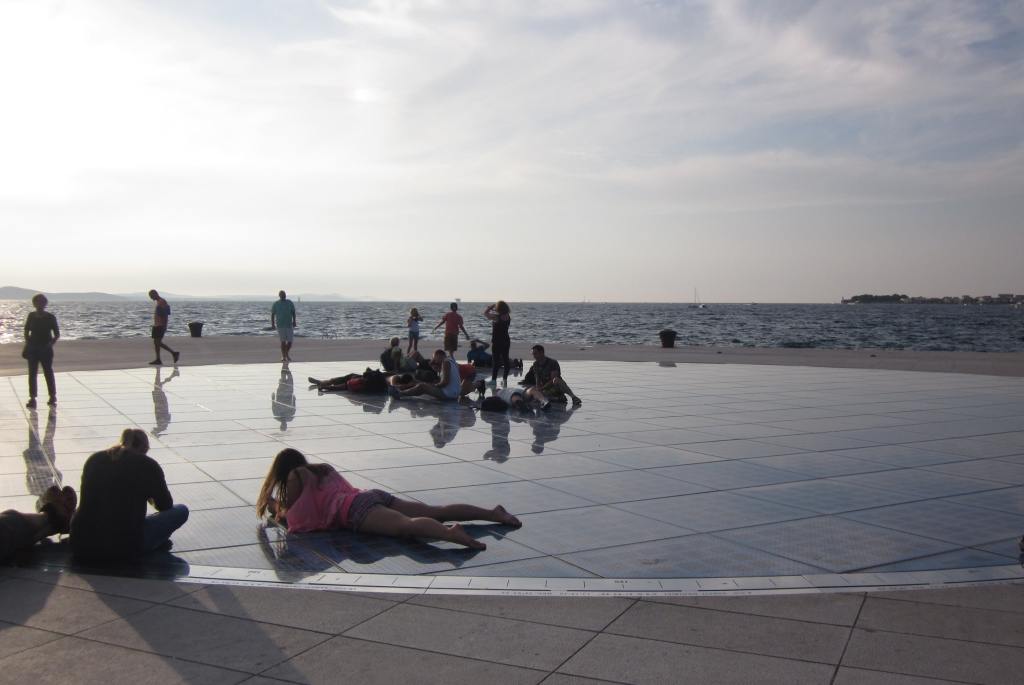
Sun Salutation was nearby too. It was a giant glass-plated circle with solar cells. The solar cells absorbed solar energy during the day and emitted colorful lights at night. It’s a popular place for locals and tourists in the evening. (We were there a bit too early and it hasn’t lit up yet.)
We had a delicious seafood dinner at one of the restaurants before returning to our lodge for the night.
Day 8: Pula
The Istria peninsula of Croatia had many attractive small towns; Pula was one of them. (Other famous towns included Rovinj, Motovun, Poreč and Opatija.) Pula was especially famous for its amphitheater (or arena).
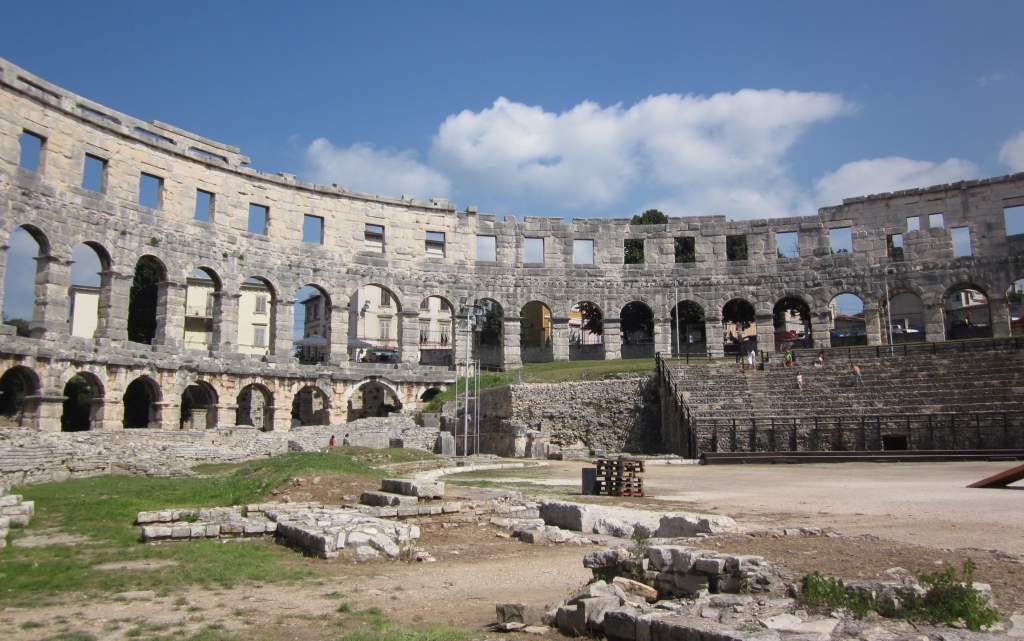
Pula had the sixth largest amphitheater in the world. The amphitheater of Pula was completed around the same time as the Colosseum in Rome. However, this amphitheater was oval and had rectangular windows at the topmost level. The annual Pula Film Festival was held here, usually in the summer. We parked our car nearby and walked into the amphitheater. There was a museum inside the Pula arena showing ancient amphorae. (Amphorae are ceramic jugs used to transport wine, olive oil, etc.) It was quite interesting.
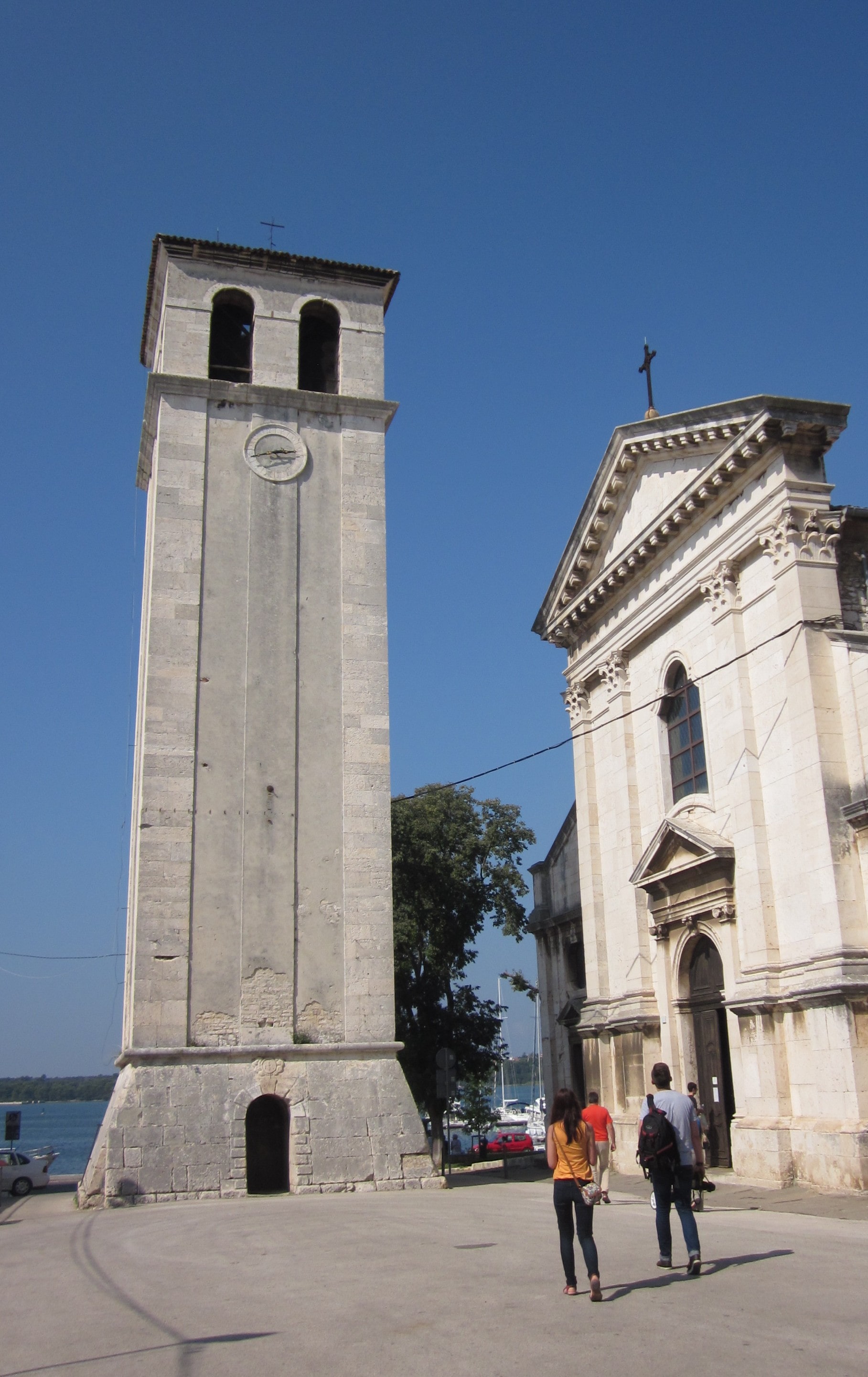
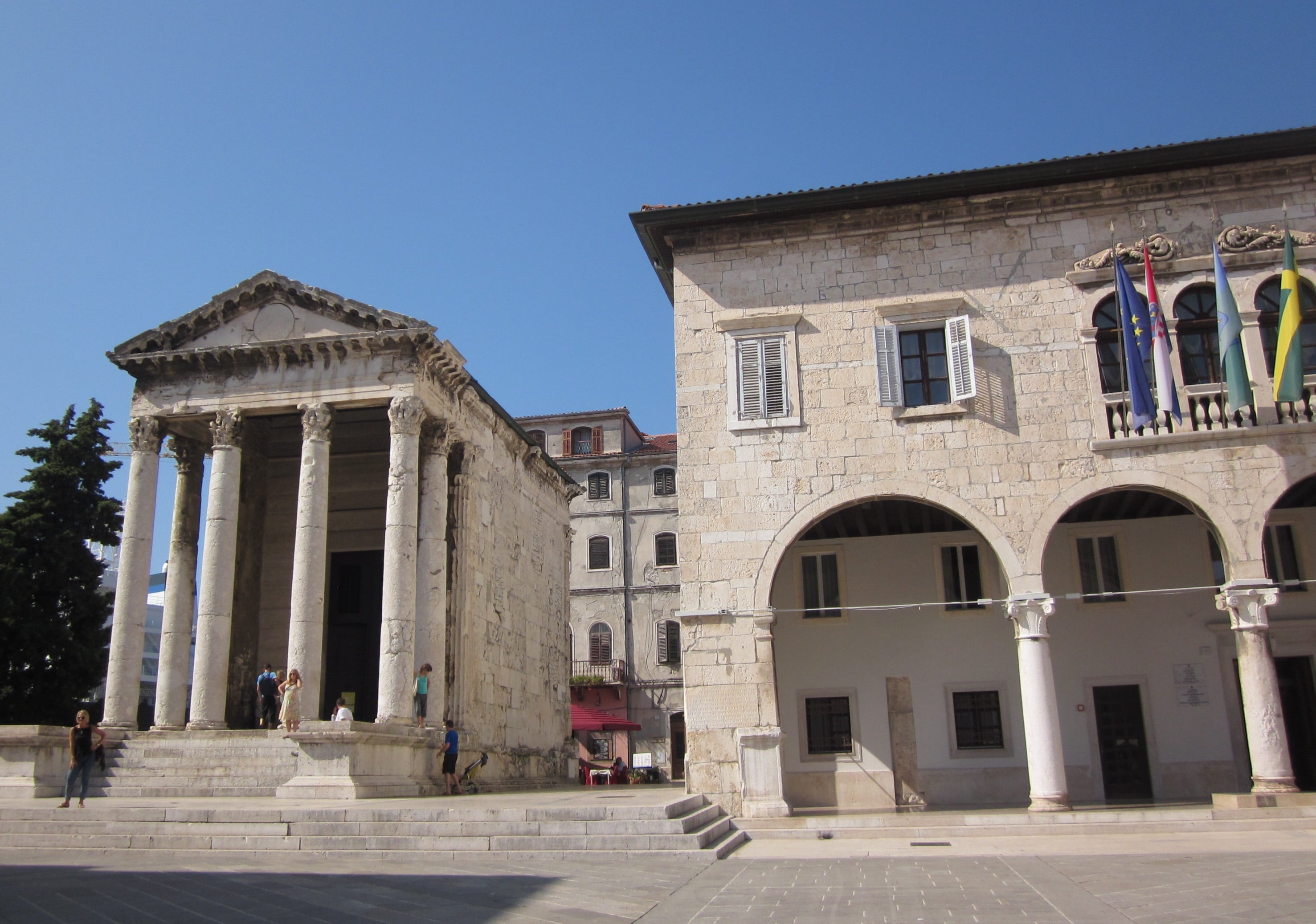
We continued sightseeing after a quick pizza lunch. There were also many other ancient buildings of various styles in the Pula old town. The Cathedral had a Venetian-style bell tower. The Roman-style Temple of Augustus was built to honor Augutus Caesar. There’s also an intricate Roman mosaic floor on display. They were all quite well preserved.
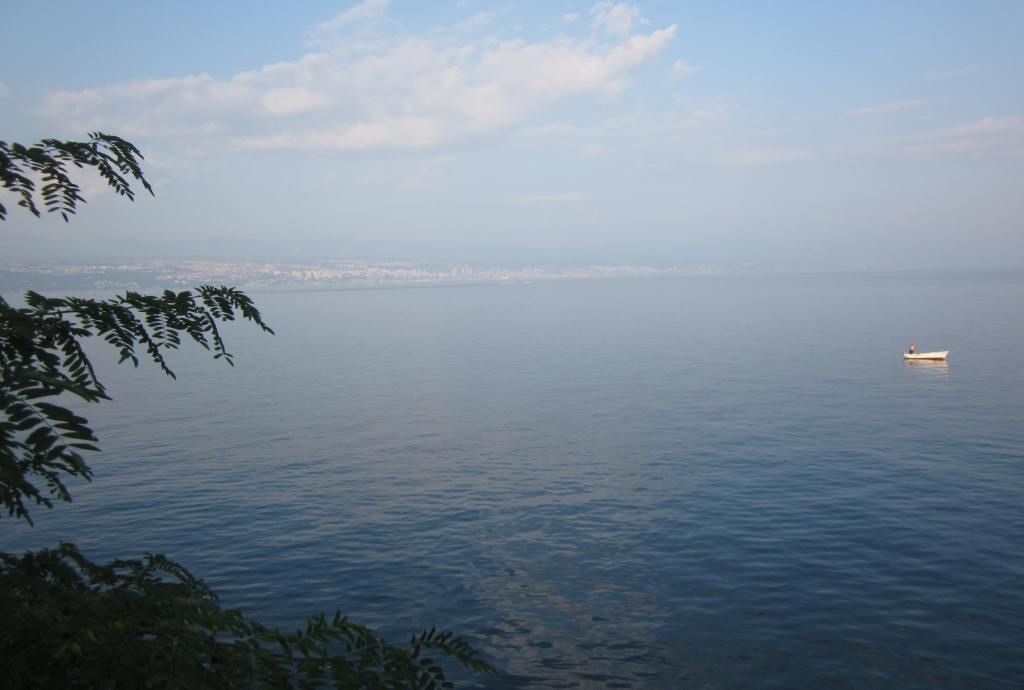
Tonight, we stayed at a seaside hotel. (It was another nerve-wracking drive to reach the hotel!) The hotel provided some floats for guests to use. It was so relaxing to float on one of them in the sea! It made me feel that we were truly on a vacation.
Day 9: Continue to Slovenia
Today we drove across the border into Slovenia. The rest of this journey is documented in Part 2.
 Amy 'n Rei